State Champ Radio
 Blog
Page: 136
All products and services featured are independently chosen by editors. However, Billboard may receive a commission on orders placed through its retail links, and the retailer may receive certain auditable data for accounting purposes.
Trending on Billboard
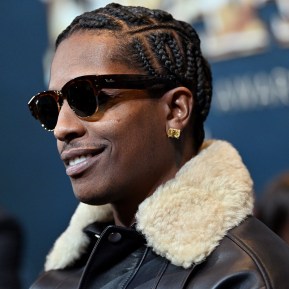
After being named Ray-Ban’s first-ever creative director in early 2025, A$AP Rocky has released his big one titled the Wayfarer Puffer Crystal Collection.
When Rocky isn’t busy cooking up beats for his unreleased album, Don’t Be Dumb, or turning looks with his boo, Rihanna, the creative is putting in work creating frames like Ray-Ban customers have never seen before. The “Fashion Killa” rapper’s three-piece collection consists of all upgraded Wayfarer styles, a staple silhouette for Ray-Ban.
Explore
See latest videos, charts and news
The result is crystalized creations including the Crystal for $292, Crystal Pavé for $701 and the ultra boujee Diamond for $6,721.00. The collection captures A$AP Rocky’s signature aesthetic and Ray-Ban’s craftsmanship at its peak. Every style can be shopped on Ray-Ban’s website now.
Ray-Ban Wayfarer Puffer Crystal Pavé Edition in Blue
Blue crystalized sunglasses.
Ray-Ban Wayfarer Puffer Crystal Edition
Black sunglasses with crystalized logos.
Instead of the thin frame the Wayfarer is well known for, these Rocky models have been exaggerated, made blocky with sculptural curves and high-octane finishes, hence the “puffer” title. It’s safe to say that these are statement-makers, meant for those who aren’t afraid to draw attention. The Crystal Pavé edition is the first on our radar, retailing for $701.
The Polished Blue silhouette is one of our favorites. It’s covered in high-shine pavé crystals and finished with gold detailing that makes the silhouette pop. The frames sit high on the bridge of the nose, eclipsing a standard amount of the wearer’s face. If you’re in the market for bold eyewear with detailing you won’t find anywhere else, the Crystal Pavé is your best bet.
The Crystal is a more subdued silhouette, but still boasts a ton of dazzling qualities. Retailing for $292, one of the more affordable options, the style comes in black with a crystal temple logo and silver accents, the direct opposite of the Pavé model. The shine is subdued but still pops against the all-black background.
Once again, you’ve got a blockier frame that is much more fashion-forward than the regular slim Wayfarer. Being that this is the most affordable option of the bunch, it still manages to steal the show. The puffy frames are a game-changer, one we haven’t seen from any other brand before.
Ray-Ban Wayfarer Puffer Diamond Edition
Black sunglasses with diamonds and 14k gold finishings.
There’s nothing sexier than black sunglasses, unless, of course, they’re encrusted with diamonds. Finally, we have the Diamond edition, which retails for $6,721. Don’t let the subdued silhouette fool you. These sunglasses are absolutely dripping in gold and diamonds, hence the price tag. The glasses are affixed with hand-set diamonds and 14k gold finishings that contrast the black frames nicely. This is an investment piece for sure, but one we’d recommend getting if you want your black sunglasses to have a little more oomph to them than your standard style.
The price tag is hefty, heavily due to the materials used and attention to detail. These are sunglasses that, if treated with care, will last you a lifetime. Don’t just take our word for it. With Rocky’s stamp of approval to back it, this collection must be a banger.
Beyond being an accomplished musician and Billboard chart regular, Rocky has made a name for himself in the fashion landscape. It’s no wonder Ray-Ban bestowed him with a creative director title. The star’s first collection with the brand was titled Blacked Out Collection, a sort of test drive of his new role, which included oversized silhouettes, gold accents and ultra-dark lenses.
Trending on Billboard
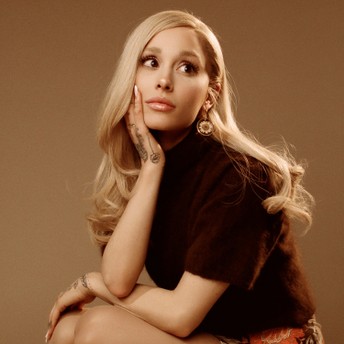
After turning the Broadway smash Wicked into a blockbuster film, starring Ariana Grande and Cynthia Erivo, last fall, director Jon M. Chu and supervising music editor Jack Dolman are returning later this month with the second part of the musical adaptation, Wicked: For Good, to bring the story of Elphaba, Glinda and Oz back to the big screen once again.
Explore
See latest videos, charts and news
Successfully translating the songs and script of a beloved musical onto film is no easy feat, but the task was made even more challenging from Chu and his team when it was decided to bisect the story into two separate parts. It called for some creative solutions to build out Wicked: For Good into a story that can stand on its own, and as part of this retooling of the show’s second act, Chu and Dolman worked with composer Stephen Schwartz to craft two new songs — “The Girl in the Bubble,” sung by Grande, and “No Place Like Home,” sung by Erivo.
There were other challenges for Chu as well — famously, the director opted for all of the songs to be sung live while filming, presenting a number of technological challenges when editing the film in post-production, and while trying to make the songs larger than life, the sheer scale of the cast, choreography and sets made the ensemble numbers a remarkable juggling act.
But if anyone is up for the task, it’s Chu. He has had a lot of experience directing music and dance-focused films in the past, including his adaptation of Lin Manuel Miranda’s In the Heights. He also worked on multiple films in the Step Up franchise and Justin Bieber’s early concert film Never Say Never.
To walk Wicked fans through the process of adapting the songs of Wicked for the screen, the creation of two new songs, and what they’ve learned from working with top musicians like Grande, Erivo, Miranda and Bieber, Chu and Dolman joined Billboard‘s new music industry podcast, On the Record w/ Kristin Robinson, this week.
Below is an excerpt of that conversation.
Watch or listen to the full episode of On the Record on YouTube, Spotify or Apple Podcasts here, or watch it below.
There are two new songs in Wicked: For Good which were not included in the original stage production. How did you work with Stephen Schwartz to make sure the new songs felt like they still fit with the original ones?
Chu: All credit to Stephen Schwartz, he had to have such an open mind and not be precious about what he wrote, and be open to new themes [and songs]. Because I knew by splitting the movie into two — well, one, that was a big decision, but I needed the room, otherwise too many songs would be cut in a one-movie version and wouldn’t be Wicked to me.
I knew this was the first time Wicked was going to be crystallized forever, and so I really wanted to be true to the musical that I fell in love with. I felt the duty to make sure it was Wicked in whatever form. By splitting it into two, then you have to face more questions in the second act, because that’s where I wanted to get closer to these girls. I didn’t just want it to be about Dorothy dropping in and the plot moving. I wanted to understand, once they made the choice to go different ways after “Defying Gravity, how hard those consequences really are.
There was no scene or song yet that let’s us getting closer to Elphaba and understanding how it feels —how lonely it is — to be courageous and make a hard choice. She faces the question of ‘why defend a home that doesn’t even want you?’ The same thing goes with Glinda — we never get to see the moment [in the musical] where she decides to break out and to pop her bubble. So, I knew we wanted to either tackle this in new scenes or songs for those two moments, and of course, Schwartz was like, “It’s a song. I know what it is. Give me 48 hours.” And he started sending me voice memos, which is a really fun thing to get in the middle of the day.
I can’t imagine getting a voice memo from Stephen Schwartz.
Chu: It’s pretty epic. One thing about Stephen that I dont think people know is that he is a great storyteller — not just writing music and lyrics, which he’s always fantastic with — but he also prioritizes storytelling and character before anything else. t’s not about necessarily the melody for him, it’s about is this telling the story, the feeling that you need for this story. And I love that about him.
Jack, as music editor, I know it’s been said before that throughout the filming of Wicked Cynthia and Ariana were singing live, but what’s the mix between singing live versus doing some pickups to smooth things out in the record studio later on?
Dolman: There’s very little of that kind of pickup material at all. It was like being in a candy store all the time. You have these vocals and you have alternate visual takes. And John can speak to this, the alternate visual takes are going to be chosen for a variety of reasons by the director whether that’s performance reasons, for emotional reasons, but each one has these incredible vocals so how do you even begin to choose? Working with singers at the caliber of Cynthia and Ariana is something that I don’t know if I’ll ever have the chance to be able to do again. And it just meant that you had this embarrassment of riches. You could swap out one live syllable of a vowel in one word with another one, and it would, it would embolden the character in that moment, and it was just incredible to be able to work with that.
Jon, As you’re trying to edit the film and create that final product for Wicked, how did you make decisions based on the fact that sometimes one vocal performance might be your favorite for the music, but also a different shot might be your favorite for the visual?
Chu: It was always a give and take, but when you have the best singers in the world you have a lot of control because when I’m on set I’m not worrying about if they are a little sharp or flat, they are always on. It was great and freeing to let them be live and it is something that we didn’t necessarily expect in the beginning.
But if you look at the film as a whole, we all had to agree on what our philosophy is on a musical movie. Because, I think, anyone taking on a musical movie could do in different ways. Some people want to have such clean tracks, no footsteps, no door closing, like they just it want to feel like it’s an album when you go into songs, but that’s just not my philosophy. That’s not why I love music or musicals or movement.
So to me, it was like, “How do you make it feel like it is emerging from the character just as naturally as dialog?” So yes, it might be a little bit messier. You might hear the chair move, and yes, we have to decide, like, how loud that chair is, is it on beat? Is it off? Is it okay that it’s off beat? That’s all part of the fabric what we’re doing.
Jon, you’ve just worked with so many great musicians as a filmmaker, from Justin Bieber, Lin-Manuel Miranda, Cynthia Erivo, Ariana Grande. I’m wondering, has there been anything that has surprised you with how these people work?
Chu: I feel very lucky. I learned a lot from each of them. When I think about Lin-Manuel Miranda, I don’t believe in genius. I think people can make genius things, but I don’t think people are just geniuses. However, Lin is pretty as close as you can get. His voice messages of songs are amazing and insane. He has great understanding of language. I think that’s the thing I learned the most, is how important lyrics are. I had done dance movies, and I had done movement stuff and and so I knew how to find the lyricism and musicality in that, but lyrics were so important In The Heights, and I had to make room for that, and I had to understand that and he had to teach me a little bit.
I think I felt that similarly with even Justin Bieber, even at 14 years old — no matter what you say about him, he was doing big shows. And in the tour bus, he’d be alone playing video games after coming down from the show, and then he would go — just naturally, as a kid — to his computer, and he would start writing music in every city he was in. He had a folder from every city and in those folders were tracks and tracks of stuff that he was doing alone. None of this was ever going to be released. It was him as a 14-year-old doing some amazing stuff, but it wasn’t, quote, unquote, “part of his brand” or whatever at that moment. I knew very early, “Oh, this kid is, like, the real deal. He loves music. He’s going to do this for the rest of his life. This is not a performance. This is just what he does.”
I felt that with Ari and Cynthia as well. What I love about someone like Ariana is she’s also like a tech nerd — like, she gets in that Pro Tools and gets down. Like, she wanted to talk about craft with me and in the tech of it all. When she sees that computer and she sits down, it’s like — she is fast and she knows exactly where to go. I thought that was so beautiful.
And Cynthia obviously knows her stuff inside and out. She has such great taste and opinions about how her voice is. So all of them were different, in a way, but all of them were about craft. It was not about the performance of being a star at all. All of them [are doing what] fulfills them as a musician. They’re not focused on the red carpet — even though they do that very well, too.
Tell me about “No Place Like Home,” Elphaba’s new song in the film.
Chu: “No Place Like Home” is a nod to the L. Frank Baum book… Stephen really brought this to the table and said, “You know what happens when you start to question the thing that you’ve been fighting for? What happens when your home doesn’t even want you alive? Is home a place or is it an idea? And if it’s an idea, why do you need to be here for it? Should we just leave?” I think those questions, at least for me, I’ve always wondered about where Elphaba sits with this. Stephen already had an insight on that through this song. It was really cool to hear it for the first time.
When did you show Cynthia and Ariana these new songs?
Chu: The first time the girls had ever heard it was the first time we all got together at my house for dinner. I was about to leave for London to shoot the film so everything was moved out, but there was a piano in there because the person moving in brought their family piano and moved that in early.
So we all had dinner. This is at the end of COVID lockdown so we hadn’t all seen each other in person. And Stephen Schwartz, Winnie Holzman and two girls are there the first time. And the girls are together in front of us — they never did chemistry read together — and Schwartz got on the piano and started playing their new songs for them. They got to listen to [“No Place Like Home”] in front of us, and they just, I mean, there was lots of tears. It was just one of those great moments.
And then he sang the other one for for Ari [“The Girl in the Bubble”], and then he started playing “For Good,” and he’s like, “Shall we?” And they just did it for the first time together. And at that moment, I took my kids out of their bedrooms, and I was like, “You better watch this thing right now. This is history.” When they sang, it was like a revelation — like, “Oh my goodness, the world does not know what’s about to happen.”
I didn’t realize those songs were written so early, during COVID lockdown. Did Steven Schwartz take into account Ariana Grande and Cynthia Erivo’s voices specifically when writing these extra songs?
Chu: Yeah, at that point, they had already been cast, but he we didn’t say anything to them yet. I don’t think, well, maybe they knew, but they didn’t know what the song was or how it was going to be. When they came over that day, I was sharing costume designs and some production designs with them, so they were getting a lot that day just dumped on them to get a sense of it all. Everything would evolve though. The songs and images would evolve over time, but this was a starting point to get us there.
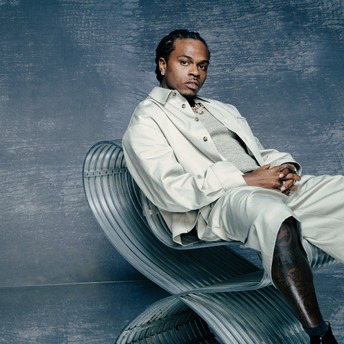
Trending on Billboard Gunna’s upcoming tour is turning into a marathon. The Atlanta native has announced more shows as part of the global trek, along with plenty of coinciding Wunna Run Club 5K race events to accompany tour dates. Explore See latest videos, charts and news The North American leg of the Wun World Tour […]
Trending on Billboard
Luke Combs, Lainey Wilson and Shaboozey are among the initial lineup of performers for the upcoming 59th annual CMA Awards.
The Country Music Association and ABC revealed the first round of performers for the Nov. 19 awards ceremony, with the lineup also featuring performances from Ella Langley, Megan Moroney, Shaboozey, Zach Top, Tucker Wetmore and Stephen Wilson Jr.
Wilson, the reigning CMA female vocalist of the year and a six-time nominee this year, will perform during and host the event, which will air live from Nashville’s Bridgestone Arena on ABC, and will stream the following day on Hulu.
Explore
See latest videos, charts and news
Combs will offer a rendition of his single “Back in the Saddle,” while six-time nominee this year Langley will perform her new song “Choosin’ Texas,” and reigning CMA new artist of the year and six-time nominee this year Moroney will perform “6 Months Later.”
Top, who has five nominations, will offer a performance of “Guitar,” while new artist of the year nominee Wetmore will perform his hit “Wind Up Missin’ You.” Wilson Jr., also a new artist of the year nominee, will offer a rendition of Ben E. King’s “Stand By Me.”
The evening will also feature plenty of collaborations, as Combs will join BigXthaPlug for their song “Pray Hard,’ while Shaboozey will team with Wilson Jr. to perform their collaboration “Took a Walk.”
More performers and presenters for the 59th Annual CMA Awards will be revealed leading up to the ceremony. This year, the nominees for the entertainer of the year trophy are Combs, Wilson, Cody Johnson, Chris Stapleton and Morgan Wallen. Wallen is also the reigning CMA entertainer of the year.
Trending on Billboard
Following Ozzy Osbourne’s July 22 death, the legendary rocker makes his presence known on the TouchTunes charts for the third quarter of 2025, paced by a No. 2 debut on the TouchTunes Artists Chart.
Explore
See latest videos, charts and news
The TouchTunes charts for the third quarter of the year track the most played songs and artists on TouchTunes jukeboxes from July 1 to Sept 30, with the Frontline ranking inclusive of music released in the last 18 months, followed by the Catalog tally for any music that was released more than 18 months ago. The TouchTunes Artists Chart tracks the same period, combining all of an artist’s plays across both rankings. TouchTunes has jukeboxes in over 60,000 locations worldwide. Its data is not factored into other Billboard charts.
Osbourne’s music had not been featured on TouchTunes’ charts since the songs-based rankings’ inception in the second quarter of 2024 or on the Artists survey since it began in the first quarter of 2025. But after his July death, he vaulted onto the Artists tally at No. 2, behind only Morgan Wallen, who has reigned for all three of the ranking’s iterations so far.
On the TouchTunes Catalog Chart, Osbourne appears three times, twice under his own name. “Mama, I’m Coming Home” leads the trio at No. 3, while “No More Tears” enters at No. 24. The former peaked at No. 28 on the Billboard Hot 100 in 1992, while the latter reached No. 71 the same year, both via the 1991 album No More Tears.
The third Osbourne-related song to chart, meanwhile, is Black Sabbath’s “War Pigs,” which enters at No. 21. The 1970 track stems from Osbourne’s time fronting the rock band and is featured on its sophomore release, Paranoid.
Both Osbourne and the original iteration of Black Sabbath performed at a star-studded final concert, Back to the Beginning, on July 5 in Birmingham, England.
Wallen’s reign on the Artists ranking, meanwhile, is assisted by music from his newest album, I’m the Problem, which was released in May, meaning the latest TouchTunes charts are the first full-quarter period the majority of the LP’s songs have been available. As such, one of the Frontline list’s big movers for the quarter is Wallen’s “What I Want,” featuring Tate McRae, which vaults 18 positions to No. 6 in its second quarter on the tally. Additionally, “I Got Better” and “20 Cigarettes” debut at Nos. 11 and 12, respectively.
In all, Wallen appears across the Frontline and Catalog charts 10 times this quarter — eight times on Frontline and twice on Catalog. That equals his count from the second quarter of 2025; “I Got Better” and “20 Cigarettes” replace “Lies Lies Lies” on Frontline, while “Last Night” departs from Catalog.
The Frontline and Catalog No. 1s are the same as they’ve been since their inception, as Shaboozey’s “A Bar Song (Tipsy)” reigns on the former while Chris Stapleton’s “Tennessee Whiskey” tops the latter. A change is coming soon, though, as “A Bar Song” is approaching its move to catalog status 18 months removed from its release.
Other Frontline movement includes debuts for songs from Alex Warren, Blake Shelton, Jessie Murph, Cardi B, Justin Bieber and Gavin Adcock. Murph in particular starts at No. 21 with “Touch Me Like a Gangster,” while her “Blue Strips” lifts 7-4 for a new peak.
Finally, the genre check-in: according to TouchTunes, the rock genre accounted for 39% of its plays across both Frontline- and Catalog-eligible titles, a 1% increase over quarter two and again the dominant genre on the platform. Country is second at 22%, though its dominance of Frontline-eligible songs remains, accounting for 41% of plays, followed by pop (19%), rap (14%) and rock (12%).
See all rankings below.
TouchTunes Frontline Chart
“A Bar Song (Tipsy),” Shaboozey (=)
“I’m the Problem,” Morgan Wallen (=)
“Pink Pony Club,” Chappell Roan (=)
“Blue Strips,” Jessie Murph (+3)
“I Never Lie,” Zach Top (-1)
“What I Want,” Morgan Wallen feat. Tate McRae (+18)
“I Had Some Help,” Post Malone feat. Morgan Wallen (-2)
“You Look Like You Love Me,” Ella Langley feat. Riley Green (-2)
“Just in Case,” Morgan Wallen (-1)
“All the Way,” BigXthaPlug feat. Bailey Zimmerman (+8)
“I Got Better,” Morgan Wallen (debut)
“20 Cigarettes,” Morgan Wallen (debut)
“Ordinary,” Alex Warren (debut)
“Not Like Us,” Kendrick Lamar (-5)
“Texas,” Blake Shelton (debut)
“Nokia,” Drake (-5)
“Messy,” Lola Young (-4)
“Love Somebody,” Morgan Wallen (-8)
“Luther,” Kendrick Lamar with SZA (-5)
“I’m a Little Crazy,” Morgan Wallen (-4)
“Touch Me Like a Gangster,” Jessie Murph (debut)
“Outside,” Cardi B (debut)
“Daisies,” Justin Bieber (debut)
“Last One To Know,” Gavin Adcock (debut)
“I Am Not Okay,” Jelly Roll (re-entry)
TouchTunes Catalog Chart
“Tennessee Whiskey,” Chris Stapleton (=)
“I Love This Bar,” Toby Keith (=)
“Mama, I’m Coming Home,” Ozzy Osbourne (debut)
“Lose Control,” Teddy Swims (-1)
“Friends in Low Places,” Garth Brooks (-1)
“Sweet Child o’ Mine,” Guns N’ Roses (+11)
“Simple Man,” Lynyrd Skynyrd (-1)
“Brown Eyed Girl,” Van Morrison (+7)
“Neon Moon,” Brooks & Dunn (-4)
“Whiskey Glasses,” Morgan Wallen (-2)
“I Think I’ll Just Stay Here and Drink,” Merle Haggard (-4)
“Drinkin’ Problem,” Midland (-3)
“Copperhead Road,” Steve Earle (-3)
“Family Tradition,” Hank Williams Jr. (-2)
“Fat Bottomed Girls,” Queen (-1)
“Rockstar,” Nickelback (-5)
“Thunderstruck,” AC/DC (+1)
“In the Air Tonight,” Phil Collins (+4)
“Cowgirls,” Morgan Wallen feat. ERNEST (=)
“Don’t Stop Believin’,” Journey (-7)
“War Pigs,” Black Sabbath (debut)
“Pour Some Sugar on Me,” Def Leppard (+2)
“Something in the Orange,” Zach Bryan (=)
“No More Tears,” Ozzy Osbourne (debut)
“Should’ve Been a Cowboy,” Toby Keith (debut)
TouchTunes Artists Chart
Morgan Wallen (=)
Ozzy Osbourne (debut)
Toby Keith (-1)
Chris Stapleton (-1)
Lynyrd Skynyrd (+1)
AC/DC (-2)
Zach Bryan (=)
Drake (=)
Shaboozey (-4)
George Strait (=)

Trending on Billboard
SZA is minding her own business. In a GQ cover story published Thursday (Nov. 6), the hitmaker spoke about how she’s chosen to stay out of two major feuds that have gone down recently in the music world — Drake versus Kendrick Lamar and Nicki Minaj versus, well, her.
Starting with the beef between two of her frequent collaborators, SZA — who recently co-headlined a stadium tour with Dot but has been friends with ex-boyfriend Drizzy for years — addressed why she chose not to take sides when one of rap’s biggest clashes on record unfolded last year. “It was something between two grown-a– men, so why would I insert myself between something between two grown-a– men, you know?” she told the publication.
“I feel like that’s how everybody felt — with the exception of people who didn’t feel that way,” SZA continued. “I didn’t really have any stake, per se. Obviously, I love Kendrick. I’m signed to [Top Dawg Entertainment]. That’s my family. Obviously, I’ve known Drake for so long and we have a beautiful rapport. And, obviously, it’s always unfortunate when the unfortunate occurs.”
Despite her diplomacy throughout the back-and-forth, fans couldn’t help but wonder last year how SZA felt about two of her longtime friends — both of whom have helped her score some of the biggest hits of her career with their collaborations — going toe to toe. Tension had been brewing for years, but the feud reached a fever pitch in the spring of 2024 when the two men started lobbing searing diss tracks at one another left and right, including Lamar’s Billboard Hot 100-topping “Not Like Us.”
But while she didn’t necessarily take sides on a personal level, SZA was certainly caught in the crossfire professionally. On the one hand, she served as the Compton rapper’s main guest artist in his 2025 Super Bowl Halftime Show — during which he openly taunted his foe while performing “Not Like Us” — but on the other, she also sang her Drake duet “Rich Baby Daddy” every night on the Grand National Tour, her joint trek with Lamar. (“Why wouldn’t I?” she told the publication of putting the track on the setlist. “I don’t know why I wouldn’t be celebrating some s–t that I ate up.”)
Protecting her peace proved more difficult, however, when the Queen of Rap began firing off increasingly mean-spirited posts about her on X this past summer. While in the midst of dissing both Roc Nation CEO Desiree Perez and Top Dawg president Terrence “Punch” Henderson — who used to be SZA’s manager — Minaj dragged SZA into the mix with repeated insults about her appearance.
After getting in a few shots of her own during the back-and-forth on X, SZA stepped away. Months later, she told GQ of Minaj, “I don’t know her.”
“We have no connection to each other,” she continued. “There’s no backstory. Like, there was no through-line narrative. It was just like, ‘Roc Nation’ … I don’t know where it came from. That’s not even my place to correct a narrative that I don’t got s–t to do with.”
“It was a little strange,” SZA added. “It was very like, ‘Why?’ But also, you know, ‘I guess.’ ”
See SZA on the cover of GQ below.
https://www.instagram.com/p/DQt0V1gkbyu

Trending on Billboard
Over the past few years, the revenue of the organizations that collect and distribute public performance and mechanical royalties have gone up – by a collective 7.2% in 2021, an eye-popping 28.9% in 2022 and then 7.6% in 2023. But the pandemic bust and subsequent recovery boom made it hard to see trends that would shape the future of this part of the business. With the Nov. 6 release of the organization’s Global Collections Report, though, a clearer picture of this part of the music publishing business is starting to emerge.
Revenue from music collections hit 12.59 billion euros ($13.62 billion), up 7.2% from 2023, a rate of growth not so different from the previous year, while revenue from digital sources rose 10.8% to 5.01 billion euros ($5.42 billion). This, too, seems to be falling into something of a pattern: Digital revenue jumped 35.1% in 2022, then 9.5% in 2023. Revenue from live and background music – played at concerts and in places like restaurants and bars – also seems to be settling into a groove. After falling more than 45% during the pandemic, it grew 68.5% in 2022, 21.8% in 2023, and 10.4% last year to 3.38 billion euros ($3.66 billion). Revenue from television and radio climbed 1.2% to 3.42 billion euros ($3.7 billion), after growing 11.8% in 2022 and falling 5.3% in 2023.
Related
Over the past decade, global music collections rose by more than two-thirds – and the mix of revenue has changed significantly. In 2024, revenue from digital sources made up 39.8% of collection organization revenue, while television and radio accounted for 27.1% and live and background music for 26.8%. Digital and live are expected to continue to grow, especially since live revenue in most cases is pegged to concert ticket prices.
Globally, the picture hasn’t changed as fast as some hoped. Western Europe still accounts for almost half the market (47.5%) and revenue there grew 6.6%. Including the U.S. and Canada, where revenue grew 10%, the West accounts for more than 75% of global collections. For years, publishing executives expected significant growth in African and Latin America, but so far it has not lived up to expectations – revenue from Africa grew 10% while that of Latin America rose 3.3%. The latter region’s growth was hurt by a currency decline in Argentina, while growth in Asia was hampered by a slight decline in Japan for the same reason. The standout region for growth was Eastern Europe, which CISAC counts as everything from the former Iron Curtain to Central Asia, where collections grew 17.9%.
These CISAC statistics capture a significant amount of the music publishing business – but not all of it. They include all of the revenue that goes through collecting societies that are CISAC members, most of which operate on a nonprofit or not-for-profit basis, plus private companies like BMI and SESAC. (These numbers do not include GMR, or Global Music Rights, and some other entities.) In most of the world, unlike the U.S., societies collect both public performance and mechanical rights revenue, and these numbers reflect that. CISAC does not currently account for money collected for mechanical rights by the MLC, although that may change next year. These numbers also exclude revenue collected for multi-territory online rights assigned by publishers to ICE and some other European entities. For all those omissions, however, the CISAC report is one of the better ways to get a sense of music publishing.
Related
CISAC is an organization that goes far beyond music – it includes 228 collective management organizations in 111 countries and territories – including those that collect money for the use of audiovisual works, visual art, literature and drama. Much of this non-music revenue comes from Europe, where countries have an array of collecting societies for different media. Music is the biggest source of revenue by far, however, accounting for about 90% of a 13.97-billion-euro ($15.11 billion) total, which was up 6.6% from 2023. Overall, digital revenue for all rights rose by 11.2%.
“This year’s results are testament to the adaptability and resilience of creators’ collective rights management in a rapidly changing environment,” CISAC director general Gadi Oron said in a statement distributed with the report. In the same document, CISAC president Björn Ulvaeus noted that “In 2024, authors’ societies delivered record royalties to creators worldwide. This achievement is a cause for celebration, reflecting the resilience of collective management and the value of creative works in a growing market.”
Oron and Ulvaeus also took the opportunity to issue warnings about the potential threat of generative artificial intelligence. Without proper regulation, AI “risks undermining the very foundation of creative value,” Oron writes in his foreword to the report. So far, he notes, the European Commission’s implementation of the AU AI Act has fallen short of the protections in it, which amounts to “a betrayal” that “underscores the urgency of ensuring that the rights of authors are upheld in practice, not just in principle.”
Related
In his own foreword, Ulvaeus takes a similar tone. A study commissioned by CISAC projected that as much as a quarter of creators’ royalties could be lost without AI regulation as the market for AI-generated content could reach 64 billion euros in three years. “This is value flowing away from the individuals who give culture its meaning,” Ulvaeus writes. “I have urged that creators must be at the decision table, not on the outside looking in.”
Trending on Billboard
The Ball brothers are teaming up again — this time off the court and outside the booth. Lonzo and LiAngelo Ball are returning to the podcast world with their new series, The Ball and the Family Podcast.
Explore
See latest videos, charts and news
“The chemistry hits different when it’s real family,” Lonzo tells Billboard. “We joke, argue, push each other, hype each other up — you’ll see that. People will also see how our relationship has evolved, from kids in the backyard to dealing with everything we’ve been through.”
Set to debut Nov. 11, The Ball and the Family Podcast will feature 40 episodes with guests from across the sports and entertainment world, including Michael Porter Jr., Larry Nance Jr., Myles Turner, Donovan Mitchell and Jake Paul. The premiere episode will feature ESPN’s Stephen A. Smith. The show will stream exclusively on the Betr app, a gaming and media platform cofounded by Joey Levy and Jake Paul.
“You can come on the show and really be yourself. No filters. Real conversations. It’s your voice, heard by the world,” LiAngelo tells Billboard, promising a space for authenticity.
Though both brothers juggle demanding schedules, they’ll host remotely: Lonzo — now with the Cleveland Cavaliers — will record from Cleveland and on the road, while LiAngelo will be based in Los Angeles. They will also share hosting duties alongside Darren “DMo” Moore and Anthony “Ant” Salazar.
Beyond their shared ties to basketball and music, the Ball brothers aim to explore deeper conversations and dream of hosting guests like Tom Brady, Kevin Hart, Zendaya, Barack Obama, and Leonardo DiCaprio.
“We want to go deeper than basketball and music,” Lonzo says. “Everyone always sees the highlights, but we want to take people behind the scenes — family dynamics, growth, what we’ve learned. Real life conversations, but still fun.”
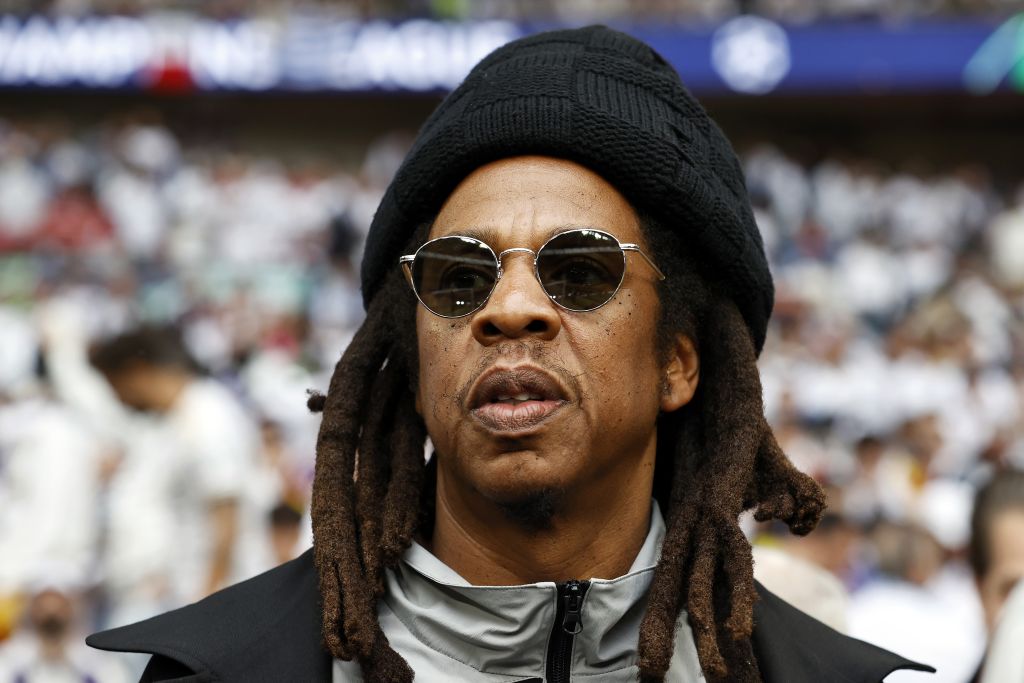
Rymir Satterthwaite began a quest over a decade ago, claiming that Jay-Z impregnated his mother in the late 1990s, leading to his birth. Jay-Z has fought the case at every turn, and now, a California judge has dismissed the paternity lawsuit from Rymir Satterthwaite.
In a report from Page Six, it was revealed that Rymir Satterthwaite, 30, will not have his paternity case go any further after a judge in California dismissed the matter with prejudice on Wednesday (November 4). From this point forward, Satterthwaite can no longer file a paternity suit against Shawn Carter, professionally known as Jay-Z.
The outlet adds that Wanda Satterthwaite, the mother of Rymir, filed a civil lawsuit against Carter that did not materialize into any legal ramifications before her passing. Ms. Satterthwaite died in 2016, but her son vowed to keep the pressure up.
Rymir Satterthwaite is also a rapper, according to past report,s but it isn’t known how far his music has traveled.
There have not been any statements made by Jay-Z’s legal team.
—
Photo: Getty

Trending on Billboard
AXS is ramping up its European ambitions with two senior executive hires designed to accelerate the ticketing company’s growth across the region. The company has appointed Peter Quinlan as managing director of Europe, and Hannah Rouch as vp of marketing in Europe — both newly created roles that will operate out of London and report to AXS’s international division.
Quinlan will oversee all European operations and lead the company’s regional strategy, reporting to Blaine Legere, president of AXS International. Rouch will report to Quinlan and spearhead marketing efforts across the continent, with a mandate to expand brand awareness and drive audience growth for the ticketing platform.
Related
“Europe remains a critical growth engine for AXS, and these appointments mark an important step forward in our continued evolution,” Legere said in a statement. “Peter’s global experience and operational acumen, combined with Hannah’s deep marketing expertise and track record of execution, will be instrumental as we continue to scale and deliver across the region.”
Quinlan joins AXS after 18 years at Live Nation Entertainment, where he held leadership roles across marketing, sponsorship, and ticketing. He most recently served in a global executive capacity at Ticketmaster, overseeing commercial partnerships, payments, fraud operations and other revenue initiatives. His new role puts him at the center of AXS’s European expansion strategy at a time when the company continues to compete with Live Nation’s Ticketmaster, CTS Eventim and other players across the territory.
“There’s tremendous opportunity for growth — especially in Europe, where promoters, venues and artists are looking for innovative, transparent partners with technology that can scale and deliver,” Quinlan said. “I’m excited to help lead that charge.”
Rouch joins AXS from Gumtree/eBay, where she led a brand repositioning for the marketplace and previously held marketing leadership roles at Motors.co.uk and Bauer Media. Her remit will include strengthening the AXS brand across all European markets and building a marketing infrastructure to support both promoter clients and consumer initiatives.
“I’m thrilled and energized to take on this role at a time of significant growth for AXS across Europe,” Rouch said. “Our focus will be on strengthening our brand and reach across Europe and building out marketing as a growth engine for the business – accelerating our ability to deliver for our clients and enhancing our efforts to ‘hold the hand of the fan’ from show discovery to live event.”
The hires come as AXS continues to grow its international footprint, with partnerships spanning festivals, arenas, sports franchises, and touring artists. The expansion also reflects the company’s broader strategy to scale its global technology platform and deepen its presence outside the U.S.
“These new appointments reflect AXS’s ongoing commitment to scale, unify, and empower our international teams,” Legere added. “With this expanded leadership structure, we’re better positioned than ever to deliver world-class support for our clients and partners.”