Author: djfrosty
Page: 835
Shyne has lost his bid for re-election in Belize. The former Bad Boy conceded defeat in a press conference on Wednesday night (March 12).
According to Channel 5 Belize, Shyne (born Moses Barrow) was unseated by fellow United Democratic Party member and businessman Lee Mark Chang in the general election.
Shyne was elected to the Mesopotamia seat in Belize City for the House of Representatives in 2020, and he eventually served as the Leader of the Opposition in the House of Representatives and the leader of the Belize United Democratic Party.
Explore
Explore
See latest videos, charts and news
According to Channel 5 Belize, Shyne secured only 318 votes in the constituency of Mesopotamia, while Chang earned 601.
“The people have spoken. Congratulations to Lee Mark Chang — he’s now the new area representative of Mesopotamia, and I wish him well,” Shyne said, according to the local news outlet. “I was confident; that was the interaction I was having with the people, but they made a decision to go in another direction, and I respect that.”
With Shyne losing his House of Representatives seat, he’s planning to resign as the leader of the Belize UDP once a new official is elected.
“I certainly will resign effective once we have a national convention to elect a new leader,” he added. “Obviously you can’t be a leader of the United Democratic Party once you’re not a member of the House, and I would not want to be appointed as a senator or anything to hold on to the leadership.”
Chang was very critical of Shyne leading up to the election, reportedly referring to him as a “cancer” in the government. “The people are realizing they have been bamboozled,” he reportedly said on national TV in Belize.
It’s unclear if the loss marks the end of Shyne’s run in Belizean politics.
Shyne rose to fame in the late ’90s as a rapper under Diddy’s Bad Boy Records label. He was sentenced to 10 years behind bars in 2001 on assault, gun possession and reckless endangerment charges for his role in a 1999 NYC nightclub shooting that left two people wounded. He was released in 2009 after eight years behind bars and deported to Belize.
The Jonas Brothers announced the release date for their upcoming single, “Love Me to Heaven,” on Thursday (March 13). The follow-up to the sibling trio’s recent singles with Marshmello (“Slow Motion”) and Rascal Flatts (“I Dare You”) is due out on March 21. They announced the news in an Instagram post in which all three modeled Canadian tuxedoes while flipping and jumping through the sky.
Explore
Explore
See latest videos, charts and news
The band previewed the uptempo pop tune during their 20th anniversary celebration show in Toronto last month, busting out the live debut of the track on which they sing, “Could give me everything, but it ain’t enough/ You can’t put a price on the human touch/ I could be down, but you love me to heaven/ Love me to heaven, babe.”
Joe, Nick and Kevin Jonas will continue their celebration of two decades of familial pop rocking with the upcoming one-day JONASCON at the American Dream mall in their native New Jersey on March 23. The event will feature live performances, DJ sets, Q&A panels, fan activations, pop-up surprises, retail takeovers, a Jonas trading post, trivia, games, immersive experiences, an interactive art installation, keynote event, karaoke, a Camp Rock bar, special guests, mini golf and exclusive merch. “From their early beginnings to global pop icons, JONASCON will honor the band’s incredible journey while also showing their appreciation to the fans who have been with them from the beginning,” a statement promised.
Trending on Billboard
While no specific information has been released about where the new single will land, earlier this year the trio promised that their 20th anniversary celebrations will include a “year of music,” featuring new songs, a live album, soundtrack, solo music and a holiday movie for Disney titled Jonas Brothers Christmas Music.
They will also be featured on Rascal Flatt’s upcoming duets album, Life Is a Highway: Refueled Duet via “I Dare You,” which was written by Nick Jonas with Dan + Shay’s Shay Mooney (as well as Dewain Whitmore Jr and Tommy English) and currently sits at No. 37 on the Billboard Country Airplay chart after peaking at No. 24.
Check out the “Love Me To Heaven” announcement below.
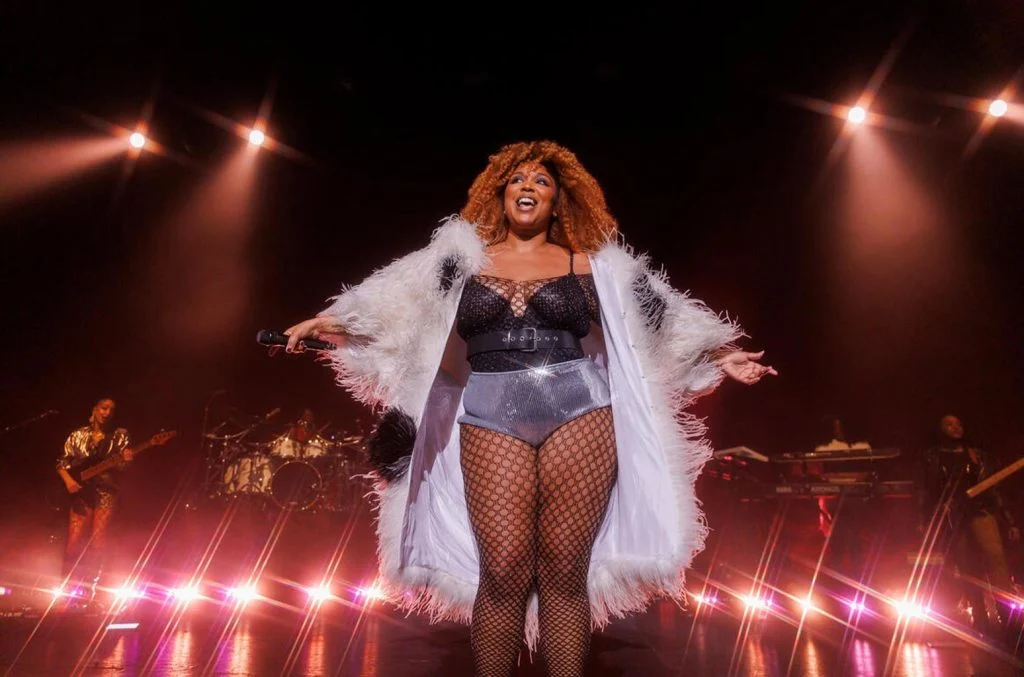
Lizzo is getting her groove back. On Thursday (March 13), the hitmaker dropped a new single titled “Still Bad” with a clear message at its center: Even after heartbreak, she’s still that girl. Produced with “About Damn Time” collaborators Blake Slatkin and Ricky Reed, the funky bassline-driven track finds Lizzo reclaiming her positive energy. “I […]
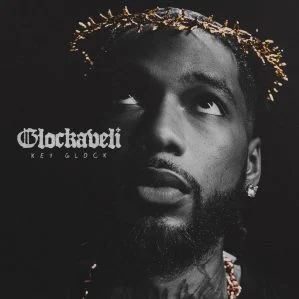
Memphis rapper Key Glock is officially joining Republic Records. As he continues to tease his upcoming album, Glockavelli, Republic announced exclusively with Billboard that Glock will be joining their roster. In addition to this new partnership, he’ll also remain under the late Young Dolph’s label, Paper Route Empire (PRE). The signing marks an exciting new […]
Last month, Vice President J.D. Vance represented the U.S. at the Artificial Intelligence Action Summit in Paris. In a speech addressing top leaders from around the world, he declared, “I think our response [to AI] is to be too self-conscious, too risk-averse, but never have I encountered a breakthrough in tech that so clearly calls us to do precisely the opposite. […] We believe excessive regulation of the AI sector could kill a transformative industry just as it’s taking off.”
Vance’s comments marked a stark shift from the Biden administration, which often spoke about weighing AI’s “profound possibilities” with its “risks,” as the former president put it in his farewell address in January. In the wake of Vance’s remarks in Paris, it’s clear that in the Trump White House, AI safety is out and the race for dominance is in. What does that mean for the music business and its quest to protect copyrights and publicity rights in the AI age?
“All the focus is on the competition with China, so national security has become the number one issue with AI in the Trump administration,” says Mitch Glazier, CEO/president of the Recording Industry Association of America. “But for our industry, it’s interesting. The [Trump administration] does seem to be saying at the same time that we also need to be ‘America First’ with our [intellectual property] too. It’s both ‘America First’ for IP and ‘America First’ for AI.”
Trending on Billboard
That, Glazier thinks, provides an opportunity for the music business to continue to push its AI agenda in D.C. While the president does not have the remit to make alterations to copyright protection in the U.S., the Trump administration still has powerful sway with the Republican-dominated legislative branch, where the RIAA, the Recording Academy and others have been fighting to get new protections for music on the books. Glazier says there’s been no change in strategy there — it’s still full steam ahead, trying to get those bills passed into law in 2025.
Top copyright attorney Jacqueline Charlesworth, partner at Frankfurt Kurnit Klein & Selz, still fears that Vance’s speech — as well as President Trump’s inauguration in January, where he was flanked by top executives from Apple, Meta, Amazon and Alphabet — “reflected a lot of influence from the large tech platforms.” Many major tech companies have taken the position that training their AI models on copyrights does not require consent, credit or compensation. “My concern is that creators and copyright owners will be casualties in the AI race,” she says.
For David Israelite, president/CEO of the National Music Publishers’ Association, it’s still too early to totally understand the new administration’s views on copyright and AI. But, he says, “we are concerned when the language is about rushing to train these models — and that becoming a more important principle than how they are trained.”
Glazier holds out hope that Trump’s bullish approach to trade agreements with other nations could benefit American copyright owners and may influence trade partners to honor U.S. copyrights. Specifically, he points to the U.K., where the government has recently proposed granting AI companies unrestricted access to copyrighted material for training their models unless the rights holder manually opts out. Widely despised by copyright holders of all kinds, the music industry has protested the opt-out proposal in recent weeks through op-eds in national newspapers, comments to the U.K. government and through a silent album, Is This What We Want?, co-authored by a thousand U.K. artists, including Kate Bush, Damon Albarn and Hans Zimmer.
Organized by AI developer, musician and founder of AI safety non-profit Fairly Trained, Ed Newton-Rex, Is This What We Want? features silent tracks recorded in famous studios around London to demonstrate the potential consequences of not protecting copyrighted songs. “The artists and the industry in the U.K. have done an incredible job,” says Glazier. “If for some reason the U.K. does impose this opt-out, which we think is totally unworkable, then this administration may have an opportunity to apply pressure because of a renewal of trade negotiations.”
Israelite agrees. “Much of the intellectual property fueling these AI models is American,” he says. “The U.S. tackles copyright issues all the time in trade agreements, so we are always looking into that angle of it.”
It’s not just American music industry trade groups that have been following the Trump administration’s approach to AI. Abbas Lightwalla, director of global legal policy for the International Federation of the Phonographic Industry (IFPI), the global organization representing the interests of the recorded music business, says he and his colleagues followed Vance’s Paris speech “with great interest,” and that future trade agreements between the U.S. and other nations are “absolutely on the radar,” given that IFPI advocates across the world for the music industry’s interests in trade negotiations. “It’s crucial to us that copyright is protected in every market,” he says. “It’s a cross-border issue… If the U.S. is doing the same, then I think that’s a benefit to every culture everywhere to be honest.”
Charlesworth says this struggle is nothing new; the music industry has dealt with challenges to copyright protection for decades. “In reflecting on this, I feel like, starting in the ‘90s and 2000s, the tech business had this ‘take now, pay later’ mentality to copyright. Now, it feels like it’s turned into ‘take now, and see if you can get away with it.’ It’s not even pay later.”
As the AI race continues to pick up at a rapid pace, Israelite says he’s “not that hopeful that we are going to see any kind of government action quickly that would give us guidance” — so he’s also watching the active lawsuits surrounding AI training and copyright closely and looking to the commercial space for businesses in AI and IP that are voluntarily working out solutions together. “We’re very involved and focused on partnerships with AI that can help pave the way for how this technology provides new revenue opportunities for music, not just threats,” he says.
Glazier says he’s working in the commercial marketplace, too. “We have 60 licensing agreements in place right now between AI companies and music companies,” he says. Meanwhile, the RIAA is still watching the two lawsuits it spearheaded for the three major music companies against AI music startups Suno and Udio and is working to get bills like the NO FAKES Act and NO AI FRAUD Act passed into law.
“While IP wasn’t on the radar in Vance’s speech, the aftermath of it totally shifted the conversation,” says Glazier. “We just have to keep working to protect copyrights.”
With the United States government repeatedly failing to protect the rights of LGBTQ+ people — and more specifically, transgender people — everywhere, a star-studded group of performers is coming together to celebrate queer excellence in defiance of the systems of oppression surrounding them. On Thursday (March 13), LGBTQ+ non-profit organization GLAAD announced the list of […]
Rag’n’Bone Man‘s emotional video for his breakthrough 2016 hit “Human” has hit one billion views on YouTube. According to YT, the visual for the bare-bones blues pop song that has had a second, and third, life as the theme song for a variety of TV Shows, movies and video games has been averaging more than […]
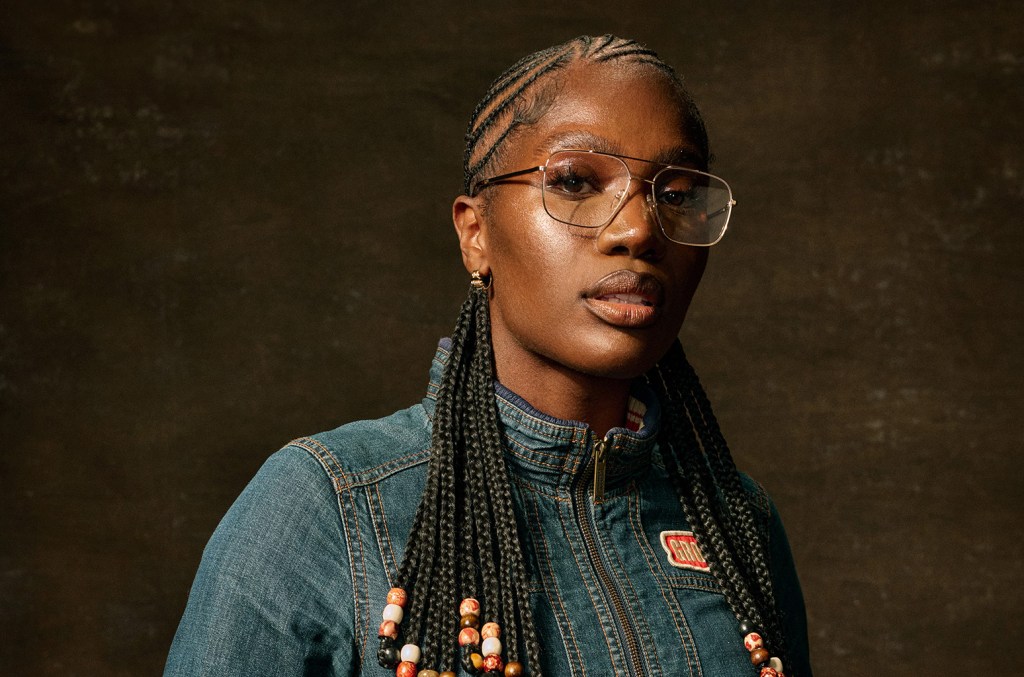
On Valentine’s Day 2025 (Feb. 14), a music video clip featuring an impossibly long and undeniably sensual makeout session instantly dominated social media. The video featured two artists: five-time Grammy-nominee Kehlani and one of R&B’s most arresting new voices — kwn.
Hailing from Walthamstow, East London, kwn (pronounced kay-one) grew up in a musical household soundtracked by selections from her mother, two older sisters and former-DJ father. While her parents introduced her to “old-school garage and house,” her sisters’ love for early-‘00s R&B heartthrobs ended up having an outsized impact on her current sound. “When I shared a room with my middle sister, she would have Chris Brown posters all over the wall, and my eldest sister was in love with Justin Timberlake,” the artist born K. Wilson reflects with a slight chuckle. “We had loads of R&B going throughout the house. A lot of Pharrell and stuff like that. I think it’s definitely following me now.”
Around 13 years old, kwn made a decision between football and music that would completely change her life. Building on her background on drums and keys, she began learning her way around at-home studio setups with some help from her sisters and their friends. She calls “So High,” one of the first songs she ever wrote, “terrible and really bad,” but she’s open to the idea of potentially sampling it in a brand-new record. By 16, she enrolled in East London Arts & Music, where she enjoyed a thorough music education, covering everything from music theory to reading contracts. Her time at East London gave her space to find her sonic pocket – a moody amalgam of trap, soulful vocal stacks and splashes of dark electronic music that both captures and reimagines the post-Bryson Tiller R&B landscape – with early tracks like “Tell Me” (with Natrell).
Trending on Billboard
In 2019, she connected with manager Carlyn Calder, who founded artist management company Vibeout Limited that same year, joining a roster that included Jvck Jones and Grammy-nominated producer Scribz Riley. “Nothing goes without Carlyn’s permission. We’re on the phone probably 50 times a day,” remarks kwn. “She’s my best friend; it’s a really good relationship that allows us to level up together without any pressure or ego.”
After taking some time to regain her motivation following COVID-19 lockdown, kwn launched her debut single, “Wn Way or Another,” in 2022. The song introduced her debut EP, Episode Wn, which arrived later that year. Kwn’s momentum continued in 2023 with “No Cinderella” and “Eyes Wide Open,” but the following year proved to be the tipping point for her burgeoning career. In 2024, she guested on “Clothes Off,” a cut from Kehlani’s While We Wait 2 mixtape, and later opened the European leg of the “After Hours” singer’s Crash world tour at the top of 2025.
“Worst Behavior,” the song that soundtracks that heated music video, arrived last November, instantly becoming kwn’s most-streamed song on Spotify – only to be surpassed by the Kehlani-assisted remix that landed three months later. According to Luminate, kwn’s breakthrough hit has amassed over 16 million official on-demand U.S. streams through March 6.
Billboard spoke with March’s R&B Rookie of the Month about what she learned from touring with Kehlani, how the steamy “Worst Behaviour” music video came together, collaborating with ROTM alum Jordan Adetunji, and how she views the U.K. R&B scene.
When did you decide to use a stage name, and how did you land on kwn?
It kind of came out of a nickname; it used to be K with a #1. My manager tried to make me change my name completely, but I liked the way it sounded — it just didn’t look cool on paper. So, I mushed all my initials together, since my last name is Wilson. If people don’t know how to pronounce it [yet], it’s fine. They’ll catch on soon.
How would you describe the evolution of the “kwn” sound?
I don’t really think I could pinpoint a sound; I just do whatever feels good. I love creating, and I don’t think there’s a limit to what we can do. I love the thought of waking up in the morning knowing that what I’m gonna come out with at the end of the day doesn’t exist in the morning. Even if it’s not something that eventually gets released, it’s still a beautiful process.
Do you find yourself getting drawn to certain chords or textures?
Yes, definitely. R&B influences are a consistency throughout my music, but I try to push the boundaries to see what I can do differently with it.
What elements from traditional R&B do you try to keep in your style?
I love traditional R&B background vocals and vocal production. I study that quite a lot and have been for the past year or so. Every time I go into the studio, I’m like, “Let’s make something that doesn’t sound like anything anybody’s heard.” Even if that means sitting there for the next 12 hours and we bang out 15-20 ideas. And if we don’t make anything, we don’t make anything. That’s what it’s all about.
What’s your favorite part of the music-making process?
The thing I find tedious is also the thing I love the most, and that’s doing background vocals. It takes so long, but I love it. The end product is always so amazing when you hear it. I’m always recording myself; I just prefer it.
Who were some of the producers or engineers that you find yourself drawn to?
Joel Compass is amazing – we work really well together. Scribz Riley is amazing. I’ve been working a lot with FaxOnly, too.
How did “Worst Behaviour” come together?
I was at home in my bedroom, and my mom was out that night. She never usually goes out, so I was like, “Alright, I’m gonna bump the music as loud as I can.” I made the song on Instagram Live in maybe 10 minutes. It was quick. I can’t remember what the inspiration was. I had the space and time to create, so I did. After I made the beat, I started coming up with melody ideas, and then I had the first verse and the chorus done.
I’m still on Instagram Live at this point, like, “Where’s my mum?” Somebody in the comments was like, “Oh, your mum commented that she’s already home!” I was like, “Huh?” I went into her room, and she was fast asleep. I said, “Oh my goodness. I’ve been blasting the music this whole time, and she’s been sleeping!” [Laughs.]
I wrote the second verse with Sasha Keable and finished it. Obviously, I worked hard on it, but it doesn’t feel like it was one of those ones where I had to take my time with it and revisit it a few times. It was super organic.
When did you start to realize that this was growing into a hit?
When I made it, I was like, “Oh, I think I got something here.” I always kind of know when I’m working on a song, whether it’s gonna be something that I keep. If I wake up the next morning and wanna listen to it straight away, it’s probably a good one.
Has your mom finally heard the full version of the song?
Oh yeah, she loves my music! She’s my biggest fan. I love my mum.
Did you always envision a remix?
No, I didn’t. Me and Kehlani have been friends for a minute now, so once I put out “Worst Behaviour,” she told me I should do a remix because it was kinda going off. I was like, “Why don’t you jump on the remix?” — I had to! — and then she jumped on it. She sent me the verse back within a day, she’s super fast.
What were some of the biggest takeaways you got from opening for Kehlani’s tour?
The biggest takeaway was that I can actually do this. Obviously, I know how to make music in my bedroom and do take after take until it’s perfect. But standing up there onstage and doing it without stopping… it’s a bit daunting. After the Crash [World] Tour, I now know I am ready to do this as a full-time career. I’m doing that already, but it taught me what kind of levels I can reach.
To perform at the O2 in my hometown – just my second hometown show after popping out for Destin Conrad at Koko, which was amazing – at this stage in my career is cool. I’ve only been putting out music for the last two or three years.
“Clothes Off” or “Worst Behaviour” remix?
I love both, but “Clothes Off.” It’s something about the sonics of it.
You know we need to talk about the “Worst Behaviour” video.
I knew you was gonna ask me about that. [Laughs.] We shot the video the day after the London show, which was crazy. Both me and Kehlani were sick; it was a tough one to get through, but we did it. We already had the idea of me being in front of the car, and one-take videos are a running theme for me, so we went from there. My director, Chris Chance, wanted it to be sexy and feel like you’re stuck in this moment with the eye contact and the Shibari model. We wanted you to be distracted, but not too distracted.
And then the kiss, man. We decided to shake the Internet a bit and get this song really popping off – and that’s what we did.
Where did the one-take video aesthetic come from?
I watched a lot of cool videos that were going around on TikTok, and they were like 10-second, one-shot things that were super cinematic and in slow motion. I also watched [the 2021 British drama] Boiling Point, which is a whole one-shot film. I think it’s a cool way to tell a story, and it worked straight away. I’m super involved in the editing process; it’s more me and my manager sitting down and coming up with an idea, then taking it to Chris, and he’ll elevate it. It’s a proper collaboration.
We did it for “Lord, I’ve Tried,” and that worked amazingly, so we did it for “Eyes Wide Open” and now “Worst Behaviour.” The hardest part about the “Worst Behaviour” video was the Shibari model because you can’t control how she spun on the rope.
You linked with Jordan Adetunji for his song “Too Many Women.” How did you two cross paths?
He was teasing it on TikTok, and then he hit me like, “Yo, we gotta get one.” I told him the song he was teasing was fire, and a few months later, he sent over an open verse. I did it for him, and that was that. Another bedroom banger that I did in my room. I think he did his parts in L.A.
How would you characterize the U.K. R&B scene?
There’s a lot of good talent coming out of the U.K. If I’m being totally honest, we should do more things to uplift U.K. R&B as a whole, rather than individually. There’s a lot of talent that I think is overlooked, but we’ll soon get our time.
Do I see myself as a part of U.K. R&B? I rep London heavy, but I’m also just here. My name is Kay, and I’m just doing my thing, going around this world, trying to live my life.
Who’s on your Mount Rushmore of producers you’d like to lock in with for a whole project?
Pharrell, Timbaland, Finneas and Anderson .Paak.
How are you handling how quickly things are moving?
I’m so overwhelmed right now. Somebody asked me the other day, if there was a theme track to your life right now, what would it be? I said it would be like 50 songs all at once — that’s how my brain feels. There’s a lot going on, but I’m so grateful. It’s a good problem to have, but a lot to adapt to. I’m just trying to remain grounded and keep myself focused.
What else do you have planned for 2025?
My project is dropping this year. I’ve been working on it for the last nine months to a year. I’m super proud of it. I’ve produced quite a few on there too, which is super exciting for me as a personal goal. I hope to do more shows as well. I want to travel more and make more music in different countries.
What does rest look like for you in this kind of moment?
Yeah, I do be resting; don’t worry about it. [Laughs.] I always wanna keep the love and passion I had for music from the start. The studio is my safe space. I love spending time with my family; that’s probably the most important thing for me. I got a niece and nephew whom I love spending time with, and they’re a big part of my life.
Jelly Roll has many tattoos, but one of them is particularly meaningful in how it relates to his life.
While speaking to People Thursday (March 13), the country star opened up about one piece of ink on his arm depicting a broken chain. “It is just about breaking chains in life — anything that is bounding us, any bondage that we have, any addiction, anything we think God can’t get us through,” he explained to the publication. “We can break those chains.”
“I think second chances are earned,” Jelly added. “I think sometimes you can earn them in opportunity — there are opportunities to earn — but I believe that second chances are earned.”
He also revealed that he only got the chain tat after he and collaborators Taylor Phillips and Jackson Dean wrote a song together called “I Can’t Break These Chains.” “We loved the song so much we got the tattoo of the breaking chains that day,” Jelly said. “And we still never put that song out! We should put that song out.”
Trending on Billboard
The “Son of a Sinner” singer has been open about his struggles with drugs and alcohol. His past also includes being in and out of jail about 40 times. Jelly has said that he knew he wanted to change his life after one particular stay behind bars when he was 23, during which he learned that he had become a father to now 16-year-old daughter Bailee.
In a recent interview on the Smartless podcast, the musician opened up about turning his life around for his child. “I had to go to court,” he said on the show. “I had to get supervised visits through the courtroom … I just had to keep going to the court every six months and going, ‘Look, I’m continuing to prove I’m changing.’ Music, being famous, wasn’t even a thought then. I just wanted to be a good dad.”
The meaningful chain tattoo is just one of countless pieces of artwork on Jelly’s body, which is nearly covered in ink. Some of his most distinguishable body art is on his face, including multiple crosses on his cheeks and near his eyes.
In March 2024, Jelly shared that he regrets “almost all” of the tattoos he’s gotten, and said that he’s done multiple coverups over his least favorites. “I regret 98 percent of these tattoos, 97 percent,” he said at the time. “Like core philosophies I rooted my life in when I was 17 and now that I’m 40, I’m like, ‘What the f–k was I thinking?’”
Bad Bunny’s sports agency, Rimas Sports, and the Major League Baseball Players Association (MLBPA) reached an agreement this month (March 6) to settle a lawsuit over penalties tied to improper inducements, according to Associated Press. The parties filed a stipulation with U.S. District Judge Jennifer H. Rearden in Manhattan, confirming that they had resolved the […]
State Champ Radio