State Champ Radio

by DJ Frosty

Current track

Title

Artist

Current show

State Champ Radio Mix

12:00 am 12:00 pm

Current show

State Champ Radio Mix

12:00 am 12:00 pm


Author: djfrosty

Page: 732

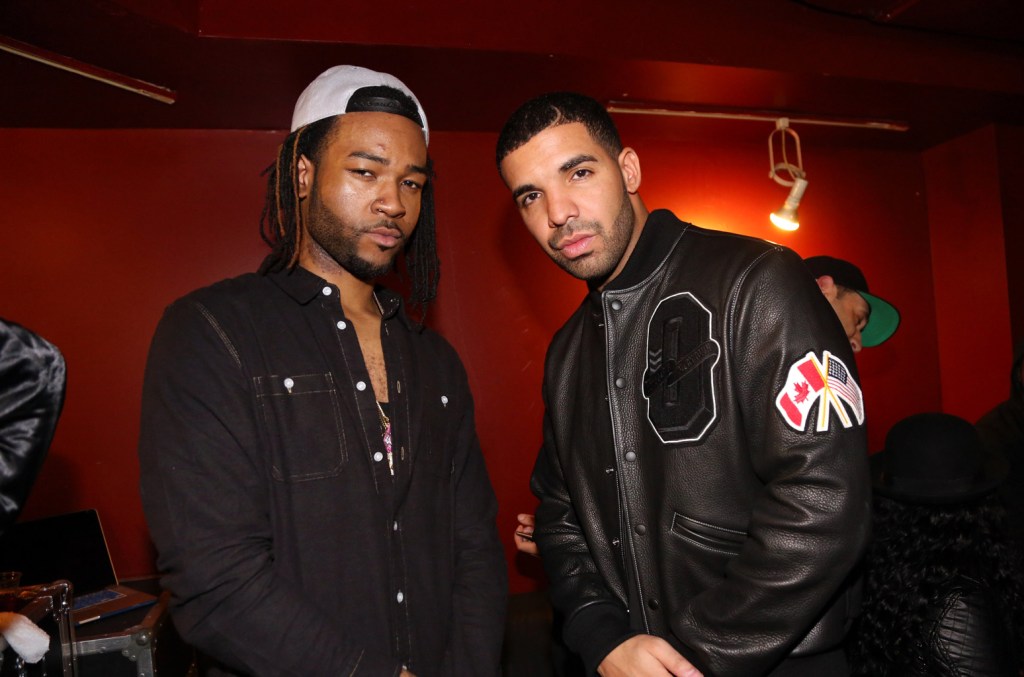
Drake is back with another earworm, and we have the producer Elkan to thank for it. This week, Drizzy’s latest hit “Nokia” sneaks back into the top 10 of the Billboard Hot 100 — reaching a new peak of No. 7 — as fans are waiting with baited breath for the arrival of the song’s IMAX music video, dropping later today (March 31). Appearing on Drake and PARTYNEXTDOOR‘s joint album $ome $exy $ongs 4 U, “Nokia” emerged as the leader of the pack amongst three other chart-topping songs off the project: “Die Trying,” “Gimme a Hug” and “Somebody Loves Me.”

While “Nokia” is littered amongst 20-other lusty heartbroken R&B slowburns, the song commands listeners to dry their tears and hit the dance floor. Drake’s “Who’s calling my phone?” catchphrase is already breaking the internet, and will undoubtedly crash every karaoke bar this summer, as soundtracked by Elkan’s bouncy beat. The producer, who’s from Sierra Leone and is based out of the United Kingdom, graces Drake with a disorienting backdrop, which disintegrates from a sweaty and pummeling Atlanta bass beat into a slithering synth-driven funk groove.

Trending on Billboard

So who is Elkan, and how long has he been honing this unique style? Here’s everything Billboard knows about the buzzing producer behind The Boy’s latest hit.

When Did Elkan Start Producing?

The 21-year-old producer began his production journey back when he was between the ages of eight and ten. His uncle, an artist based out of Sierra Leone at the time, introduced him to FL Studio. Elkan admitted in an interview with wavs.com that he wasn’t interested in the software at first, but eventually began tinkering around in FL’s demo version. He then fully locked in with producing after taking a class led by a professional producer named Eli Brown.

“I saw Eli Brown post a sample on Twitter and it blew me away,” he said in an interview with the Spill Your Sauce podcast in 2023. “I reached out to him about his class and I’m so grateful for the opportunity to learn from him. It completely changed my perspective on what could be achieved with samples.”

From there, Elkan became obsessed with making samples, with his first official release being a sample from Tory Lanez’ “Joke’s on Me” when he was 17. After getting some praise online, Elkan decided to pursue production full time.

How Did Elkan Break Out?

His claim to fame became meshing nursery rhymes within his samples, and he got his official start producing as part of a well-established group called the Rucker Collective. One of Elkan’s samples from 2020, titled “Dead or Alive,” caught the attention of Lil Baby, who was seen on TikTok rapping over the beat in the studio. The sample eventually made its way to Metro Boomin, who added drums and tinkered with it a bit more to make his Heroes & Villains cut “Metro Spider” with Young Thug in 2022.

The rest was history, as Elkan continued to produce for well-known rappers including Russ, Nemzzz and Lecrae, the latter collaboration of which led to his first Grammy win in 2024, for his work on Church Clothes 4.

What Inspired “Nokia?”

While working on the beat for “Nokia,” Elkan said on Instagram in February the instrumental was just inspired by real-life events.

“NOKIA” came from people I love ringing my line asking if I was okay inviting me out to karaoke, clubbing, going to crazy food spots and just enjoying the finer things in life!” he wrote on IG. Elkan added that knew the result would be a smash hit.

“When Drake puts pen to pad onna elken ting you know it’s a special one!” he concluded.

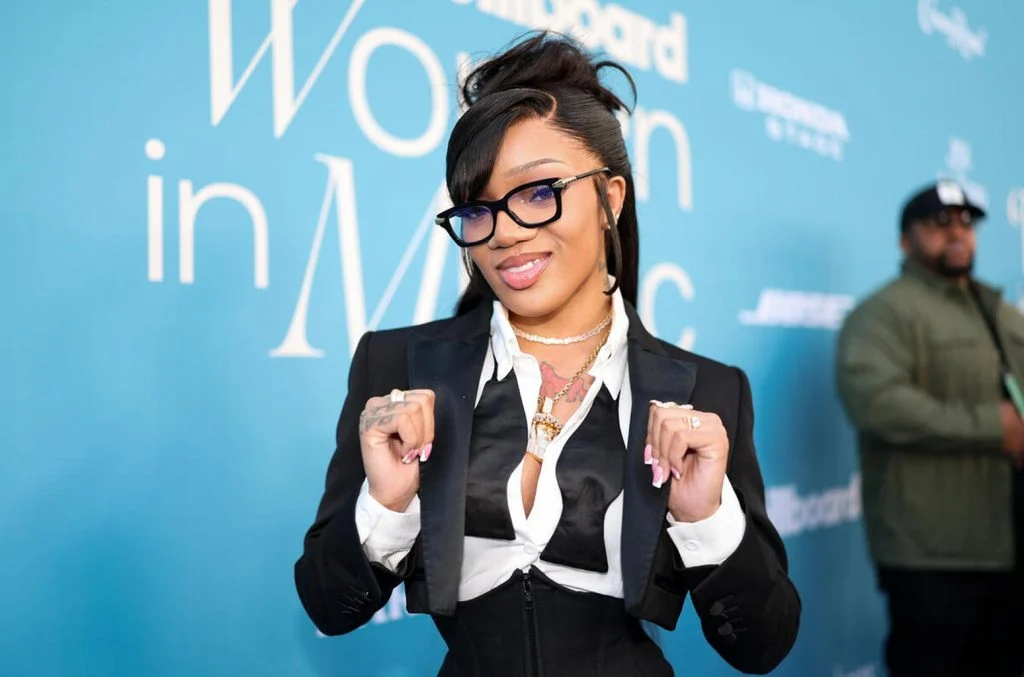
GloRilla absolutely dominated 2024 as she cemented her status as one of the premier rappers in the game today. Following her massive year, Glo was honored with the Powerhouse Award at the Billboard Women in Music 2025 ceremony in Los Angeles on Saturday (March 29). Draped in a sleek black tux, the Memphis native was […]

With Monday (March 31) marking the annual International Transgender Day of Visibility, pop superstar Madonna took a moment to celebrate the community with a post to her social media. Sharing a series of photos from a fundraising fashion show she attended over the weekend to her Instagram account — including a photo with trans model […]

TAMLA Records, the Nashville-based reprise of the storied label founded by Motown Records icon Berry Gordy, is announcing its official re-launch. Having set the goal “to redefine the Christian music landscape,” TAMLA operates under the Motown Gospel/Capitol Christian Music Group banner and is helmed by Walter Thomas, senior vp for Motown Gospel & TAMLA.
“Our mission is to champion, uplift and inspire new generation cutting-edge artists,” Thomas tells Billboard, “by providing a platform to connect their music with fans around the world through innovation and culture. TAMLA is the new home of positive music.”

It was initially announced in 2023 that TAMLA — Gordy’s late ‘50s precursor to Motown — would be revamped as a “mainstream imprint specializing in positive R&B and hip-hop music.” The first partner signed then to the reimagined TAMLA was Thomas “Tillie” Mann and his label Encouragement Music. However, the early 2024 reorganization of Universal Music Group delayed TAMLA’s formal relaunch.

Trending on Billboard

Also working alongside Thomas at TAMLA will be Rodney “Darkchild” Jerkins. The Grammy Award-winning songwriter/producer has partnered with TAMLA to sign and develop emerging talent under his imprint, EVOLVE Music Group.

Rodney Jerkins / Credit: Andre St. Louis

“The history of TAMLA is very important,” Jerkins tells Billboard. “People need to know what TAMLA meant then but more importantly what it will mean now. To have the chance to help continue the legacy of what the great Berry Gordy started is what really prompted my decision to partner with TAMLA. We have a great opportunity to find new artists that can help continue its rich legacy.”

“I want to help bring to the world some cutting-edge Christian and gospel music,” added Jerkins. “I’ve always felt it should co-exist with mainstream. So my goal with Walter and Brad [O’Donnell, president of Capitol Christian Music Group] is to discover talent that we feel could do just that.”

In addition to the aforementioned Encouragement Music and its artist EmanuelDaProphet, TAMLA’s current roster now includes Childlike CiCi, Jordan L’Oreal and Lee Vasi. The label has also entered into a partnership with AMG Music Group (Anderson Music Group). Thomas’ label team at TAMLA includes senior director of A&R Alex Dollar, senior director of marketing Justin Tomlinson, director of A&R Justin Pearson and project manager, marketing Brianna Dowd.

“Right now, more than ever, I think we all need hope,” says Thomas. “And this music gives a lot of hope and uplift. It isn’t front tier in a lot of people’s minds because it’s religion-based. But if they can get past religion-based and get caught up in the whole messages that this music gives, people will connect more.”

“The more opportunities and platforms that these artists get on, I think people will want to hear it,” continues Thomas. “They just don’t know that it’s out. The main goal right now is to position these artists to be front and center so they can work in general market settings as well.”

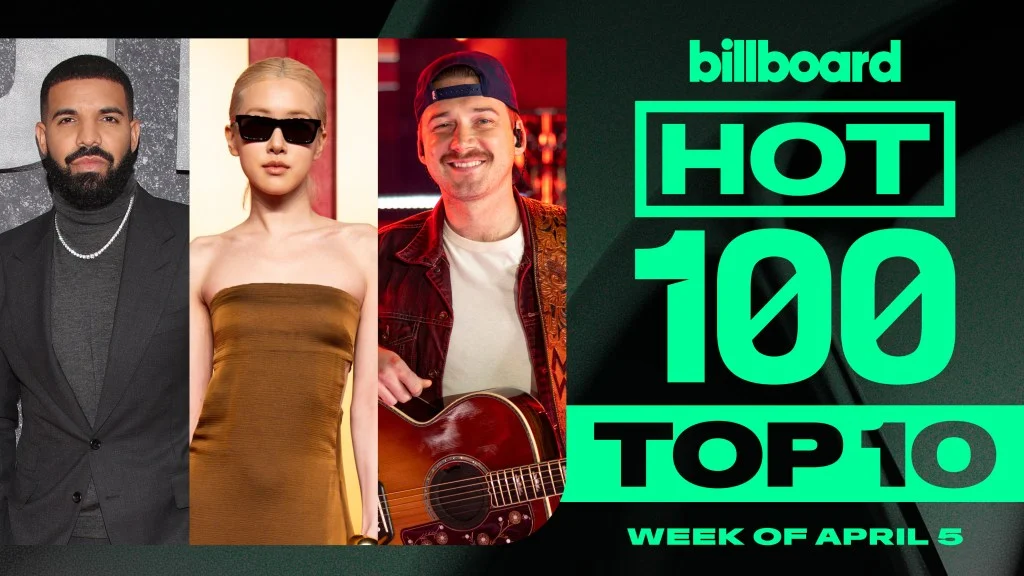
Kendrick Lamar and SZA’s “Luther” rules the Billboard Hot 100 songs chart for a sixth total and consecutive week. The single, whose title fêtes late R&B icon Luther Vandross, who is sampled on the track, became Lamar’s sixth No. 1 and SZA’s third. Lamar and SZA each extend their longest career Hot 100 reigns with the song.

Meanwhile, “Luther” ties Jack Harlow’s “Lovin on Me,” in 2023-24, for the longest Hot 100 command for a rap hit since 24kGoldn’s “Mood,” featuring iann dior, led for eight weeks in 2020-21. The only longer domination for a rap hit this decade: 11 weeks, for Roddy Ricch’s “The Box” in 2020. (Rap titles are defined as those that have hit or are eligible for Billboard’s Hot Rap Songs chart.)

Plus, Morgan Wallen’s “Just in Case” launches at No. 4 on the Hot 100, marking the country star’s 14th top 10 – and record fifth from an album prior to its release; his I’m the Problem is due May 16 – and Chappell Roan’s “Pink Pony Club” trots to No. 5, becoming her third top five hit.

Browse the full rundown of this week’s top 10 below.

The Hot 100 blends all-genre U.S. streaming (official audio and official video), radio airplay and sales data, the lattermost metric reflecting purchases of physical singles and digital tracks from full-service digital music retailers; digital singles sales from direct-to-consumer (D2C) sites are excluded from chart calculations. All charts (dated April 5, 2025) will update on Billboard.com tomorrow, April 1. For all chart news, you can follow @billboard and @billboardcharts on both X, formerly known as Twitter, and Instagram.

Luminate, the independent data provider to the Billboard charts, completes a thorough review of all data submissions used in compiling the weekly chart rankings. Luminate reviews and authenticates data. In partnership with Billboard, data deemed suspicious or unverifiable is removed, using established criteria, before final chart calculations are made and published.

‘Luther’ Airplay, Streams & Sales

HipHopWired Featured Video

For obvious rat-related reasons, Tekashi 6ix9ine is probably the most hated rapper in the game, so whenever we hear that he’s been dealt an “L” in a court of law, we low-key feel good whenever hearing about that kind of news.

According to documents obtained by AllHipHop, a court in D.C. has just ordered the pariah of a rapper to pay $250,000 to Hits Before Fame LLC and After Hours LLC due to his failure to appear for a sold-out show in 2018. Interestingly enough, the complaint filed by the aforementioned LLCs claims that not only did Tekashi not show up for his scheduled appearance and not inform them that he wasn’t going, but the man even went so far as to perform at a competing event the same night.

Talk about doing what you can to make people hate you.

Hits Before Fame LLC and After Hours LLC say they planned Tekashi’s performance at the Echostage, which was planned around Howard University’s homecoming.

Keep in mind, this is when Tekashi was crowned the “King of New York” and was dominating Billboard charts on a weekly basis. Then he ended up getting kidnapped and beaten up by his crew and ultimately decided to turn state’s evidence and snitch on half of Brooklyn.

Now, all these years later, Tekashi is being held accountable for his other douche-ish move and will have to come out of pocket for his transgression.

AllHipHop reports:

According to the complaint, 6ix9ine accepted nearly $60,000 in performance fees but ghosted promo ters and vanished—only to pop up hours later performing at Powerhouse NJ at the Prudential Center in Newark.

The court ruled that 6ix9ine violated the terms of his contract after months of rescheduling, renegotiating, and receiving wire transfers and cash—most of it funneled through his former manager, Kifano “Shotti” Jordan, who was later imprisoned for unrelated charges.

Documents show 6ix9ine’s team stopped communicating with the promoters just as ticket sales surged past $165,000, VIP tables sold out, and more than 3,000 fans waited outside in cold rain.

One of his own agents even threatened to cancel the event weeks before, but days later, 6ix9ine recorded a video hyping the rescheduled gig as a “make-up date for the Howard homecoming”—a clip that was never shared publicly.

When it became evident that Tekashi wasn’t going to show, the promoters canceled the event 30 minutes before show time to avoid a possible riot. Though the judges rejected the promoters’ claims of defamation and unjust enrichment, they did rule in favor of breach of contract and slapped Tekashi with a $250,000 bill.

We don’t feel bad for him at all. Just sayin’.

What do y’all think about this latest Tekashi 6ix9ine situation? Fair or not fair enough? Let us know in the comments section below.

Photo: Getty/Eric Espada

Morgan Wallen’s “Just In Case” debuts in the top five of the Hot 100. Tetris Kelly: This is the Billboard Hot 100 top 10 for the week dated April 5. “APT” is back in the top 10 while “Not Like Us” slips to nine. “Beautiful Things” also returns to the top 10, as does “Nokia” […]

HipHopWired Featured Video

CLOSE

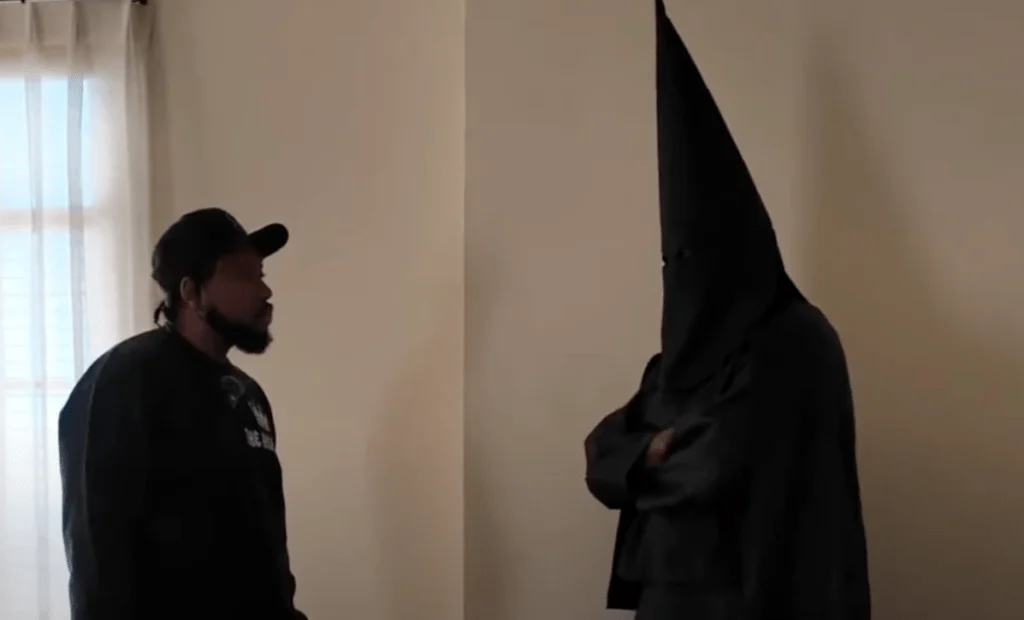
Kanye West, also known as Ye, has been on a weeks-long rant on Twitter discussing everything from his connection to Diddy, along with harsh critiques of the Jewish community and fellow artists. In a new interview with DJ Akademiks, Kanye West donned an all-Black KKK hood and wore a swastika chain during the meandering and bizarre chat.
On Sunday, Ye, aka Kanye West, was joined by DJ Akademiks, who traveled out to Los Angeles to meet with the Chicago native. As seen in Big Ak’s video that he shared on social media, the planning of the meetup with Ye didn’t go off without a hitch, and it appeared that West wanted Ak to perform the interview in China or Japan, as he claims not to feel safe in the United States.

Some 13 minutes into the video, Ak finally gets to Ye’s hotel room, where the producer is seen wearing a Black Sean John shirt with white lettering and the aforementioned bejeweled chain. At minute 16:10, Ye emerges with the KKK outfit and the pair launch into their chat.
There are far too many moments to highlight, but chief among them was Ye saying that he didn’t intend to have children with his ex-wife, Kim Kardashian. Kardashian and West are the parents of North, Saint, Chicago, and Psalm. Ye also stood on business regarding the comments he made about former collaborator Jay-Z and Beyoncé, and seemingly defended what he said about their children.
The conversation between Kanye West, aka Ye, and DJ Akademiks can be viewed below.


Photo: YouTube Screenshot

At the close of the new Alison Krauss & Union Station cut “The Wrong Way,” Krauss practically whispers the final line, “The one that I forgot.”
The “g” and the “t” on that last word are distinctly crisp and audible despite the softness of the moment, underscoring the singer’s reverence for the text.

The track is featured on Union Station’s Arcadia (March 28, Down the Road) — the band’s first project since 2011’s Paper Airplane — in which her uniquely fragile approach is once again front and center. Krauss’ crystalline tone is — as her fans have come to expect — immaculate, and her stylized enunciations and airy resonance seem to reach through the speakers in a personal way. But that emotional connection isn’t created in a vacuum. She leans on technical partners — producers and engineers — who capture her voice, paying particular attention to Krauss’ nuanced treatment of the most brittle sounds in the English language.

“There’s a high degree of intimacy in hearing those consonants and the fricatives,” says engineer Neal Cappellino, who co-engineered Arcadia with Rounder senior vp of A&R Gary Paczosa. “They have meaning to her. Everything like that has meaning.”

Trending on Billboard

In most country-based recordings, the lead vocal and the song itself are the primary connecting points for the listener. Thus, the singer’s ability to translate the melody and lyrics is key. But singers aren’t robots, so the physical and emotional condition that an artist experiences can vary from day to day. Dancing with the uncertainties, both technical and psychological, to elicit the ap-propriate vocal is part and parcel of the engineer’s job.

“The voice definitely has to be ready,” Paczosa says. “That can be tougher with a pure tone like [Krauss’]. That requires that everything’s in great shape, as far as no allergies or no dryness. Then your job as the engineer is to be ready when all of that happens.”

Perhaps the most valuable tool in an artist’s arsenal is an identifiable  vocal sound. Finalists for the Academy of Country Music Awards, announced March 27, illustrate the point. Top nominee Ella Langley conveys a casual sarcasm. Cody Johnson calls on an impressive level of power. Lainey Wilson sounds ultra-Southern. Jelly Roll often trails off at the end of his phrases. And Chris Stapleton owns a soulful grit.

Producers and engineers employ plenty of technology to relay those signatures to the consumer, but the machinery is merely a tool.

“A lot of people complain about all this Pro Tools, auto-tuning stuff,” says Vince Gill, a five-time winner of the Country Music Association’s male vocalist of the year. “Let me tell you something: Auto-tune doesn’t make you more interesting. It only makes you more in tune, you know. And you can be perfectly in tune, but your voice still may not be very compelling.”

What’s compelling varies. Linda Ronstadt reached her commercial peak with impeccable, pre-Auto-Tune pitch and fierce dynamics. George Jones, considered by many to be the greatest country singer in history, built his reputation on wild dips and slurs, frequently a hair off-pitch. George Strait approaches material with classic, masculine understatement. 

Strait’s long line of hits is directly related to his skill at matching his everyman resonance to songs that suit him.

“You can just raise the key a half-step or lower it a half-step, and he gets in that sweet spot of his voice,” says producer Tony Brown (Reba McEntire, Brooks & Dunn), revealed March 25 as one of this year’s Country Music Hall of Fame inductees. “It’s amazing that a tiny, little, subtle thing like that turns a song into one that sounds like George.”

Newcomer Greylan James instantly has his own identity, thanks in part to the sibilance in his first radio single, “Wait Til You Have Kids.” The “s” and “f” sounds are prominent, though not overdone. Many other artists would likely downplay that trait, but James embraced it.

“It’s getting the real-life character of a vocal,” James says. “For me, it’s [also] got to have some rasp to it.”

Artists and engineers can obsess, understandably, about the details in a vocal. They tinker with microphones, preamps, equalization, reverb and other effects to get what they perceive as the right sound. Once they settle on a vocal chain — as that series of machines and effects is called — they often use that same chain for every recording. Producer Lukas Scott (Hudson Westbrook, Austin Snell) is a fan of a Luke Audio Voodoo microphone that features a removable diaphragm. It allows the user to switch out a vibrating membrane that plays a part in converting the live tone to an audio signal. The removable diaphragm makes it easier to rifle through options until finding a tone that works for the producer and the singer.

“All the diaphragms look exactly the same,” he says, “but they sound completely different.”

The gear is just part of it, though. Cappellino focuses on three areas in his work: the musical, the technical and the interpersonal. Unlike, say, mathematics, where 2+2 always equals 4, a vocal is subjective. Artists typically need supportive feedback as they work through their part since there is no right or wrong answer to what works.

“It’s knowing what to say, what not to say, when to push, when to encourage, when to be patient, allowing something to unfold,” Cappellino says. “But really, you have to be honest with somebody in the moment, having a discriminating ear for technical things or a tuned-in sense for how it’s feeling.”

That’s harder than it might appear. Fans typically learn every wrinkle of a singer’s performance as they memorize a song, as if it’s the only way to perform it. But the artist always knows they can change a phrase, the melody, the dynamics or even the enunciation. They’re prone to wonder if they could improve it.

“The great singers I’ve worked with, that have long careers, are the ones that do second-guess themselves,” Paczosa says. “They’re sort of never happy with their voice or their performance.”

Most fans won’t actively identify what differentiates singers, but they’ll recognize voices that stand out. Those that carve their own place, as Krauss does with her precise tone and exacting consonants, are a product of their natural resonance and performance choices. The devil’s in the details, and the great singers tend to pay attention to the small stuff. 

“Alison has amazing ears,” Paczosa says. “If you change something slightly — a different screen, little things that you might not even think about — she’ll say, ‘Something’s different.’ It may be something really small, but she usually hears it.”

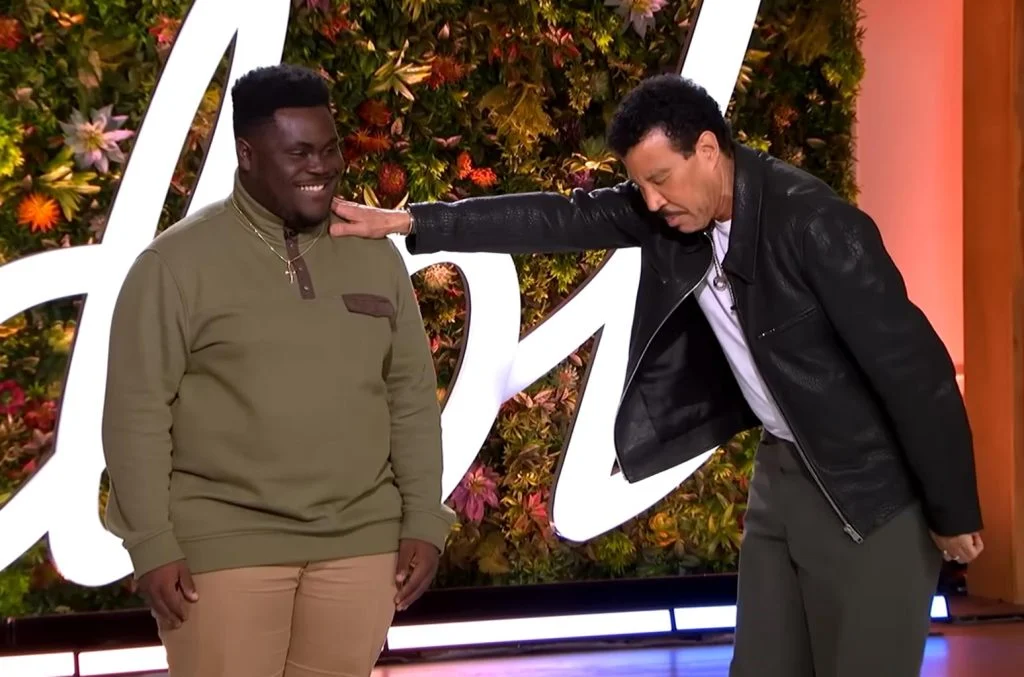
This week, it was especially fitting that American Idol airs on Sundays. On the March 30 episode of the show, teenage contestant — and aspiring preacher — Canaan James Hill took the judges to church with his audition for the show, leaving Lionel Richie in particular stunned. Before diving into a soulful rendition of Earnest […]