Author: djfrosty
Page: 589
Kevin Gates pulled up to the Los Angeles Lakers game at Crypto.com Arena on Tuesday night (April 22), which had social media buzzing on the heels of his controversial remarks about Lakers star LeBron James and his wife, Savannah James.
Explore
Explore
See latest videos, charts and news
Over the weekend, Kevin Gates took to social media detailing a conversation he had with a friend regarding how he wouldn’t want to switch places with LeBron James and explained that he didn’t like the way James’ wife looked at her superstar husband.
“We was talking about how LeBron do the little handshake with Savannah. Then I came, maybe I notice s–t people don’t notice. They were like, ‘What if you had LeBron money?’ He one of the greatest players to play the game, but I wouldn’t want to trade places with him,” Gates said. “I said because I don’t like the way Savannah look at LeBron. I like the way them white women look at LeBron.”
Trending on Billboard
KG later compared Savannah to the “warden of the jail” and feels that she “polices” James. “I couldn’t do it,” he said. “It hurt me to see that… I love LeBron and I hate that he gotta go through that.”
James typically doesn’t respond to social media chatter involving him, but many fans took his Instagram post on Monday (April 21) as a possible dig at Kevin Gates.
“‘Kings don’t concern themselves with the opinions of peasants.’ Where to next Queen?!?! Let’s get it,” he captioned the pair of photos, laughing with his wife.
Symba, Victoria Monét, D-Nice and more applauded James for showing love to Savannah. “[fire emoji] and that’s that on that,” Monét wrote in his comments.
Unlike when he confronted ESPN’s Stephen A. Smith, James appeared to pay Gates and his girlfriend, Brittany Renner, no mind during game two against the Minnesota Timberwolves.
James and Luka Doncic led the Lakers to a much-needed 94-85 victory on Tuesday night to even the series at one game apiece. King James finished with 21 points, 11 rebounds and seven assists to help power the Lakers.
Find Kevin Gates’ original post addressing LeBron below.

Bon Iver’s SABLE, fABLE premieres atop a host of Billboard album charts dated April 26.
The set bows with 37,000 equivalent album units earned in the U.S. in the week ending April 17, according to Luminate. That sum includes 25,000 in album sales, begetting a No. 1 debut on Top Album Sales. Its 19,000 vinyl copies sold also spark a No. 1 start on Vinyl Albums.
The Justin Vernon-led band rules the Top Rock & Alternative Albums chart for the first time since 22, A Million led in 2016. Before that, Bon Iver hit No. 1 with its self-titled effort.
SABLE, fABLE also starts at No. 1 on Top Rock Albums, Top Alternative Albums and Americana/Folk Albums, likewise marking Bon Iver’s third leader on each list.
Bon Iver adds its second Top Albums Sales No. 1, following 22, A Million, and its third on Vinyl Albums, after Bon Iver and I,I.
On the all-genre Billboard 200, SABLE, fABLE enters at No. 11, Bon Iver’s best rank since 22, A Million reached No. 2; Bon Iver also hit No. 2. The band first made the survey in 2008 with For Emma, Forever Ago, which peaked at No. 64 in 2009.
Concurrently, four tracks from the new album appear on the Hot Rock & Alternative Songs chart, led by “There’s a Rhythm” at No. 35 thanks to 1.9 million official U.S. streams. “Everything Is Peaceful Love,” the set’s current radio single, follows at No. 44, along with “S P E Y S I D E” (No. 46) and the Dijon– and Flock of Dimes-featuring “Day One” (No. 48).
“Everything Is Peaceful Love” ranks at No. 7 on the latest Adult Alternative Airplay chart, Bon Iver’s second-highest-charted song on the tally and best as a lead act, having passed the No. 13 peak of “S P E Y S I D E” last year. Its best remains its featured turn on The National’s “Weird Goodbyes,” which reached No. 6 in 2022.
Welcome to Billboard Pro’s Trending Up newsletter, where we take a closer look at the songs, artists, curiosities and trends that have caught the music industry’s attention. Some have come out of nowhere, others have taken months to catch on, and all of them could become ubiquitous in the blink of a TikTok clip.
Explore
Explore
See latest videos, charts and news
This week: A box office blockbuster starts to get its footing on streaming, while Charli XCX parlays Coachella attention into another viral moment and a big HBO twist lends new emotional heft to the song that soundtracks it.
‘Sinners’ Soundtrack Spins Southern Horror into Streaming Success
Academy Award-nominated multihyphenate Ryan Coogler has scored perhaps the first must-see film event of 2025 with Sinners, a remarkable Michael B. Jordan-led period horror flick that blends Southern Gothic elements with vampires and blues music. The picture opened to over $48 million at the box office, snagging the No. 1 spot from A Minecraft Movie – which spun out its own streaming hit last week.
Trending on Billboard
Sinners features an original score by Oscar winner Ludwig Göransson, as well as an original soundtrack produced by him and his wife, Serena Göransson. With a smattering of blues and gospel classics, Irish folk tunes and original cuts performed by the cast, Rod Wave, Don Toliver and Brittany Howard, the Sinners soundtrack captures the critical role music plays in the film’s plot.
According to Luminate, the Sinners soundtrack pulled over 570,000 official on-demand U.S. streams in its first day of release (April 18). Over the course of the film’s opening weekend (April 18-21), the soundtrack’s streams increased by at least 20% day-over-day, ultimately jumping 126% over the three-day period to over 1.3 million streams on April 21.
The Rod Wave-penned-and-performed titular song and lead single from the soundtrack arrived on April 4 and has steadily increased in streams now that the film is in theaters. By April 21, the song logged over 448,000 official on-demand U.S. streams, marking a near 30% increase from the number of streams it pulled at the top of the weekend (April 18). Don Toliver’s “Flames of Fortune,” the soundtrack’s other original song by a contemporary rap star, leapt 271% in streams across opening weekend, topping out at 51,000 official streams on April 21.
Three of the most notable streaming increases came from songs performed in the film by the Sinners cast. Miles Caton’s Raphael Saadiq-penned “I Lied to You,” a very pivotal song in the film, exploded over 600% in streams from April 18-21. By April 21, daily streams for “Lied” topped 175,000. Caton also sings alongside Grammy-nominated soul singer-songwriter Alice Smith for the end credits song, “Last Time (I Seen the Sun).” Streams for last time jumped over 500% across the film’s opening weekend, eventually reaching over 40,000 official streams by April 21. Finally, streams for “Rocky Road to Dublin,” a sinister take on a 19th-century Irish folk song performed by Irish singer Brian Dunphy, rose a whopping 700% across the film’s opening weekend. By April 21, the song logged over 109,000 official on-demand U.S. streams.
Already having spun out a Billboard 200 No. 1 album in the 2018 Black Panther soundtrack and a Billboard Hot 100 No. 2 hit in Wakanda Forever’s “Lift Me Up,” it looks like Ryan Coogler has delivered yet another film that will significantly impact the music world. — KYLE DENIS
‘Party’ On, Charli: 2020 Deep Cut Goes Viral Again for Coachella’s Miss Should Be Headliner
Just when you might have thought Charli XCX’s reign over pop culture was over — with the star giving her hedonistic 10-month Brat Summer a proper send-off through a pair of special guest-filled Coachella sets April 12 and 19 – the resurgence of an older deep cut (for the second time already this year) has proven that the party will never really be over for her.
“Party 4 U,” an A.G. Cook-produced, Robyn-esque banger on 2020’s How I’m Feeling Now about dancing through the pain despite feeling your heart break in real time, is seeing another streaming spike the past week. That’s largely thanks to a melancholy new TikTok trend, where fans share their interpretations of the song’s emotional breakdown, which finds an emotionally wiped Charli repeating the phrase “Party on you” over stacks of artfully Auto-Tuned harmonies. Users unloaded anecdotes about everything from seeing an ex seven years post-breakup to searching for love on Roblox, before the song’s creator herself finally shared its real meaning in a video of her own: “This is actually the moment you realize that that one person isn’t ever coming to your party,” she wrote, “so you stand in the middle of the room, tears briefly fill your eyes but then you wipe them away, pretend you’re ok and proceed to get unbelievably f—ked up…”
Nonetheless, the track has given Charli plenty to celebrate with its recent performance on DSPs — pulling in nearly two million official on-demand U.S. streams between April 18 and 21, a 63.4% increase from the same period (April 11-14) the week prior, according to Luminate. It was also the biggest gainer on Spotify’s Daily Top Songs USA chart on Tuesday (April 22), moving up 37 spots to No. 39 — so even though Coachella has officially wrapped for 2025, Charli’s “Party” may not have even hit its peak yet. – HANNAH DAILEY
That Major Moment on ‘The Last of Us’ Boosts Streams For The Video-Game Voice of Ellie
No The Last of Us spoilers here, don’t worry — but if you’ve been on the Internet at all over the past few days, you’re probably aware that the most recent episode of the zombie-apocalypse HBO series contained a rather momentous ending. And before credits rolled on the second episode of season 2, the final few minutes were soundtracked by “Through the Valley,” the 2012 song by Shawn James, as covered by Ashley Johnson and guitarist Chris Rondinella.
Johnson has a special connection to The Last of Us: not only did the singer-actress, who was a child star on Growing Pains and later appeared in films like What Women Want and The Help, voice the character of Ellie in the best-selling video game franchise, but she also played Ellie’s mother when the HBO series premiered in 2023. In 2021, Johnson sang four songs, including a somber take on “Through the Valley,” on The Last of Us Part II: Covers and Rarities, an EP released following the second installment of the video game.
After her rendition of “Through the Valley” concluded the episode (also titled ‘Through the Valley’), daily streams of the cover shot up by a factor of 10: after earning 4,000 U.S. on-demand streams on the previous Monday (Apr. 14), the song scored 43,000 streams on the day after the episode aired (Apr. 21), according to Luminate. The Last of Us Part II: Covers and Rarities also includes Johnson and Rondinella covering a-ha’s “Take on Me” — maybe that one will appear in an episode of The Last of Us where the infected get really into synth-pop? – JASON LIPSHUTZ
Back in September, the House Judiciary Committee sent a letter to the Register of Copyrights, Shira Perlmutter, requesting the examination of “concerns” and “emerging issues” with U.S. performance rights organizations (PROs). More specifically, the Committee expressed concerns about the alleged “lack of transparency” with PROs and the so-called “proliferation” of new PROs in the market.
So early this year the U.S. Copyright Office opened a notice of inquiry that allowed licensors and licensees to submit a comment and weigh in about whether or not they like the way that the U.S. PRO system works today.
Trending on Billboard
The inquiry has become one of the most important issues facing the music publishing sector this year, and it’s one that is especially sensitive, given mechanical royalties and the majority of performance royalties (for those signed to ASCAP or BMI) in the U.S. are not negotiated in a free market — a common complaint amongst publishers, PROs and songwriters. The idea that this inquiry could bring additional scrutiny or inspire Congress to pursue additional regulation to performance royalties in the future has become a stress point. Those who have to license music through PROs, however, believe that the system has grown to be too complicated and too expensive and a renewed conversation about reform is needed. (For more background, read Billboard’s explainer here).
The comment period ended on Friday (April 11), and the 12,344 comments were released on Monday (April 14). Since then, Billboard has been reviewing the comments submitted by key groups and individuals — like publishers, songwriters, venues, restaurants and, of course, the PROs themselves.
Here is a guide to those comments.
What did the PROs say?
Of the six U.S. PROs, five of them — ASCAP, BMI, SESAC, GMR and PRO Music Rights (PMR) — submitted comments to the Copyright Office. AllTrack, one of the two new entrants to the market along with PMR, did not.
ASCAP: American Society of Composers Authors and Publishers, one of the two U.S. PROs that operates under a consent decree and the only one operating on a not-for-profit basis, wrote that “American songwriters, composers and music publishers are some of the most heavily regulated business owners in the country.” The organization then called the complaints about “lack of transparency” “particularly disingenuous,” pointing out that ASCAP has already invested significant resources into its public repertory database, called Songview, which it shares with BMI, “and yet little evidence suggests these licensees ever use that information.” Plus, ASCAP says that “distribution” of royalties “should be decided between music creators and their chosen PROs, not by licensees or government entities.” They note that “further regulation of ASCAP and its members would “harm music creators.”
ASCAP also pushed back on the idea of rising costs for licensees: “The market for musical compositions continues to grow year over year, as does the volume of copyrighted music,” it said. “It is nonsensical, and contrary to the foundational principles of a free market, that licensees could obtain permission to use more and more music each year without a corresponding increase in what they pay for it.”
It also pointed to the emergence of DIY distributors like DistroKid and Tunecore, private equity’s increasing interest in music as an “asset class,” and technology lowering barriers to entry as reasons why new PROs have emerged. ASCAP then cast doubt on PMR’s catalog, saying, “We discovered copyright registrations for literally millions of ‘musical works’ that were apparently either computer-generated sounds or merely random titles.” Read the full comment here.
BMI: Broadcast Music Inc., the second of the PROs in the U.S. that operate under a consent decree, said in its comments that additional regulation of PROs would harm songwriters and composers and that licensees called for this inquiry “with the goal of further reducing licensing fees at the expense of songwriters, composers and music publishers that depend on them.” In addressing licensees’ accusations that PROs lack transparency, BMI said it “rejects” the idea that these so-called issues “have any impact on a licensee’s obligation to compensate copyright owners for the use of copyrighted works,” though BMI added that it “is confident that [it] succeed[s] in this effort.”
It wrote, however, that AllTrack and PMG, “in stark contrast” to BMI, “make little information readily available regarding the contents of their repertoires.” BMI continued to cast doubt on PMR, writing that evidence suggests “that [PMR] greatly overtates its relative share of copyrighted and performed works… it is unclear whether certain of the results in [PMR’s] search function are even authentic musical works,” later adding that Spotify alleged that PMR’s founder, Jake Noch, “‘flood[ed] online streaming services with large quantities of’ AI-generated music.” Read the full comment here.
GMR: Global Music Rights, an invite-only PRO founded in 2013 for “top-tier songwriters,” said that it believes “the competitive [PRO] marketplace fostered by the four major PROs (ASCAP, BMI, SESAC and GMR)” “ensure[s]” that music creators and publishers are “fairly compensated.” It also stated that “some of the entities that are now appealing to the Office to intercede…are themselves not licensed by GMR, yet continue to use GMR’s music.” The organization also cited its differences from other PROs, saying that it offers “an identical rate card to all of its clients” and “individualized service, increased transparency, and enhanced economic terms” that songwriters allegedly couldn’t find in the “incumbent PROs.”
GMR also took shots at AllTrack and PMR, saying they “appear to be contrary to the customs and practices of the four major PROs.” “A PRO that offers no threshold level of transparency and is paired with a repertoire that is largely devoid of any meaningful value to any licensee is deeply problematic,” GMR wrote. “Coupled with attempts to take advantage of small businesses by relentlessly threatening litigation while failing to provide music users with insight into the repertoires that they represent, such a PRO should certainly be subject to further inquiry.” Read the full comment here.
PMR: Pro Music Rights wrote that the more established PROs have engaged in “anti-competitive practices” and have tried to box PMR out of the market. The organization also claimed that “BMI’s board — despite publicly disparaging Pro Music Rights — approved confidential discussions about selling BMI to Music Licensing, Inc., culminating in meetings with Goldman Sachs.” They proposed a number of reforms, including “mandated transparency” and “uniform licensing fees” so that “every voice in music, from small establishments to major corporations, is treated with fairness and respect.” Read the full comment here.
SESAC: Society of European stage Authors and Composers, the second-oldest PRO in the U.S. and the first for-profit player, said that maintaining “freedom of choice” for publishers, songwriters and composers was important in the U.S. PRO marketplace, forcing the PROs to “adjust or modif[y]” their operations “when [members] raise concerns.” SESAC noted that it has a publicly available database to search through their works and that they are more concerned that “nearly 70% of restaurants and over 90% of bars remain exempted” from paying royalties to PROs. SESAC also noted that ASCAP, BMI, SESAC and GMR are “currently exploring the inclusion of SESAC and GMR data to enhance Songview’s reconciled view of copyright ownership information” for increased transparency.
And SESAC pointed out that there are multiple ways to license music without using a PRO at all, including easy-to-license song libraries Mood Media, Soundtrack Your Brand and more. Read the full comment here.
What did the publishers say?
Publishers work with the U.S. PROs every day to ensure they are getting properly compensated for public performances. Some top publishers, like UMPG, opted not to submit comments. Those that did typically aligned closely with the stance also expressed by the National Music Publishers’ Association (NMPA) (which counts the vast majority of U.S. publishers as members), implying that the top publishers — major and indie — are fairly unified in their stance.
NMPA: The NMPA’s comment called the inquiry a “thinly veiled attempt by licensees to reduce the already depressed rates they pay” for performance royalties and called for Congress and the Copyright office to “take such claims skeptically.”
Instead, the NMPA advocated, as it often has, for “unregulated music licensing markets” and said that “musical works copyrights are already significantly undervalued…due to overregulation.”
The NMPA believes that the “creation of new PROs…is an indication of a competitive marketplace…which improves PRO performance for their members.” The NMPA said that it is “disingenuous [to] characterize the growth of the PRO market as a negative development…In reality an increase in licensing costs is an inevitable outcome of a growing market…Requiring licensees to pay fairly for the music that they use is not the systematic injustice that licensees portray; it is simply the cost of operating a business built on performing music someone else wrote.” Read the full comment here.
Warner Chappell: Warner Chappell raised in its comment that it would like to have the ability of “selective withdrawal of digital rights” from PROs’ blanket license. This resurrects a hot button issue that divided publishers and PROs dating back to 2013. The same idea was brought up again in 2019 and has previously been supported by the NMPA, the three major publishers and many of the biggest indies. Read the full comment here.
The selective withdrawal of digital rights from the PROs would basically mean publishers could still use the PROs’ services for the general licensing of bars, restaurants, venues and more, but that publishers could negotiate directly with digital services like Spotify, Apple Music, Pandora or iHeartRadio, cutting out any fees associated with royalties first going through the PROs before reaching publishers and allowing for global, not U.S.-specific, deals. But this would mean more work for the publishers, given there’s a large number of digital services beyond just the streaming and digital radio giants.
In the past, raising this point has also raised other, much less welcomed, ideas, like a 100 percent licensing system (meaning licensees only need a license from one of the songwriters on a song instead of all of them, as they have to do today, a system referred to as “fractional licensing”). Plus, it would be a seismic shift for the U.S. PROs, which have been investing in developing complex systems for digital royalty collection over the years. More background information is available on that issue in Billboard’s past coverage here.
Sony Music Publishing: SMP’s comments largely echoed the NMPA’s comments, saying that “SMP believes that less and not more regulation is not only good for songwriters but also a sensible pro-competitive approach where the true value of musical compositions is determined in a free market.” Read the full comment here.
What did the licensees say?
Licensees, such as clubs, bars and restaurants, are thought to have kicked off this inquiry in the first place. And the fact that they exist in every political jurisdiction in the U.S. likely gives them more political power than the music business, which lives mostly in clusters around New York, Los Angeles and Nashville.
National Restaurant Association: This organization said that the “emergence and proliferation of new PROs” has “jeopardized” the “efficacy of the U.S. music licensing system” “to the detriment of small business restaurant operators across the nation” and pointed the finger specifically at “recent” PROs such as GMR, PMR and AllTrack. The restaurants say they could face “costly litigation” if they accidentally play an unlicensed song. To date, the association found that its members pay “just shy of $4,500 on average to license music on an annual basis, which represents upwards of nearly 0.5 percent of the average U.S. small business restaurant’s total annual sales … for an industry that runs on an average pre-tax margin of 3 percent to 5 percent, this cost is significant.” The organization proposed three key solutions: requiring PROs to create centralized databases of their performance data; allowing establishments to receive itemized statements of works licensed from PROs upon request; and “a public registry of PROs that also summarizes what portions of the music industry they represent.” Read the full comment here.
Fox Theater: The famous Atlanta theater said in its comment that AllTrack and Pro Music Rights’ attempts to collect licensing fees are “redundant” and “create a significant financial burden” on venues. The theater also accused PROs of “routinely rely[ing] on trade magazines to determine artist appearance schedules, rather than actual reports submitted by the venue. This often leads to incorrect invoices submitted by PROs, which leads to countless hours of administrative work.” The Fox Theater suggested that “PROs should be required to undergo public audits…to ensure that they are not routinely overbilling licensees.” Read the full comment here.
International Association of Venue Managers: This organization pointed to the complexity of licensing music when many songwriters and many PROs are involved. “Venues often find themselves paying high fees without understanding what rights they are actually securing,” the comment read. The organization suggested a few changes to the US PRO system, including a publicly accessible and legally reliable database; that PROs should be required to update and maintain the database; the establishment of a federal registration system for PROs; mandated itemized statements upon request from licensees; and ensuring rate-setting processes reflect the PROs’ market share. Read the full comment here.
What did the songwriters and independent advocates say?
Songwriters and independent advocates in the music business have long advocated for change — often taking even greater swings than the industry establishment and calling out issues too political for music companies to touch in their advocacy. They are all also known for centering songwriters in their efforts, but still — that doesn’t mean everyone in this grouping holds the same ideas about how to effect positive change in music.
Songwriters of North America: SONA, a songwriter organization founded in 2015, said that it “does not believe that any aspect of this requires action from any regulatory or legislative body regarding copyright. We believe that any existing issues can and should be handled outside of the purview of the U.S. government and can be solved within the industry itself.” The organization also said it “recognizes the concerns from licensees” about the so-called “proliferation” of PROs, but “SONA does not take an official stance in regards to this issue.” Read the comment here.
Artist Rights Institute, North Music Group, Blake Morgan: led by songwriter David Lowery, songwriter Blake Morgan, attorney Chris Castle and North Music Group founder Abby North, the group wrote a comment, that said, “We are apprehensive that the subtext of the NOI is the justification of yet another compulsory license for songwriters,” calling them “among the most regulated workers in America.” The comment also likened PROs to “representative bodies for independent contractors who lack the protections afford by traditional labor unions,” and while they are not actual unions, “PROs serve a crucial function by negotiating…on behalf of their members.” Without this, the commenters believe indies would be more “vulnerable.” Among their proposed solutions is the idea of a “localized PRO at the city level,” royalty auditing of the PROs, and allowing songwriters to do “partial withdrawals” to manage some of their rights outside of the PRO. For a full explanation of these ideas, read the comment here.
Songwriters Guild of America / Society of Composers and Lyricists / Music Creators of North America: This comment noted that “the independent music creator community agrees without reservation that maintenance of the competitive PRO collective licensing system in the US as described above (including its ‘fractional licensing’ structure) is essential.” In response to licensees’ complaints about there being too many PROs, SGA/MCNA/SCL said these complaints are “a renewed effort by users to invent new, unfounded, inconvenience-based excuses for royalty payment-avoidance supported by no reasonable motivation other than generation of windfall user profits.” Read the comment here.
“Gay pop” star JoJo Siwa might be looking to change the name of her beloved genre to “queer pop” after a recent episode of Celebrity Big Brother UK.
On the April 22 episode of the show, Siwa spoke with fellow contestant and Drag Race UK winner Danny Beard about how her experience in the Big Brother house has helped her come to terms with her evolving sexuality. “It’s made me feel so queer. And I’ve always been afraid of feeling ‘queer,’” she said. “Like, I always said ‘lesbian,’ right? But I feel, like, so queer … I think I’ve always told myself I’m a lesbian, and I think being here I’ve realized, ‘Oh, I’m not a lesbian, I’m queer.’ And I think that’s really cool.”
She continued, saying that she’s “switching letters” before exlcaiming, “F–k the ‘L’, I’m going to the ‘Q’!”
Trending on Billboard
Siwa first came out publicly in 2021, when she posted a photo of herself wearing a T-shirt that read “Best. Gay. Cousin. Ever.” In a 2021 interview with People magazine, though, Siwa explained that she was still figuring out which label best fit her. “I want to figure it out … I don’t know — bisexual, pansexual, queer, lesbian, gay, straight. I always just say ‘gay’ because it just kind of covers it, or ‘queer’ because I think the keyword is cool,” she said at the time.
Siwa had also previously been criticized by a fan who claimed that she called the word “lesbian” a “dirty word,” which she vehemently denied. “I never said that ‘lesbian’ was a dirty word and I never, ever would say that it’s a dirty word because it is not. It is not a bad word, it is not a slur and it is especially not a word that I am ashamed of saying or ashamed of identifying as by any means,” she said in a 2023 TikTok.
This also isn’t the first time Siwa’s sexuality has been brought up in the Celebrity Big Brother UK house. In earlier episodes of the season, contestant Mickey Rourke was “warned” about making inappropriate comments to Siwa about her sexuality, including the use of slurs, saying that he would “vote the lesbian out” and claiming that the “Karma” singer wouldn’t “be gay anymore” if he stayed for longer than four days. Rourke later agreed to leave the competition and apologized to Siwa and the other contestants he offended with his comments.
Atlanta rap legend Jeezy has announced the TM:101 Live Tour — teased as a “black-tie symphonic tour” — with special guest DJ Drama to celebrate his third studio album and commercial debut, Let’s Get It: Thug Motivation 101, as it turns 20 this year. Explore See latest videos, charts and news See latest videos, charts […]
HipHopWired Featured Video
CLOSE
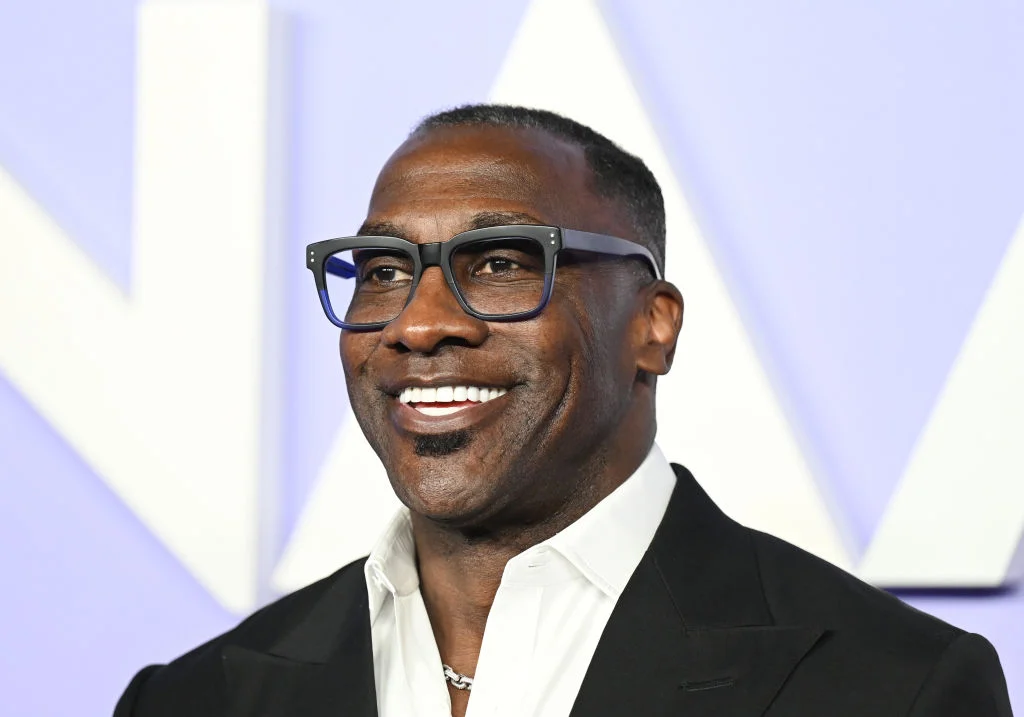
Shannon Sharpe was hit with a $50 million lawsuit by Jane Doe, who has since been revealed by the retired NFL great’s legal team. In the days since the bombshell lawsuit was made public, many are looking into how Shannon Sharpe is handling the matter.
Jane Doe is currently being represented by Texas attorney Tony Buzbee, who typically takes on high-profile cases involving celebrities. Buzbee’s credibility was recently put under question after unsuccessfully attempting to launch a lawsuit against Jay-Z amid Buzbee’s alleged personal issues.
Much isn’t known about Jane Doe, but according to what was found online, she is reportedly an OnlyFans model that Sharpe, 54, met at a Los Angeles gym in 2023 when she was 19. After agreeing to enter into a consensual physical relationship with Sharpe, Doe says things took an odd shift when she realized that the Hall of Fame quarterback took video footage of her performing a sexual act against her consent.
On Tuesday (April 22), Sharpe posted a video statement regarding the case and said that Doe is manipulating footage that paints him in an incorrect light. His legal team has previously fired back and said that Doe’s complaint is an attempt to get Sharpe to pay up and settle the $50 million lawsuit against him.
Online observers have taken notice of the three-decade age gap between Sharpe and Doe and also discovered that the popular podcaster has been accused of forcing a sexual act in 2023 by his girlfriend, Michele Evans. Last year, audio of Sharpe in the throes of passion was leaked online, an incident Sharpe has since apologized for and even flipped into an advertisement for a male sexual enhancement drug.
As referenced at the top of this article, Lanny J. Davis, Sharpe’s legal counsel, put together a statement that Sharpe shared on social media, which reportedly shows Doe’s full name. We’ll share that statement in the body of this post below.
While the credibility of Buzbee is tainted in the eyes of some, some are still wondering if the current legal moves made by Shannon Sharpe are the best course of action. The mudslinging is only ramping up as Doe reportedly released audio that depicts Sharape allegedly threatening her.
We combed through replies on X and will share the commentary we saw regarding this still-developing matter below.
If you or someone you know is contending with sexual abuse or partner violence, please visit the RAINN resources page here to get further assistance.
—
Photo: Getty
HipHopWired Featured Video
Source: Karim Sadli / Karim Sadli
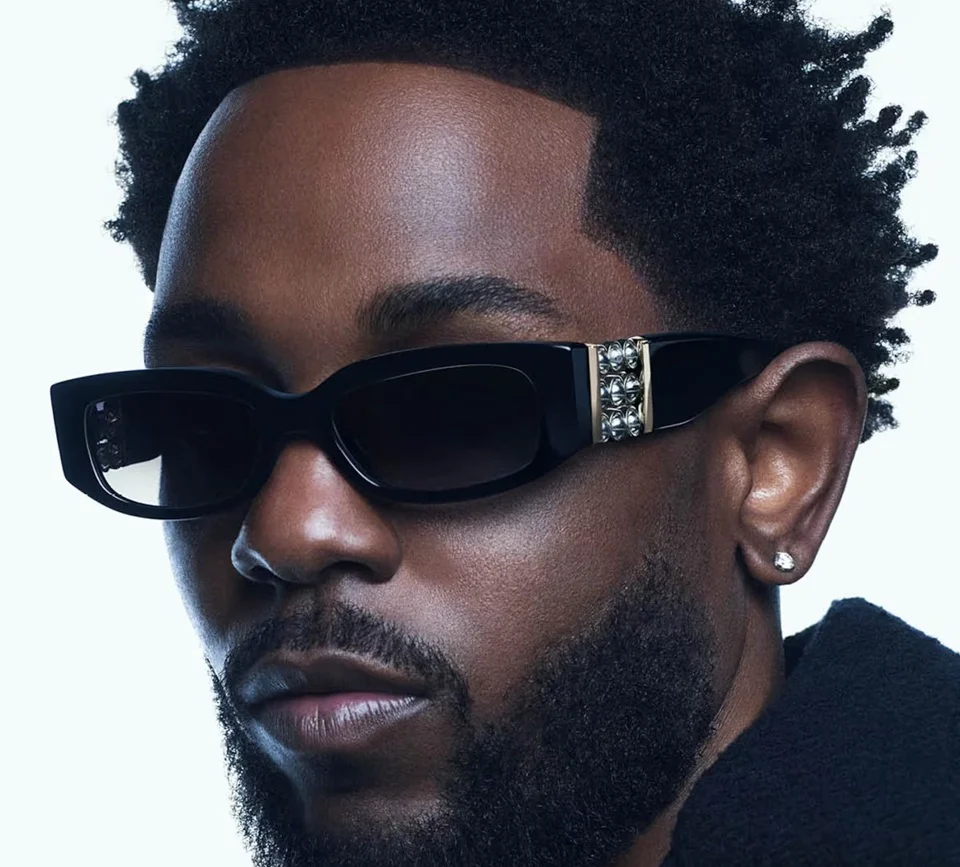
Kendrick Lamar has extended his winning streak into high fashion. Chanel has named him their newest brand ambassador.
As per Hypebeast, Kendrick Lamar has formally partnered with the luxury apparel brand. In an exclusive report by Business of Fashion, he explained how a trip to France made the deal all came together. “[I] spent a week in Paris with their team and explored the brand history. I visited the Chanel ateliers and saw the process of how something goes from design to execution. Seeing the people who work hard and bring these visions to life resonates with me,” he explained via email. Kendrick would also go on to add that “Chanel has a timeless legacy and that is always something I can get behind. Since they don’t make clothes for men, I knew it would have to be glasses.”
Prior to the announcement Chanel has played a role in several big moments in the “Not Like Us” MC’s storied career. He wore Chanel sunglasses in the “Luther” video featuring SZA. He and frequent collaborator Dave Free contributed to their Spring-Summer 2024 Haute Couture show with the curation of not only the stage set but also directing a short film titled The Button.
04/23/2025
From Ultra South Africa to Afro Nation Portugal, here are the best lineups this year.
04/23/2025
HipHopWired Featured Video
Source: John Nacion / Getty
Well, it’s not the Oscars like he originally hoped for, but Kevin Hart will indeed finally be hosting an awards show. And truth be told we can’t wait to see what kind of comedic hi jinx he has in store for us.
According to TheGrio, Kevin Hart has been tapped to host the 25th Annual BET Awards on June 9 and with that will come all kinds of jokes and “insults” aimed at celebrities that only Kevin Hart can get away with making. Having already been a part of the BET family with his 2013 cult classic comedy show, Real Husbands of Hollywood, the only question is why did it take BET so long to come to this decision? Regardless of the delay, Kevin Hart is excited about taking on hosting duties for the BET Awards 25th anniversary, and we don’t blame him one bit.
TheGrio reports:
“I love a celebration! It’s a chance to reflect, cherish, and honor life’s unforgettable moments,” Hart said in a press release. “I’m truly honored to host the 25th BET Awards and celebrate the culture’s biggest night. This year marks the 25th anniversary, and my partners at Hartbeat, BET, and JCE [Jesse Collins Entertainment] are pulling out all the stops to make it a night to remember. It’s a Black-Tie affair, and you’re all invited.”
Kevin Hart isn’t the only one bursting at the seams about hosting the BET Award’s 25th Anniversary show. BET President and CEO Scott Mills is also elated at Hart’s involvement in this year’s ceremony.
“For over a decade, Kevin Hart has been a beloved part of the BET family, and we couldn’t be more excited to have him return to host the 25th anniversary BET Awards,” said BET President and CEO Scott Mills. “His unparalleled talent, infectious energy, and deep connection to our audience make him the perfect host for this historic celebration. Kevin has continuously pushed boundaries in entertainment. On the heels of the successful launch of BET+ original series Lil Kev, we are eager to expand our partnership and continue to bring groundbreaking projects to life.”
Check out the comedic announcement of Kevin Hart hosting the 2025 BET Awards below, and let us know if you’ll be checking out this year’s show on June 9 in the comments section below.
State Champ Radio