State Champ Radio

by DJ Frosty

Current track

Title

Artist

Current show

State Champ Radio Mix

1:00 pm 7:00 pm

Current show

State Champ Radio Mix

1:00 pm 7:00 pm


Author: djfrosty

Page: 582

HipHopWired Featured Video

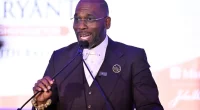
Rev. Jamal Bryant made waves after announcing a 40-day “fast” of sorts from shopping at Target, and now the clergyman wants to extend the boycott. After assessing Target’s response to demands made by organizers to restore their rolled-back DEI initiatives, Rev. Bryant feels that the corporation hasn’t felt enough pressure.

Rev. Jamal Bryant, the lead pastor of New Birth Missionary Baptist Church in the Atlanta metropolitan area, shared an announcement on his Target Fast website thanking supporters of the Lent-inspired fast and shopping at the major retailer. He then shared his renewed focus on moving past the fast and continuing to cease all shopping until changes to DEI at the company are implemented.

From Target Fast:

We are entering a new phase of this movement. What began as the Target FAST — a moral witness and urgent call for justice — now evolves into a full Target BOYCOTT. This shift marks not an end, but a deepening of our commitment to justice and accountability.

Until Target comes to the table with serious, concrete proposals to meet our four demands, we will remain in this posture. Silence and delay are no longer acceptable. Our communities deserve action, not platitudes. Our demands are not radical — they are righteous, reasonable, and long overdue.

It is vital to remember: this boycott is a coalition effort. It is not about any single individual, personality, or public figure. It is about people. It is about power. It is about principle. We stand shoulder to shoulder — workers, organizers, elders, youth, people of faith, people of conscience — in a collective refusal to support a corporation that refuses to hear us.

According to several reports, Target appears to be feeling the brunt of the boycotts with declining shopper numbers since the company did away with DEI, seemingly in response to President Donald Trump’s administration essentially scaling down the practice.

To learn more about Rev. Jamal Bryant’s boycott efforts, click here.

Photo: Paras Griffin / Getty
HipHopWired Featured Video

Source: Michelle Farsi / Getty

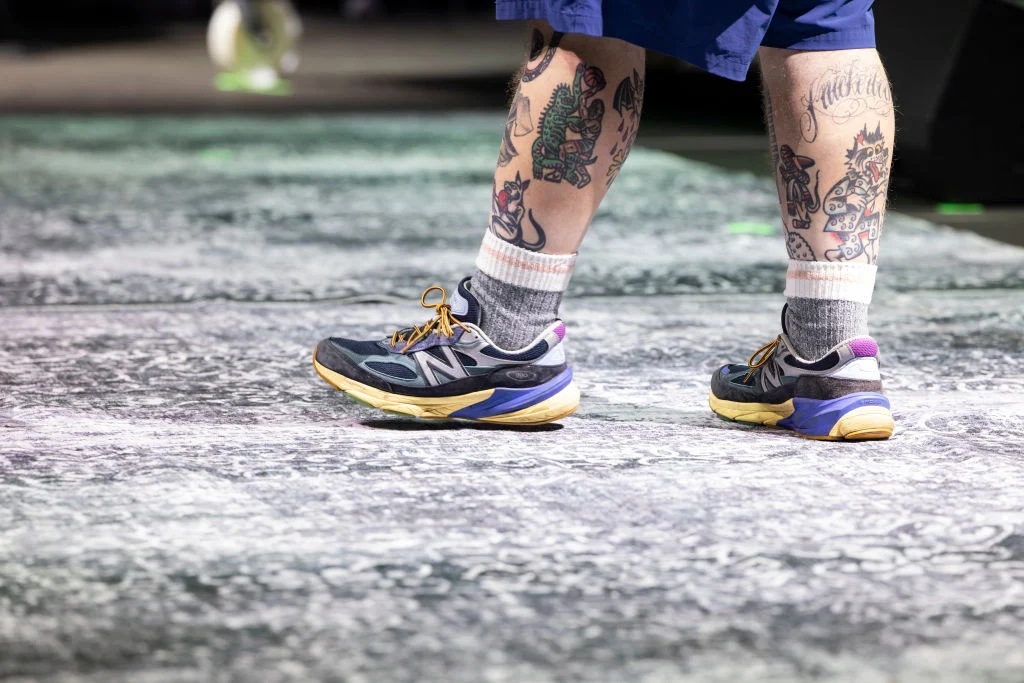
Look out Nike, it seems like Action Bronson done learned a thing or two about your restocking ways and is preparing to bring back every single sneaker he and New Balance have collaborated on.

Taking to Instagram to break the news, the Queens rapper confirmed that his fans will have another chance to cop some of his highly coveted collaborations at his pop up shop, Baklava Megastore, in SoHo this weekend. From the “Baklava,” to the “Lapis Lazuli” to his 1906R “Rosewater,” every single New Balance collaboration that he’s dropped and sold out will be up for grabs at his pop up at 131 Greene St. from April 25 to April 27.

In the caption for the post Bronson wrote, “EVERY BAKLAVA RELEASE EVER WILL BE AVAILABLE AT THE MEGASTORE. APPAREL, VINYL, EXTRA VIRGIN OLIVE OIL, BRAND NEW WORLD PREMIERE *BAKLAVA* STUDIO SLIDE, #FUCKTHATSDELICIOUS NEW YORK CITY ONLY HOODIE, EAGLES DON’T CRY AND -CHUMBEH- THAI ICED TEA KETTLE COOKED CHIPS CHINESE LAMB BBQ CHIPS, RUSS’S WARM CHOCOLATE CHIP BUTTERSCOTCH COOKIES. LISTEN IM GOING ALL OUT.”

Yeah, it’s gonna be lit.

Don’t forget you have to RSVP at Shopifyxbaklava.com for a chance to get in on the restock craze this weekend.

Check out the announcement below and let us know if you’ll be heading out to SoHo to get in on the sale in the comments section below.

HipHopWired Featured Video

CLOSE

Source: Anadolu / Getty
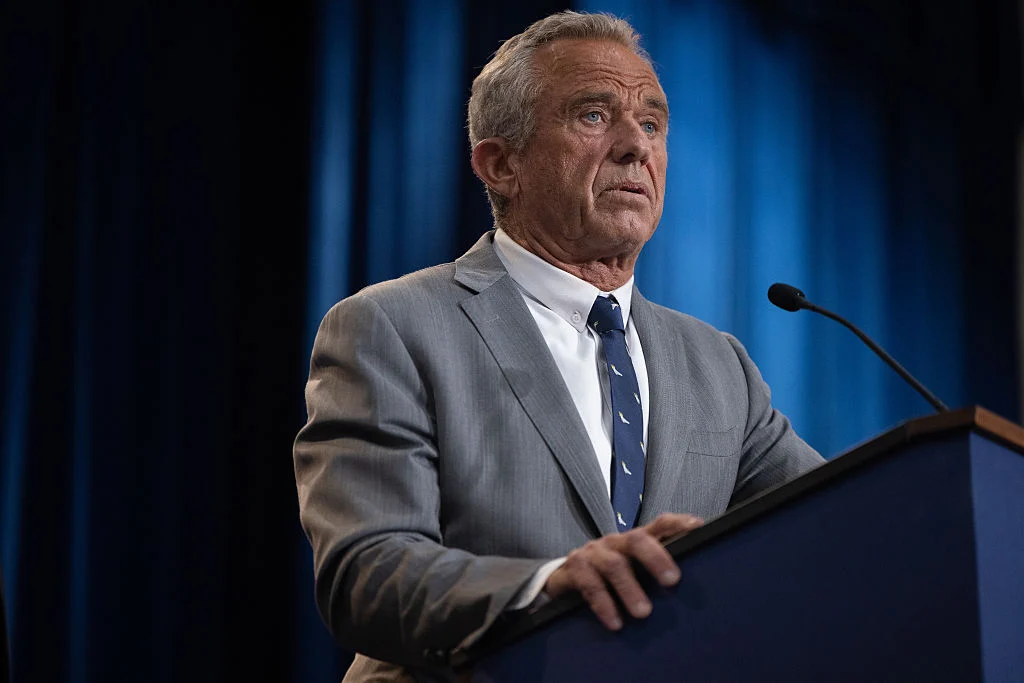
Robert F. Kennedy Jr. is overseeing a plan to collect data on autistic people nationwide, which has drawn backlash from the public.
According to reports, the National Institute of Health is creating a database of Americans’ private health records in line with Health and Human Services Secretary Robert F. Kennedy Jr.’s controversial plan to find a cause and cure for autism. The plan will cull data from pharmacy chains and private laboratories as well as from government agencies such as the Department of Veteran Affairs and potentially from Medicaid and Medicare.

NIH Director Dr. Jay Bhattacharya detailed the plan in a meeting with a panel at the agency, according to NPR. “The idea of the platform is that the existing data resources are often fragmented and difficult to obtain. The NIH itself will often pay multiple times for the same data resource,” he said while emphasizing that the data collected would be subject to “state of the art protections” for confidentiality purposes.
Robert F. Kennedy Jr. has been persistent in promoting his incorrect views on autism, having recently stated at a press conference that those diagnosed have “regressed … into autism when they were 2 years old. And these are kids who will never pay taxes, they’ll never hold a job, they’ll never play baseball, they’ll never write a poem, they’ll never go out on a date. Many of them will never use a toilet unassisted.” He also falsely claimed that vaccinations and environmental factors are the causes.
“Even among those with an intellectual disability, there’s huge variability,” Penn Center for Mental Health David Mandell said, refuting RFK’s autism claims. “People with Down’s Syndrome have an intellectual disability, but often are quite capable and can do all the things RFK points to.”
The plan has alarmed many who call it an “autism registry” and liken it to eugenics. “This idea is dangerous, unethical, and a serious threat to privacy. People with autism deserve dignity and respect—not surveillance by their own government,” New York State Assemblyman Angelo Santabarbara wrote in a post on X, formerly Twitter, adding: “I stand with advocates across the country in strongly opposing this proposal.” Santabarbara has a young child diagnosed with autism.

Senior counsel at the Electronic Privacy Information Center Sara Geoghagan touched on the breach of privacy involved. “The collection and processing of personal information, especially health-related information that can reveal health conditions in this way, is out of context and inappropriate,” she said in an interview.

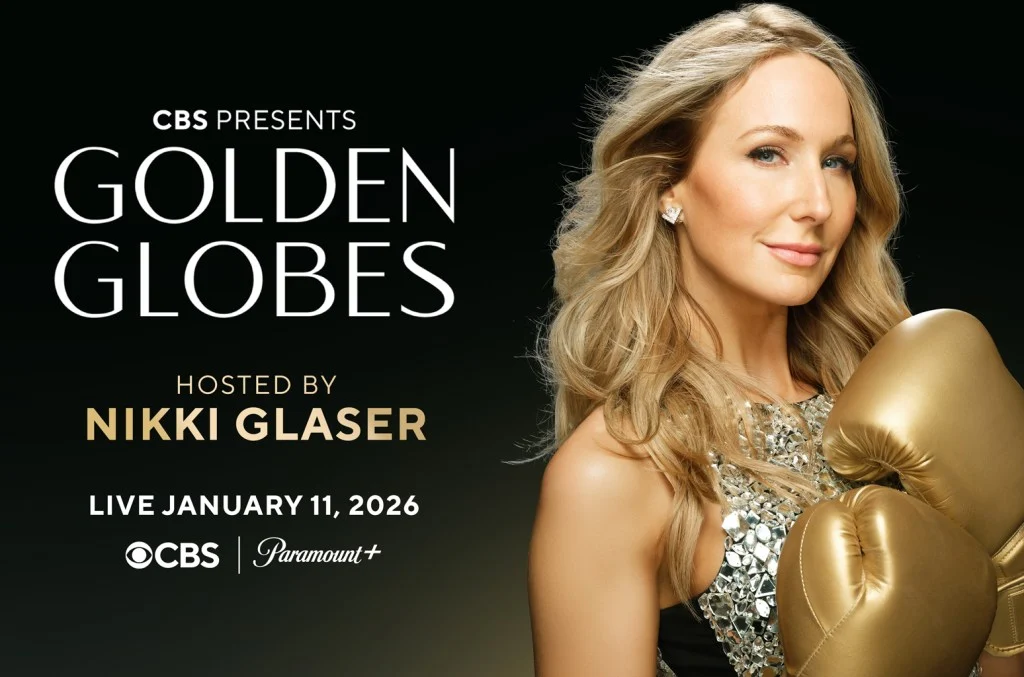
The 2026 Golden Globes have a date — Sunday, Jan. 11. That’s a bit later in the calendar year than the 2025 show, which aired on Jan. 5. The 2026 show will air live on both coasts (8-11 p.m. ET/5-8 p.m.PT) on CBS, and will stream on Paramount+ in the U.S. The show will again […]

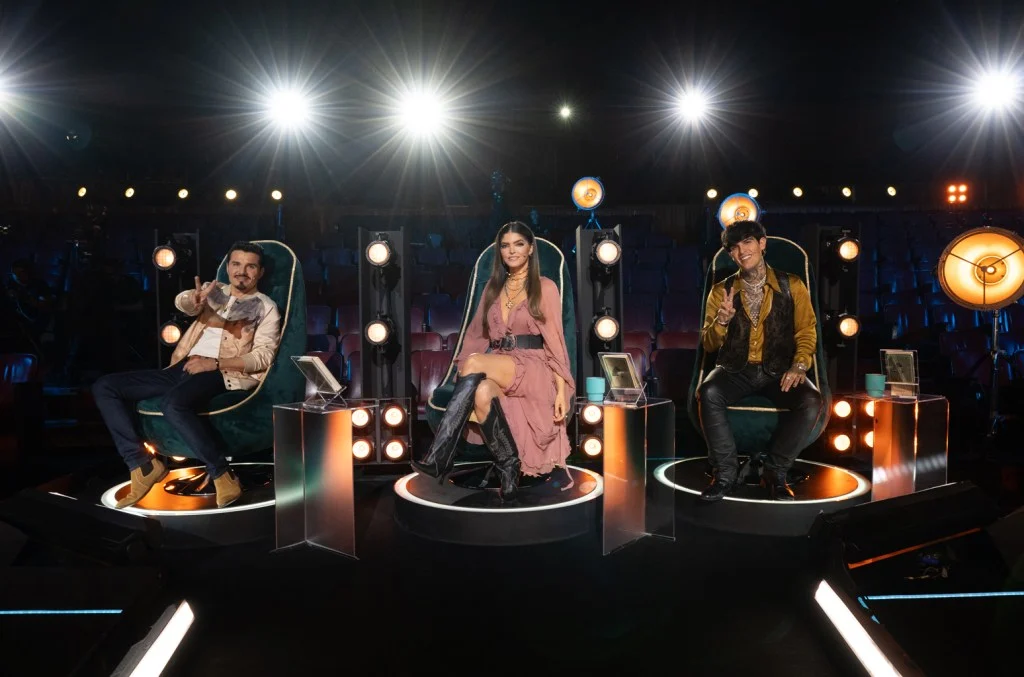
Telemundo and HYBE Latin America are set to debut Pase a la Fama, a music competition series focused on discovering the next great Regional Mexican band. Launching on June 8, the show will feature contestants vying for a $100,000 prize and a record deal with HYBE Latin America. Explore See latest videos, charts and news […]

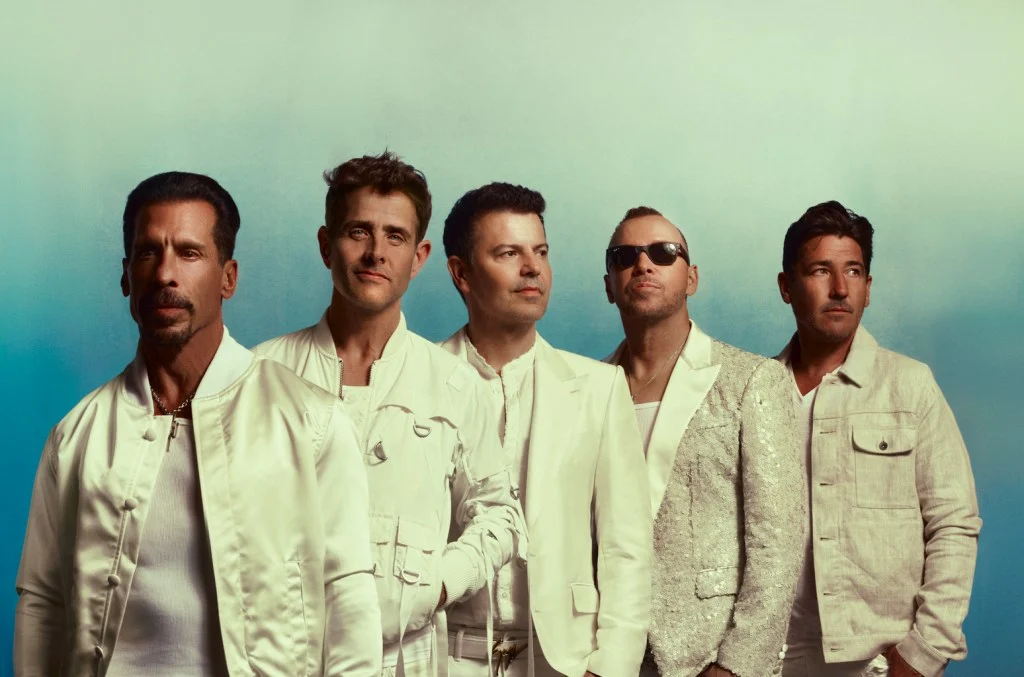
Step by step, New Kids on the Block are taking their fans 35 years backward in time.   On Thursday (April 24), the boy band announced that an anniversary reissue of Billboard 200-topping 1990 album Step By Step is arriving this summer, celebrating 35 years since the quintet’s fourth studio LP. Featuring bonus material, unreleased tracks […]

HipHopWired Featured Video

Source: Gie Knaeps / Getty

Rhymefest dropped a wild story on the It’s Just My Opinion podcast recently, claiming that Eminem called him the n-word during a rap battle back in 1998. 

According to Rhymefest, the two clashed at Scribble Jam in Cincinnati, one of the biggest underground rap battles in the country at the time, where legends from all over came to prove themselves. According to Rhymefest, the two clashed at Scribble Jam in Cincinnati, one of the biggest underground rap battles in the country at the time, where legends from all over came to prove themselves.

The Chicago rapper said, “I battled Eminem in ’98 at this competition called Scribble Jam in Cincinnati,” Rhymefest said. “It was the biggest battle in the Midwest, and a lot of famous rappers, DJs, and breakdancers came outta there.”But the real shocker came when Rhymefest recalled one of Em’s bars during their battle. “That was the first time a white dude ever called me a n-gga,” he said. “He spit, ‘I’ll let my razor split you, ’til they have to staple stitch you, this n-gga took my facial tissue, turned it to a racial issue.’”

The real shocker came when Rhymefest recalled one of Em’s bars during their battle. “That was the first time a white dude ever called me a n-gga,” he said. “He spit, ‘I’ll let my razor split you, ’til they have to staple stitch you, this n-gga took my facial tissue, turned it to a racial issue.’” Instead of getting mad, Rhymefest said he was actually impressed. “You couldn’t even be mad,” he laughed, acknowledging how hard the line hit. “I realized something about racism that day, it’s why Family Guy works.”

Em hasn’t said anything about the claim yet, but if this is true, it’s another complex layer in his already controversial career.

The PRO business is booming! But could it become a victim of its own success? 
For the 75 years after the 1939 founding of BMI, the U.S. had three organizations that collected public performance royalties for songs on behalf of composers and publishers: ASCAP, SESAC and BMI. And for much of that time — from the 1950s, when ASCAP and BMI expanded into all genres, to 1993, when a group of investors purchased SESAC — the competition might best be described as gentlemanly. ASCAP and BMI became the Coke and Pepsi of PROs, licensing similar rights, for different songs, to similar bars, restaurants, concert venues and television and radio stations. The privately owned SESAC was less aggressive than it is now.   

Some licensees want to set the clock back to that simpler time. They may have inspired members of Congress to ask the Copyright Office to look into the subject, which resulted in a Notice of Inquiry and then a flood of comments. (Billboard has a guide here.) To understand why, and what this means, it helps to realize how much U.S. performance rights licensing has changed in the last decade.  

In 2013, Irving Azoff, ever the disruptor, founded GMR, which like SESAC — owned by the investment group Blackstone since 2017 — signs big songwriters with big advances. Unlike ASCAP and BMI, which are more constrained by antitrust consent decrees and allow all songwriters to join, GMR and SESAC are free to cherry-pick from the most popular. (All four have big writers; GMR and SESAC just don’t have small ones.) With fewer writers, they are thought to bring in more money per performance of a song. They are also thought to be wildly profitable: A recent deal for a stake in GMR valued the company at $3.3 billion. Any business that good attracts competition, and two new PROs have emerged over the last five years: AllTrack, founded by former SESAC board member Hayden Bower; and the Florida-based PRO Music Rights.  

Trending on Billboard

Things got complicated. Venues that had once received three bills for their use of music were suddenly getting five or six. Most knew they needed rights from what we might call the big four — and let’s pause for a moment to consider just how weird it is that the U.S. now has more established PROs than major labels — but some weren’t sure if they needed the rights controlled by AllTrack and PRO Music Rights. Costs went up — with the possibility of future increases — and let’s not kid ourselves that this is the real issue here.

Both the Notice of Inquiry and the responses to it are fascinating because, as several executives pointed out to me, this isn’t an issue that the Copyright Office — or even government regulation in general — seems especially well-suited to solve. The Copyright Office administers and consults on intellectual property law, and licensees presumably see the NOI as an opening move in a push for legislation that could constrain PROs — or even empower a government body to set royalty rates, as one does for mechanical rights. That would be a disaster for publishers and songwriters, which get their only negotiating power from performing rights. And licensees have much more lobbying power than the music business, simply because every Congressional district has bars and restaurants, while the music business is relatively concentrated in a few cities.  

What, exactly, is the problem here? Look at the NOI, which sets out two very different issues: “The number of PROs in the United States has expanded in recent years, potentially undermining licensing efficiencies” and “PROs do not all disclose comprehensive information concerning the works that are covered by their licenses, and their royalty distribution practices and policies.” The only thing these issues have in common is that neither of them is really a matter for copyright law.  

The idea that there are too many PROs is odd because for years the issue was that ASCAP and BMI had too much market power — hence the antitrust consent decrees. In legal terms, this is known as trying to have it both ways. Competition is a good thing, as long as it’s fair. If it’s not, that’s a matter for competition law — which traditionally champions competition! — not copyright.  

One of the real issues behind the NOI is that it can be hard to tell which PRO controls what rights. This can be complicated, though, and the issues often have less to do with concealing information than with presenting it in an accessible way. AllTrack, which is focused on the independent market, allows potential licensees to search a database of songs to which it controls rights, but that requires looking up specific compositions. The site displays far more prominently some of the artists who play songs to which AllTrack owns at least some rights, including Billy Ray Cyrus, Elle King and No Doubt. In smaller type, underneath, it says that “The artists above are examples, but not an all inclusive list, of performers of AllTrack music” — and in most, but not all, cases it doesn’t control rights to all these artists’ songs, let alone their rights as songwriters. Billboard readers understand this, but it might drive the average bar owner to drink. 

PRO Music Rights is even more controversial. It seems to focus on serving smaller songwriters in the so-called long tail, and it says it controls rights to more than 2 million works, including songs performed by A$AP Rocky, Wiz Khalifa and others. It is unclear how popular many of those songs are, though, and both the ASCAP and BMI responses to the NOI challenge its business practices more directly than those of AllTrack. In its filing, ASCAP says that in 2018 it discovered millions of songs registered by PRO Music Rights “that were apparently either computer-generated sounds or merely random titles” and BMI’s response points out that Spotify in a court filing accused PRO Music Rights founder Jake Noch of flooding its platform with AI music, although the case in question subsequently settled. (PRO Music Rights filed its own response to the NOI that accuses the established PROs of engaging in “anti-competitive practices.”) 

The other side of transparency is that it’s not always clear how some PROs distribute some of the money they collect. But it seems hard to believe that licensees really worry about this — most just want to pay less — and that issue is really between PROs and creators and publishers. (Alas, Billboard advertisers seldom ask about the compensation of the publication’s witty and dashing “Follow the Money” columnist.) The best way to address this — maybe the only way to address it in a lasting way — could be a competitive market. Big songwriters who think that the big PROs don’t serve them well can sign with SESAC or GMR, although not all of them do. Why shouldn’t smaller ones have more options as well? 

Like every other issue in the music business, this is ultimately about money — rightsholders want to charge more and licensees want to pay less. That’s business. And it seems best to keep it as business, without getting the government involved.  

HipHopWired Featured Video

CLOSE

Source: Nintendo / Nintendo Switch 2
After a delay, primarily due to Donald Trump’s blatant abuse of tariffs, Nintendo was forced to postpone pre-orders for the Nintendo Switch 2 for fans in the US. After some waiting, the day has arrived for gamers stateside to secure Nintendo’s new console, and as expected, things did not go smoothly.

Although people have been complaining about the Switch 2’s price, demand is still strong. Gamers had a frustrating time trying to secure a Nintendo Switch 2 due to several sites offering pre-orders crashing under the high volume of traffic.

Best Buy, Target, and Walmart all experienced issues with their websites on Thursday morning once pre-orders for the Switch 2 went live, according to Downdetector.
For about 45 minutes, starting around midnight, following the announcement that pre-orders for the Switch 2 went live, more than 2,000 customers reported experiencing issues while trying to connect to Target’s website.
Best Buy wasn’t any better. Even though they required customers to have an account on the website, a tactic to combat scalping, customers began encountering issues around 9 PM on Wednesday, which persisted until 2 AM on Thursday.
GameStop, remember them? Kicked off their Nintendo Switch 2 pre-orders on Thursday at 11 AM; spoiler alert, it was also a hot mess.

Still, some were able to secure their Nintendo Switch 2 consoles, even though it required some searching. To those people, congratulations on your major accomplishment.
The Buzz & Discourse Around The Nintendo Switch 2
The Nintendo Switch 2 is set to launch on June 5, a date Nintendo says will hold firm. Since its announcement, there has been considerable excitement, as well as considerable discourse, particularly regarding the costs of its games.
Mario Kart World, one of the console’s launch titles, will cost $80, and that is not sitting well with some gamers.
Many were worried that Nintendo would raise the price of the console in response to Trump’s tariffs, but the company has recently announced that the console’s price will remain unchanged. However, they did raise the price on accessories.
Welp.
You can see more reactions to the Switch 2 pre-order situation in the gallery below.

1. Felt this

3. Gotta kill time somehow

8. Nature is healing

In the new trailer for the third and final season of The Summer I Turned Pretty, Belly and Jeremiah live happily ever after — or do they? Luckily, Taylor Swift has songs for either outcome.
Released Thursday (April 24), the minute-long teaser features two of the pop superstar’s most beloved tracks, starting with Lover album closer “Daylight.” The ethereal ballad plays over an ooey-gooey montage of Lola Tung and Gavin Casalegno’s characters picking up where they left off in season two — as a couple, despite Belly previously dating Jeremiah’s brother, Conrad, who is nowhere to be found for almost all of the trailer.

As the two frolic through their college campus, make out in the library and slow dance at a party, Swift’s voice sings, “I don’t wanna look at anything else now that I saw you/ I don’t wanna think of anything else now that I thought of you/ I’ve been sleeping so long in a 20-year dark night/ And now I see daylight.”

Trending on Billboard

At the very end, however, #Jelly’s romantic fantasy is interrupted by a certain intruder: Christopher Briney’s Conrad, who shows up at the brothers’ beach house and delivers the only spoken line in the entire trailer.

“Hey,” he says as a shocked Belly opens the front door on him, while “Daylight” abruptly switches to a line from a very different Swift track. “Loving him was red,” interjects the 14-time Grammy winner’s voice on 2012’s Red title track.

The new trailer is far from the first time The Summer I Turned Pretty — which is based on the Jenny Hahn book series of the same name — has featured Swift’s music. In fact, the singer-songwriter has been one of the biggest musical contributors to the show since it premiered in 2022, with “The Way I Loved You,” “Exile” featuring Bon Iver, “Snow on the Beach” with Lana Del Rey, “Sweet Nothing,” “This Love,” “Last Kiss” and several more Swift tracks finding homes in various episodes.

The final season will put an end to the messy love triangle that has fueled the show from the beginning, with the description reading, “It’s the end of her junior year of college, and Belly’s looking forward to another summer in Cousins with her soulmate, Jeremiah … until some core-shaking events bring her first love Conrad back into her life.”

“Now on the brink of adulthood, Belly finds herself at a crossroads and must decide which brother has her heart,” it continues. “Summer will never be the same.”

Season three of The Summer I Turned Pretty arrives on Prime Video July 16. Watch the trailer above.