State Champ Radio

by DJ Frosty

Current track

Title

Artist

Current show

State Champ Radio Mix

1:00 pm 7:00 pm

Current show

State Champ Radio Mix

1:00 pm 7:00 pm


Author: djfrosty

Page: 475

HipHopWired Featured Video

CLOSE

Source: Gary Gershoff / Getty
T-Pain dropped a throwback video showing the first time he came up with one of his most famous lines—when he rhymed “mansion” with “Wiscansin.”

The line comes from his 2008 hit “Can’t Believe It” featuring Lil Wayne. If you’ve ever said “Wiscansin” instead of “Wisconsin,” this is where it all started.

In the video, T-Pain’s in the studio recording and says, “I can put you in a mansion, somewhere in Wiscansin.” Right after, he turns to his friends and asks, “That’s how they say that in Wisconsin right?” Everyone starts laughing, and you can tell they knew the line was going to stick. That one rhyme turned into a whole thing. Teddy Pain ended up naming a tour “Wiscansin University” and even dropped merch with the made-up school name.
The song “Can’t Believe It,” where T-Pain says the made-up word “Wiscansin,” is from his 2008 album Three Ringz. The track features Lil Wayne and became one of the album’s biggest hits. Three Ringz is T-Pain’s third studio album and has a circus theme, with skits and interludes tying it all together. Other songs on the album include “Freeze” with Chris Brown, “Chopped ’n’ Skrewed” with Ludacris, and “Karaoke.”
The album blends R&B, hip-hop, and Auto-Tune-heavy vocals that T-Pain is known for. Three Ringz was nominated for Best Contemporary R&B Album at the 2010 Grammy Awards.
This vintage footage shows how Pain didn’t overthink it—he just had fun and let it flow. Sometimes the lines that hit the hardest come out of nowhere. Now fans finally get to see the exact moment the line that made everyone say “Wiscansin” was created.
Check out some of the reactions to the rare footage below.

HipHopWired Featured Video

Source: Chance Yeh / Getty

Chris Gotti is a firm believer that blood is thicker than water. He says Ashanti should be giving his brother Irv Gotti more credit her success.

As spotted on Hop New Hip Hop the music executive paid a visit to the Keep It 100 podcast recently and spoke on different topics relating to the Murder Inc. Records legacy, his late great brother and more. Prior to Irv Gotti’s death his relationship with Ashanti had severely soured – to the point where she avoided talking about him altogether. When asked about it he made it clear that Ashanti shouldn’t be surprised it was such a hot topic. “Everyone keeps talking about it, she should understand that, too” he said. “If you’re in the limelight, they ask the question. It wasn’t little, it was big. For her to act like it ain’t Murder Inc. that made her is f***ing bulls**t. Or that Irv made her, it’s crazy.”

He went to remind everyone that she didn’t find her signature sound until she got to Murder Inc. “She had three deals before him. Like, something with y’all chemistry worked out. Respect it. That’s all. I’m not saying you have to talk about. Respect the magic that was made. That’s all I said” Chris Gotti added. He would go on to reveal that their tension put him in a tough spot. “Irv hate when I take her position. But I never took Irv’s position with her. But I’m doing it ’cause he ain’t here now. I’m not going to let no one talk about my brother. You going to have a problem. Simple and plain. Especially someone who he made that career. I was there. Like, he made you sing records in the way you sang them. ‘Cause you would’ve never sang it that way if it was up to you.”

Prior to his passing Irv Gotti made some very startling revelations on two separate Drink Champs episodes about his personal dealings with the “Foolish” singer. Irving alleged they were romantically involved all the while he was still legally married. He caught severe backlash with many saying Irv was fixated with Ashanti. You can see Chris Gotti discuss the situation below.

HipHopWired Featured Video

Source: Nike Basketball / Nike Basketball

Years after the Nike Kobe sneaker line was a scarce product out on these streets, Nike has been giving Kobe fans all the kicks that they can handle (lots of them are sitting on shelves). Now, they’ll be re-releasing the sneaker that started it all at the Swoosh brand. We’re sure fans can’t hardly wait.

According to Sneaker News, Nike will be retroing the classic Nike Kobe 1 “81 Points” in 2026 in honor of the 20th anniversary of Kobe’s classic game against the Toronto Raptors in which he dropped a historic 81 points on Jalen Rose (sorry, man, but he did). Featuring the classic white, purple and gold Lakers colorway, the first Kobe silhouette that Nike released following his departure from adidas, the Kobe 1 “81 Points” will most definitely become a must-have for hardcore Kobe fans who witnessed his greatness during his historic 20-year NBA career.

Per Sneaker News:

The Nike Kobe 1 “81 Points” was released as a limited PE in 2007 and then again as a Protro in 2019. Importantly, Kobe’s 81-point game preceded the wide release of the Nike Kobe 1 by about a month. No images of the 2026 Protro have surfaced yet, but the sneaker is expected to feature the same “White/Black/Court Purple” blocking alongside modern performance upgrades.

The only question is whether the sneakers will be a limited release (as Nike is once again keeping production numbers low of their classic silhouettes in 2025) or if it’ll be a big rollout so they can cash in on the hype. Either way, we expect these to be a hard cop.

Check out pics of the original Kobe 1 “81 Points” below, and let us know if you’ll be checking for these when they drop in 2026.

Red Hot Chili Peppers frontman Anthony Kiedis is launching his own coffee brand, and he’s turning to Live Nation for help getting it in front of coffee drinkers.
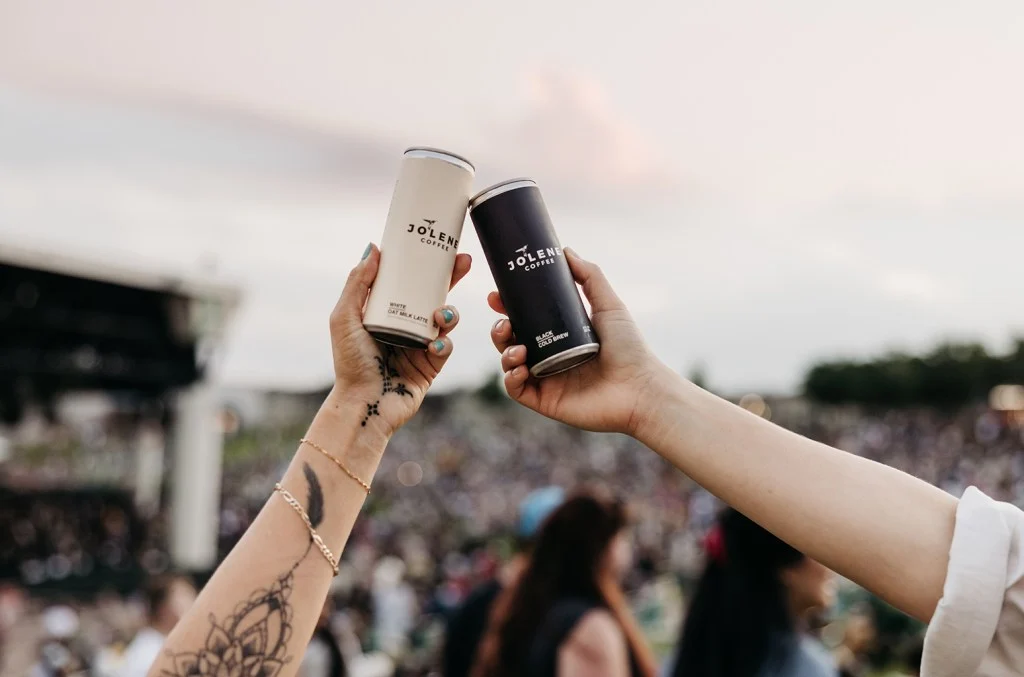
Today, Kiedis and longtime friend Shane Powers are debuting their coffee in a can consumer brand JOLENE along with a marketing campaign, which a press release says is “built to move with the rhythm of live entertainment and meet the ambition of those living life to the fullest.”

Kiedis and Powers have partnered with Live Nation as both an investor and distribution partner for JOLENE. The global concert promoter will carry the coffee brand at its festivals and 40 amphitheaters owned or operated by Live Nation, including the Gorge Amphitheater in Washington, Northwell at Jones Beach Theater in New York and Allianz Amphitheater at Riverfront in Richmond, Virginia.

Trending on Billboard

Live Nation is an equity investor in JOLENE as is consumer spirits company Global Brand Equities and h.wood Group founder John Terzian. The agreement is similar to one Live Nation struck with water company Liquid Death in 2021 and its celebrity ownership group that included Wiz Khalifa, Machine Gun Kelly, Steve Aoki and Tony Hawk. That agreement had Live Nation selling Liquid Death at its 120 owned-and-operated venues as part of a larger sustainability effort to phase out the sale of single-use plastics at all owned and operated venues and events. 

JOLENE comes in two flavors: Black (cold brew) and White (oat milk latte) and will be used to make four signature cocktails at Live Nation-owned venues. According to a press release, JOLENE is sourced through an all-female co-op in Peru, “ensuring high-quality beans while directly supporting the women growers and their communities,” the release reads. The product is also available for purchase online at retailers in Los Angeles and New York.

The origin of the coffee goes back several years, according to Kiedis. “Shane shouted at me down the sidewalk ‘Let’s do something!’ I shouted back ‘how ’bout coffee’? He said ‘done.’ And so began the adventure of putting a high-quality spin on a can of coffee.”

The name JOLENE is a spin on the phrase “cup of Joe” and the common descriptor “skinny latte” or “lean latte” referring to a latte without whole milk, as well as a reference to the hit country music song “Jolene” by Dolly Parton.

Russell Wallach, Live Nation’s global president of Media & Sponsorship added “Fans want options that fit the pace and energy of live music,” noting, “Cold brew has come up again and again, and JOLENE delivers — it’s high quality, easy to enjoy, and adds something new to the fan experience. It’s one more way we’re evolving to meet what fans are asking for.”

Disturbed singer David Draiman is down with the nuptials. The 52-year-old hard rock singer popped the question to girlfriend model Sarah Uli during a surprise moment at his band’s Disturbed: The Sickness 25th anniversary concert in Sacramento, CA on Friday night (May 9). During the show at the Golden 1 Center honoring the band’s landmark […]

On Friday afternoon, the U.S. Copyright Office released a report examining copyrights and generative AI training, which supported the idea of licensing copyrights when they are used in commercial AI training.
On Saturday (May 10), the nation’s top copyright official – Register of Copyrights Shira Perlmutter – was terminated by President Donald Trump. Her dismissal shortly follows the firing of the Librarian of Congress, Carla Hayden, who appointed and supervised Perlmutter. In response, Rep. Joe Morelle (D-NY) of the House Administration Committee, which oversees the Copyright Office and the Library of Congress, said that he feels it is “no coincidence [Trump] acted less than a day after [Perlmutter] refused to rubber-stamp Elon Musk’s efforts to mine troves of copyrighted works to train AI models.”

This report was largely seen as a win among copyright owners in the music industry, and it noted three key stances: the Office’s support for licensing copyrighted material when a “commercial” AI model uses it for training, its dismissal of compulsory licensing as the correct framework for a future licensing model, and its rejection of “the idea of any opt-out approach.”

Trending on Billboard

The Office affirms that in “commercial” cases, licensing copyrights for training could be a “practical solution” and that using copyrights without a license “[go] beyond established fair use boundaries.” It also notes that some commercial AI models “compete with [copyright owners] in existing markets.” However, if an AI model has been created for “purposes such as analysis or research – the types of uses that are critical to international competitiveness,” the Office says “the outputs are unlikely to substitute” for the works by which they were trained.

“In our view, American leadership in the AI space would best be furthered by supporting both of these world-class industries that contribute so much to our economic and cultural advancement. Effective licensing options can ensure that innovation continues to advance without undermining intellectual property rights,” the report reads.

While it is supportive of licensing efforts between copyright owners and AI firms, the report recognizes that most stakeholders do not hold support “for any statutory change” or “government intervention” in this area. “The Office believes…[that] would be premature at this time,” the report reads. Later, it adds “we agree with commenters that a compulsory licensing regime for AI training would have significant disadvantages. A compulsory license establishes fixed royalty rates and terms and can set practices in stone; they can become inextricably embedded in an industry and become difficult to undo. Premature adoption also risks stifling the development of flexible and creative market-based solutions. Moreover, compulsory licenses can take years to develop, often requiring painstaking negotiation of numerous operational details.”

The Office notes the perspectives of music-related organizations, like the National Music Publishers’ Association (NMPA), American Association of Independent Music (A2IM), and Recording Industry Association of America (RIAA), which all hold a shared distaste for the idea of a future compulsory or government-controlled license for AI training. Already, the music industry deals with a compulsory license for mechanical royalties, allowing the government to control rates for one of the types of royalties earned from streaming and sales.

“Most commenters who addressed this issue opposed or raised concerns about the prospect of compulsory licensing,” the report says. “Those representing copyright owners and creators argued that the compulsory licensing of works for use in AI training would be detrimental to their ability to control uses of their works, and asserted that there is no market failure that would justify it. A2IM and RIAA described compulsory licensing as entailing ‘below-market royalty rates, additional administrative costs, and… restrictions on innovation’… and NMPA saw it as ‘an extreme remedy that deprives copyright owners of their right to contract freely in the market, and takes away their ability to choose whom they do business with, how their works are used, and how much they are paid.’”

The Office leaves it up to the copyright owners and AI companies to figure out the right way to license and compensate for training data, but it does explore a few options. This includes “compensation structures based on a percentage of revenue or profits,” but if the free market fails to find the right licensing solution, the report suggested “targeted intervention such as [Extended Collective Licensing] ECL should be considered.”

ECL, which is employed in some European countries, would allow a collective management organization (CMO) to issue and administer blanket licenses for “all copyrighted works within a particular class,” much like the music industry is already accustomed to with organizations like The MLC (The Mechanical Licensing Collective) and performing rights organizations (PROs) like ASCAP and BMI. The difference between an ECL and a traditional CMO, however, is that under an ECL system, the CMO can license for those who have not affirmatively joined it yet. Though these ECL licenses are still negotiated in a “free market,” the government would “regulat[e] the overall system and excercis[e] some degree of oversight.”

While some AI firms expressed concerns that blanket licensing by copyright holders would lead to antitrust issues, the Copyright Office sided with copyright holders, saying “[the] courts have found that there is nothing intrinsically anticompetitive about the collective, or even blanket, licensing of copyrighted works, as long as certain safeguards are incorporated— such as ensuring that licensees can still obtain direct licenses from copyright owners as an alternative.”

This is a “pre-publication” version of a forthcoming final report, which will be published in the “near future without any substantive changes expected,” according to the Copyright Office. The Office noted this “pre-publication” was pushed out early in an attempt to address inquiries from Congress and key stakeholders.

It marks the Office’s third report about generative AI and its impact on copyrights since it launched an initiative on the matter in 2023. The first report, released July 31, 2024, focused on the topic of digital replicas. The second, from Jan. 29, 2025, addressed the copyright-ability of outputs created with generative AI.

It was the quick exit heard ’round the world. Back on March 29 when he was the musical guest on Saturday Night Live, Morgan Wallen famously beat what some saw as a hasty retreat from the stage during the traditional end-of-show credit segment where the week’s guest and the cast hang out trading hugs and goodbyes.
After performing two songs on the Mikey Madison-hosted episode, Wallen briefly joined the cast on stage at the end of the episode, then abruptly walked off, sharing a photo on his Instagram Stories a short time later from his private plane with the caption, “Get me to God’s country” over the image of a runway; he later capitalized on the controversy by selling “Get Me to God’s Country” merch.

A week later, the show had some fun with the incident in a cold-open bit in which James Austin Johnson’s Donald Trump took a shot at Wallen while discussing the president’s “Liberation Day” tariffs. “I even put tariffs on an island uninhabited by humans. It’s called Heard and McDonald Island,” Johnson’s Trump said, holding a poster featuring a hula skirt-wearing hamburger. “I would love to visit there. Can you imagine that? Big Mac and a hula skirt. Get me to God’s country, right? Remember that?”

Trending on Billboard

On Sunday (May 11), Wallen appeared on comedian Caleb Pressley’s podcast and the host, in a bid to show how normal the country star is noted that Wallen still cuts his own grass and takes out his trash. “Not true,” Wallen smiled. Teasing out the joke, Pressley asked if former landscaper Wallen is good around the house fixing stuff.

“Could you fix a TV, if it was on SNL?,” Pressley asked. Wallen laughed and said, “I could change it for sure.”

“Seriously, SNL, did they make you mad?” Pressley pressed, as the camera zoomed in faux dramatically. “No, no, I was just ready to go home. I been there all week.”

While Wallen seems to have had his fill, SNL wasn’t done with the jokes. During that same April 5 episode, Weekend Update’s Colin Jost poked fun at the singer in a bit about the economy. “This was the worst week for the stock market since the summer of 2020. But you have to remember — back then, the president was also Trump,” Jost said. “Just in the past two days, investors have lost over $6 trillion. Money is leaving the stock market faster than Morgan Wallen at goodnights.”

Long-time cast member Kenan Thompson also had thoughts about it, saying the Wallen quickstep was unusual at best. “We’re so used to everybody just turning around and high-fiving us, everybody’s saying, ‘Good job, good job, good job.’ So when there’s a departure from that, it’s like, hmm, I wonder what that’s about?” Thompson said, noting that Prince had pulled a similar move during his appearance on the show years ago.

“I’m not saying Morgan Wallen is Prince, but we weren’t surprised because Prince was notoriously kind of standoffish,” Thompson said. “It’s just how he was. So we just thought like, ‘Okay, now he’s gone back into fantasyland.”

Wallen’s upcoming 37-track album, I’m the Problem, is due out on Friday (May 16).

Watch Wallen on Sundae Conversation with Caleb Pressley below.

She’s back, y’all! NBC announced Monday morning (May 12) that Reba McEntire will make her way back to the spinning red chairs of The Voice as a coach for season 28. Set to premiere this fall, the upcoming season marks the superstar’s fourth go-round on the popular reality singing competition after joining the fun as […]

Pearl Jam have released a new four-track collection of songs connected to The Last of Us franchise, tying together their long-running relationship with the acclaimed video game series and its HBO adaptation.

Explore

Explore

See latest videos, charts and news

See latest videos, charts and news

The EP includes studio cuts, a live performance, and a reworked fan favorite, and arrives with an exclusive vinyl edition available only to Ten Club members.

The tracklist features the original studio version of “Future Days” from 2013’s Lightning Bolt, as well as “All or None” from Riot Act (2002). On the flip side of the vinyl pressing, fans will find a new live version of “Future Days,” recorded at the 2024 Ohana Festival, and a reimagined take on No Code’s “Present Tense,” titled “Present Tense (Redux).”

Trending on Billboard

“Future Days” has become deeply embedded in the lore of The Last of Us. In The Last of Us Part II, Joel plays the song for Ellie in one of the game’s most emotional scenes, and it reappears throughout the storyline as a symbol of connection and loss.

That moment was first brought to life outside the game in 2020, when Eddie Vedder performed “Future Days” live at The Game Awards as a tribute to the game’s impact.

In season two of HBO’s The Last of Us, the song makes a quiet return. In episode five, Ellie picks up a guitar inside a Seattle theater and softly sings the first line of “Future Days,” the moment mirroring a pivotal scene from the video game The Last of Us Part II, where Joel plays the full song for Ellie in a flashback.

The compilation is available now on all major streaming platforms. A limited edition 12-inch vinyl version has also been released through Pearl Jam’s official site, but is exclusive to registered members of The Ten Club.

This release lands in the middle of Pearl Jam’s 2025 global tour in support of their twelfth studio album Dark Matter, which debuted at No. 5 on the Billboard 200. The band’s current run includes appearances across North America and Europe, and has already featured standout moments, including a performance of “Black” in Nashville with Peter Frampton.

When Metallica hit the stage at Lane Stadium on May 7, it wasn’t just another stadium show, it became a scientifically confirmed minor seismic event.
As the opening chords of “Enter Sandman” rang out at the show, more than 60,000 fans jumped together, creating enough force to register ground movement. The Virginia Tech Seismological Observatory, located a mile away, detected tremors during the set and later confirmed that the crowd had, quite literally, shaken the earth.

Explore

Explore

See latest videos, charts and news

See latest videos, charts and news

“Metallica saved ‘Enter Sandman’ for the final song of the night. It did not disappoint, shaking Lane Stadium so hard it registered on the Virginia Tech Seismological Observatory’s helicorder. Nothing compares to experiencing it live, but this multi-camera video shared by the band comes pretty close,” Virginia Tech’s website reported.

Trending on Billboard

While the tremors posed no danger to the public, the moment quickly earned the nickname “Metallica Quake” across social media. According to the FOX Forecast Center, the seismic activity was too minor to be rated on the Richter scale.

“The magnitude would have been less than 1.0,” said Virginia Tech Seismological Observatory research associate Martin Chapman. “Too small to be felt even a mile away.”

For locals, the track holds deeper meaning. “Enter Sandman” has soundtracked Virginia Tech Hokies football team entrances for years, blasting through the stadium speakers to fire up the crowd.

Virginia Tech Athletics shared the moment online, saying, “Thanks for jumping with us, Metallica! Come back anytime.”

The concert was part of Metallica’s M72 World Tour, which supports their eleventh studio album 72 Seasons. The tour features two-night stops in each city, with no repeated songs across either set. Support acts on this leg include Pantera, Limp Bizkit, Suicidal Tendencies, and Ice Nine Kills.

72 Seasons debuted at No. 2 on the Billboard 200 following its release in April 2023. The set debuted with 146,000 units earned, achieving the largest week by units for any rock or hard rock album in over three-and-a-half years. It also marked the band’s 12th top 10 charting album, of which nine have reached the top two. 72 Seasons also marked the band’s first original album in seven years.

Last month, Metallica also dropped the first trailer for their upcoming fan-focused documentary, Metallica Saved My Life, directed by the band’s longtime collaborator, Grammy-winner Jonas Åkerlund, which will be screened in select cities on the band’s ongoing M72 world tour.

In a statement on April 8, the group wrote, “As a few of you may know, we’ve been working behind the scenes the last couple of years on a new film that will be released later this year starring you guys! Metallica Saved My Life explores our world through the lives of fans who have supported each other through highs, lows, trials and triumphs for over four decades. And yeah, we’re in it a little bit too.”