State Champ Radio

by DJ Frosty

Current track

Title

Artist

Current show

State Champ Radio Mix

1:00 pm 7:00 pm

Current show

State Champ Radio Mix

1:00 pm 7:00 pm


Author: djfrosty

Page: 419

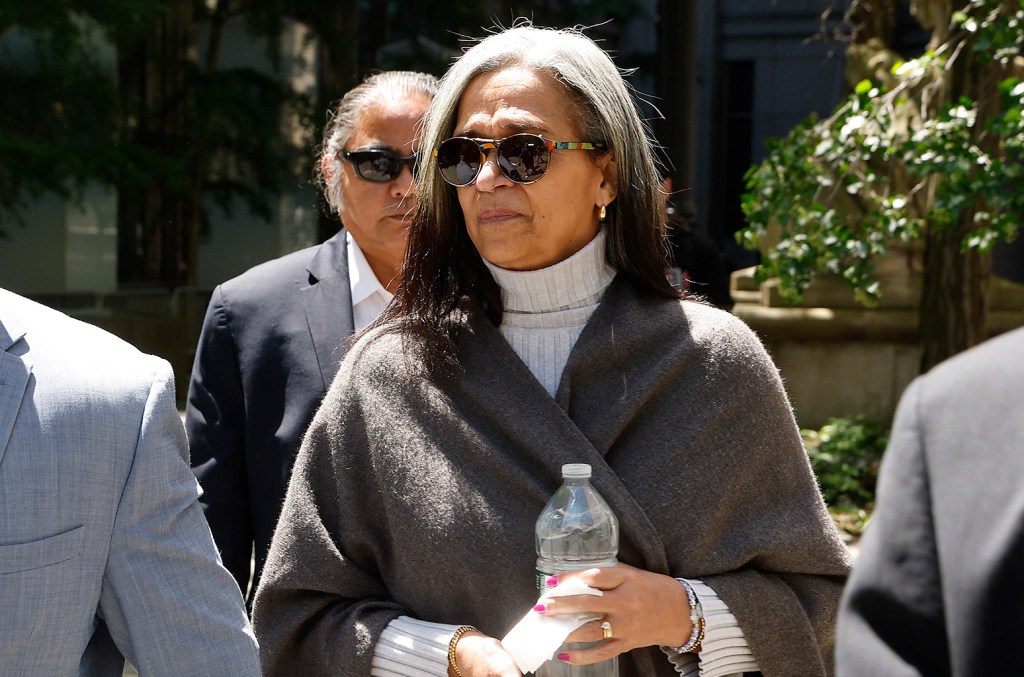
Several new witnesses took the stand Tuesday at Sean “Diddy” Combs’ sex-trafficking trial, including a male escort named “The Punisher” and Cassie Ventura’s mother, who testified that she was “scared for my daughter’s safety.”

Regina Ventura told jurors that she documented the physical abuse Cassie suffered from Combs, who prosecutors claim coerced the younger Ventura and others into participating in drug-fueled sex shows known as “freak-offs.”

The elder Ventura later testified that she once wired $20,000 to Combs’ company in 2011 after Cassie told her that the rapper was threatening to release a sex tape of her, according to the New York Post and other media outlets — allegedly because he was enraged at her romantic relationship with Kid Cudi: “I was physically sick,” she testified, before adding, “I was scared for my daughter’s safety.”

She later said the money, which she obtained by taking out a home-equity loan, was returned days later and she had no contact with Combs about it.

Later in the morning, jurors heard testimony from Sharay Hayes, a male exotic dancer who goes by the nickname “The Punisher.” He testified that he attended as many as 12 freak-offs, and that Combs often closely directed how he and Ventura were to have sex.

Combs was indicted in September, charged with running a sprawling criminal operation aimed at facilitating the freak-offs — elaborate events in which Combs and others allegedly pressured Ventura and other victims into having sex with escorts while he watched and masturbated. Prosecutors also say the star and his associates used violence, money and blackmail to keep victims silent and under his control.

Once one of the music industry’s most powerful men, Combs is accused of racketeering conspiracy (a so-called RICO charge), sex trafficking and violating a federal prostitution statute. If convicted on all of the charges, he faces a potential life prison sentence.

Defense attorneys maintain that Ventura and other women consensually took part in the sex parties. They’ve admitted that Combs had committed domestic violence during his and Ventura’s “toxic” relationship and had unusual sexual preferences, but that he had never coerced her into participating in his “swinger” lifestyle.

Tuesday also saw testimony from David James, Combs’ former personal assistant, continuing his testimony from Monday; and Gerard Gannon, a federal law enforcement agent who led the headline-grabbing raid of Combs’ house in Miami last spring that turned up guns and huge amounts of baby oil.

Cudi himself is expected to take the witness stand later this week, where he will potentially be asked about an infamous incident in which Combs allegedly set his car on fire as payback for his brief relationship with Ventura.
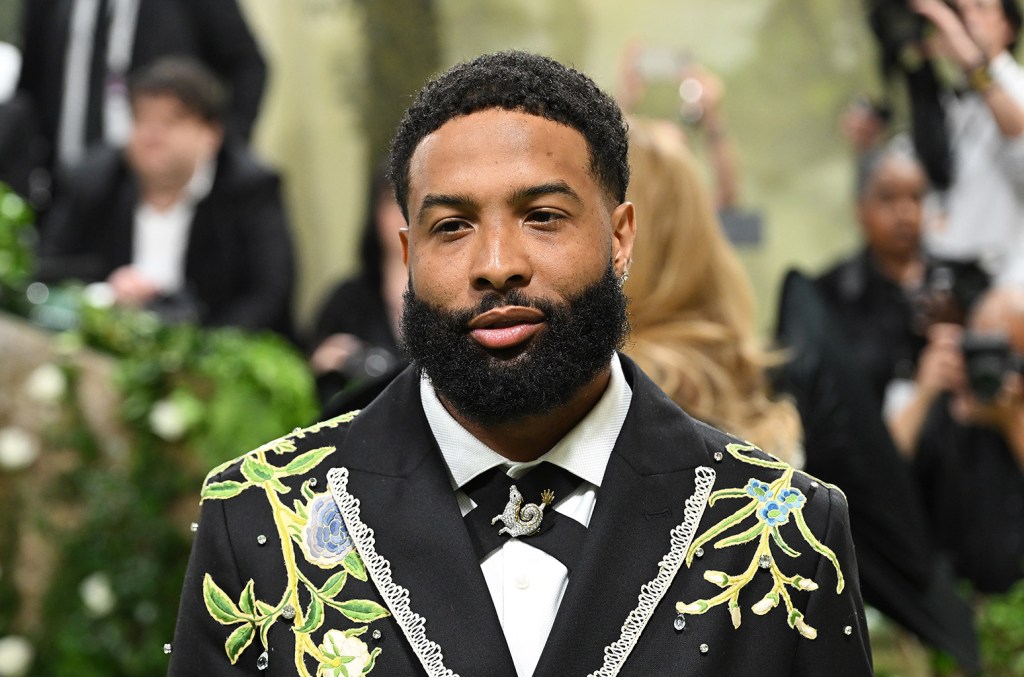
NFL wide receiver Odell Beckham Jr. is standing by his friend Chris Brown, who remains behind bars in a U.K. jail following his May 15 arrest. The former New York Giants superstar took to his Instagram Story early Tuesday (May 20), calling for CB’s freedom. “Free Breeeezyyy,” OBJ wrote. “The moral compass will never lie… […]

Universal Music Group (UMG) announced on Tuesday (May 20) that it will move its East Coast headquarters to Penn 2, a recently redeveloped building that sits on top of the transportation hub Penn Station.  “Located in the heart of Midtown Manhattan and literally adjacent to Madison Square Garden, one of music’s most storied venues where […]

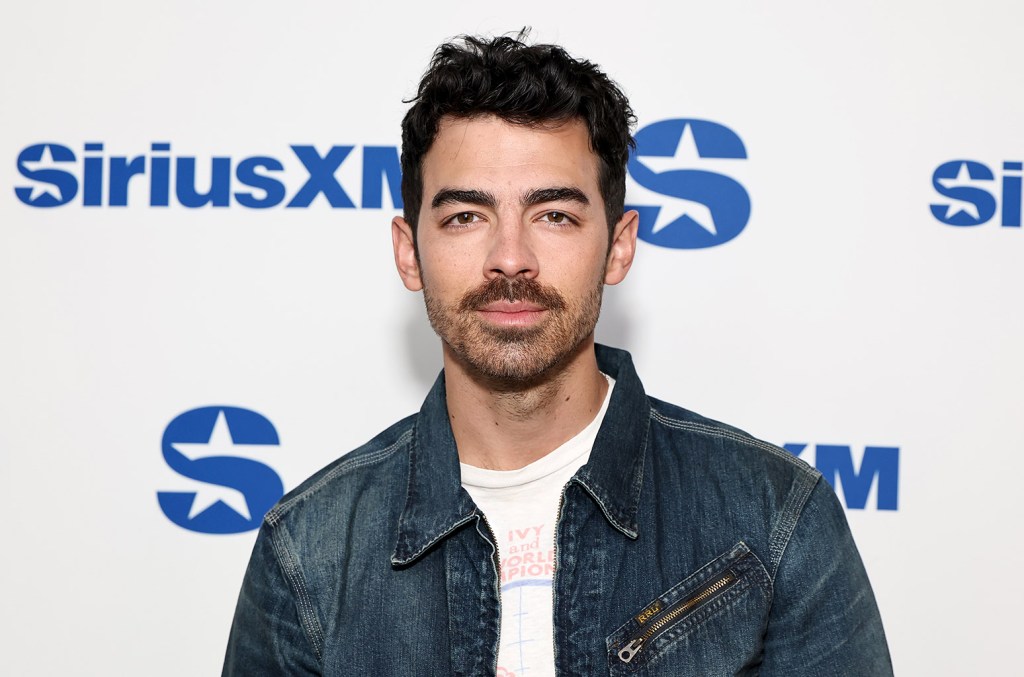
Joe Jonas and Aly & AJ are squashing all potential of “Potential Breakup Song” being about the DNCE frontman, with the trio reuniting in a hilarious TikTok posted Tuesday (May 20). In the clip on Jonas’ account, he mimes talking on the phone while singing the lyrics to the 2007 hit. “It took too long, […]

THE BIG STORY: Jennifer Lopez is facing copyright lawsuits over paparazzi pictures — of herself.
In complaints filed this week in federal court, photographer Edwin Blanco and photo agency BackGrid USA accused the star of violating their rights by reposting images of herself outside a Golden Globes pre-party in January.

A star getting sued for posting a picture of herself might sound unusual, but it’s exceedingly common. Over the last few years, Dua Lipa, Miley Cyrus, Justin Bieber, Ariana Grande, Emily Ratajkowski, LeBron James, Katy Perry and others have all faced similar cases.

Unfortunately for J. Lo, the law is pretty clear: Photographers own the copyrights to the images that they take, and using them without a license constitutes infringement. Simply appearing in an image does not give a celebrity co-ownership of it, nor does it give them the right to repost it for free.

As we’ve written here previously, that probably seems unfair to stars hounded by paparazzi. When Khloe Kardashian was hit with such a case in 2018, she said as much: “They can legally stalk me and harass me and then on top of it all I can’t even use the pictures of myself they take LOL what the f— is this,” the reality star wrote on social media.

Trending on Billboard

Those arguments haven’t gotten much play in court. When Ratajkowski was sued, she briefly argued she had legally re-used an “exploitative image” to criticize the “harassing and relentless behavior of paparazzi.” But the vast majority of these cases quickly end in small settlements — and the Lopez case is unlikely to be any different.

For all the details on the case against J. Lo, go read our story on the new lawsuits from Billboard‘s Rachel Scharf. And for more details on how these cases work, go read my in-depth explainer.

You’re reading The Legal Beat, a weekly newsletter about music law from Billboard Pro, offering you a one-stop cheat sheet of big new cases, important rulings and all the fun stuff in between.

Other top stories this week…

DIDDY TRIAL CONTINUES – The sex-trafficking trial of Sean “Diddy” Combs continued into its second week, first with more bombshell testimony from star prosecution witness Cassie Ventura — about Kid Cudi, a $20 million settlement and more vivid allegations of abuse. The singer was then cross-examined by defense attorneys, who showed jurors huge numbers of her emails and text messages — some loving, others sexually graphic — in an effort to prove she was a willing participant in the so-called “freak-off” sex shows at the center of the case. Friday (May 16) and Monday (May 19) were dominated by testimony from Danity Kane singer Dawn Richard, who said she saw Diddy repeatedly attack Ventura, including once with a frying pan and another time at a restaurant with Usher and other celebs present. The trial is expected to run until early July.

POSTY CUSTODY FIGHT – Post Malone legally opposed efforts by his ex, Hee Sung “Jamie” Park, to move their two-year-old daughter to California, arguing that the child has lived in Utah most of her life and should remain a resident there. The filing came in response to a custody petition filed by Park last month, seeking sole physical custody of the girl following their split in November.

COVID COLLUSION? The Justice Department is conducting a criminal antitrust investigation into whether Live Nation and AEG illegally colluded in their concert refund policies at the beginning of the COVID-19 pandemic. The probe was first reported by Bloomberg and later confirmed by Live Nation, which strongly denied any wrongdoing: “It is not illegal for artist agents, promoters and ticketing companies to work together to solve the unprecedented challenges of a global pandemic,” said Dan Wall, the company’s regulatory chief.

“INFLAMMATORY ACCUSATIONS” – Days after sending subpoenas to Taylor Swift and her lawyers, Justin Baldoni’s attorneys made a shocking claim that Blake Lively asked Swift to delete text messages and used “extortionate threats” to try to get a statement of support from the pop superstar. Those allegations, credited to an anonymous source and denied by Lively’s lawyers as “categorically false,” were later thrown out of court by a federal judge, who called them a “misuse of the court’s docket” by Baldoni’s attorneys: “The sole purpose of the letter is to promote public scandal by advancing inflammatory accusations,” the judge wrote.

DRAKE CASE IS “DANGEROUS”? A group of legal scholars warned a federal judge that Drake’s defamation lawsuit against Universal Music Group over Kendrick Lamar’s “Not Like Us” was “dangerous” because it would have a “chilling effect” on hip-hop and encourage prosecutors to use rap lyrics as evidence in criminal cases. The professors, hailing from UC Irvine, said that diss tracks are a form of creative expression, not a “series of news reports” — and that Drake’s case threatens to “deny rap the status of art and instead to flatten lyrics into literal confessions.”

TERMINATION LITIGATION – Salt-N-Pepa sued Universal Music Group to win back control of their masters, claiming in a new lawsuit that the music giant has stonewalled their use of copyright’s so-called termination rights. Rather than accepting the move, the case claims UMG has instead “punished” the legendary hip-hop duo by removing some of its music from streaming and holding its music “hostage.”

DURK LYRICS BATTLE – Federal prosecutors fired back at Lil Durk’s “false narrative” that they’re unfairly using his lyrics against him, arguing that he was indicted because of a “brazen murder plot” and not because of his music. Weeks after the feds removed all musical references from the case, they argued they still had more than enough to charge him for murder-for-hire: “Defendant was charged for his murderous conduct, not his lyrics.”

SMOKEY POLICE REPORT – Attorneys for the housekeepers suing Smokey Robinson for sexual assault confirmed that they had filed a police report against the 85-year-old Motown legend, leading the Los Angeles County Sheriff’s Department to open a criminal investigation. The singer’s attorneys said such a probe was automatically required after the filing of a report, and said they “welcome that investigation”: “We feel confident that a determination will be made that Mr. Robinson did nothing wrong.”

LIL NAS X CASE TOSSED – A federal appeals court dismissed an unusual lawsuit accusing Lil Nas X of copying Instagram posts by a freelance artist and model named Rodney Woodland, who claimed the rapper stole his distinctive semi-nude poses and used them in his own IG posts. The Ninth Circuit ruled that the disputed images “share few similarities” and Lil Nas likely never saw them anyway.

SHEERAN AT SCOTUS – Ed Sheeran urged the U.S. Supreme Court to finally end one of the long-running lawsuits claiming his “Thinking Out Loud” infringed Marvin Gaye‘s “Let’s Get It On.” The star’s lawyers said the case, filed by a company that owns a partial stake in Gaye’s 1973 song, was rightfully dismissed by a lower appeals court in November, which ruled that the two tracks share only basic “musical building blocks.”

TUPAC/BIGGIE COPYRIGHT CASE – A pair of photographers who snapped photos of the late legendary rappers Tupac Shakur and The Notorious B.I.G. teamed up to sue Univision for copyright infringement, accusing the broadcaster of using the images without permission in a web article about “unsolved” murders.

BANKRUPT STREAMER – Free music streaming service AccuRadio filed for bankruptcy, citing $10 million in debts to SoundExchange for artist royalties. The company, which describes itself as “the only online music streaming service curated by human beings, not algorithms,” said it had been unable to reach a settlement to resolve a lawsuit filed by SoundExchange over those debts.

Kid Cudi is expected to testify as a witness in Diddy’s sex trafficking trial.
According to CNN, prosecutor Maurene Comey announced on Tuesday (May 20) that Cudi (born Scott Mescudi) will take the stand later this week.

Last week, during Cassie’s time on the stand, she testified that Diddy became irate and threatened to blow up Cudi’s car after learning she was dating the Cleveland-bred rapper in 2011.

“Too much danger, too much uncertainty of what could happen if we continued to see each other,” she reportedly said of why she ended things romantically with Cudi after a brief dating stint.

Explore

Explore

See latest videos, charts and news

See latest videos, charts and news

“[Diddy] said he wanted Scott’s friends to see Scott’s car blown up,” Cassie added. “We met, [Diddy], [Kid Cudi] and me. [Kid Cudi] said, ‘What about my vehicle?’ And [Diddy] said, ‘What vehicle?’ And that was the end of the meeting.”

Trending on Billboard

Cassie’s bombshell 2023sexualabuse lawsuit against Combs accused Diddy of blowing up Kid Cudi’s car in his driveway after repeatedly threatening the “Day ‘n’ Nite” rapper. Reps for Cudi confirmed the car explosion to The New York Times.

Cassie’s mother, Regina Ventura, took the stand and claimed that Diddy demanded he be paid $20,000 for the money he spent on Cassie as he became enraged to find out she was dating Cudi.

According to Complex, Ventura took out a home equity loan to get Diddy the cash, but returned the money days later without an explanation.

An email sent from Cassie to her mom was reportedly shown in court, which accused Diddy of threatening to leak a pair of sex tapes featuring Cassie. “He is going to release two explicit tapes of me,” the 2011 email reportedly reads. “One on Christmas Day… Another one soon after that. He has also said that he will be having someone hurt me and Scott Mescudi physically.”

Kid Cudi’s testimony will follow George Kaplan, who was an employee of Diddy’s who quit after allegedly witnessing physical abuse. Cudi’s time on the stand could come on Wednesday (May 21) or Thursday (May 22).

Diddy is facing charges of sex trafficking and racketeering, and the Bad Boy mogul could be sentenced to life in prison if found guilty on all counts. The trial is expected to last into July.

The maker of Fortnite has defeated a $32.5 million patent lawsuit over animated in-game concerts put on by Travis Scott and Ariana Grande, with a federal jury deciding that it did not steal another company’s technology for the virtual events.
The verdict came down on Monday (May 19) after a weeklong trial against Fortnite maker Epic Games. Epic was accused of infringing a patent invented by Canadian virtual reality company Utherverse Digital when it staged the virtual Scott and Grande concerts for tens of millions of Fortnite users in 2020 and 2021.

Utherverse was seeking $32.5 million in damages for the alleged infringement. But the jury in Seattle federal court rejected the claims, siding with Epic to rule that neither the Scott nor the Grande concert stole Utherverse’s technology.

Trending on Billboard

Lawyers for Utherverse and Epic did not immediately respond to Billboard‘s requests for comment on the verdict Tuesday (May 20).

The litigation has been ongoing since 2021. That year, Utherverse claimed that the Fortnite concerts relied on a patent it was issued in 2017, which covers a type of technology for playing back a recorded event in a virtual world.

Epic denied any infringement, saying the technology behind its virtual concerts used completely different processes than Utherverse’s patent. Epic’s attorney, Daralyn Durie of the law firm Morrison Foerster, said during the trial’s closing arguments that Utherverse was “trying to fit a square peg in a round hole.”

Jurors heard testimony during the trial from Brian Shuster and Aaron Burch, two Utherverse employees who co-invented the patent at issue. Multiple Epic executives also testified, including controller Brian Boyle and former head of marketing Matthew Weissinger.

Scott’s “Astronomical” concert series in April 2020 made history as Fornite’s largest-yet in-game gathering, drawing nearly 28 million unique players from across the world across five airings of a pre-taped performance by the rapper’s avatar.

In August 2021, Fortnite followed up its success with the Scott concerts with Grande’s “Rift Tour,” which similarly featured an animated version of the pop star performing hits like “7 rings” and “Positions” across five viewings.

A number of other artists have since performed their own virtual concerts within the massively popular Fortnite gaming universe, including Eminem, The Weeknd and Billie Eilish.

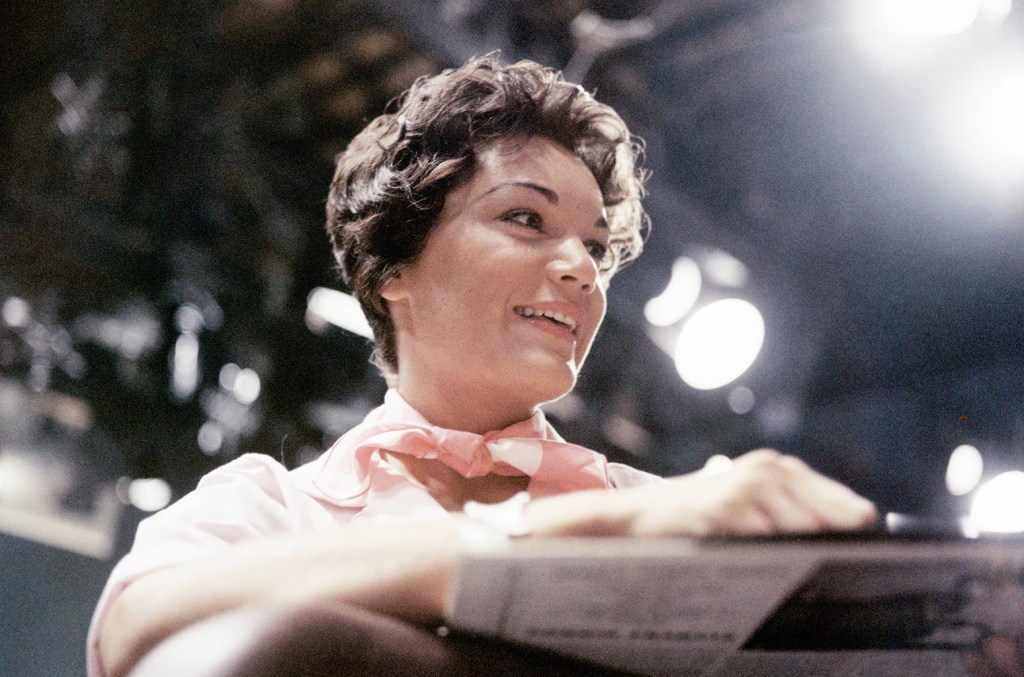
If not for TikTok, Connie Francis‘ 1962 tinkly organ bop “Pretty Little Baby” may have been forever obscure. It was never a hit, and Francis, reached by phone at her Parkland, Fla., home, barely remembers recording it. “I had to listen to it to identify it,” admits the 87-year-old pop legend, who became the first woman to top the Billboard Hot 100 as a solo act in July 1960 with “Everybody’s Somebody’s Fool,” one of her three Hot 100 No. 1s.
“Then, of course, I recognized the fact that I had done it in seven languages.”

Trending on Billboard

A friend recently informed Francis that “Pretty Little Baby” had turned up on TikTok as a “viral hit,” an upbeat soundtrack for people (including Kylie Jenner and Kim Kardashian) showing off babies, puppies, kittens and — befitting the lyric “you can ask the flowers” — flowers. Francis responded: “What’s that?” In a sense, TikTok is just a technological update of American Bandstand in the ’60s, when Dick Clark’s TV countdown regularly drew 8 million viewers and automatically turned songs into hits. “Without Dick Clark, there would have been no Connie Francis,” Francis says.

“Pretty Little Baby” was one of 40 songs Francis recorded during several recording sessions over four days in August 1961, according to her 2017 autobiography Among My Souvenirs: The Real Story Vol. 1. The track landed on her Connie Francis Sings Second Hand Love & Other Hits album.

On April 10, “Pretty Little Baby” was streaming 17,000 times per week in the U.S.; a month later, it was streaming 2.4 million times, an increase of more than 7,000%. The track has 10 billion TikTok views, hitting No. 1 on the app’s Viral 50 and Top 50 charts, and recently crossed over to streaming success, with 14 million global streams, landing at No. 67 on Spotify’s Global Top 100. Francis’ label, Universal Music, recently reissued the versions Francis had sung in Swedish, Japanese and other languages in 1962, when her label, MGM, hoped to score hits in regions outside the U.S.

Francis, who told Facebook followers in March she is awaiting stem cell therapy to treat a “troublesome painful hip,” discussed “Pretty Little Baby,” “Who’s Sorry Now,” Just In Time (the hit Broadway musical about her late onetime boyfriend Bobby Darin) and the domineering nature of her late Svengali father, George Franconero Sr. Of her newfound virality, she tells Billboard: “I’m getting calls from everywhere: ‘You’re a TikTok phenomenon.’”

Did the memory of recording “Pretty Little Baby” come back to you when you recently listened to the song?

Yes. I remembered after I heard it. It’s just a blessing to know that kindergarten kids know me and my music now. It’s really thrilling.

That song was on Connie Francis Sings Second Hand Love & Other Hits. Phil Spector co-wrote the title track.

Yes, it was Phil Spector’s first top 10 record.

What do you remember about working with him?

I didn’t work with him on it. He wasn’t even at the session.

Since you posted “What’s that?” on Facebook, have you learned about viral hits and TikTok?

Yes. [Laughs.] Now I know.

Have you seen Just In Time, in which Gracie Lawrence plays you on stage?

I’m planning on going to see it.

Lawrence told an interviewer at Nylon that the most difficult song of yours to sing is “Who’s Sorry Now,” from 1958. She said: “The balance of singing emotionally, going through the heartbreak she experiences every night, while also wanting to deliver a pitch-perfect performance is a really challenging task. It’s one I assume Connie herself was navigating while performing the song as well at the pinnacle of her career, and she’s just been put through the ringer emotionally behind the scenes. I think about that a lot.” Does that resonate with you?

Yes. It does resonate with me.

How did you get through that emotion when recording it?

I didn’t want to record the song. My father insisted that I record “Who’s Sorry Now.” I did three other songs at the session first, in the hopes of not being able to get to “Who’s Sorry Now” in the four-hour time allotted to me. I had 16 minutes left in the session and I said, “That’s a wrap, fellas, there’s no time for ‘Who’s Sorry Now.’” My father said, “If I have to nail you to that microphone, you’re going to do at least one take of ‘Who’s Sorry Now.’” So that’s what I did — one take of “Who’s Sorry Now.” And I didn’t try to imitate anybody else, as I always had on my recordings. By the time I was 14, I did demonstration records, and a publisher would say, “Connie, give us some of that great Patti Page sound, give me some of that great Kay Starr sound, give me some of that great Teresa Brewer sound.” I didn’t have a style of my own yet. But on “Who’s Sorry Now,” I was so turned off on the song that I didn’t try to imitate anybody else. I just sounded like myself for the first time. And it was a hit.

So not only was that a breakthrough on the charts, it was a breakthrough for you creatively.

Yes, it was.

You described in your book the “arduous work” to drive between radio stations and record hops in different cities, “from one dreary, depressing $3 or $4 a day hotel room to the next.” When did that dreary, depressing part of your career come to an end?

It came to an end with “Who’s Sorry Now.” I didn’t have to worry about staying in $4-a-night hotels.

You wrote in your book: “Bobby wasn’t merely a person, he was an experience.” If an actor and actress were to reach out for suggestions on how to play both you and Mr. Darin, what advice would you give them?

Well, Bobby was very cool. And I was very naive. When he said, “I dig,” I said, “You do? For what sort of company? Oil?”

What plans do you have to promote “Pretty Little Baby”? Interviews? Appearances?

I don’t feel like going on the road.

TV shows?

Yes, I’ll do TV.

What do you miss about the music business?

I miss the stage.

Is there ever an opportunity for you to perform again?

Those days are over. That ship has sailed.

For health reasons? Or too difficult logistically?

For a variety of reasons. It’s too much work.

Anything else you want to say to your new “Pretty Little Baby” fans?

I want to thank everybody. It gives me a new lease on life.

Three years after initially earning a top 20 pop hit on the all-genre Billboard Hot 100 as part of the duo Surfaces, singer-songwriter Forrest Frank began to compile contemporary Christian music hits. He’s become one of the genre’s fastest-rising artists, melding elements of pop, hip-hop and gospel on songs such as “No Longer Bound,” a collaboration with Hulvey, which cracked the top 20 on Billboard‘s Hot Christian Songs chart. But it’s the ebullient, summer-ready “Your Way’s Better” that becomes Frank’s first solo Hot 100 entry — the hit has reached a No. 61 high on the chart and crowns Hot Christian Songs for the first time this week (charts dated May 24). Meanwhile, his recent team-up with country artist Thomas Rhett, “Nothing Else,” resides at No. 4 on the same chart.

Frank originally released the pop-inflected “Your Way’s Better” in October 2024, but the song’s success was spurred by TikTok momentum earlier this year, thanks to a viral TikTok dance that both resonated with fans — and took Frank, then on a social media hiatus, by surprise.

Trending on Billboard

In the past year, Frank has released music at a dizzying speed, stoking fervor in the industry and his growing fan base. His July 2024 album, Child of God, was nominated for a Grammy for best contemporary Christian music album and nominated for top Christian album at the Billboard Music Awards. By that November, he returned with a deluxe version of the album; on May 9, he released its follow-up, Child of God II. The two installments currently hold Nos. 1 and 2 on Top Christian Albums, with his more recent project leading the chart.

“That’s kind of a theme for me in my career,” Frank tells Billboard, calling while on the road during the second part of his sold-out Child of God tour. “I love pushing the boundaries, and I feel like my career is busting myths.”

Below, Frank talks about “Your Way’s Better,” Child of God II and Christian music’s current Hot 100 surge.

How did “Your Way’s Better” come about?

I was having a hard day and had gone for a drive. I remember pulling into my neighborhood and that chorus came spilling out. It was just a prayer that ended up having a melody with it. I recorded a voice memo of it on my phone and didn’t do anything with it for a few months. Then, backstage at [Frank’s 2024 Child of God tour], I pulled out my laptop and produced the beat for it. Then, my producer friend PERA came out to a session and we were jamming on this song and I said, “What if you play something kind of somber?” He starts playing it, and I freestyled the melody [and] some of the words that ended up on the track.

You released “Your Way’s Better” last October, but a dance that went viral on TikTok and social media helped boost it. How did that happen?

It was my 12th- or 13th-highest streaming song at a daily rate — it was not making a big splash. There’s a couple, David Myers and Bridgette [Nicole], and they post a new dance almost every day to different songs, and it was one they did [in February]. What’s interesting is that I was taking a social media break — I had posted maybe three times in a four-month period. At first, I didn’t really engage with it, but then I saw a significant jump in my streams. I’m seeing these kids doing the dance, and it’s kind of like this vacation Bible school type thing, [learning] the dance to go with the song and do the hand motions and stuff. It is like that energy, but not in an enclosed church space. It just kind of feels like it’s across the whole world.

You just released your new album, Child of God II, on May 9, just 10 months after Child of God, and six months after its deluxe edition. Why did you want to drop another full album so soon?

They say you have to upload a song about a month before it comes out to make sure that all the distributing partners have enough time to add it to playlists and can properly program. I remember a year or two ago thinking, “Is that really the case?” So, I uploaded music closer to the deadline, like 48 hours before a release and it made it on [Spotify playlist] New Music Friday.

With Child of God, I had a song with Connor Price called “Up!” and that splashed and two weeks later, we released “Good Day,” which became the next biggest one. We kept dropping songs every two weeks because that’s the pace I was writing music. Rather than hold back music for months, why not just put everything out there and see what happens? I feel like life is short: My time and moment is finite to a degree, so if I’m excited about these songs and the fans are excited, why would I hold stuff back?

There are a lot of crossover efforts between contemporary Christian music and country happening now, such as your collaboration with Thomas Rhett on “Nothing Else.” Why do you think that’s the case?

I think including God is pretty common in country music, [but] I’ve noticed that transition in my heart and the fullness I get to experience in praising God specifically. I think the country space is starting to feel that as well. I could see in the next year or two, a lot of the A-list country artists just making straight-up Christian worship songs.

With Brandon Lake and Jelly Roll’s “Hard Fought Hallelujah” also on the Hot 100, what’s your take on the surge in Christian music’s popularity?

I think it’s just the people. Yes, it’s the artists who are expressing their genuine love for God, but also, it’s the consumers that are supporting it and championing it. With my tour, there’s this family thing going on: We didn’t expect for families to come to the show, but “Your Way’s Better” has become the music for the car ride, the music on the way to school. It was like an invisible market. I knew that there was kind of a starving family market, but here it is.

A version of this story appears in the May 17, 2025, issue of Billboard.

Source: Gilbert Flores / Getty

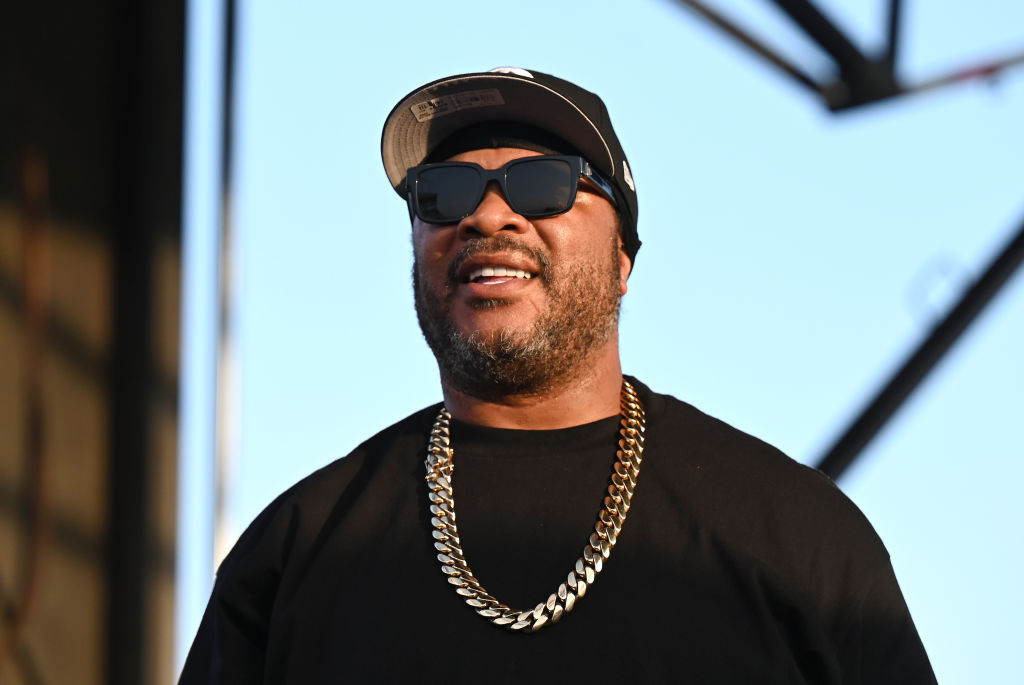
In a recent interview, rapper and former television host Xzibit revealed that he was only paid $5,000 per episode for his role on MTV’s popular show Pimp My Ride.

Despite the show’s widespread success and cultural impact, the financial compensation he received was surprisingly low. Xzibit opened up about the disconnect between public perception and reality, explaining that what appears successful from the outside does not always reflect the truth behind the scenes.

He shared that the initial deal he signed was not favorable and likely mishandled by his agents at the time. They had no way of knowing how big the show would become, and the contract failed to secure better terms. Xzibit had also hoped that being on MTV would help promote his music by including his videos, but that opportunity never came to fruition.

As the show progressed, Xzibit began to feel restricted by the obligations it placed on him. He expressed dissatisfaction with being unable to tour or pursue other opportunities due to his commitment to the show. His frustration only grew as he realized the financial arrangement was not improving in line with the show’s growing popularity.

He went on to claim that the situation worsened when Viacom, MTV’s parent company, began reducing his earnings. Although his contract included a clause promising him 15 percent of all merchandise featuring his name or likeness, that promise was undercut. Xzibit noted that while the first season’s DVD box prominently featured his face, later seasons did not, with the packaging instead focusing solely on the cars. This change appeared to be a deliberate way to avoid paying him his share of merchandise profits.

Xzibit also alleged that when the show went into syndication, his music was removed from the episodes. This move, he believes, was made specifically to avoid paying him additional royalties. His story sheds light on the often unseen struggles artists face behind the scenes, even when their work is widely celebrated.

HipHopWired Featured Video