State Champ Radio

by DJ Frosty

Current track

Title

Artist

Current show

State Champ Radio Mix

1:00 pm 7:00 pm

Current show

State Champ Radio Mix

1:00 pm 7:00 pm


Author: djfrosty

Page: 414

Source: Chip Somodevilla / Getty

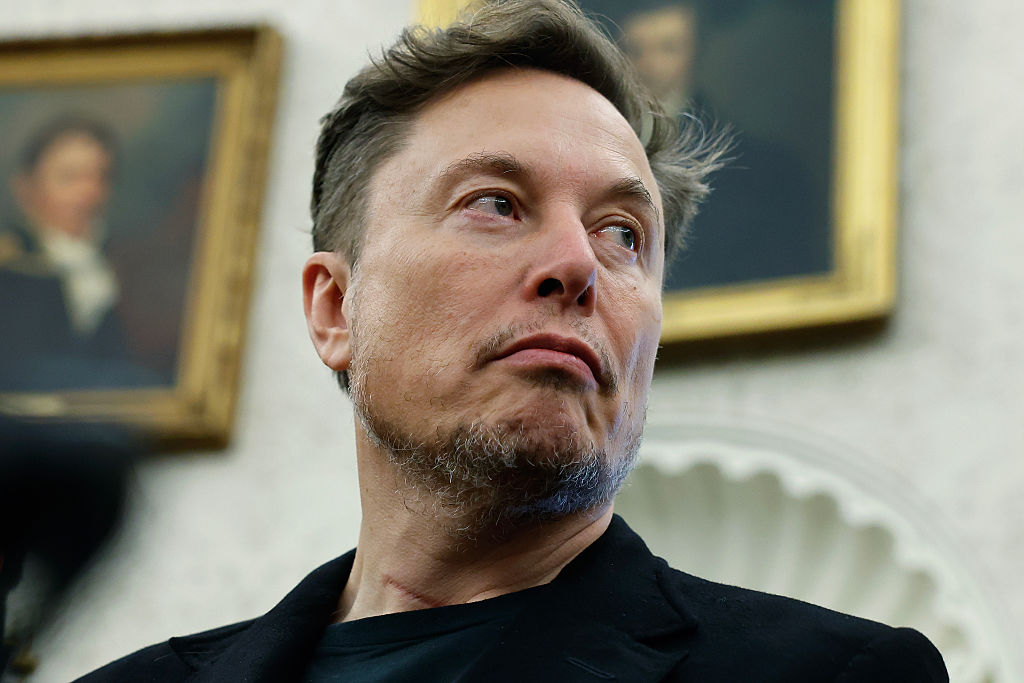
As Elon Musk says he will be spending a “lot less” money on politics, that action is now drowned out by the revelation of how toxic he’s become all around. This came to light in a segment on “CNN News Central” on Wednesday (May 21) where analyst Harry Enten detailed how far the tech billionaire who headed the Department of Government Efficiency (DOGE) team that slashed thousands of federal jobs has fallen.

“How unpopular is he?” Enten said, utilizing a flatscreen showing the data. “How low can you go? Oh, my – okay, take a look here: Elon Musk’s net favorability rating, look at this shift back in 2017, before he really started this politics thing. He was at plus-24 points. Look at where he is now: Whoa, he fell through the floor, minus-19 points. Among Democrats, the fall was even more dramatic. We’re talking about going from plus-35 points on net favorability rating. That is quite a popular guy among Democrats, but get this – now down to minus-91 points. You can’t really go lower than that. I guess you could go down to minus-100 points, but he became political kryptonite.”Enten highlighted how Musk’s efforts with DOGE led to many Americans truly disliking him, with those who identify as Democrats being the most expressive, noting his attempts to influence the Wisconsin Supreme Court election race held earlier this year. But his comparison of Tesla, which Musk co-founded, to General Motors in terms of favorability really showed the height of disdain Musk has earned. “We’re going to compare General Motors and Tesla,” Enten began. “General Motors, quite well-liked by the American people, plus-23 points on net favorability rating. But look at Tesla, minus-20 points. So this idea that Tesla could somehow separate itself from Elon Musk, the American people saw the exact same way, and, of course, Tesla is a business.”“It turns out that Elon Musk’s political kryptonite was also becoming kryptonite for selling cars,” Enten added. As an ally to President Donald Trump, Musk has been heavily targeted by activists since Trump’s administration took office with protests here and abroad. And it has rattled the mogul, who issued a threat to those who he claimed threatened him personally during a virtual interview with Bloomberg’s Qatar Economic Forum. “We’re coming for you,” he said, pointing to the camera.Check out the CNN segment above.
HipHopWired Featured Video

Source: Nettflix / Netflix

With a brand new 10-year streaming deal with Netflix now well underway, the higher-ups over at WWE know they have to keep the company and brand as relevant and popular as ever and are reportedly looking to expand their reach and are making moves to ensure that the WWE remain at the top of the wrestling world for the foreseeable future.

According to Newsweek, the WWE are looking into recruiting new wrestling talent from around the world as they look to reel in new fans from different countries and cultures in an effort to get the WWE brand to be as popular and relevant as ever. It’s getting to the point where WWE officials are looking into kicking off an NXT Europe brand by the end of 2025 to attract European wrestlers into the fold before ultimately integrating them into the majors i.e. WWE’s main roster.

Per Newsweek:

This potential new branch in Europe would follow several of WWE’s recent attempts to attract more international wrestlers. These activities include the special UK Tryouts that WWE held while on its European tour in March 2025, which gathered many hopefuls.

From those tryouts, it has been reported that WWE found several wrestlers they are very interested in signing. Among these talents are Spanish wrestler Zozaya, Aigle Blanc from France, and Mike D. Vecchio, who represents Italy, along with other promising athletes who made an impression.

WWE’s concept of NXT Europe is not a brand-new idea, as it builds on previous international efforts. For a while, the company has discussed creating a new training and development center based in the European region to nurture local talent.

We’re sure there’s popular European wrestlers licking their chops at the chance to make that jump to the timeless WWE brand at some point and showing Americans exactly what they’re made of across the pond.

What do y’all think about WWE’s plan to recruit worldwide talent to the WWE brand? Let us know in the comments section below.

HipHopWired Featured Video

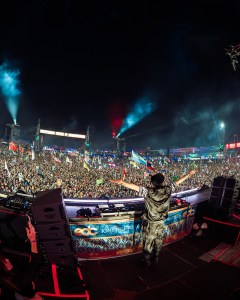
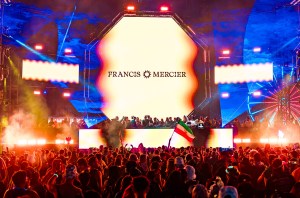
May 16-18 marked the annual dance mega-festival EDC Las Vegas, which went down at its longtime home at the Las Vegas Motor Speedway. The always hefty lineup this year featured more than 250 artists playing across 15 areas and stages, which this year included the new Ubuntu stage dedicated to Afro house. The lineup included […]

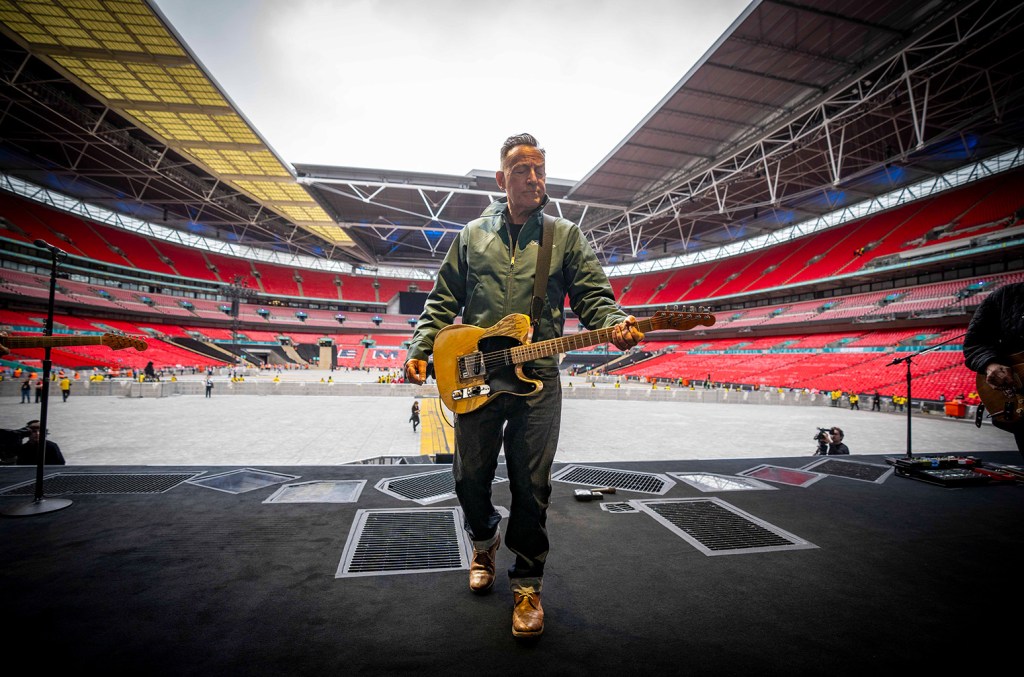
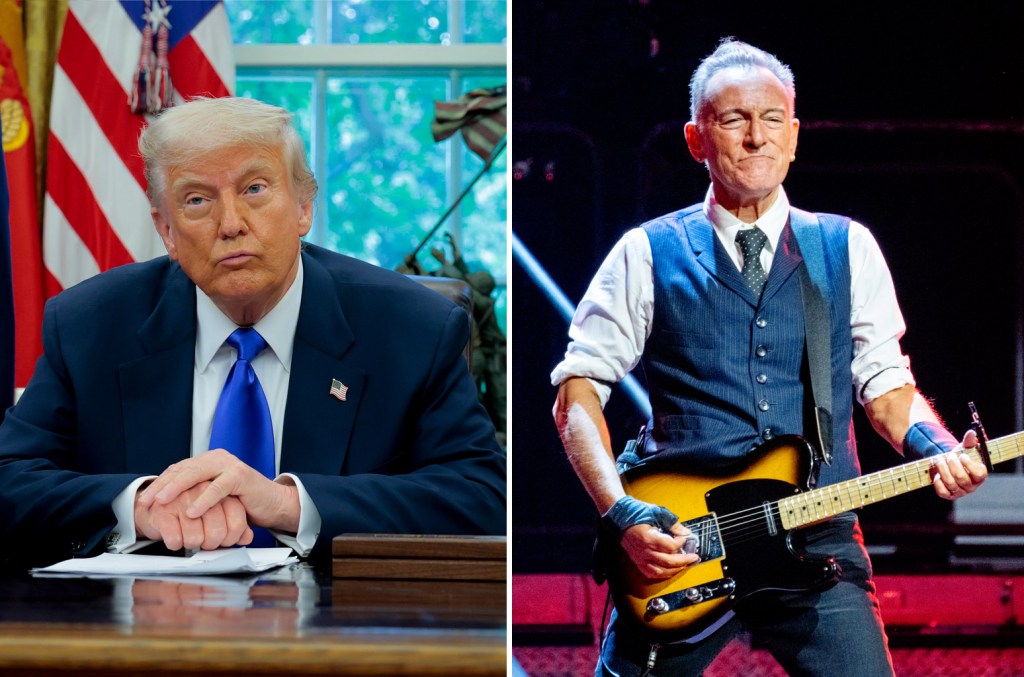
Bruce Springsteen is doubling down on his stance that the United States government is “corrupt, incompetent and treasonous,” even after his remarks on the subject at a Manchester concert infuriated President Donald Trump last week.
One week after criticizing the Trump administration during a speech at his European tour kickoff show in England — leading the twice-impeached POTUS to launch into a series of vitriolic posts targeting him on Truth Social — the Boss has released a Land of Hopes & Dreams EP featuring a recording of the address as its opening track. “In my home, the America I love, the America I’ve written about, and has been a beacon of hope and liberty for 250 years, is currently in the hands of a corrupt, incompetent and treasonous administration,” he says in the audio snippet. “Tonight, we ask all who believe in democracy and the best of our American experience to rise with us, raise your voices against the authoritarianism, and let freedom ring.”

The rocker then dives into 2001’s “Land of Hopes & Dreams,” which is also the name Springsteen’s ongoing tour.

In addition to the politically charged speech, the six-track project also features live takes of the musician and his band performing “Long Walk Home,” “My City of Ruins” and “Chimes of Freedom” in Manchester. There’s also a three-and-a-half-minute recording of Springsteen once again critiquing the state of American politics later in the show.

“In my country, they’re taking sadistic pleasure in the pain that they inflict on American workers, they’re rolling back historic civil rights legislation that led to a more just and moral society,” he says in the clip. “They’re abandoning our great allies and siding with dictators against those struggling for their freedom.”

The EP comes shortly after Trump responded to Springsteen’s onstage remarks by calling him “highly overrated” and “dumb as a rock” on Truth Social, adding at the time, “This dried out ‘prune’ of a rocker (his skin is all atrophied!) ought to KEEP HIS MOUTH SHUT until he gets back into the Country, that’s just ‘standard fare.’”

Later, the billionaire accused the “Born in the U.S.A.” singer — along with Beyoncé, Oprah and Bono — of taking part in an “illegal election scam” for Kamala Harris, alleging that he accepted an undisclosed payment from the 2024 Democratic nominee to endorse her for president. (Campaign finance records do not support this claim, and Harris’ campaign has denied paying any artist for their support in last year’s election.)

Trump still hadn’t let the matter go as of Wednesday, when he shared an edited video of himself golfing — and appearing to hit and knock over Springsteen with his ball — on Truth Social hours after the Land of Hopes & Dreams EP dropped.

But despite Trump’s counters, Springsteen hasn’t ever backed down on his firm stance against the president’s policies. The E Street bandleader has long been vocal about his beliefs, telling The Atlantic in 2020 that he believed Trump — who in May 2024 was convicted of 34 felony counts in a hush money trial — to be a “threat to our democracy.”

Also in 2024, Springsteen proudly endorsed Harris and played at a number of her campaign events. He also appeared in an advertisement for the former VP’s campaign, telling viewers, “This election is about a group of folks who want to fundamentally undermine our American way of life … Donald Trump does not understand this country, its history, or what it means to be deeply American.”

Cardi B will receive the American Society of Composers, Authors and Publishers Voice of the Culture Award, recognizing her groundbreaking influence on music and culture. On Wednesday (May 21), ASCAP announced that Cardi would be honored with the award for 2025, which comes after Usher received the award last year. “Cardi B has left an […]

President Donald Trump is once again letting his distaste for Bruce Springsteen be known after the musician slammed him and his administration during two recent concerts.
This time, an altered video Trump shared via his Truth Social platform on Wednesday (May 21) shows the commander in chief in a red Make America Great Again cap as he takes a big swing and hits a ball on the golf course as onlookers cheer him on. The video then cuts to a scene of The Boss walking on stage during a concert, as a white dot representing the golf ball suddenly sails into the shot, hits the musician in the back and knocks him down as audio of onlookers clapping and saying “nice shot” plays. Trump did not caption the video, but also shared it on X.

Billboard has reached out to Springsteen’s reps for comment.

This latest dig at the 20-time Grammy winner comes after Springsteen spoke out against the twice-impeached president on his ongoing tour. “[America] is currently in the hands of a corrupt, incompetent and treasonous administration,” the rocker, who endorsed Democratic presidential nominee Kamala Harris in the 2024 election, said during his first Land of Hopes and Dreams Tour in Manchester, England, on May 14. “Tonight, we ask all who believe in democracy and the best of our American experience to rise with us, raise your voices against the authoritarianism, and let freedom ring.”

Trump, who in May 2024 was convicted of 34 felony charges in his hush money trial, responded in a lengthy Truth Social post on May 16 calling the artist “dumb as a rock” and going on to insult his talent. “This dried out ‘prune’ of a rocker (his skin is all atrophied!) ought to KEEP HIS MOUTH SHUT until he gets back into the Country, that’s just ‘standard fare,’” Trump wrote the same day he also insulted Taylor Swift, who also endorsed his opponent in the election. “Then we’ll all see how it goes for him!”

Springsteen continued his criticism of the president during his May 17 show in Manchester. “In my home, they’re persecuting people for their right to free speech and voicing their dissent. That’s happening now,” the musician told concertgoers. “The majority of our elected representatives have utterly failed to protect the American people from the abuses of an unfit president and a rogue government. They have no concern or idea of what it means to be deeply American.”

Those same comments from his two concerts are included in a new six-track EP also titled Land of Hopes & Dreams, which arrived on Wednesday.

Since the back-and-forth, the president has called for investigations into Springsteen as well as other stars for allegedly joining in on an what he calls an “illegal election scam” he claims was orchestrated by Harris’ campaign. In May 19 Truth Social posts, Trump accused The Boss, Beyoncé, U2’s Bono as well as Oprah Winfrey of illegally accepting undisclosed payments to appear at the former VP’s rallies and endorse her. FactCheck.org previously disproved those allegations when they first surfaced in 2024.

After Trump initially insulted Springsteen and Swift on May 16, the American Federation of Musicians International stepped up to defend the artists. “The American Federation of Musicians of the United States and Canada will not remain silent as two of our members — Bruce Springsteen and Taylor Swift — are singled out and personally attacked by the President of the United States,” Tino Gagliardi, the organization’s president, said in part in a statement that day. “Musicians have the right to freedom of expression, and we stand in solidarity with all our members.”

Las Vegas Metropolitan Police are reporting two deaths that happened amid EDC Las Vegas 2025, the dance music mega-festival that happened at the Las Vegas Motor Speedway this past weekend, May 16-18. A statement provided to Billboard by the Las Vegas Metropolitan Police Department (LVMPD) says that “after discussions with the coroner’s office, LVMPD will be […]

LONDON — When the European Parliament passed sweeping new laws governing the use of artificial intelligence (AI) last March, the “world first” legislation was hailed as an important victory by music executives and rights holders. Just over one year later — and with less than three months until the European Union’s Artificial Intelligence Act is due to come fully into force — those same execs say they now have “serious concerns” about how the laws are being implemented amid a fierce lobbying battle between creator groups and big tech.
“[Tech companies] are really aggressively lobbying the [European] Commission and the [European] Council to try and water down these provisions wherever they can,” John Phelan, director general of international music publishing trade association ICMP, tells Billboard. “The EU is at a junction and what we’re trying to do is try to push as many people [as possible] in the direction of: ‘The law is the law’. The copyright standards in there are high. Do not be afraid to robustly defend what you’ve got in the AI Act.”

Trending on Billboard

One current source of tension between creator groups, tech lobbyists and policy makers is the generative AI “Code of Practice” being developed by the EU’s newly formed AI Office in consultation with almost 1,000 stakeholders, including music trade groups, tech companies, academics, and independent experts. The code, which is currently on its third draft, is intended to set clear, but not legally binding, guidelines for generative AI models such as OpenAI’s ChatGPT to follow to ensure they are complying with the terms of the AI Act.

Those obligations include the requirement for generative AI developers to provide a “sufficiently detailed summary” of all copyright protected works, including music, that they have used to train their systems. Under the AI Act, tech companies are also required to water mark training data sets used in generative AI music or audio-visual works, so there is a traceable path for rights holders to track the use of their catalog. Significantly, the laws apply to any generative AI company operating within the 27-member EU state, regardless of where they are based, acquired data from, or trained their systems.   

“The obligations of the AI Act are clear: you need to respect copyright, and you need to be transparent about the data you have trained on,” says Matthieu Philibert, public affairs director at European independent labels trade body IMPALA.

Putting those provisions into practice is proving less straight-forward, however, with the latest version of the code, published in March, provoking a strong backlash from music execs who say that the draft text risks undermining the very same laws it is designed to support.

“Rather than providing a robust framework for compliance, [the code] sets the bar so low as to provide no meaningful assistance for authors, performers, and other right holders to exercise or enforce their rights,” said a coalition of creators and music associations, including ICMP, IMPALA, international labels trade body IFPI and Paris-based collecting societies trade organization CISAC, in a joint statement published March 28.

Causing the biggest worry for rights holders is the text’s instruction that generative AI providers need only make “reasonable efforts” to comply with European copyright law, including the weakened requirement that signatories undertake “reasonable efforts to not crawl from piracy domains.”

There’s also strong opposition over a lack of meaningful guidance on what AI companies must do to comply with a label, artist or publisher’s right to reserve (block) their rights, including the code’s insistence that robots.txt is the “only” method generative AI models must use to identify rights holders opt out reservations. Creator groups says that robots.txt – a root directory file that tells search engine crawlers which URLs they can access on a website — works for only a fraction of right holders and is unfit for purpose as it takes effect at the point of web crawling, not scraping, training or other downstream uses of their work.

“Every draft we see coming out is basically worse than the previous one,” Philibert tells Billboard. “As it stands, the code of practice leaves a lot to be desired.”

Caught Between Creators, Big Tech and U.S. Pressure

The general view within the music business is that the concessions introduced in the third draft are in response to pressure from tech lobbyists and outside pressure from the Trump administration, which is pursuing a wider deregulation agenda both at home and abroad. In April, the U.S. government’s Mission to the EU (USEU) sent a letter to the European Commission pushing back against the code, which it said contained “flaws.” The Trump administration is also demanding changes to the EU’s Digital Services Act, which governs digital services such as X and Facebook, and the EU’s Digital Markets Act, which looks to curb the power of large digital platforms.

The perception that the draft code favors Big Tech is not shared by their lobby group representatives, however.

“The code of practice for general-purpose AI is a vital step in implementing the EU’s AI Act, offering much-needed guidance [to tech providers] … However, the drafting process has been troubled from the very outset,” says Boniface de Champris, senior policy manager at the European arm of the Computer and Communications Industry Association (CCIA), which counts Google, Amazon, Meta and Apple among its members.

De Champris says that generative AI developers accounted for around 50 of the nearly 1,000 stakeholders that the EU consulted with on the drafting of the code, allowing the process “to veer off course, with months lost to debates that went beyond the AI Act’s agreed scope, including proposals explicitly rejected by EU legislators.” He calls a successful implementation of the code “a make-or-break moment for AI innovation in Europe.”

In response to the backlash from creator groups and the tech sector, the EU’s AI Office recently postponed publishing the final code of practice from May 2 to an unspecified date later this summer to allow for changes to be made.

The AI Act’s key provisions for generative AI models come into force Aug. 2, after which all of its regulations will be legally enforceable with fines of up to 35 million euros ($38 million, per current exchange rate), or up to 7% of global annual turnover, for large companies that breach the rules. Start-up businesses or smaller tech operations will receive proportionate financial punishments.

Creators Demand Stronger Rules

Meanwhile, work continues behind the scenes on what many music executives consider to be the key part of the legislation: the so-called “training template” that is being developed by the AI Office in parallel with the code of practice. The template, which is also overdue and causing equal concern among rights holders, will set the minimum requirements of training data that AI developers have to publicly disclose, including copyright-protected songs that they have used in the form of a “sufficiently detailed summary.”

According to preliminary proposals published in January, the training summary will not require tech companies to specify each work or song they have used to train AI systems, or be “technically detailed,” but will instead be a “generally comprehensive” list of the data sets used and sources.

“For us, the [transparency] template is the most important thing and what we have seen so far, which had been presented in the context of the code, is absolutely not meeting the required threshold,” says Lodovico Benvenuti, managing director of IFPI’s European office. “The act’s obligations on transparency are not only possible but they are needed in order to build a fair and competitive licensing market.”

“Unless we get detailed transparency, we won’t know what works have been used and if that happens most of this obligation will become an empty promise,” agrees IMPALA’s Philibert. “We hear claims [from the European Commission] that the training data is protected as a trade secret. But it’s not a trade secret to say: ‘This is what I trained on.’ The trade secret is how they put together their models, not the ingredients.”

“The big tech companies do not want to disclose [training data] because if they disclose, you will be able to understand if copyrighted material [has been used]. This is why they are trying to dilute this [requirement],” Brando Benifei, a Member of the European Parliament (MEP) and co-rapporteur of the AI Act, tells Billboard. Benifei is co-chair of a working group focused on the implementation of the AI Act and says that he and colleagues are urging policymakers to make sure that the final legislation achieves its overarching aim of defending creators’ rights.

“We think it is very important in this moment to protect human creativity, including the music sector,” warns Benifei, who this week co-hosted a forum in Brussels that brought together voices from music and other media to warn that current AI policies could erode copyright protections and compromise cultural integrity. Speakers, including ABBA member and CISAC president Björn Ulvaeus and Universal Music France CEO Olivier Nusse, stressed that AI must support — and not replace — human creativity, and criticized the lack of strong transparency requirements in AI development. They emphasized that AI-generated content should not be granted the same legal standing as human-created works. The event aligned with the “Stay True to the Act, Stay True to Culture” campaign, which advocates for equitable treatment and fair compensation for creators.   

“A lot is happening, almost around the clock, in front of and behind the scenes,” ICMP’s Phelan tells Billboard. He says he and other creator groups are “contesting hard” with the EU’s executive branch, the European Commission, to achieve the transparency standards required by the music business.    

“The implementation process doesn’t redefine the law or reduce what was achieved within the AI Act,” says Phelan. “But it does help to create the enforcement tools and it’s those tools which we are concerned about.”

Source: Paras Griffin / Getty

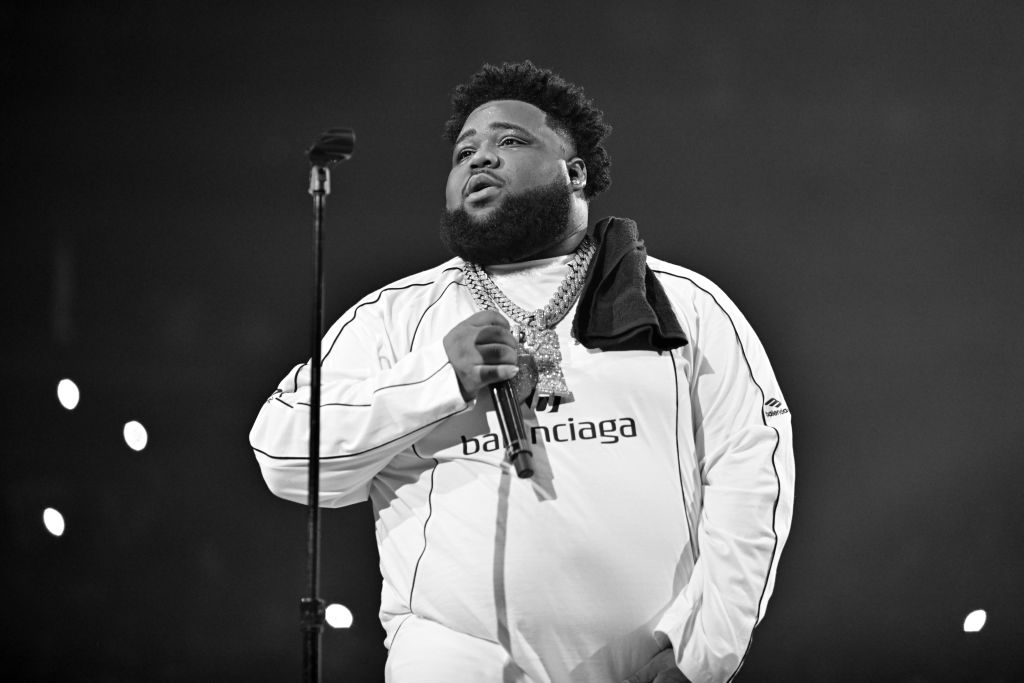
Rod Wave was arrested in Fulton County, Georgia, on May 20, 2025, facing a slew of serious charges tied to an incident from a month earlier. 

The 26-year-old rapper, born Rodarius Marcell Green, was booked on 14 counts, including Aggravated Assault, Reckless Conduct, Pointing a Gun at Someone, and Tampering with Evidence. He was released the same day on a $50,000 bond. According to a police report, the trouble began on April 21, when Rod returned to his Atlanta-area home after it had been burglarized. 

The Florida rapper showed up with realtors and a few associates to check on things, but things quickly went south. A heated argument broke out with one of his associates while they were moving items out of the house. That’s when Rod allegedly pulled out a Glock 20 and fired 14 shots, with 11 of those rounds hitting the associate’s 2025 Mercedes G-Wagon.

When the cops showed up, Rod reportedly tried to cover up his tracks by cleaning up shell casings and even attempted to leave the scene to avoid getting caught. On top of that, his actions allegedly violated an active bond from a previous battery charge dating back to October 2020. Rod’s legal team, Drew Findling and Marissa Goldberg, quickly shot back with a statement to TMZ, saying, “Rod Green was a victim of a burglary and committed no crimes. It’s beyond us how these charges were even brought.”

This isn’t Rod Wave’s first brush with the law. He was arrested in 2022 on charges of strangulation and battery, but those were dropped. In 2024, he was also arrested for possession of a firearm, which his attorneys said was a mistake. Despite the latest charges, his legal team is confident the case will be cleared up in his favor.

HipHopWired Featured Video

A English hard rock band that performs in masks and cloaks is not the type of artist that regularly visits the top of the Billboard 200 — yet anyone who had been paying attention to Sleep Token’s rise over the past few months knew that their fourth studio album, Even in Arcadia, was going to have a strong debut. 

Explore

Explore

See latest videos, charts and news

See latest videos, charts and news

After years of building a fan base, expanding their lore and inching onto the Billboard charts with increasingly higher peaks, the group kicked off the year by scoring their first career Hot 100 entries, as well as quickly selling out a slew of fall arena dates. When Even in Arcadia was released on May 9, its album tracks flooded streaming charts, a clear sign that the early enthusiasm around the album had coalesced upon its release.

Yet when the dust settled on its debut week, even the most bullish Sleep Token fan had to be pleasantly surprised: Even in Arcadia debuted at No. 1 on the Billboard 200 chart dated May 24 with 127,000 equivalent album units, according to Luminate — good enough to not only score Sleep Token’s biggest chart week ever, but the biggest total for a hard rock album in nearly two years, as well as the largest streaming week ever for a hard rock album. It’s the type of debut that blows away even the most hyped-up prognostications, and immediately makes Sleep Token one of the biggest stories in rock this year.

Trending on Billboard

The performance of this album cycle has “by far” surpassed expectations, RCA Records COO John Fleckenstein tells Billboard. Sleep Token — which debuted nearly a decade ago and has always remained under cover of anonymity, with band members never revealing their identities or speaking to the press — signed with RCA in early 2024 following the release of third album Take Me Back to Eden. That album became the band’s first to hit the Billboard 200, debuting at No. 16 in May 2023, and produced some of its first songs to hit the Hot Rock & Alternative Songs chart.

Yet when “Emergence” — the six-and-a-half minute, multi-part prog-metal epic that opened the Arcadia era in March — debuted at No. 57 on the Hot 100 in March, thanks in part to some mind-boggling streaming numbers (9.9 million official U.S. streams from March 14-20, according to Luminate), RCA had to adjust its forecast for the commercial prospects for its host album, says Fleckenstein. 

“We knew they were great, and they were potent,” he says. “But when ‘Emergence’ came out, that’s when we saw the reality of where the numbers had gotten to.”

“Emergence” was followed by “Caramel” — a more radio-friendly (yet no less audacious) single that somehow pulls off a fusion of rhythmic pop, shuffling reggaeton and a shrieking metal breakdown — and “Damocles,” Sleep Token’s version of a power ballad with twinkling pianos that morph into thundering guitars. Both of those songs hit the Hot 100 as well, at Nos. 34 and 47, respectively — and the fact that the second and third songs released from Even in Arcadia peaked higher than the first on the Hot 100 indicated to RCA that the host album was going to be a monster.

“Everyday along the path into this album, we were more and more confident that this was a big deal,” says Fleckenstein. “We just don’t see that kind of fan behavior and consistency, in terms of new music coming out.”

When RCA signed Sleep Token last year, Fleckenstein says that the two biggest indicators of the band’s upward trajectory were its rapid growth as a live act — the group leapt from clubs to theaters, and now to arenas, with strong ticket demand for each live run — and the online dedication of its fan base. The London natives have crafted a complex backstory over the year, with Sleep Token leader Vessel speaking of a higher power called Sleep and causing fans to parse through lyrics and messages to unlock new mysteries from their world.

For the band’s new major-label partner, Sleep Token’s anonymity has felt “liberating” as a promotional tool, says Fleckenstein, particularly in an era of artists oversharing on social media platforms. “So much of it is about the art that the band makes,” he notes. “The world that’s being created is being driven by the fans, and as we were building [the rollout] with the band, the part that was so rewarding was that we could not get more clever than this fan base.” 

Case in point: in February, before the album cycle had truly started, the band launched a teaser site full of jumbled numbers and letters, which fans quickly found out related to the geographic coordinates of an 18th century monument in England. “It all happened in a blink!” Fleckenstein says with a laugh. “It’s because you’ve got a fan base that is undyingly passionate about this band.”

Now that Even in Arcadia is here, fans’ attention will now turn to how the album will be presented live: Sleep Token will perform the new material for the first time next month at a handful of European festivals before their U.S. arena tour kicks off on Sept. 16. In the meantime, the noise of this album debut has already unlocked opportunities for Sleep Token that aren’t normally reserved for hard rock acts: Vessel was featured as the main image of Spotify’s New Music Friday playlist on release day, for instance, and all 10 of the album’s tracks have made the Hot 100 chart. Combined with Ghost’s new album Skeletá debuting atop the Billboard 200 two weeks prior to Arcadia, a brand of new-school hard rock with baked-in mystique and accessible hooks is experiencing a mainstream boom that’s been years in the making.

“The numbers here are basically in line with high-caliber pop artists, in terms of consumption level,” says Fleckenstein of Sleep Token. “Up until this point, the focus has been on the fan base, and that won’t change — they’re the reason why we’re here… But in a lot of ways, the story from here will probably be that this isn’t some niche thing. There’s definitely a broader awakening here among media and partners that are looking at this in a different kind of way.”

A similar effect is trickling down to pop fans, too. “There are people that haven’t discovered this band yet, because they haven’t been part of the lore and they perceive it as metal, which may not be their genre of choice,” Fleckenstein says. “But it’s great music. And I think that’s going to be the road ahead.”