State Champ Radio
 Author: djfrosty
Page: 322
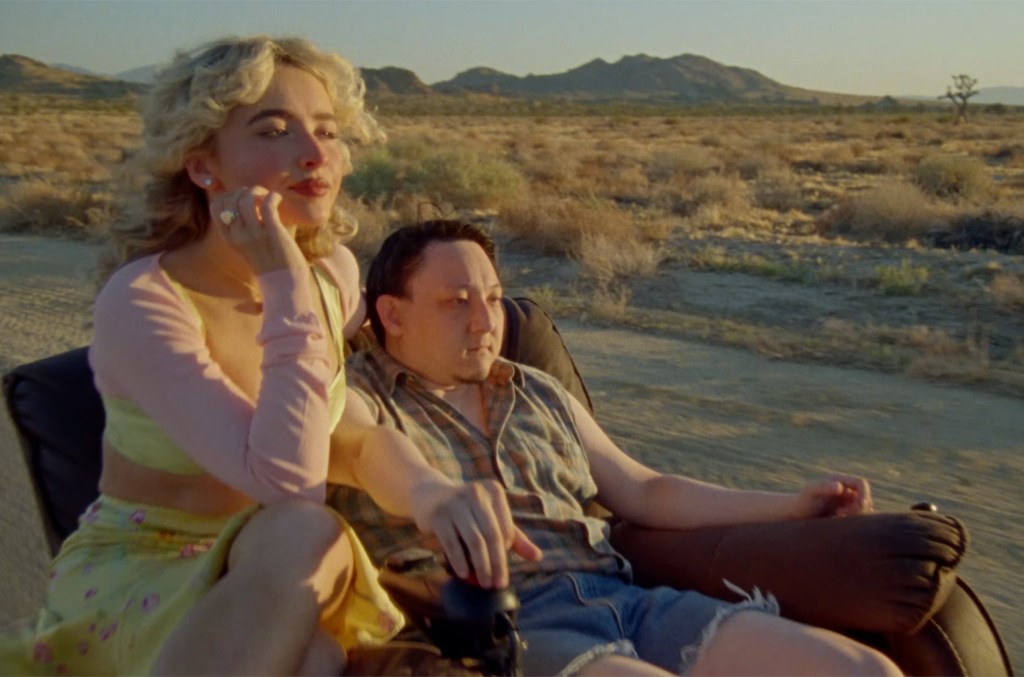
Take it from Sabrina Carpenter, dating can be like the Wild West — especially when so many eligible prospects turn out to be stupid, slow and useless. Or, in other words: a “Manchild.”
Following her new single’s release the day prior, the pop star dropped the hilarious music video for “Manchild” Friday morning (June 6). In the Vania Heymann and Gal Muggia-directed visual, Carpenter travels all over the American West by hitching rides with a diverse crop of men, whose only similarities are their propensities for odd modes of transportation and their inability to get the Grammy winner where she needs to go.
Barreling down the highway on the back of a jet ski, in a shopping cart attached to a motorcycle and on the arm of a motorized recliner chair, Carpenter repeatedly rolls her eyes and sings, “Stupid, or is it slow/ Maybe it’s useless/ But there’s a cuter word for it, I know/ Manchild/ Why you always come a-running to me?/ F–k my life/ Won’t you let an innocent woman be?”
Trending on Billboard
“it’s exactly what i pictured in my head,” the Girl Meets World alum wrote of the video on Instagram shortly after it dropped. “no animals were harmed in the making but some men were.”
Released Thursday (June 5), “Manchild” marks Carpenter’s first piece of new music since the Short n’ Sweet deluxe album brought forth bonus tracks “15 Minutes,” “Couldn’t Make It Any Harder,” “Busy Woman” and “Bad Reviews.” The original LP arrived in August and spent four weeks atop the Billboard 200, marking the musician’s first-ever No. 1 album on the chart.
According to Carpenter, she penned the track with songwriter Amy Allen and producer Jack Antonoff shortly after finishing Short n’ Sweet. “it ended up being the best random tuesday of my life,” the “Espresso” artist wrote on Instagram Thursday. “this song became to me something I can look back on that will score the mental montage to the very confusing and fun young adult years of life.”
Carpenter is currently on a short break from her Short n’ Sweet Tour, which kicked off last fall with a North American leg in September. This spring, she traveled across Europe on a run of dates that will pick back up with two performances at London’s Hyde Park in July, followed by another round of shows in the United States and Canada.
Watch the “Manchild” music video above.

When Tito Double P was deciding on a name for his debut album, he remembered a comment about him that had gone viral on social media.
“Tito se ve incómodo,” someone wrote, pointing out that Tito looked “uncomfortable” in a photo where he appeared in the background with other artists, including his superstar cousin, Peso Pluma.
“As a songwriter, a lot of artists would invite me to hang, and eventually, they would ask me for a song during those hangouts,” the 27-year-old musician explains with a smirk on his face. “But I was always in the background, looking very serious in photos and videos, and someone left that comment — I don’t remember if it was on TikTok or Instagram — and it got a bunch of likes. And from then on, whenever I uploaded a photo on social media, even if I looked happy, everyone would comment, ‘Se ve incómodo.’ It became a thing and I thought, ‘That’s what we should name the album — it will give people something to talk about.’ ”
Today, Tito Double P seems anything but incómodo. Last summer, his set of the same name shot to No. 1 on Billboard’s Top Latin Albums chart, dethroning Peso’s Éxodo, and earlier this year, Tito embarked on an arena and amphitheater tour — his first trek in the United States — for which his training included doing vocal and breathing exercises with a voice coach over the phone. With his No. 1 album and sold-out tour, Tito, who only just launched his career as an artist last year, has gone from songwriter to superstar-in-the-making.
Trending on Billboard
“There’s no manual for that, and it’s not an easy process to go from songwriter to singer,” the Sinaloa, Mexico-born artist reflects. “At first, it was always ‘Peso Pluma’s cousin’ or ‘That guy writes for Peso.’ Eventually, I finally became Tito Double P.”
Tito (born Roberto Laija) penned some of Peso’s early hits, including “El Belicon,” “Siempre Pendientes,” “PRC” and “AMG,” all of which catapulted onto the Hot Latin Songs chart in 2022 and helped usher in a global era for corridos and regional Mexican music in general. They also helped Tito become the genre’s most in-demand songwriter, which in turn laid the groundwork for his evolving career. He could have kept to songwriting, but Tito wondered what would happen if he released his own music on indie label Double P Records, which Peso and his manager/business partner, George Prajin, co-founded.
“First I said, ‘Let me release one song,’ because I kind of thought nothing would happen. But then it became a hit, so I released another one and then another,” he says. “The team asked me if I was going to be a singer or a songwriter and I said, ‘Let me record an album and see what happens.’ I also remember thinking that I wouldn’t tour, I’d just release music. But after performing onstage, now I don’t want to get off. I never thought this would happen to me.
“I went from songwriter to singer to artist in less than a year,” he explains, still sounding somewhat awed by his rapid ascent.
With his charming boy-next door personality, hoarse vocals, in-your-face delivery and unique writing style — which he compares to writing rap songs because he adds “too many words” and records in double-time — Tito stands out among música mexicana’s ever-growing field of emerging artists. He scored his debut Billboard chart entry as an artist with “Dembow Bélico,” a collaboration with Joel De La P and Luis R. Conriquez that hit No. 35 on Hot Latin Songs in July 2023. His first top 10 arrived a little less than a year later with the Joel De La P and Peso collaboration “La People II.” Overall, Tito has seven career entries on the all-genre Billboard Hot 100 and 23 career entries on Hot Latin Songs; Incómodo — which ruled Top Latin Albums for nine nonconsecutive weeks — reached No. 11 on the Billboard 200 last October. Tito closed 2024 at No. 15 on the year-end Top Latin Artists list, with 1.7 billion on-demand official streams in the United States, according to Luminate.
Tito says Peso is proud of his accomplishments — even if they’ve dethroned him on the charts. “He was proud and like, ‘¿Qué onda?’ [What’s going on?], at the same time,” he recalls with a gentle, almost timid smile as he remembers Peso’s reaction to Incómodo hitting No. 1 on Top Latin Albums. “It’s never a competition between us. To be honest, he was like, ‘Better you than anyone else to take me out.’ ”
That reflects the ethos at Double P Records, whose roster also includes Deorro, Dareyes de la Sierra and Jasiel Nuñez.
“The artists on the label get together in the studio to show each other what we’re working on and get feedback like, ‘That idea is great,’ or ‘I like the lyrics but not the tune.’ We share everything, from the producers we’re working with to writing together and collaborating. We’re like a family,” Tito says. “And we also get to be our own bosses. There’s no set timeline of when I have to release a song. We have so much freedom.”
Tito is gearing up for future projects to maintain his momentum, including “tons of new music” with which he plans to shift from corridos singer to writing and recording songs about desamor (heartbreak). He also has an upcoming joint EP with Peso: “We have a lot of songs, but we’re still working on it because I was on tour and he had his own projects — but something big is coming with [Peso],” he teases of the project, which has no set release date.
Tito’s life has changed so much over the last year — but there’s still one moment in particular that reminds him of his growth. “One time, when Peso was just starting, he asked me to go do an interview with him because he didn’t want to go alone,” he recalls. “Literally no one knew who I was at the time, and I just sat there next to him, didn’t say a word, until the interviewer asked me, ‘And who are you?’ And I quickly responded, ‘Oh, no, I’m just his cousin.’ Today, I’m much more loose, more comfortable. Like, it’s still me but just more mature, motivated and grateful for everything that has happened and for what is coming.”
This story appears in the June 7, 2025, issue of Billboard.
On Friday (June 6), Lil Wayne continued his beloved decade-spanning series, Tha Carter, with the installment’s sixth entry. With a career built on longevity, evolution and unrelenting dominance, Wayne’s career arc is rare, but similar to that of another cultural titan: the Black Mamba, the late NBA great Kobe Bryant.
Explore
See latest videos, charts and news
See latest videos, charts and news
Kobe defied physics with his aerial acrobatics and rim-rocking jams. Wayne trounced his competition with punishing punchlines and steely wordplay.
Like Wayne, Bryant’s early beginnings were rocky. Drafted by the Charlotte Hornets in the 1996 NBA Draft, a 17-year-old Bryant was traded to the Los Angeles Lakers for Vlade Divac. Bryant, who was a heralded high school phenom at Lower Merion in Philadelphia, was relegated to the bench his rookie season, backing up Eddie Jones. His minutes were inconsistent. He averaged a putrid six points per game. He shot four airballs in a crucial playoff game against the Utah Jazz. Lakers head coach Del Harris wasn’t keen on playing the rookie, though fans saw the spark. When Bryant showed glimmers of greatness, even in small increments, we stopped and took notice.
Trending on Billboard
Wayne’s career started earlier than Bryant’s. He signed with Cash Money at 11, before dropping Tha Block is Hot at 17. Powered by Juvenile, B.G., and Turk, Wayne was a young upstart, sliding in as an edgy wildcard capable of pouncing on any beat with ruthless intentions. Raw and unpolished, Wayne’s swaggering energy was the catalyst for hits like “Bling Bling” and “We on Fire.” Before vaulting into superstar territory, Wayne was a quintessential role player, playing alongside starry teammates — most notably, Juvenile. Juvie enjoyed a fruitful run in the late ’90s, courtesy of his RIAA-certified 4x platinum album 400 Degreez, and the success of “Ha” and “Back That Thang Up.” Like Bryant, who played alongside three all-star caliber talents in Jones, Nick Van Exel and Shaquille O’Neal, Wayne bided his time behind rap vets. But, when Wayne and Bryant’s names were called, neither flinched under the bright lights.
For both superstars, it wasn’t about endorsements and commercials. Their wins didn’t happen overnight. They trudged through the mud, battled against rivals, and tried to usurp their idols. Kobe had MJ. Wayne had Jay. Still, their admiration never blurred their undying ambition: Bryant’s “Mamba Mentality” was fueled by obsessiveness. After thousands of hours in the film room, Bryant’s level of authority on the court mirrored Wayne’s unmatched studio effort.
When Bryant delivered masterclasses on how to be clutch, Wayne taught MCs how to be prolific, dropping thousands of songs with charm and wit. Bryant was considered a flashy dunker, a human highlight reel devoid of a jumper. With hard work and dedication, he became a gutsy shot-taker, a five-time NBA champion, and spiritual backbone for a dynasty. As for Wayne, he flipped the script from being a Hot Boy sidekick to a mixtape monster and later a rap icon, all without a pen. Wayne and Bryant scoffed at their respective scouting reports during their rookie years and rewrote their legacies.
From Bryant’s nine-game streak of 40 points in February 2003 to his sacred 81-point game in January 2006, to even his seven-game winners in the 09-10 season, he was considered the gold standard of the NBA’s first decade of the 21st century, while Wayne’s Carter series and fiery mixtape run with Da Drought and Dedication simultaneously had him in the Best Rapper Alive category.
Kobe chased NBA greatness. Wayne chased lyrical immortality. Different courts. Same mentality.

All products and services featured are independently chosen by editors. However, Billboard may receive a commission on orders placed through its retail links, and the retailer may receive certain auditable data for accounting purposes.
Timberland and Pabst Blue Ribbon are kicking off summer right with their latest exclusive collaboration.
The seven-piece men’s collection includes three new workboot silhouettes, along with an apron, T-shirt, sweatshirt and trucker hat all affixed with PBR and Timberland co-branding. Each piece is rugged and playful, perfectly pairing with an ice-cold beer. For footwear, you’ve got Timberland’s beloved Direct Attach 6″ and Gridworks 6″ work boot silhouettes adorned with PBR iconography in blues and reds, married with Timberland’s utilitarian all-American aesthetic.
“PBR has always been about celebrating those who take pride in their craft, so this partnership with Timberland Pro was a no-brainer,” Kat Mata, culture marketing director at PBR, said via a statement. “This collection wasn’t just about creating a cool collaboration. It was designed with the community at the forefront, and we’re excited to see this drop finally come to life.”
Explore
Explore
See latest videos, charts and news
See latest videos, charts and news
Men’s Timberland PRO® and Pabst Blue Ribbon Direct Attach 6″ Soft Toe Waterproof Work Boot
Ankle-length work boots with Pabst Blue Ribbon detailing throughout.
The Direct Attach 6″ Soft Toe Waterproof Work Boot is crafted of sturdy leather with a waterproof, seam-sealed construction and a water-repellent finish. It’s safe to say that these boots were built to help keep your feet dry. A built-in bottle opener dangles from the boot tag, so you’re ready for a beer anytime, anywhere.
Trending on Billboard
These bad boys are built with a lot of supportive details, including anti-fatigue tech that delivers comfort along with shock-diffusion plates for added support. Microban tech helps fight odor and wear for those long days at work spent sweating under the summer sun. Finally, a padded collar gives way to slip, heat, oil and abrasion-resistant outsoles. If the tan colorway isn’t your thing, more maximalist footwear lovers should check out the Blue Nubuck variation. With these boots, you’ll be ready for whatever life throws your way.
Men’s Timberland PRO® and Pabst Blue Ribbon Gridworks 6″ Soft Toe Waterproof Work Boot
A waterproof work boot in brown with Pabst Blue Ribbon branding throughout.
The collaborative Gridworks 6″ Soft Toe Waterproof Work Boot features a similar construction to its Direct Attach 6″ counterpart, save for a few cosmetic tweaks like coloring. All three boot styles in the collection are made with similar, if not exact, details, accompanied by that iconic PBR flair. We can envision any of these boots worn with your favorite classic denim pieces, playing into those workwear vibes. This Brown Full-Grain colorway is extremely versatile, pairing well with lots of pieces thanks to its neutral color scheme.
Men’s Timberland PRO® and Pabst Blue Ribbon Hoodie
A taupe men’s hoodie with Pabst Blue Ribbon branding throughout.
Men’s Timberland PRO® and Pabst Blue Ribbon Short Sleeve T-Shirt
A taupe men’s tee with Pabst Blue Ribbon branding throughout.
“At Timberland Pro, we build gear with purpose — footwear and apparel that work as hard as the people wearing them,” Ryan Murphy, head of marketing for Timberland, said via statement. “Partnering with Pabst Blue Ribbon allowed us to create a collection that’s tough, comfortable, and made to honor the moment when the job’s done and the boots stay on.”
Every apparel piece is crafted in neutral colorways to highlight PBR’s colorful red, white and blue logo. The hoodie is slouchy and simple, making for a superb layering piece, while the T-shirt is a good lounge-around-the-house piece. The collaborative apron is currently sold out, but you can still get your hands on the trucker hat, and for cheap, too.
Retailing for $25, the accessory is gray and blue with the PBR logo fixed to the front. Durable and stylish, the cap is made of 60% cotton and 40% polyester and includes a six-panel construction that adds structure to the classic trucker hat look. The mesh in the back offers breathability.
Timberland PRO® and Pabst Blue Ribbon Trucker Cap
A blue and gray trucker hat with Pabst Blue Ribbon on the front.
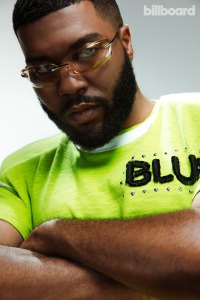
TikTok is a time machine. Hearing his songs on the app, Khalid finds himself in an earlier era.
Last February, the Billboard Hot 100-topping R&B and pop artist noticed one of his early hits was resurfacing. “Location” — which peaked at No. 16 in 2017 — was connecting with listeners all over again, who were singing along to the yearning lyrics about love in the digital age with a fresh perspective.
“It’s a whole new society, a whole new age of young adults who are experiencing this song,” Khalid says. “I lived it, and I performed it, but to see people who are now the age I was then listening to that song, it’s surreal, funny and nostalgic. It makes me live vicariously through that experience. I’m like, wow, there’s a reason why it resonates with them: because that was real.”
When he first wrote the song, Khalid was a teenager himself. A 17-year-old living in El Paso, Texas, he uploaded the track to SoundCloud without ever considering the impact the now-diamond-certified song might one day have on young lovelorn listeners a decade later.
Trending on Billboard
“Turning 27 this year came with a lot of reflection on life,” he says. “I started to look back at where I was when I was 17. To be able to be in my career for as long as I have, to still have an impact, even to see things going viral on TikTok — I feel like that version of me 10 years ago would be so proud and so happy. And if you had told him all of [what would happen in the next 10 years]?” he says with a chuckle. “He wouldn’t have had a clue.”
Now fully cemented as an in-demand collaborator, global arena artist and reliably charting hit-maker, Khalid is ready to rediscover the innocent version of himself that he was before he found success.
He wants to be the most open and honest version of himself — not necessarily the serious and emotional version Khalid spent years of his life pouring into 2024’s Sincere, but one that is able to relax because he has fully embraced his own identity.
“Not just my moody side, but the fun side,” he says. “The flirty side.”
Though Sincere was a deeply personal album, there was one part of himself Khalid hadn’t quite revealed yet.
In November 2024, Khalid was outed by an ex-boyfriend. Though it’s not how he wanted to share that part of his identity with his fans, with a simple rainbow emoji he confirmed that he is gay and “not ashamed of [his] sexuality.’”
He was never hiding anything, he says, just protecting that part of his privacy. Stepping back onstage and seeing the reaction from his fans reaffirmed his open and honest approach to music.
“I had a moment where I walked out and I looked into the crowd, and I’m singing these songs that — I was obviously gay when I wrote them, but the world may not have known,” he recounts. “Everybody is singing them the same way they were before I was outed! So [that shows me] none of my fans care about my sexual preferences. I think they care about our mutual respect for music.”
Blue Marble shirt, Bonnie & Clyde glasses.
Joelle Grace Taylor
He realized he didn’t have to keep finding ways to protect his privacy. It was a liberating experience, he says, seeing that very little had changed.
“Finding that freedom comes from knowing I can just be myself and still be embraced and appreciated,” he says. “That doesn’t change because the world finds out I’m gay. Because I don’t change because the world finds out I’m gay.”
Though artists express themselves through their music, the songs live their own lives. Once they’re out in the world, fans can project their own feelings and experiences onto them. In some ways, the music belongs to the listener as much as the artist.
After he came out, a fan pointed out that his 2022 song “Satellite” was already “an LGBTQ anthem.” In addition, “Better” has been used as a first dance at multiple weddings, and the 2017 song “Young Dumb & Broke” has become a staple at graduations. As listeners find meaning in the music, it takes on its own dimensions.
“When you’re an artist, you carry a responsibility,” Khalid says. “People will live to your music, people will die to your music, people will give birth, people will be reborn. There’s so much emotion involved in the exchange of music from artists to listeners.”
He uses “Young Dumb & Broke” as an example. The song’s universal experience of the feeling of invincibility of life in your teenage years has persisted from one generation to the next, which is something he would not have predicted.
“ ‘Young Dumb & Broke’ lasting as long as it has now would have never been anything I imagined, because when I made that song, I was so presently focused on being young, dumb and broke,” he says. “When I was singing that song at 19, I probably would have told you that I couldn’t wait to stop singing that song. Now, I love it.”
Khalid says he wants to inspire young Black men to be comfortable being open about their sexuality, but he doesn’t see the music as appealing to any specific kind of listener because of the identity of the person making it.
“Music is subjective,” he says. “If you place yourself in an experience, we can relate to people all across the board. It doesn’t matter if you’re gay, it doesn’t matter if you’re straight. We all have feelings and we all have emotions.”
Khalid is a major star of the streaming era. He has multiple songs in Spotify’s Billions Club (tracks with 1 billion streams), including “Location,” “Young Dumb & Broke” and “Lovely,” his collaboration with Billie Eilish. At his 2019 streaming peak, he spent some time as the most popular artist on the platform.
When he first started, though, those platforms were barely on his radar. Instead, he uploaded his first songs to SoundCloud, the streaming site where users once shared their own music and mixtapes — a popular platform for new musicians. There was very little thought to strategy or rollout.
“Naturally, that led to other apps like YouTube, Spotify, Apple Music and so on. But that’s where it all started,” he recalls. “I remember being on the phone with a friend, like, ‘I’m about to upload my song to the internet.’ It felt so carefree back then — just making songs with my friends and throwing them online. Nobody could have imagined what streaming would become today.”
Though he couldn’t have predicted it, Khalid was uniquely positioned for the streaming era. He’s often categorized as an R&B singer, but he has a genre fluidity that has landed him on a diverse number of Billboard charts: Adult Contemporary, Latin, Rock & Alternative, Rap, Dance. He has a song for every playlist.
As a child, Khalid’s parents were in the Army and he often found himself moving around. He spent six years living in Germany when he was young, then spent some of his formative teen years from eighth grade until just before his senior year in upstate New York, just 20 minutes from the Canadian border.
“Being a military kid, I was like a sponge, just soaking in all the cultures around me,” he recounts. “When I was in northern New York, I got introduced to American folk music, which became a big part of my foundation as an artist and really shaped my songwriting. Then living in Germany exposed me to pop music from a different perspective. And coming from the South, R&B is definitely at my core. So all these different shades of music come together to make who I am.”
PDF top, pants and shoes; Gentle Monster glasses, Magdelena necklace, Rolex watch.
Joelle Grace Taylor
He’d moved to El Paso by the time he released his breakout 2017 debut album, American Teen, but it was inspired by his experiences growing up both there and at Fort Drum, just outside of Watertown, N.Y. Like so many other teenagers growing up outside of a major city, he spent a lot of time bored or partying — and dabbling in music.
“A lot of the stories that ended up inspiring American Teen came from that time in my life,” he recalls. “It was cold and kind of bleak, with not a whole lot to do — but there were definitely a lot of parties. At the time, it was fun and wild. Looking back now as an adult, I’m like, ‘Why did you get yourself into some of those situations?’ But honestly, it was the perfect setting for teenage angst — just growing up, facing challenges and mentally taking notes.”
His mother was restationed to El Paso before his senior year of high school, and he decided to go with her. Lonely and separated from his friends, he began writing songs and uploading them online. At the time, Right Hand Co.’s Courtney Stewart was managing a number of producers when he was introduced to Khalid through mutual friends on Twitter and heard some of his SoundCloud demos.
“He didn’t know it at the time, but he was writing a generational album in American Teen,” Stewart says. “As soon as I heard that voice and those lyrics, I was like, ‘This is incredible.’ It was something I had never heard before. His tone, the youthfulness of the lyrics and just how it made me feel. So I got on a plane and went and met with him.” (Khalid’s management team now includes Stewart, Mame Diagne, Jordan Holly and Relvyn Lopez at Right Hand.)
Other artists and producers have heard the same thing in his music. His ability to adapt to different sounds and his breadth of universal experiences has made him an ideal collaborator for everyone from J Balvin to Marshmello to Logic to Halsey.
Growing up near the Canadian border may also have endeared him to artists from the country. He’s collaborated with a number of Canadian artists, including Majid Jordan, Tate McRae, Shawn Mendes, Alessia Cara and Justin Bieber. He’s also made a big impact in the country, with 40 songs charting on the Billboard Canadian Hot 100.
Khalid says he loves collaborating, which brings the best attributes of two sounds together. Having another voice in the room can also let him get out of his own head, he says, and recognize when a song is a hit.
Most importantly, he’s sure enough in his own voice that no matter the genre he’s working in or the artist he’s performing with, he’s still recognizably Khalid.
“I think not losing sight and just trusting my voice has led me to be in any sound comfortably because I get to pull up as myself,” he says. “When you feel yourself on a track, you can’t fake it. It’s real.”
Being rather private, Khalid worries he’s created an impression of himself as an introverted person. Now, he’s ready to bust that myth.
“I’m actually extremely extroverted,” he says. “I love to socialize, I love to hang out, I love to see new things and meet new people. I mean, my [2019] album was called Free Spirit, but I really do believe I am one. I made that album only to go into hiding afterward. I don’t feel like that’s very much freedom. But now, I feel like I do have my freedom.”
Embracing his full self has brought him back to the carefree headspace of his SoundCloud days — but with the experience and maturity of an established music career.
“I started off just having fun and when I gained a career, I started to take myself a little too seriously,” he admits. “I had my fair share of time to be serious. Now I don’t have a care in the world. I can just have fun.”
In a recently posted TikTok clip, Khalid is vibing to a snippet of an unreleased song on the streets of Manhattan. In a black hoodie and throwback raver pants and holding a black handbag, he dances along to a track that blends his signature mellow, wise-beyond-his-years vocals with a sound that evokes decadent early-2000s pop by Britney Spears or The Pussycat Dolls. Grinning ear to ear, he stops to take a quick photo with a fan. It takes only 15 seconds to see the comfort and excitement of his new chapter.
“My new era of music feels like I’m finally ready to be the artist I’ve always dreamt of being,” he says. “It goes back to the regressions of when I was a child — imagining myself and thinking, ‘I want to be this artist one day.’ Now I feel like I have the confidence to finally be that artist.”
Libertine shirt, ERL pants, Adidas shoes, Magdelena rings.
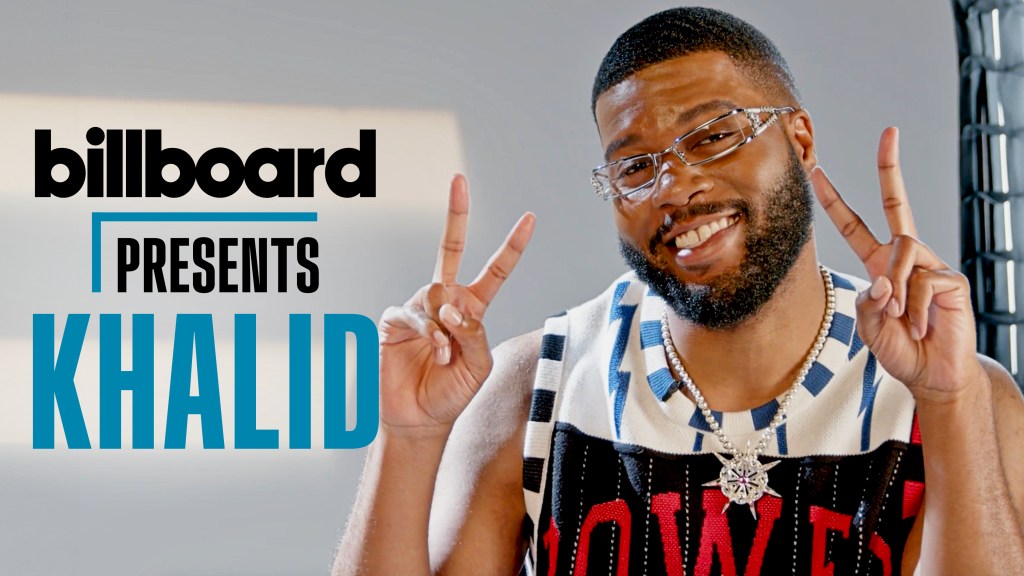
Billboard Canada cover star Khalid is getting ready to show off his more mature and authentic self on his fourth album, and he sits down to share his reaction to being outed online, who he’d love to work with in K-pop, wanting to be an inspiration to young queer boys, his growth since ‘American Teen’ and more!
Tetris Kelly:
How are you feeling, my friend?
Khalid:
I’m good. Thank you for having me.
Well, we are happy to have you, but I gotta ask you right away: Tell me about your favorite Billboard moment, like a time past, present, future even that you might have charted or want to chart.
My favorite Billboard moment had to be my first ever moment on Billboard with “Location.” I mean, that song, to me, is just one of those songs that I’m grateful to even have gotten a chance to write. It’s one of those songs that kind of came to me, and so to see that success and to know that people are still bumping “Location” almost nearly 10 years later is really exciting.
Yeah, and I mean, to have a hit like that, and then have continued to have hits, you’re a lucky man. And now you got new music coming out. So tell me about “All I Know.”
“All I Know,” Rudimental, I want to thank them for having me be a part of the song. It’s really awesome. I love EDM music, and I listen to it on my own time. So anytime that I’m able to experiment and explore with my sound and try new things, I’m always willing to, so I really love that song so much.
When you’re working on your own new music, you’re creating an album. I mean, you’ve had different journeys in your career, where do you want to arrive now?
Keep watching for more!

All products and services featured are independently chosen by editors. However, Billboard may receive a commission on orders placed through its retail links, and the retailer may receive certain auditable data for accounting purposes.
Fans can to tune-in to Pulp: A Film About Life, Death & Supermarkets, which is slated to stream on Friday (June 6).
The documentary streams starting at 4 p.m. ET/1 p.m. PT on Veeps. Read on for details on how to stream on Veeps.
How to Watch ‘Pulp: A Film About Life, Death & Supermarkets’
You can stream Pulp: A Film About Life, Death & Supermarkets for $4.99. Veeps accounts are free when you sign up with an email address, while you can still purchase access to the stream. However, if you’re an Veeps All Access subscriber, you can watch the movie for free. Not a subscriber? You can sign up for $19.99 per month, or $199 per year.
Owned by Live Nation Entertainment, Veeps All Access features hundreds of livestream concerts, a catalog of past shows and concert films, exclusive bonus interviews, discounts and other benefits. Learn more about Veeps All Access on the Veeps website.
Explore
Explore
See latest videos, charts and news
See latest videos, charts and news
Courtesy of Veeps
‘Pulp: A Film About Life, Death & Supermarkets’
The rock doc is also available to stream on Prime Video and Apple TV, as a rental or digital purchase. Meanwhile, those who want to watch internationally can access different the streaming service with a VPN, such as ExpressVPN or NordVPN.
The music documentary follows the Brit Pop band Pulp during their farewell concert in their hometown of Sheffield, England in 2013. However, since the original release of the film in 2014, Pulp has reunited and touring again, as of 2022.
Pulp: A Film About Life, Death & Supermarkets streams on Veeps with a start time of 4 p.m. ET/1 p.m. PT. It’s free to stream for Veeps All Access subscribers.
Want more? For more product recommendations, check out our roundups of the best Xbox deals, studio headphones and Nintendo Switch accessories.

Charli xcx had a very special guest for her Primavera Sound set in Barcelona at the Parc del Fòrum on Thursday night (June 5). On opening night of the festival, Chappell Roan shocked the crowd when she showed up to expertly do the viral “Apple” dance during Charli’s set (watch the moment below). Chappell, wearing […]
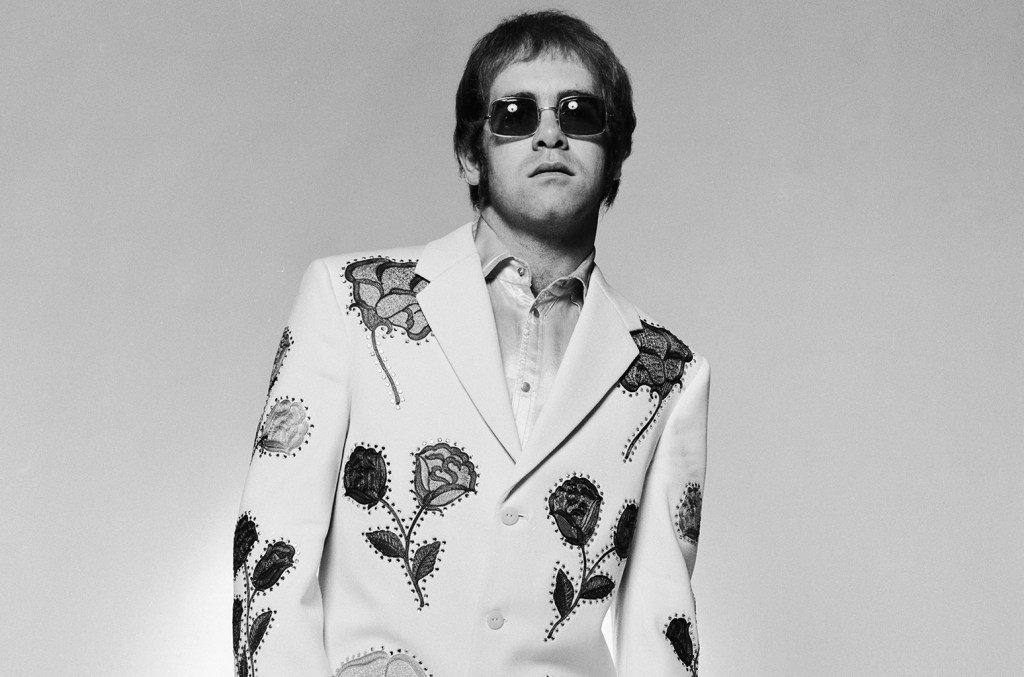
Fifty years ago, in the Billboard issue dated June 7, 1975, Elton John did something no one had ever done before: He entered the Billboard 200 at No. 1. He achieved the feat with his ninth studio album, Captain Fantastic and the Brown Dirt Cowboy.
The album dislodged Earth, Wind & Fire’s That’s the Way of the World, which had spent the three previous weeks at No. 1. It was potent enough to hold Wings’ Venus and Mars – the band’s follow-up to its classic album Band on the Run – to the No. 2 spot for four consecutive weeks before Wings finally moved up to No. 1 for one week.
In the nearly two decades between the introduction of the Billboard 200 in March 1956 and Captain Fantastic’s history-making accomplishment, the highest any album had entered the Billboard 200 was No. 2. Van Cliburn’s Tchaikovsky: Piano Concerto No. 1 debuted in the runner-up spot in the issue dated Aug. 4, 1958 (which, coincidentally, was the same week the Hot 100 debuted, with Ricky Nelson’s “Poor Little Fool” as the inaugural leader).
Trending on Billboard
How was a classical album able to get off to such a fast start? Cliburn had achieved global fame when he won the inaugural International Tchaikovsky Competition in Moscow in 1958 near the height of the Cold War. A cover story in TIME (May 19, 1958) proclaimed him “The Texan Who Conquered Russia.” His album topped the Billboard 200 for seven weeks, won a Grammy for best classical performance – instrumentalist and received an album of the year nod.
Since the Cliburn album was a little far afield, let’s go deeper. The highest that a contemporary pop or rock album had debuted prior to Captain Fantastic was No. 3. That was the debut position for The Beatles’ Hey Jude (March 21, 1970) and a pair of Led Zeppelin albums: Led Zeppelin III (Oct. 24, 1970) and Physical Graffiti (March 15, 1975). Three more contemporary pop or rock albums had debuted in the top five prior to Captain Fantastic: the Woodstock soundtrack (No. 4, June 6, 1970), George Harrison’s All Things Must Pass (No. 5, Dec. 19, 1970) and Elton’s previous studio album Caribou (No. 5, July 6, 1974).
Captain Fantastic was Elton’s sixth No. 1 album in less than three years. His 1972 album Honky Chateau reached No. 1 in its fifth chart week. A pair of 1973 albums – Don’t Shoot Me I’m Only the Piano Player and Goodbye Yellow Brick Road – both reached No. 1 in their fourth weeks. A pair of 1974 albums – Caribou and Greatest Hits – both reached the top spot in their second weeks. Elton was steadily getting hotter year-by-year, as you can see.
Captain Fantastic’s debut at No. 1 received considerable media attention and contributed to Elton’s status as the Greatest Pop Star of the Year – years before Billboard officially recognized such a thing.
In calendar year 1975, Elton had three No. 1 albums on the Billboard 200 (one a carryover from 1974) and three No. 1 singles on the Billboard Hot 100 (plus an uncredited, but prominent, featured role on a fourth – Neil Sedaka’s “Bad Blood”); had a cameo as The Pinball Wizard in the hit movie adaptation of The Who’s Tommy; made the cover of TIME (the inevitable cover line: “Rock’s Captain Fantastic”); and became the first artist since The Beatles to play a concert (two, actually) at Dodger Stadium.
Since Elton’s through-the-roof 1975, we’ve seen such artists as the Bee Gees (1978), Michael Jackson (1983-84) and Taylor Swift (2023-24) experience this same “how-much-hotter-can-they-get” phenomenon.
Captain Fantastic was a loosely autobiographical concept album about the struggles that John (Captain Fantastic) and his longtime lyricist Bernie Taupin (the Brown Dirt Cowboy) experienced in the early years of their careers in London from 1967 to 1969, leading up to John’s eventual breakthrough in 1970.
Captain Fantastic spent its first six weeks at No. 1 before yielding the top spot to Wings’ Venus and Mars and then Eagles’ One of These Nights (which had five weeks on top). In late August, Captain Fantastic returned for a seventh week at No. 1. Only two other John albums ever logged seven or more weeks at No. 1: Goodbye Yellow Brick Road (eight weeks on top in 1973) and Greatest Hits (10 weeks on top in 1974-75).
Captain Fantastic received two Grammy nominations: album of the year (John’s third in that category, following Elton John and Caribou) and best pop vocal performance, male. He lost both awards to Paul Simon for Still Crazy After All These Years. (Fun Fact: Simon had also won album of the year, in tandem with Art Garfunkel, for Bridge Over Troubled Water five years earlier, when the Elton John album was nominated.) Gus Dudgeon, who produced John’s album, received a Grammy nod for producer of the year, non-classical. (He lost to Arif Mardin.)
Just one single was released from Captain Fantastic: “Someone Saved My Life Tonight.” Despite its length and somber tone, the song reached No. 4 on the Hot 100, a reflection of Elton’s popularity at the time. Clocking in at 6:45, “Someone Saved” was the longest song to crack the top five on the Hot 100 since The Temptations’ symphonic soul smash “Papa Was a Rollin’ Stone” (6:53), a No. 1 hit in December 1972.
Of course, even though just one single was released from Captain Fantastic, Elton was blanketing pop radio at the time. The week Captain Fantastic debuted, John’s previous single, the marvelous, disco-accented “Philadelphia Freedom,” rebounded to No. 10 on the Hot 100, having reached No. 1 in April. And though it was never released as a single, John’s rendition of “Pinball Wizard” from the Tommy soundtrack was played on many pop radio stations with the frequency of a hit single.
The Billboard staff included three songs from Captain Fantastic on its 2022 list of the 75 Best Elton John Songs, timed to coincide with the star’s 75th birthday. “Tower of Babel” ranked No. 73, “Curtains” was No. 29, and “Someone Saved” was way up at No. 3, with Billboard‘s Melinda Newman saying of the latter song, “The song has more drama than a made-for-Lifetime movie, including allusions to John’s first suicide attempt in 1968. With a heavy, slow, and instantly unforgettable piano-pounding melody that matches the theatrical storytelling … ‘Someone’ is like slowly walking through molasses in the best possible way, Sugar Bear.”
In November 1975, just five months after Captain Fantastic became the first album to debut at No. 1, Elton’s follow-up album, Rock of the Westies, became the second. Unlike Captain Fantastic, Rock was led by a highly commercial single, the zesty funk-reggae smash “Island Girl,” which topped the Hot 100 for three weeks.
In October 1976, Stevie Wonder’s Songs in the Key of Life became the third album to debut at No. 1. No other albums debuted in the top spot for a little more than a decade, until Bruce Springsteen & the E Street Band’s Live/1975-85 achieved the feat in November 1986. The following year, Whitney Houston and Michael Jackson started on top with their hit-laden albums Whitney and Bad, respectively.
In May 1991, Billboard began compiling the Billboard 200 based on actual units sold. As a result, No. 1 debuts became much more common. Between June and December 1991, seven albums entered the chart at No. 1 – slightly more than the six albums that had achieved the feat over the previous 16 years. (Since December 2014, the chart has ranked titles by equivalent album units, incorporating streaming and sales, with albums continuing to regularly soar in at No. 1.)
In 2006, John recorded a sequel of sorts to Captain Fantastic. That album, The Captain & the Kid, reached No. 18 on the Billboard 200.
Two songs from Captain Fantastic were featured on the 2018 tribute album, Revamp: Reimagining the Songs of Elton John & Bernie Taupin. Mumford and Sons covered “Someone Saved My Life Tonight.” Coldplay took on “We All Fall in Love Sometimes.” That album reached No. 13 on the Billboard 200.
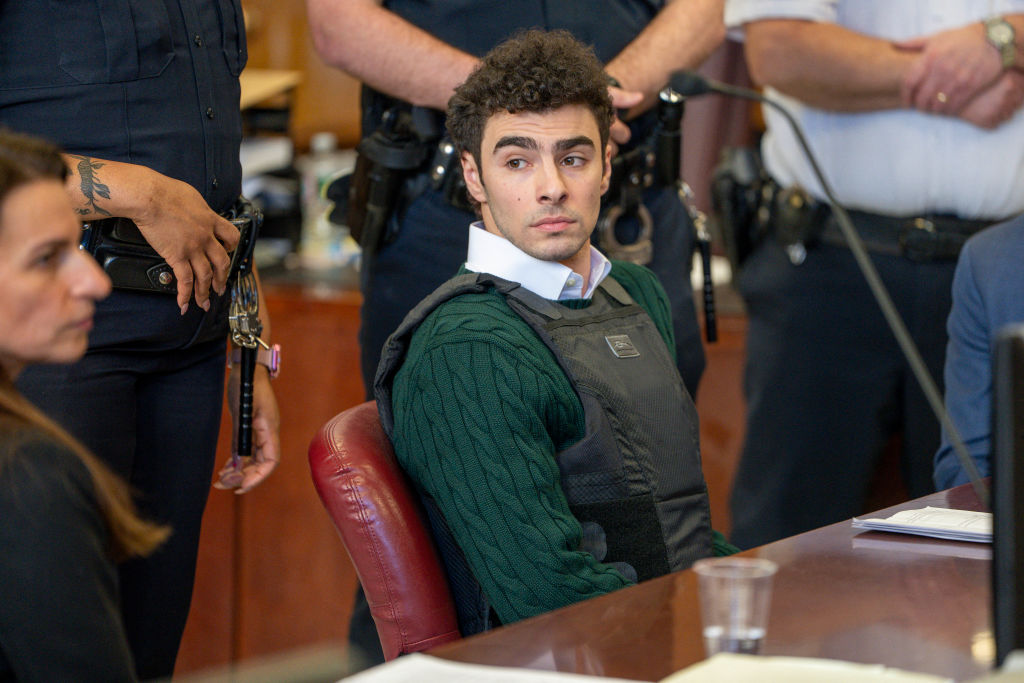
Luigi Mangione, the alleged suspect in the murder of United Healthcare CEO Brian Thompson, was arrested and had his belongings confiscated. Among them were spiral notebooks filled with writings that, according to prosecutors, explained the motivation behind the crime Mangione is accused of.
The New York Post shared a report on Wednesday (June 4) that Manhattan District Attorney Alvin Bragg filed documents with the court to present the writings of Luigi Mangione. The notebooks laid out Mangione’s motivations, which were to strike a blow against the healthcare industry that he felt was consumed by financial greed.
“So say you want to rebel against the deadly, greed fueled health insurance cartel. Do you bomb the HQ? No. Bombs=terrorism,” read a portion of Mangione’s writings. Another portion of the writings added context that Mangione felt it more effective to “wack [sic] the CEO at the annual parasitic bean-counter convention. It’s targeted and precise and doesn’t risk innocents.”
Throughout the writings, Mangione, 27, maintained an air of continually justifying the crime and lessening the impact his actions could have on bystanders. Furthermore, Mangione railed against other healthcare companies, framing them as entities that “literally extracts human life force for money.”
Mangione aimed to make Thompson’s death a spectacle that would play out in the media and bring light to his crusade to send a message to the healthcare industry.
“The point is made in the news headline Insurance CEO killed at annual investors conference,” Mangione wrote in the book. “It conveys a greedy bastard that had it coming. “Members of the public can focus on greed, on the event through reasonable acceptable discussion.”
The prosecution wrote the following regarding Luigi Mangione’s alleged plot:
If ever there were an open and shut case pointing to a defendant’s guilt, this case is that case. Simply put, one would be hard pressed to find a case with such overwhelming evidence of guilt as to the identity of the murderer and the premeditated nature of the assassination.
—
Photo: STEVEN HIRSCH / Getty
HipHopWired Featured Video