State Champ Radio
 Author: djfrosty
Page: 275

Riley Green banks his third chart-topper on Billboard’s Country Airplay chart as “Worst Way” (Nashville Harbor) rises 3-1 on the list dated June 21. It increased by 13% to 28.4 million audience impressions in the June 6-12 tracking week, according to Luminate. Explore Explore See latest videos, charts and news See latest videos, charts and […]
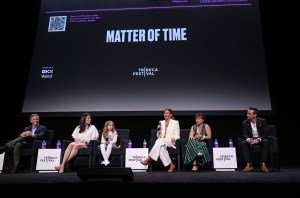
By the time the world premiere of the documentary Matter of Time and a panel with key figures from it finished, the Tribeca Festival audience gathered in lower Manhattan on Thursday (June 12) was jonesing for the final part of the night’s programming: a solo acoustic performance by Eddie Vedder. Much to their relief, they didn’t have to wait long.
Explore
See latest videos, charts and news
See latest videos, charts and news
“That was a quick five-minute changeover,” the Pearl Jam frontman said as he took the stage. “That was very Saturday Night Live – and it’s only Thursday.”
Vedder wasn’t just in Tribeca as a performer, but as an activist and philanthropist. Matter of Time documents the work of the EB Research Partnership, a nonprofit founded by Vedder and his wife, Jill, dedicated to treating the rare genetic disorder Epidermolysis Bullosa, and a pair of Seattle concerts Vedder played during the organization’s Venture Into Cures Summit in October 2023.
Trending on Billboard
After thanking “Bob” – “He bought my mom dinner once for her birthday, so I feel like I can call him Bob now,” Vedder quipped of Tribeca Festival co-founder Robert De Niro – the singer turned to the audience. “I just can’t thank you enough for taking that journey with us,” he said. “To accept all that information and all that emotion and be supporting and give us a way to ride the surfboard of hope – we are very, very grateful.”
As the screen behind him displayed pictures of EB patients – most of them children – Vedder launched into his first song, a heartfelt cover of Warren Zevon’s “Keep Me In Your Heart.” The selection was emblematic of the six-song set, where a loose, reflective Vedder leaned heavily on covers. “If I f–k it up, you don’t really have to tell anybody,” he joked before the next song, a rendition of Tom Waits’ “Picture In a Frame” that he said he hadn’t planned to play.
After bringing out the singer-songwriter Glen Hansard to handle guitar duties for Hansard’s own “The Song of Good Hope,” Vedder continued on solo with a rousing version of Pearl Jam’s Ten classic “Porch.” He may have flubbed a transition in the song – “I think I just messed that up!” he remarked during it – but the audience gave him a standing ovation anyway.
“That was very generous, thank you,” Vedder said, before referencing Dr. Jean Tang, a Stanford researcher featured in Matter of Time. During Thursday’s panel, she explained that, with EBRP’s help, a new gene therapy treatment for the condition received FDA approval two months ago. “It wasn’t quite as loud as the ovation that science got, and I couldn’t be happier about that,” Vedder happily declared. “I’ll take a backseat to rock star Jean Tang any day.”
Matt Finlin, Kate Holler, Rowan Holler, Jill Vedder, Jean Tang and Michael Hund speak onstage during the World Premiere of Matter of Time at Tribeca Festival at The Indeed Theater at Spring Studios on June 12, 2025 in New York City.
Kevin Mazur/Getty Images for EB Research Partnership
Moderated by Tribeca’s Casey Baron, Tang appeared on the brief panel with Jill Vedder, Matter of Time director Matt Finlin, EBRP CEO Michael Hund, and a young EB patient, Rowan, and her mother, Kate. “We need the cure, I’ve been waiting eight years!” Rowan good-naturedly told Tang. “But thank you for your science stuff.”
As the documentary and panel detailed, EB research has increased by leaps and bounds since the creation of EBRP in 2010. For the Vedders, the cause is personal: They were spurred into action after meeting a friend’s child who had EB. “There was nothing then,” Jill said during the panel. Today, with three FDA-approved treatments available, “it really feels like this [a cure] can happen in our lifetime. It really does feel close, and I’m really proud of our families for opening themselves up. We asked a lot of you to be in this film. Thank you for trusting us.”
While Matter of Time weaves in several Vedder performances from his two concerts at Seattle’s Benaroya Hall – Pearl Jam classics like “Elderly Woman Behind The Counter In A Small Town” and “Better Man” and deep cuts like 2020’s “River Cross” shine – the film is primarily about the lives of EB patients and their families, and the researchers who are working toward a cure. Many of them attended the 2023 shows; the most powerful musical moment in the documentary isn’t any Pearl Jam song, but rather “Say Hi,” which Vedder wrote for the young patient Eli – “My friend, my teacher, my hero,” as Vedder describes him to the Seattle concert audience – who is featured heavily in the documentary and attended Thursday night’s premiere.
In Matter of Time, Jill says EBRP’s research isn’t just critical to curing EB – a devastating disease that one parent in the film says makes patients’ skin “slide off like skin on a ripe peach” – but to providing a model for private funding to support research of rare conditions at a time when public funding is often insufficient. Another parent in the film sums up the extent to which the Vedders’ activism has impacted the EB community: “They changed dread into hope.”
So, naturally, Tang received as impassioned an ovation when she spoke on Thursday as Vedder did – something that clearly buoyed him as he wrapped his set, with covers of Wayne Cochran’s “Last Kiss,” which Pearl Jam has played regularly for nearly 30 years, and Tom Petty’s “I Won’t Back Down,” which also features prominently in the documentary. When the crowd stood one final time to applaud, it wasn’t just for Vedder’s energetic performance, but for the efforts and perseverance on display throughout the evening. “Much love,” Vedder said, as he stood to exit. “Thank you.”
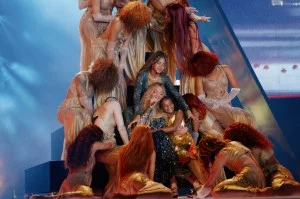
The latest London show on the Cowboy Carter Tour was an extra special one for Beyoncé, who had not one but two very important people to celebrate on stage Thursday night (June 12). Midway through the performance, the pop superstar quickly paused to wish her twins, Rumi — who joined her mother on stage — […]
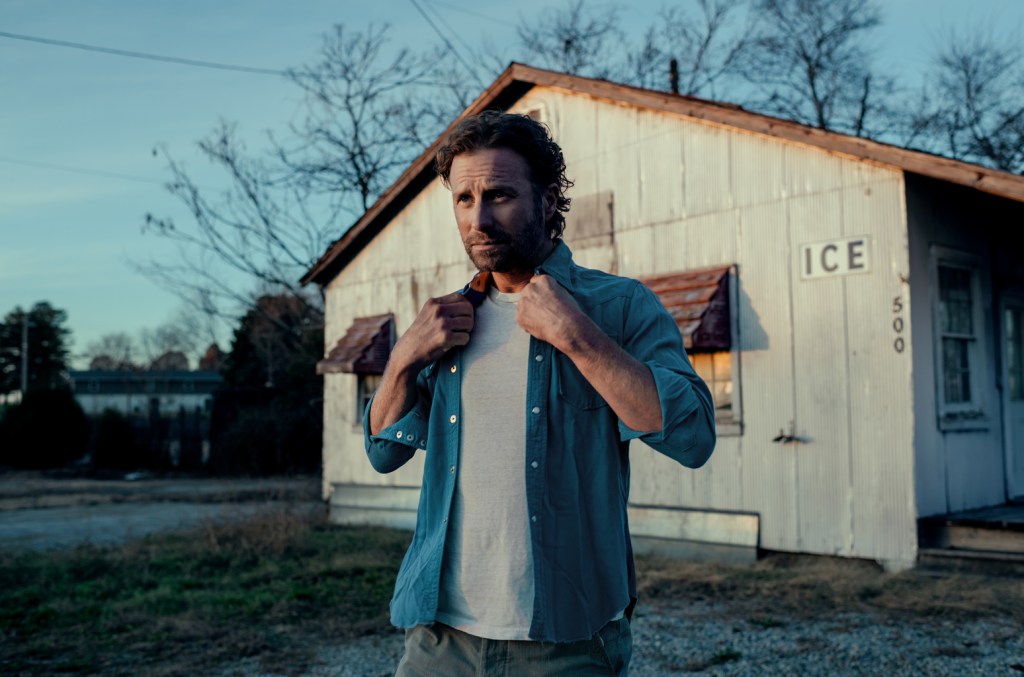
As he releases his 11th studio album Broken Branches, out today (June 13), Dierks Bentley knows more than a bit about constructing an album — and a career — that’s going to endure. After two decades spent notching 18 chart-topping Country Airplay hits and establishing himself as seasoned headliner, the artist, who spent nights early in his career soaking in bluegrass music at Nashville’s Station Inn and who collaborated with the bluegrass stalwarts Del McCoury Band on his debut 2003 album, says he’s tried to approach his career like a bluegrass band does a performance.
Explore
See latest videos, charts and news
See latest videos, charts and news
“It’s very collaborative, and all the pieces are important. You can’t make bluegrass music without all those unique instruments and unique voices,” Bentley tells Billboard. “I’ve tried to work with great people in every aspect of my career. It’s mixing my love of bluegrass instrumentation with my love of playing big rooms, and that requires big electric guitars and drums and bass. The original idea was to mix the bluegrass with the kickass, and I’m still trying to do that.”
Trending on Billboard
On Broken Branches, he collaborated with a tight-knit group of fellow artists, producers and writers, including Ross Copperman and Jon Randall, and feted musicians including Jedd Hughes, Rob McNelly, Bryan Sutton and Charlie Worsham (who also plays in Bentley’s road band).
“They know my music and are able to take it places that maybe I hadn’t even thought about,” Bentley says. “They know it from underneath the car — I might be driving the car, but they know all the nuts and bolts of it, so it’s great working with those musicians.”
Bentley co-wrote four of the album’s 11 songs, infusing witty lyrics into “She Hates Me,” or examining the toils and rewards of working toward a goal on “Something Worth Fixing.” But most of the project finds him locked in on highlighting the songs of other writers.
“There’s people around me that are like, ‘Hey, you need to have some more songs on there that you wrote.’ I just want great songs,” he says. “I love being a big fan and proponent of the Nashville songwriting community. Nobody writes songs like Nashville. I have such respect for it, and I feel lucky [and] grateful to have some temporary ownership of some of these great songs on this record.”
Fifteen years ago, Bentley collaborated with Miranda Lambert and Jamey Johnson on “Bad Angel” from his 2010 Up on the Ridge bluegrass album. On Broken Branches, Bentley and Lambert reunite for the banjo-inflected “Never You.”
“She’s someone I’ve known forever and whose voice I love,” he says. “She’s exactly who she is offstage as she is onstage, and she is awesome. I sent the song to her, and she was in Scottsdale [Arizona]. She went into a studio we found out there and put down the vocal. She’s one of the true trailblazers in country music.”
When Bentley heard the song “Broken Branches,” written by Zach Abend, Beau Bailey and “Oil Money” hitmaker Graham Barham, he says it “gave us a story” to construct the album around.” He invited Riley Green and Country Music Hall of Fame member John Anderson to sing with him, linking together three generations of country hitmakers.
Green was Bentley’s first call. “Right away he was in on it and a couple of days later we were in the studio. While he’s singing, I was thinking, ‘How can I make this even more special?’” he recalls. “John Anderson came to mind, because the link between ‘Broken Branches’ and [Anderson’s 1983 hit] ‘Black Sheep,’ just subconsciously hit me. He came in the studio by himself like a week later. What a legend. He came off the road—he drives himself in his RV to all his gigs, which is so classic. His RV had broken down in Valdosta, Georgia and he spent three days in a motel—hard M—waiting to get it fixed. He’s the real deal and always has been.”
The song wraps with a bit of good-natured, ad-libbed ribbing as Bentley, Green and Anderson ended up recording the ending together. “You hear us talking [like on] Alan Jackson and Jimmy Buffett’s ‘It’s Five O’Clock Somewhere,’ I like that stuff,” Bentley says. “It’s funny and it sticks out in my mind when I listen to those records. This song, it was all done together. It wasn’t no AI, no overdubbing or editing, just us around one mic kind of giving each other crap.”
The song naturally felt like the title track that tied the project together. “When I’m looking for songs, I’m trying to find those songs that are like little broken branches off the family tree,” Bentley explains. “Not the big popular ones, not the ones that sound like a big hit on radio. Those are great, but I’m trying to find songs that are a little bit different.”
He adds, “That really started with the [2014] Riser record and the song ‘Riser.’ I heard ‘Broken Branches’ and thought it’s a great song because I’m a broken branch. Most of my friends are broken branches. All the people I know that came to Nashville to do something in music are doing something that their family probably didn’t do. And they’re doing it; they love country music.”
Throughout his career, Bentley has prioritized lifting up the next generation of artists, sifting through sounds and championing those artists whose music catches his ear. Burgeoning artist Stephen Wilson Jr. co-wrote two songs on the album, “Cold Beer Can” and “Something Worth Fixing.” Bentley has also shared the stage with recent breakout artists like Red Clay Strays and Zach Top, the latter of whom is opening for Bentley on his the Broken Branches tour.
“I love the spot I’m in in country music. I’ve been around a lot of the older cats, and I love those guys—but I also love watching what the younger artists are doing,” he says. “I love what’s happening in country music right now and I love seeing those guys have that success. I first saw Red Clay Strays play at our Seven Peaks Festival a while back. I probably personally told like 500 people about those guys. Same with Zach. I’ve known about him since his bluegrass days, just [through] having a bunch of bluegrass guys in my band. Watching him come over to country and do what he’s done, it’s been fun to watch.”
The album ends with the reflective “Don’t Cry For Me,” which Bentley wrote with Jim Beavers. The song finds him taking stock of his life and career thus far and assuring that he’s happy with how it’s all turned out.
“It’s very personal for me just knowing that one day it all does come to an end, whether it’s your music career or your life,” he says. “I’ve been really blessed in my time here in Nashville. It’s just been a great career and I’ve still got a lot left, hopefully, to do.”
One thing not on that list? Making movies.
Though many of Bentley’s music videos, including the clip for “She Hates Me,” make use of his natural comedic talents, that’s as far as he’s likely to go as an actor. “I love making music videos, but I don’t have any desire to do anything beyond that,” he explains. “I get sent some stuff, and sometimes people think, ‘Hey, everyone just wants to be in a movie,’ and I just don’t. I love film and movies and shows, but I think I’m pretty good in my lane.”
But it’s likely fans could see him once again revisiting his bluegrass roots: “I think about that all the time when I’m listening to [SiriusXM channel] Bluegrass Junction. It’d be fun to make another record like that.”

Source: Julia Beverly / Getty
According to reports, The Roots’ lead MC Black Thought is writing and planning to direct a new film, teaming up with his bandmate Questlove on the project. The unnamed film is planned to be powered by the 360-degree immersive platform WonderRoom with the hopes that it “drops audiences into Hip-Hop’s soul,” with its narrative.Black Thought, aka Tariq Trotter, is partnering with the Impossible Creative studio, who has been behind several immersive experiences in cities across the globe. On their website, they describe their mission in creating those spaces as “designing, filming and mastering 360° experiences that cross an illusory threshold – where a room’s walls, ceiling and floor disappear, giving audiences the experience of being there, of infinite perspective in all directions.” Questlove and Shawn Gee of Two One Five Entertainment are signed on as producers of the film.“I’m grateful to Impossible Creative for entrusting me with their technology in bringing my latest project to the world.” the Grammy Award-winning rapper said in a statement about the project. “Hip-Hop has a rich and beautiful history, and by creating a space where audiences play a role and physically live out its greatest moments, the potential for a better understanding of the genre and its roots increases significantly.”“Working with Tarik and the team at Two One Five is a dream come true. Tarik’s stunning vision will allow audiences to feel the music, stories, and culture of Hip-Hop come alive around them in a way that’s never been experienced before,” said David Galpern, Impossible Creative’s co-founder and producer.FanX Studios Chief Operating Officer Jonathan Schwartz will serve as executive producer and provide oversight for Impossible Creative, and Josh Williams will also oversee the film project for Two One Five. Impossible Creative is eyeing next spring for the premiere to take place in New York City.
The film world is nothing new for Black Thought and Questlove. Black Thought has numerous acting credits to his name, including HBO’s The Deuce dramatic series, 2010’s Night Catches Us and the 2014 James Brown biopic Get On Up. Questlove won an Academy Award for Summer of Soul, and is also the producer of the documentary Sly Lives! on the recently deceased rock pioneer Sly Stone.
HipHopWired Featured Video

Source: Variety / Getty
Atlanta rapper Silentó has been sentenced to 30 years in prison for the aggravated manslaughter of his cousin, Frederick Rooks III, and other charges related to the 2021 shooting.
DeKalb County District Attorney Sherry Boston announced in a news release on Wednesday that Silentó, born Ricky Lamar Hawk, pleaded guilty but mentally ill to charges of voluntary manslaughter, aggravated assault, possession of a firearm during the commission of a crime, and concealing the death of another. According to the Associated Press, a murder charge was dropped as part of a plea agreement.
For those who are unfamiliar with the downfall of the “Watch Me (Whip/Nae Nae)” artist and the violent death of his cousin, here’s a quick rundown as reported by AP:
DeKalb County police found Frederick Rooks III shot in the leg and face in the early morning hours of Jan. 21, 2021 outside a home in a suburban area near Decatur. Police said they found 10 bullet casings near Rooks’ body, and security video from a nearby home showed a white BMW SUV speeding away shortly after the gunshots.
A family member of Rooks told police that Silentó had picked up Rooks in a white BMW SUV, and GPS data and other cameras put the vehicle at the site of the shooting.
Silentó confessed about 10 days later after he was arrested, police said. Ballistics testing matched the bullet casings to a gun that Silentó had when he was arrested, authorities said.
In 2020, Silentó, who was a high school junior in 2015 when he released his “Watch Me” smash hit, had been involved in a number of run-ins with the law, some of which involved violence allegedly threatened or committed against others.
In August 2020, he was arrested in Santa Ana, California, on a domestic violence charge. The next day, in Los Angeles, he was charged with assault with a deadly weapon after witnesses said he entered a stranger’s home looking for his girlfriend, who wasn’t there, and swung a hatchet at two people before he was disarmed.
In 2019, he made an appearance on the medical talk show The Doctors, where he discussed struggling with depression and witnessing violence and mental illness among his family members growing up.
“I’ve been fighting demons my whole life, my whole life,” he said.
HipHopWired Featured Video
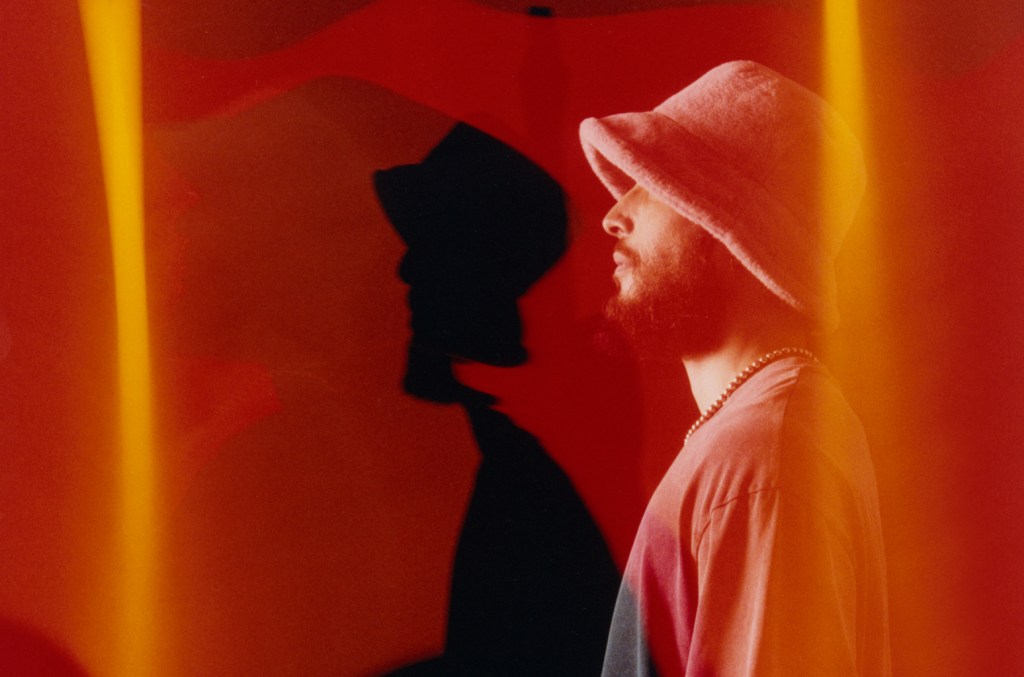
Roughly a decade ago, Bruno Boumendil, the French producer who goes by the name Folamour, perfected a distinct strain of soul-sampling house music, fragile yet fierce.
For source material, he mined plush soul ballads from the late ’70s and early ‘80s, dropping vocal snippets into productions that flew forward, so the charismatic voices seemed to be battling to maintain their stately dignity. He programmed his drums to start low in the mix before they reared up and lashed out, and used repetition to push tracks to dramatic climaxes, looping to lethal effect.
After an early run of success that included “When U Came Into My Life” (2016), “Ya Just Need 2 Believe in Yaself” (2017) and “I Know It Has Been Done Before” (2018), Boumendil pivoted. Though he never stopped making dance music, he started sprinkling it in among neo-soul and hip-hop tracks. But in recent years, he has been battling a creative funk.
Trending on Billboard
“I started to feel like everything was just a routine,” Boumendil explains. “I was doing gigs and creating music, but I wasn’t really thinking about it anymore.”
His new album, Movement Therapy, out June 13, comes after he forced himself to turn off autopilot, “to actually think about what I’m doing and be more than just someone going on stage and playing for two hours.” The first song on the record is a spoken-word manifesto: “For a while, I stopped moving and I felt dead inside. My soul and body were losing their light and purpose, I felt devoid of love for myself. Then I understood that I needed to stay in movement.”
In search of the lost spark, Boumendil fully recommitted to the style that initially boosted his career. He calls Movement Therapy his “first proper house music album.”
Boumendil, bearded, beaming and wearing his trademark bucket hat, spoke via Zoom from Paris, where he is based. He’s eager to discuss the intricacies of his production process and earnest about his passion for full-length albums — this is his fifth. “The format is tougher to present than big singles,” he says. “But I just love albums too much. It’s always nice when people want to dig into it.”
While France has a proud tradition of sample-based house music — the “French Touch” of Daft Punk, Cassius, and more — Boumendil was not raised in dance clubs. He grew up in Lyon, where much of his early listening was informed by his father, who enjoyed jazz and punk, funk and stadium rock. Later Boumendil fell hard for ‘90s hip-hop from New York, the boom bap made by the likes of DJ Premier, Pete Rock, and Q-Tip, where heady samples collided with hefty beats.
A love for rap led him obliquely to house, as if he snuck into the club through a side door: Both genres love a choice sample, even if they prefer different tempos. “I started to feel the connection,” Boumendil says, “and around 2010 to 2012, started falling in love with Kerri Chandler, Moodymann, Theo Parrish, all the old-school guys from Chicago and Detroit.” (Some of these “old-school guys” were a key influence on French Touch in the first place — when Daft Punk debuted their 1997 Essential Mix for BBC, they kicked it off with “Hear the Music,” from Chicago stalwart Paul Johnson.) Boumendil started DJing as a way of sharing his growing record collection.
Production came later, in 2014, when he was laid up in bed for three months with an illness. “I was like, ‘Okay, I have two options,’” he recalls. “I can watch Lost for like the 15th time, or I can try to do something better.” A friend helped tip the scale by introducing him to the production software Ableton.
He improved quickly. “Baise en Ville,” from the following year, mixed snatches of Jodeci’s volcanic lament “Cry for You” with soothing piano house. But Boumendil says it wasn’t until 2017 that his music started getting widespread attention. That year he put out “Lost Frequencies” — which flips “Lady,” a 1995 classic from one of Boumendil’s favorite artists, the neo-soul savant D’Angelo — as well as “Ya Just Need 2 Believe in Yaself,” one of his most-streamed songs, and the album Umami via Classic Music Company, the label co-founded by dance luminaries Derrick Carter and Luke Solomon.
Boumendil saw that burst of activity as the close of a chapter. After years of chopping samples on his MPC, he decided to start playing more instruments — sometimes hiring musicians to help — and making “slower stuff.”
Not anymore: Movement Therapy whizzes toward the dancefloor and rarely lets up. “Feel the Power,” “a song about the energy we feel when we are all together in a party,” detonates almost immediately and borrows its over-the-moon vocal from a ‘90s rave track, Love Decade’s “So Real.” In “Everyone’s Beautiful When They Do What They Love,” the bass hits as if it’s trying to maul its way out of the speakers. “I wanted to feel that growl, like it was an animal or something really savage,” Boumendil says.
While crafting Movement Therapy, he purposefully broke his studio routine in several ways as part of an effort to banish his malaise. “The musician’s life never stops — it’s hard to say, ‘I’m not doing shows for six months,’” Boumendil points out. “I had to feel a difference while I was still doing the things that made me feel that way [‘dead inside’], which was super tough.”
For the first time ever, he club-tested early versions of every song on the album. “One of the goals of coming back to house music was to have that link where on Thursday I can be in my studio making something, and on Friday I can try the song in a set,” Boumendil explains. After numerous tweaks — he’s been lucky to find a mastering engineer “who doesn’t mind doing like, 20 versions of a song” —”Ca Va Aller” and “Everyone’s Beautiful When They Do What They Love” have “been working super well” on the dancefloor.
In addition to establishing a new feedback loop between the club and the studio, Boumendil added more electronic touches after years of being committed to analog instrumentation. On both “Ca Va Aller” and “Everyone’s Beautiful When They Do What They Love,” synthesizers glitter like pennies at the bottom of a fountain.
The same goes for “Pressure Makes Diamonds,” the album’s lead single, originally released almost a year ago. “It’s always a bit unexpected [when I play that] in my set, because it has that really electronic, modern lead, which doesn’t really fit with the old-school funk, disco, and soul I usually play,” Boumendil acknowledges.
But queuing up the track serves as another way for him to scramble his old routines. There is a point in the song after the second verse where the drums and vocal fall away before revving up again, and when Boumendil hears it, he’s repeatedly been close to tears.
Treasuring these moments — “stepping back, understanding the power of dancing, and loving the music that makes you move” — is part of his larger project of creative rejuvenation. “I’m still working on it,” Boumendil says. “But I’ve never felt better about how I do things than I do right now.”

Source: Bernard Smalls / @PhotosByBeanz
Raids by Immigration and Customs Enforcement (ICE) officers in a section of Los Angeles have sparked outrage and protests, leading to President Donald Trump sending in National Guard officers and Marines in response. Some have questioned why more celebrities haven’t been vocal about the administration’s behavior, and rapper Cardi B addressed that while appearing in a Spaces conversation on X, formerly Twitter on Tuesday (June 10).“Personally, the reason why I haven’t really said anything is because I could say something every single day about it and guess what? Nothing is going to happen,” she stated, going on to express fears that her words could provoke more retaliation. “Because Trump do not give one f—k about me or what I gotta say. I personally believe that he doesn’t like me. So if somebody don’t like you, and they say something or they do something, they’ll be like, ‘Oh word? Now I’m gonna show you.’”The Bronx, New York native continued, “He always gives dictatorship vibe. I tried to warn people that this was going to happen. I don’t know nobody anymore in the White House. I don’t know a representative. I don’t know nobody in there. And if I talk about it every single day, he is not going to care. Actually, I feel like if I talk about it every single day, he’s going to deport more people on purpose to show you. … Like, ‘B—-h, I run this country.’”She did go on to call on Trump to display more “compassion” during the conversation hosted by Complex, saying the people targeted “are working their a— off and providing for this country” despite Trump and his believers’ allegations. “So they actually have helped America a lot,” she said. “Plenty! We wouldn’t like for an American to get snatched up in Russia and get f—g treated practically like dog s—t. And we’re treating these people like they’re dog s—t, like not even humans.”Cardi B has been a supporter of former Vice President Kamala Harris and Bernie Sanders in the past and has spoken out against Trump in the past. She did warn that the U.S. could encounter bad karma for its actions, referencing the COVID-19 pandemic. California Governor Gavin Newsom has called out Trump repeatedly since last week, notably in a speech on Tuesday saying “democracy is under assault,” in reference to Trump’s rhetoric.
HipHopWired Featured Video
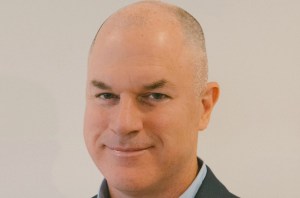
While headlines from California, D.C., India and Iran have dominated a chaotic news cycle this week — plus add in a restructuring at MCA and the loss of two stone cold icons — the music industry has actually had a meh few days when it comes to promotions and new hires. So without any further delay here’s the latest edition of Executive Turntable.
BMI‘s board of directors has voted to keep president and CEO Mike O’Neill on for three more years, through Dec. 31, 2029. O’Neill has been with BMI, one of the most dominate performing rights organizations (PROs) in the U.S., for the last 30 years, and since taking the helm as president and CEO, O’Neill has guided the company through some of the biggest business changes in its history. This includes its 2024 sale to New Mountain Capital, its move to for-profit status, and its partnership with Music Nation to establish a licensing infrastructure in the UAE. “I have never been more optimistic about the future of BMI, and there are only greater things ahead,” O’Neill added. “BMI’s mission to drive value for our affiliates, increase our distributions and ensure the long-term success of our family of songwriters, composers and publishers continues at full speed.”
Trending on Billboard
Wasserman elevated Shelley Pisarra to chief insights and innovation officer, reporting to COO Darrell Coetzee. Previously evp of global insights, Pisarra will now lead the company’s strategy and innovation platforms, aiming to fuel growth across sports, music and entertainment. Based in NYC, Pisarra’s new role includes expanding Wasserman’s product offerings and creating proprietary tools to drive revenue for talent, brands, and rights holders. With over 25 years of experience across sports, media, and consumer goods — including positions at PepsiCo, Novartis, Nestle and Bristol-Myers Squibb — Pisarra has played a key role in transforming Wasserman’s insights capabilities through data analytics, consumer profiling, and fan segmentation. “I’m thrilled to step into this role, as Wasserman continues to demonstrate our commitment to putting insights to work to best serve our clients, while anticipating what’s next for the fan at the intersection of sports, music, and entertainment,” said Pisarra.
NASHVILLE NOTES: FEM co-owner Leslie Fram was named governor of the Recording Academy’s Nashville Chapter … Artist management company Make Wake Artists launched an in-house digital strategy department. The new department is led by Jess Keifer (head of digital marketing and social strategy) and Kyle Jonas (artist strategy and management coordinator). Make Wake Artists’ clients include Luke Combs, The Castellows, The Wilder Blue, Brent Cobb and Cooper Alan.
Centricity Music promoted four team members to vice president roles, highlighting the Nashville-based Christian label’s growth. Matt Ewald is now vp of A&R, Kris Love becomes vp of promotions, Joshua Wurzelbacher advances to vp of creative and Michael Pons is promoted to vp of finance. These promotions follow five earlier ones this year, with all four individuals having advanced internally since joining between 2013 and 2020. “Centricity has grown over the years in terms of artists, writers and employees,” said Caren Seidle, CEO. “This growth has led to increased responsibilities and work load of our staff. These promotions recognize the leadership these employees provide to their departments consistent with the high level of service for which Centricity is known.”
RockForce, a provider of workforce and production solutions for the live industry, opened a new office in Nashville to support regional productions. The office includes RockForce divisions The Production Collective and Collective Payroll. Jeremy Young, the company’s evp of business development, has also been named vp of operations for the new location. With nearly 30 years of experience in artist management, touring, and commercial leadership, Young began his career at SFX/Clear Channel Entertainment and has worked with artists like Maroon 5 and Gavin DeGraw. He later managed DeGraw’s career and led national sales for CAPS/Cast & Crew before joining RockForce. “RockForce is experiencing meaningful and sustainable growth, and I’m thrilled to be part of it,” said Young.
RADIO, RADIO: Matt Pinfield returns as host of Flashback With Matt Pinfield on Westwood One this weekend, following a near-fatal stroke in January that left him unresponsive for over two months. After extensive rehab in Los Angeles, the former MTV VJ is set to resume hosting duties on June 14–15 on the nationally syndicated rock show. During his recovery, Leslie Fram served as interim host of Flashback. Pinfield also continues his weekday role on The Matt Pinfield Show on 88.5 The SoCal Sound in Los Angeles. Cumulus Media’s Brian Philips praised Pinfield’s recovery, calling him a “warrior.”
ICYMI:
Mike Harris
Under new boss Mike Harris, MCA Nashville laid off nearly 20 employees across multiple departments. The cuts affect several high-level execs, including vps Leigh Malleus (media marketing), Karen Naff (creative services) and Gary Keffer (strategic marketing). Senior directors Michelle Hall, Troy Scott and Leah Ducey were also let go, along with multiple directors and coordinators. [Keep Reading]
Last Week’s Turntable: iHeartMedia Shuffles Top Accountants
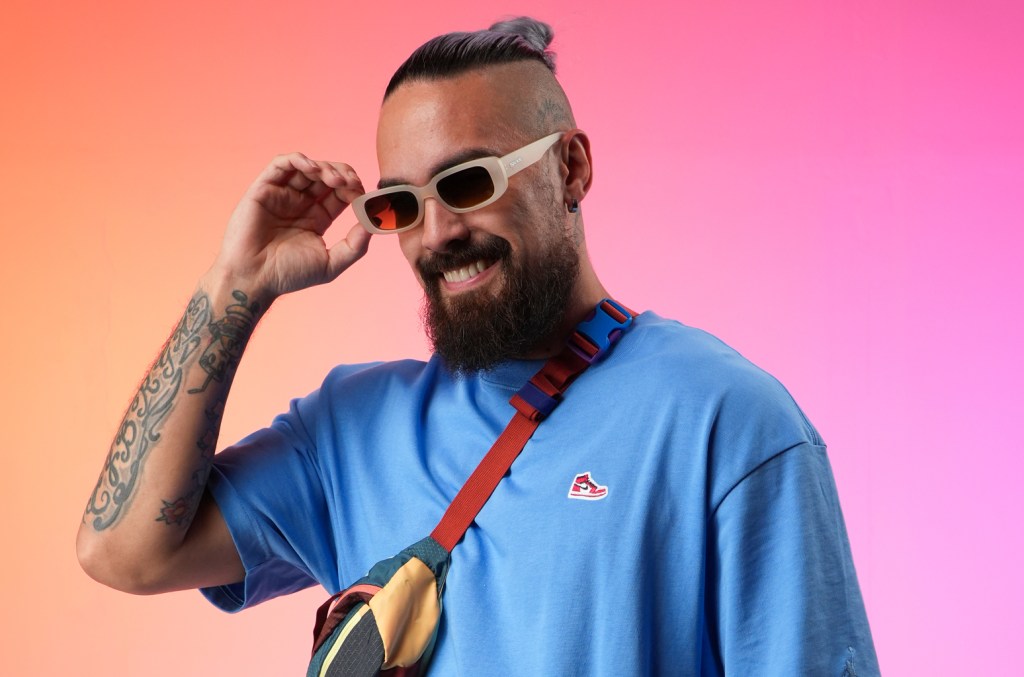
Lenny Pearce had been producing electronic music and uploading it to SoundCloud for years, but it wasn’t until he made a remix unlike anything being played in the club scene that his career skyrocketed.
“The first one that really took off was ‘Head, Shoulders, Knees & Toes,’ techno version,” says the Australian producer.
He’s speaking about his edit of the classic children’s song that encourages kids to touch their head, shoulders, knees and toes. (And eyes, and ears, and mouth and nose.) But instead of being rendered in traditional sing-song, Pearce’s version is done with kickdrum and waves of dark synth.
It’s one of many canonical children’s songs that Pearce has made dance remixes of, forging a genre he calls “toddler techno,” and with it carving out a niche space in the touring world with his baby raves.
Trending on Billboard
Thus far, Pearce has hosted events in Australia, Bahrain, Singapore and the United States, where he launched a ten-date tour this week. The run hits nine U.S. cities through the end of the month, with each event welcoming between 700 to 1,500 children and parents. Most of the shows sold out within minutes, altogether selling more than 11,000 tickets. After the U.S. he’s off to Malaysia and has had offers come in from Kenya as well.
“Nursery rhymes are just known by everyone,” he says of his global demand.
DJ-ing all-ages parties wasn’t on Pearce’s radar when he started in entertainment. 15 years ago, he was part of a 10-person breakdancing crew that won Australia’s Got Talent in 2010. This team, Justice Crew, then transformed into a boy band that clocked hits like “Boom Boom,” which hit No. 1 on the Australian ARIA Singles chart. Pearce DJ’d as part of Justice Crew shows and fell in love with production, eventually leaving the group to focus on it. While his career was for a time “going nowhere,” he says he eventually became a better and better producer, working in house and tech house and uploading his music to streaming platforms while trying to get the attention of labels.
Then, two years ago his first child — a daughter — was born. “She captured my heart,” Pearce says. “I wanted to do everything for her.” He was still making music, but was suddenly also a stay-at-home dad. And as any parent who’s spent long stretches of time with their young child has likely experienced, traditional children’s music was suddenly on heavy rotation in the Pearce household.
“She liked ‘The Wheels On the Bus’ and and all that,” says Pearce of his daughter. “With my creative mind I was thinking that I could remix these songs and put them on TikTok.” Amid the bottles and naps, he did just that, working from his home studio. “And then it just started to take off from there.”
One of Pearce’s first uploads, the techno edit of “Head, Shoulders, Knees & Toes” quickly racked up 500,000 views, with Pearce’s follower count on TikTok growing from 30,000 to over a million as he uploaded other kid-centric club edits. (He now has 2.1 million followers on the platform.) The track’s success lead him to sign myriad remixes to the longstanding Dutch dance label Spinnin’ Records, an imprint he’d been trying to get the attention of for years. In 2024, Spinnin’ released his slinky club version of “Wheels On the Bus,” which now has 2.3 million views on YouTube alone.
Pearce’s career was also buoyed by the fact that his identical twin brother, John Pearce, is a current members of Australian kids group The Wiggles. (The brothers were also both members of Justice Crew.) The connection made it possible for Lenny to remix an entire Wiggles album into The Wiggles Soundsystem: Rave of Innocence, which featured 14 edits of classics by the group. The album hit No. 1 on the ARIA Australian Dance Albums Chart.
Pearce’s work isn’t entirely reinventing the wheel. Snoop Dogg has done his own interpretations of children’s music, and in 2020, Marshmello and his team capitalized on the artist’s popularity among children and launched a kids-focused content platform. Dance edits of kids songs have been around for years, but mostly as one-offs, making them harder for parents to find in aggregate.
“There’s not one artist who has been doing it,” Pearce says. “There’ll be a random guy who does a trap version of ‘Five Little Ducks’ or something. But in the eyes of toddlers and parents, there hasn’t been an artist who they can go to for this sound.”
Pearce says the messages he gets from parents around the world are often ones of gratitude, given that his music provides something that children love, but which is different than the traditional kids fare that can become mind-numbing with repetition. His music is also a way for parents to connect with the club vibe that, for many, defined their pre-child years.
As such, Toddler Techno live events was the next logical step, with Pearce signing with WME for representation late last year.
“A DJ performing for kids and families sounded wild enough to be huge, and that’s exactly what it is,” says Pearce’s agent at WME, Peter Schwartz. “The family market has always been strong — parents need entertainment! Lenny’s engaging both kids and the parents who were raving not too long ago and still want to have fun.”
To wit, Pearce’s current U.S. tour sold out every show in ten minutes, Scwartz says, with second shows added in most markets. The run comes on the heels of Pearce’s debut album Toddler Techno (Vol. 1), released in March. Pearce is playing traditional pop/rock venues like Los Angeles’ Roxy Theater, The Brooklyn Bowl and Chicago’s Outset, and a bigger fall tour currently in the planning stages. Show tickets range between $30 and $40, with some venues letting very young children in for free.
“What Lenny’s doing is fun, fresh, and a little edgier than other kids’ acts,” says Scwartz, “which we think really sets him apart.”
Pearce, who has a warm personality, a wide smile and a long, colorful braid that in fact gives him an aptly cartoonish quality, says kids have always just naturally been drawn to him, making him the perfect artist to play a party designed for families. (To wit, he’s also collaborated with kids entertainment juggernauts including Nickelodeon, Disney and Hasbro.) His shows welcome even the newest of newborns (“There’s like, babies in carriages,” he says) and are not seated, meaning kids and parents can roam the dancefloor like attendees do in adults-only settings.
On the road, Pearce has seen entire families come dressed in matching mermaid outfits and others in tutus. (His now two year old daughter also prefers this latter accessory, with Pearce and his wife also welcoming a baby boy in April.) Shows also offer face-painting, hair braiding and photo booths, and a recent event had a giant inflatable octopus in the middle of the dancefloor. These elements are obviously kid-centric, but they’re also not really different from standard activities and styles at adults clubs and festivals. At a show in Philadelphia earlier this week, kids clutched glow sticks and wore sunglasses on the dancefloor, and their parents did too.
Pearce has heard plenty of jokes about attendees taking shots of apple juice versus alcohol and acknowledges that one of the reasons why what he does is so popular is because “it’s like an extreme to an extreme. Rave culture is supposed to be all about drugs and partying and this and that, and then kids are so innocent. But it’s not about the party aspect, it’s about music, entertainment, unity and including the whole family.”
There’s a lot of forthcoming music to keep the tiny fists pumping. Pearce has a new album of remixed kids classics dropping soon, with his ability to reconfigure these songs possible because many are old enough to be covered by public domain and are not under copyright. When Pearce does eventually get through the well of kids classics, he says he’ll simply shift genres and do all of the same music in drum & bass, or deep house, or reggaetón. “By the time that cycles around, we’ll all be retired,” he says.
In the meantime, he seems to have found his calling as both an artist and a dad.
“A lot of parents say they play my remixes in the car on the way to school or daycare and it’s not a buzzkill,” he says. “The kids enjoy it, and they do, too.”