
State Champ Radio

by DJ Frosty

Current track

Title

Artist

Current show

State Champ Radio Mix

1:00 pm 7:00 pm

Current show

State Champ Radio Mix

1:00 pm 7:00 pm


Author: djfrosty

Page: 257

R. Kelly was reportedly hospitalized following claims of an alleged overdose while in prison. The singer is now seeking a pardon from President Donald Trump. Keep watching for the full story. Tetris Kelly: R. Kelly was reportedly hospitalized after what he is claiming was another attempt on his life inside prison. His defense attorneys are […]

Electronic dance music may have been born in America, emerging from the disco dancefloors of 1970s New York, the house hotbed of ’80s Chicago, and the techno frontier of ’80s Detroit, but it initially found a more receptive audience abroad. While the U.S. largely relegated it to the underground, Europe and Latin America embraced it wholesale, building ecosystems of clubs, festivals and media that treated dance as a cultural fixture.
Billboard launched its first “Disco Action” dance charts in the ‘70s and built a legacy of covering dance music well before the digital era, thanks to talented journalists like Larry Flick, Michael Paoletta and Brian Chin. When I joined Billboard in 2014, the genre lived in a column called CODE, with sharp contributing voices like Kerri Mason and Zel McCarthy keeping the beat alive.

Dance music was exploding in popularity in America, but the legacy media hadn’t entirely caught up. While Rolling Stone and SPIN gave deadmau5 and Skrillex cover stories during the early EDM boom of 2011–2012 and Billboard dedicated three cover stories to the genre’s explosion throughout 2012, most top-tier U.S. music publications weren’t offering dedicated coverage of the genre. Meanwhile, in Europe, outlets like Mixmag, Resident Advisor and DJ Mag were deeply embedded in the scene, offering both depth and consistency that was largely absent in the American press.

Trending on Billboard

As a result, the scene relied on a network of scrappy music blogs with their ear to the ground and finger on the pulse. Social media was reshaping the ecosystem. Artists were breaking online before they ever hit radio, and the direct line to fans was turning DJs into stars. At the same time, the democratization of digital tools gave rise to a new generation of bedroom producers, making tracks on laptops that could suddenly reach millions.

I was living in Berlin when Kerri gave me the opportunity to start freelancing for Billboard in 2014. My first feature was on a then-unknown kid named Kygo, before he’d ever played outside his native Norway. Soon after, I was covering European festivals like Tomorrowland and Sónar, and the doors that opened for Billboard made it clear we had a rare window to build something meaningful.

Feeling the winds of destiny at my back, I moved back to New York and delivered a 10-page proposal for a Billboard Dance vertical. Looking back, I probably could have been more concise. Nothing happens overnight at a legacy media brand, and this was no exception. I’ll always be grateful to Tye Comer and Mike Bruno for championing my vision and helping win over the higher-ups to get it approved.

When we announced Billboard Dance’s launch in 2015, the industry welcomed it as a much-needed step forward in the scene’s stateside maturation. One piece of feedback I often heard was that my hiring felt like the passing of a generational torch. I was seen as part of the blog-era generation, close in age to many of the artists we were covering and trusted by the community that had championed them early on. As a DJ and producer myself, I could speak their language and recognize the difference between innovative production and recycled presets when deciding which artists to spotlight.

With full-time focus, dedicated resources and standalone social channels, Billboard Dance’s coverage could expand beyond the charts and into the culture. These additions were buoyed by the launch of the Hot Dance/Electronic chart in 2013, with the team recognizing and responding to the genre’s explosion. The additions of passionate contributors like Dave Rishty and Kat Bein helped our lean team punch above its weight class and go toe-to-toe with much larger outlets.

We built a reputation for curation, spotlighting artists like Martin Garrix, Alison Wonderland and Black Coffee long before they became headliners. As a new wave of artists climbed the Billboard Hot 100, we put faces to the movement — The Chainsmokers and Marshmello as crossover juggernauts, Diplo and DJ Snake as global tastemakers, REZZ and TOKiMONSTA as rising voices from the underground — and gave them the covers they deserved.

It’s been really heartening to see Billboard Dance continue to thrive under Katie Bain’s leadership since she took over in June of 2019. She’s brought thoughtful editorial vision and a clear sense of where the scene is headed, helping the brand remain relevant for a new generation of dance music fans.  The Launch   Launching it as “Billboard Dance” was a victory in itself. At the time, there were some who pushed for “Billboard EDM,” but we held the line. History has smiled on that decision, as the term “EDM” has become synonymous with a very specific (and often reviled) subset of the genre, while “Dance” gave us the latitude to reflect the full spectrum of global, cross-genre electronic music. I remember getting coffee with Dutch house and techno DJ/producer Joris Voorn during one Amsterdam Dance Event, and he thanked me for using the term “dance,” saying it showed the broader scene was finally being taken seriously by American media. “With all due respect,” he quipped. “We wouldn’t be sitting here right now if you were Billboard EDM.”

It illustrated the rift that existed between mainstream dance music and the underground at the time, a divide I addressed in an early op-ed. We made a concerted effort to bridge that gap, spotlighting house and techno artists like Jamie Jones, Guy Gerber and Damian Lazarus with their first Billboard features through our “The Dance World According to“ series.

Shortly after we launched Billboard Dance, dance music entered a generational run of pop chart crossovers. In 2015, Major Lazer and DJ Snake’s “Lean On” debuted at No. 4 on the Hot 100, while Skrillex and Diplo’s “Where Are Ü Now” peaked at No. 8 and helped resurrect Justin Bieber’s career. The following year ushered in an unprecedented streak for The Chainsmokers, who landed five top-ten hits with “Roses” (No. 6), “Don’t Let Me Down” (No. 3), “Closer” (No. 1), “Paris” (No. 6) and “Something Just Like This” (No. 3). Some of the old rock heads at the publication still didn’t respect dance music, but they could no longer deny its relevance.

The cover stories always felt especially meaningful because dance music has long carried a bit of an underdog complex. The Marshmello cover in March 2018 was a standout. It was the masked artist’s first-ever interview and a testament to the trust we’d built by covering his rise from the start. Scarcely three years earlier, we’d published the first-ever photo of him wearing his now-iconic helmet — a true full-circle moment. In that short span, he had gone from a total unknown to a global hitmaker, and just a few months later, he would release his biggest hit to date, “Happier” (No. 2).

April 20, 2018, is a day I’ll never forget. Billboard broke the news of Avicii’s passing, sending shockwaves of grief and disbelief through the music world. I remember having to compose myself before stepping into a whirlwind of media appearances — Good Morning America, CBS, Reuters, The New York Times‘Popcast and more. It felt surreal, and honestly uncomfortable, to speak publicly so soon after his death. But in the days that followed, several people close to Tim reached out to express appreciation for how his story was told.

Looking back, I do think his loss changed the trajectory of dance music. As I wrote in his Billboard obituary five days later, Avicii’s loss marked the end of innocence for the scene. It forced the industry to confront the toll of nonstop touring and the elephant in the room: mental health. Conversations that had long been avoided were suddenly impossible to ignore.

Launching the Billboard Dance 100 in 2018 was a milestone. We became the first publication to secure full touring data from every major booking agency, going beyond hard ticket sales to deliver the most accurate snapshot of the global dance/electronic touring landscape and inform the rankings. But the most powerful statistic, in my view, was the 180,000 fan votes from 174 countries. That overwhelming response opened eyes both inside and outside the publication to the truly global reach of dance music’s fanbase.

Taking Billboard Dance from URL to IRL with the Dance 100 events at 1 Hotel South Beach during Miami Music Week marked a defining moment for the brand. In an industry built on live music and real-world connection, these events made it real. Everyone from Armin van Buuren and Nicky Romero to Marshmello’s manager, Moe Shalizi, and Goldman Sachs CEO David Solomon came through to celebrate. Having Afrojack and Arty on the decks didn’t hurt either. 

Afrojack

World Red Eye/Courtesy of Matt Medved 

Dance Music’s Continued Evolution

One encouraging shift over the years is that the music industry has finally accepted that dance music is here to stay. I remember having to answer the same question ad nauseum in our early Billboard meetings: “When will the EDM bubble burst?”

A decade later, the numbers speak for themselves. According to the 2025 IMS Business Report, the global electronic music industry has reached a record value of $12.9 billion, marking a staggering 87% increase since Billboard Dance’s 2015 birth. That growth hasn’t come in a straight line. The industry was rocked by COVID, losing more than half its value in 2020 as festivals were canceled, clubs shuttered and touring ground to a halt. But the rebound has been swift and striking: a 34% surge in 2022, followed by another 17% climb in 2023.

When we launched Billboard Dance, TikTok didn’t exist. Soundcloud was still the first stop for discovery, and Spotify was just beginning to shift listening habits. Virality hinged on Hype Machine chart-toppers, not sped-up remix snippets blowing up overnight.

Today, discovery in dance music is a different beast. Spotify playlists are kingmakers, with premier placements critical to breaking a track. Social media has become the frontline where most listeners first encounter a song. A 20-second drop can ignite a worldwide trend. Keinemusik’s “Move” went parabolic even before its official release, buoyed by a wave of Instagram reels and TikTok edits that turned a live set highlight into a global hit. Viral Boiler Room sets have been career-making moments for artists like Fred again.. and Yousuke Yukimatsu. Tracks are breaking as much through content as they are through clubs.

Sonically, dance music has evolved significantly. The formulaic big-room drops that dominated the EDM era have given way to a broader, more dynamic spectrum. House and techno have taken over festival stages with a new generation of headliners like John Summit, Dom Dolla and Sara Landry. Of course, the real innovation remains on the side stages: in the rise of amapiano and Afro-house, the resurgence of jungle and drum and bass, and the creative cross-pollination of global sounds.

The Future

A decade after founding Billboard Dance, I believe we’re witnessing a new renaissance in dance music. Five years removed from a pandemic that shuttered the touring industry, we’re experiencing a boom driven by pent-up demand. From vinyl to CD-Js to digital, technology has always driven dance music forward, and today’s tools are accelerating that evolution.

One trend to watch is the rise of immersive audiovisual experiences. Just as modern dance music empowered producers to step out from behind the scenes and into the spotlight, we’re now seeing digital artists and audiovisual creators begin to take center stage. At Now Media, we’ve been covering the rise of Anyma long before his shows at the Sphere captured the world’s attention. Look at what Eric Prydz has done with HOLO, what Dixon is building through Transmoderna or how Max Cooper is merging sound with interactive installation art.

This movement is poised to go mainstream in a major way. Daft Punk’s pyramid set off an arms race in stage production, and I think Anyma’s Sphere shows will similarly be remembered as the spark for a new paradigm in dance music visuals.

Matt Medved 

Courtesy of Matt Medved 

The rise of AI-generated music is the biggest shift that not enough people are paying attention to. Tools like Suno and Udio can now turn a simple text prompt into a fully formed track within seconds. While we’re not quite at a Midjourney-for-music moment, the quality is improving at a remarkable pace. This is a seismic shift that’s going to impact everything from how music is made to how it’s valued. Dance music, with its reliance on repetition and structure rather than narrative or lyricism, is especially exposed. It’s a genre where AI can already mimic form convincingly, and that makes the stakes even higher for originality.

There’s disruptive creative potential here, especially for artists without access to traditional resources. Just as drum machines and DAWs once lowered the barrier to entry, AI tools are unlocking new creative workflows for electronic musicians to bring ideas to life. In my own productions, it’s been a game-changer — what used to take me weeks in the studio now takes hours. Producers can generate custom loops, build tailored sample packs on demand, create instant demos with AI vocalists, and use the tools as a dynamic sounding board to refine ideas in real time. The real value isn’t in simply pressing generate, but in how you select and shape those raw outputs into a sound that’s distinctly your own. As AI visual artist Claire Silver likes to say, “Taste is the new skill.”

But taste alone won’t be enough. Platforms are already flooded with AI-generated tracks, a relentless tide of indistinguishable output. As that volume becomes overwhelming in the years to come, the challenge shifts from production to curation. In a world where anyone can generate music instantly, listeners will gravitate toward what feels real. The artists who thrive in this new landscape will be those who can harness technology to create something meaningful and unmistakably human.  Matt Medved is the co-founder, CEO and editor-in-chief of Now Media. He previously served as the founding editor of Billboard Dance, editor-in-chief of SPIN and senior vp of content at Modern Luxury.   

Following the death of The Beach Boys’ Brian Wilson at age 82 on June 11, the group’s catalog surged 184% in equivalent album units earned in the United States in the week ending June 12, growing to 31,000, according to Luminate. Plus, the act’s classic 1966 album Pet Sounds reenters the Billboard 200 chart — and at its highest rank in nearly 60 years.

Explore

See latest videos, charts and news

See latest videos, charts and news

Units comprise album sales, track equivalent albums (TEA) and streaming equivalent albums (SEA). Each unit equals one album sale, or 10 individual tracks sold from an album, or 3,750 ad-supported or 1,250 paid/subscription on-demand official audio and video streams generated by songs from an album.

On the Billboard 200, Sounds of Summer: The Very Best of The Beach Boys, released in 2003, jumps 180-52 (15,500 units; up 71%) and Pet Sounds reenters at No. 136 (11,000; up 1,335%). For the latter, it returns to the chart for the first time since July 2015, and to its highest rank since Feb. 18, 1968, when it ranked at No. 110. It peaked at No. 10 in 1966 and is one of 13 top 10 albums for the group.

Trending on Billboard

Overall on-demand official streams of the group’s songs increased by 126% to 26.7 million, while their collected songs sold 19,000 (up 1,132%). The act’s most-streamed song of the week was “Wouldn’t It Be Nice” (2.28 million; up 78%), while the top-selling song was “God Only Knows” (4,000; up 3,382%). On the Digital Song Sales chart dated June 21, “God Only Knows” debuts at No. 7, while “Wouldn’t It Be Nice,” the second-biggest-selling Beach Boys song of the week, debuts at No. 18.

“Woudn’t It Be Nice” reached No. 8 on the Billboard Hot 100 in 1966, while its follow-up single, “God Only Knows,” hit No. 39 later that same year. Both are from Pet Sounds. In total, The Beach Boys boast 35 top 40-charted hits on the Hot 100.

The Beach Boys’ catalog also makes waves on the LyricFind U.S. and Global charts, where “God Only Knows” bows at No. 1. The LyricFind Global and LyricFind U.S. charts rank the fastest momentum-gaining tracks in lyric-search queries and usages globally and in the U.S., respectively, provided by LyricFind. The Global chart includes queries from all countries, including the U.S. The company is the world’s leader in licensed lyrics, with data provided by more than 5,000 publishers and utilized by more than 100 services, including Amazon, Pandora, Deezer, Microsoft, SoundHound and iHeartRadio.

According to LyricFind, lyric searches and usages of “God Only Knows” jumped 1,238% in the U.S. and 1,519 globally week over week (June 9-15 vs. June 2-8).

The U.S. chart features five Wilson-penned songs in all, with “God Only Knows” followed by “Wouldn’t It Be Nice” (No. 2), “Don’t Worry Baby” (No. 4), “Sloop John B” (No. 7) and “Good Vibrations” (No. 9).

Further increases for The Beach Boys catalog could occur in the tracking week ending June 19 (Luminate’s tracking week runs Friday through Thursday each week), after a full week of impact is felt following Wilson’s passing.

Additional reporting by Kevin Rutherford

Source: Getty / General

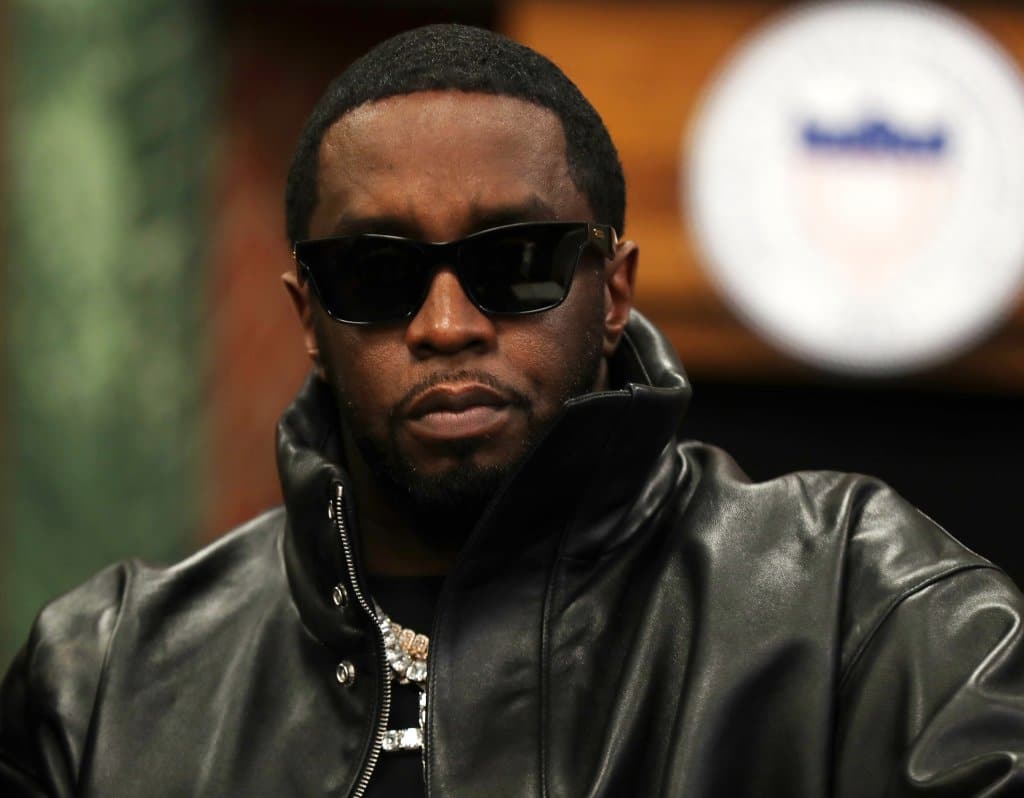
On Monday (June 16), jurors in the criminal trial against Diddy had an unorthodox respite from the usual witness testimony and evidence presentation, as they got to view portions of the videotapes of the sex parties that Diddy threw. Prosecutors for the federal government showed the jurors the footage of the alleged “freak offs” as they questioned a special agent for the Department of Justice on the witness stand.According to the New York Times, the footage jurors viewed was from 2012 and 2014, and involved Cassandra “Cassie” Ventura, Diddy’s former partner. The jurors viewed the footage while in the courtoom, wearing headphones as they looked at screens with privacy guards attached. One young juror was reported to have giggled audibly as the clips, 30 seconds in length, were first displayed. The remaining jurors were silent, with some wincing at what they saw and one snatching the headphones off after the first clip was done. According to TMZ, some of the audio from the video clips could be faintly heard as the courtroom went silent.Prior to the viewing of the videos, prosecutors presented a bevy of text and audio messages which involved Kristina Khorram, Diddy’s former chief of staff directing assistants to have luxury hotel rooms furnished with supplies for the “freak-offs”(which were also dubbed “wild king nights” and “hotel nights”). The messages are part of the prosecution’s case to prove that these assistants helped facilitate the sex trafficking run by Diddy, aka Sean Combs. Khorram has not publicly testified, but her phone was seized by the government last year.The jurors’ viewing of the clips came after the morning session, where Judge Arun Subramanian replaced Juror No. 6 citing that he was inconsistent about his place of residence, noting that it led him to believe that he was “shading answers” to get on the jury and stay on. “There’s nothing that the juror could say at this point that would put the genie back in the bottle,” Judge Subramanian stated after Diddy’s lawyers protested the move.

HipHopWired Featured Video

Chappell Roan is one of the most outspoken artists of her generation, but that doesn’t mean she isn’t sensitive to the backlash she often receives when she speaks her mind.
While interviewing SZA for an Interview Magazine piece published Tuesday (June 17), the pop star — who has sparked heated public discourse on everything from toxic fan behavior to political endorsements in the past year alone — was candid when the R&B hitmaker asked whether she “gave a f–k about the backlash.”

“I didn’t until people started hating me for me and not for my art,” Roan replied. “When it’s not about my art anymore, it’s like, ‘They hate me because I’m Kayleigh, not because they hate the songs that I make.’ That’s when it changed.”

Trending on Billboard

“When things are taken out of context, people assume so much about you,” she continued. “I didn’t realize I’d care so much. When it comes to my art, I’m like, ‘B—h, you can think whatever you want. You are allowed to hate it with all your guts.’ But when it comes to me and my personality, it’s like, ‘Damn. Am I the most insufferable b—h of our generation?’”

Fortunately, Roan isn’t alone. SZA shared that she also feels hurt when she comes across tough criticism about herself, telling the Missouri native, “Maybe everybody secretly gives a f–k … I tried to tell myself that I didn’t care what people were saying about me, but it was so weird that I was being misperceived so far from who I am.”

“It makes me cry,” Roan added. “I don’t know if it will ever feel okay to hear someone say something really hateful about me.”

Roan has spoken before about how difficult it can be to feel misunderstood. While guesting with Sasha Colby on TS Madison’s Outlaws podcast in May, she reflected on being labeled a “villain” at different points in her career, sharing that she “cannot bear people saying I’m something I’m not.”

She also hasn’t let it stop her from voicing her opinions or speaking up when she feels mistreated — like when she confronted photographers at not one, but two events in 2024. “I think that I’m doing it the way I want to, but not everyone likes that,” she told SZA for Interview. “I will yell at a b—h on the carpet. I think that right now in my career, I’m just trying to see if the way I’ve been doing it is sustainable. Am I okay with the backlash of speaking my mind? That’s where I am right now.”

R. Kelly’s lawyer says the disgraced R&B star and convicted sex offender was recently hospitalized after overdosing on anxiety and sleep medication in prison, attributing the event to a supposed jailhouse murder plot that prosecutors have dismissed as entirely made-up.

Kelly, who’s serving a 30-plus-year sentence for two federal sex crime convictions, has been petitioning a Chicago court for release since last week. Defense lawyer Beau Brindley claimed in an eyebrow-raising June 10 court filing that Bureau of Prison officials had tried to solicit another inmate to kill the singer (Robert Sylvester Kelly) to stop him from uncovering prosecutorial misconduct in his trials. Prosecutors deny that there’s any murder plot against Kelly.

Now, Brindley claims prison officials have tried another method of killing Kelly: administering the singer an overdose quantity of his medications while he was in solitary confinement last Thursday (June 12).

“In the early morning hours of June 13, 2025, Mr. Kelly awoke,” Brindley writes in a court filing from Monday (June 16). “He felt faint. He was dizzy. He started to see black spots in his vision. Mr. Kelly tried to get up, but fell to the ground. He crawled to the door of the cell and lost consciousness.”

Brindley says Kelly was taken from the Federal Correctional Institution in Butner, N.C., to Duke University Hospital, where he was informed of the overdose. Kelly was hospitalized for two days to treat the overdose, according to the court filing.

To make matters worse, Brindley says, Kelly learned at the hospital that he had developed life-threatening blood clots in his lungs that required surgery. But Kelly was allegedly denied this surgery and taken back to Butner, where he was returned to solitary confinement without medical care.

“He could die from this condition, and they are letting it happen,” writes Brindley. “There is no legitimate explanation for that.”

Brindley’s court filing reiterates his request to have Kelly released to home confinement or temporary furlough, saying “his life actually depends on it.”

Prosecutors have called the allegations a “fanciful conspiracy” and “deeply unserious.” They also say the Chicago criminal court doesn’t have jurisdiction over the issue, and that it must be brought instead as a civil rights case or habeas corpus petition in North Carolina.

In response to Kelly’s latest claims about the alleged overdose and blood clot issue, prosecutors wrote late Monday, “This is the behavior of an abuser and a master manipulator on display.”

“This court should not allow Kelly to turn its docket into a grocery store checkout aisle tabloid,” prosecutors added.

Billboard reached out to Duke Hospital seeking to confirm the facts of Kelly’s hospital stay. A Duke spokesperson deferred to the Bureau of Prisons, which declined to comment on the matter.  

“For privacy, safety and security reasons, we do not discuss the conditions of confinement for any incarcerated individual, including medical and health-related issues,” said Bureau of Prisons spokesperson Scott Taylor in a statement to Billboard.

The motion to release Kelly from prison is scheduled to be heard by the Chicago judge on Friday (June 20). Meanwhile, Brindley has been publicly asking President Donald Trump to pardon Kelly.

Kelly was convicted in 2021 and 2022 at two separate federal trials, one in New York and one in Chicago, on a slew of criminal charges including racketeering, sex trafficking, child pornography and enticing minors for sex.

The former R&B star was sentenced to 30 years in prison for the New York conviction and 20 years in the Chicago case, although the vast majority of the second sentence will overlap with the first. Both convictions have been upheld on appeal.

Last week (June 11), the brilliant writer, producer, composer and singer Brian Wilson died at age 82. Wilson leaves behind a singular catalog of pop and rock music, which is of course headlined by his work in the ’60s and ’70s with The Beach Boys, alongside his brothers Carl and Dennis, cousin Mike Love and friend Al Jardine. The Beach Boys cruised to pop stardom from 1963 to 1965 with a string of smash hits about surfing, cars and girls that grew increasingly complex as Brian rapidly developed as a songwriter and studio wizard. In 1966, all the group’s artistic ambitions were realized, with perhaps both the Boys’ most beloved album and most beloved single — though it all came at a tremendous cost to Wilson, and to the band’s long-term future.

Explore

Explore

See latest videos, charts and news

See latest videos, charts and news

On this week’s Vintage Pop Stardom episode of the Greatest Pop Stars podcast, host Andrew Unterberger is joined by Billboard executive digital director, west coast Katie Atkinson, to talk about the greatest year by the ultimate west coast pop band. We talk about everything that led up to the Beach Boys’ singular legacy year in 1966 — which ultimately resulted in the LP masterwork Pet Sounds and the unanimously acclaimed pop smash “Good Vibrations” — as well as why the group was ultimately unable to reach those commercial or artistic heights again.

Trending on Billboard

And of course, along the way, we ask all the big questions about the Beach Boys’ greatest (and in many ways last) year in the sun: Why did Brian Wilson enlist an ad man he barely knew as his primary collaborator on Pet Sounds (and why did that guy end up hating working with him so much)? Is “Sloop John B.” secretly the album’s perfect thematic centerpiece? Is “Good Vibrations” really more head than it is heart? Would 1966 Brian have dealt with f–kboy or industry plant allegations in 2025? And of course: Is this the greatest year in pop music that any American band has ever had?

Check it out above — along with a YouTube playlist of some of the most important moments from The Beach Boys’ 1966, all of which are discussed in the podcast — and subscribe to the Greatest Pop Stars podcast on Apple Music or Spotify (or wherever you get your podcasts) for weekly discussions every Thursday about all things related to pop stardom!

And as we say in every one of these GPS podcast posts — if you have the time and money to spare, please consider donating to any of these causes in the fight for trans rights:

Transgender Law Center

Trans Lifeline

Gender-Affirming Care Fundraising on GoFundMe

Also, please consider giving your local congresspeople a call in support of trans rights, with contact information you can find on 5Calls.org — and if you’re in the D.C. area this weekend (May 30-31), definitely check out Liberation Weekend, a music festival supporting trans rights with an incredible lineup of trans artists and allies.

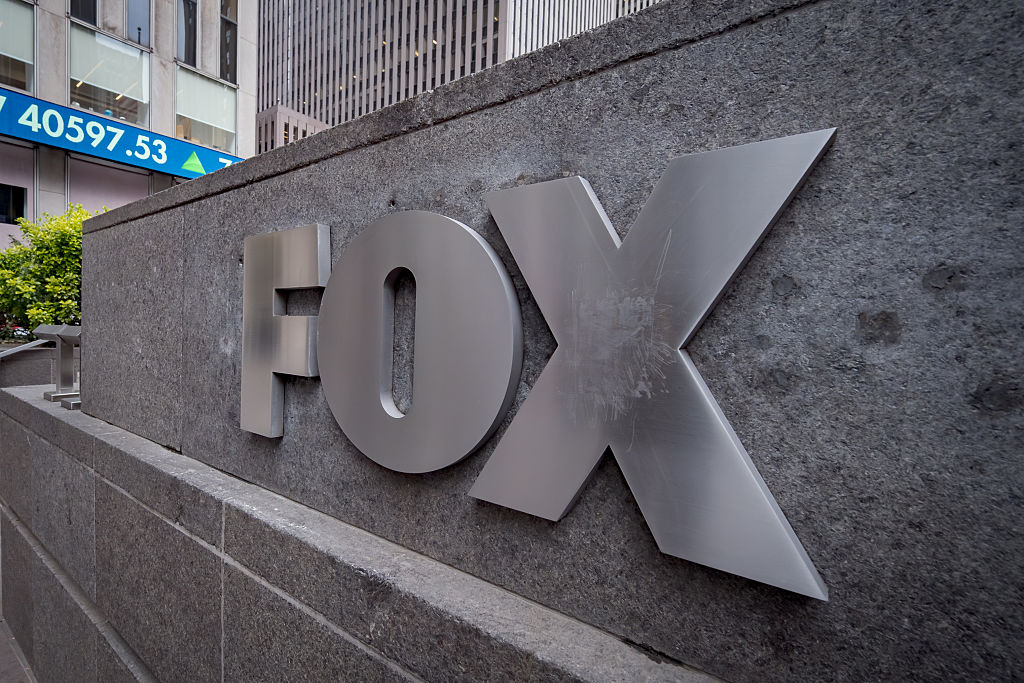
Fox News was once considered the hub of all conservative media and a favorite network of President Donald Trump and his acolytes. Tucker Carlson, a former Fox News host, invited Trump ally Steve Bannon to his program, with both framing the networking as pushing propaganda to its viewers.
Carlson invited Bannon to his eponymously named program, and the pair spoke on President Donald Trump’s second term, the political climate in America, and the burgeoning conflict between Iran and Israel. They opened up the show discussing Trump’s policies, centering much of their critique on how the administration is handling the situation in the Middle East.

Much of their conversation meanders about and centers on Israel and the state of affairs regarding domestic unrest under the Trump administration early on, but around the 7:00-minute mark, Carlson aims Fox News with Bannon adding in similar criticism.
“I never criticize Fox because they were so kind to me,” Carlson said. “But they are playing a central role in the propaganda operation here.”
Bannon seized upon this moment after Carlson shared that he helped push the narrative surrounding the Iraq War, which seemed to rankle Bannon and caused him to launch into a further examination of the media’s role in the conflict and its perception stateside.
“An epic, failed war. We were lied to about everything,” Bannon fired back. “ Because if you remember, at first, the American people supported it, given the information they were given. Then later, they realized that, hey, not only was the initial predicate for this a lie, all the updates were kind of a lie. We really weren’t winning.”
Carlson and Bannon continued to take hits at  Fox News for pushing a pro-war agenda under Trump’s watch, later turning their attention to so-called “Never Trumpers” surrounding the president and holding jobs in the current administration.
On X, reactions to Tucker Carlson and Steven Bannon’s comments appeared, and we’ve posted some below.

Photo: Erik McGregor / Getty

HipHopWired Featured Video

CLOSE

Jon Dee Graham, the Austin guitarist and songwriter who played in the beloved local punk band True Believers, slipped and fell in 2021, and doctors apparently did not notice a crack in his spine. In early 2024, he had spinal surgery, and a six-month recovery period meant he could not make money from playing gigs. But the procedure didn’t take, and in April, he had another surgery, then developed an infection. Today, Graham, 66, lies in bed for hours every day, taking antibiotics every 12 hours that cause nausea and chills.
“We got a call from the IV company: ‘We need up-front payment in the thousands before we’re able to deliver the medication,’ ” says William Harries Graham, Jon Dee’s son, an architect and singer-songwriter who is overseeing his care.

Trending on Billboard

Jon Dee has Medicare, but there are crucial coverage gaps — because the hospital discharged him, according to William, insurance won’t reimburse medication and other portions of his home care. So the family turned to the most reliable backup plan available to veteran, well-known musicians: fans. Jon Dee is also a painter, and William has been offering his artwork, comics and music through a zine-like Bear Cave Dispatch in exchange for online donations. It’s working — for now. “We were able to cover those initial medical expenses,” he says.

The guitarist’s story remains bleak — sepsis recently set in — but it speaks to the blessing-and-curse health-care reality that working musicians must endure as they age. As gig-economy workers whose incomes fluctuate across decades, independent artists often find themselves with few resources for medical costs beyond those covered by the Affordable Care Act (ACA), Medicare or spouses’ employer plans. And if medical issues prevent touring, artists often have zero income. But musicians such as Jon Dee and rockers Matthew Sweet and Jesse Malin, as well as the late David Johansen and Gang of Four bassist Dave Allen, have recently tapped into loyal, generous fan bases through crowd-sourcing sites like GoFundMe and other grassroots fundraising.

At recent concerts, Gang of Four founding drummer Hugo Burnham has returned to the stage post-encore to request that fans buy merchandise to offset costs for Allen’s family. (Allen died at his home in Portland, Ore., in April at 69 after a long struggle with dementia.) “It’s no secret the cost of medical care in the U.S. is an obscenity,” says Burnham, 69, who fractured a bone in his leg during the tour but is covered through his job as a college professor. “Had he lived anywhere else, there might not have been this terrible burden on the family. We all know the stories of people who have had to rely on raising money based on the kindness of strangers — and it’s not just musicians.”

Outside of the U.S. health-care system, musicians struggling with health care costs can tap into multiple resources — but they rarely come close to providing all the costs needed for severe, long-term health issues. After Chappell Roan demanded “a livable wage and health care” for artists during her acceptance speech at the 2025 Grammy Awards, music-business experts pointed out that musicians signed to major labels could access health-insurance plans provided by the SAG-AFTRA union for premiums comparable to the ACA.

In addition, Sweet Relief provides grants for artists and others in the music industry through fundraising concerts, donations and other resources. The 31-year-old nonprofit is a “stopgap,” according to executive director Aric Steinberg. In 2023, Sweet Relief helped Malin set up an online fundraiser when the veteran punk frontman suffered a paralyzing stroke in his back. “It’s unfortunate we have to exist,” Steinberg says. “Sadly, we’re busier than ever.”

MusiCares, a 35-year-old affiliate of the Recording Academy, raises funds through high-profile events like its Grammy Week Person of the Year benefit, which has recently honored the Grateful Dead, Motown Records’ Berry Gordy Jr. and Smokey Robinson, Joni Mitchell and Aerosmith. It has provided nearly $120 million in health-care assistance to musicians and music-business workers over time, including roughly $10 million overall to 9,000 people during the past year. “It is not unlimited support,” says Theresa Wolters, MusiCares’ interim executive director/vp for health and human services. “However, it is very, very substantial.”

These limits were evident to William, who says he has reached out to MusiCares on Jon Dee’s behalf for health-care funding with “no result.” Russell Carter, Sweet’s longtime manager, adds that MusiCares contributed funds for some early medical costs, but the charity has been “just one piece in the puzzle of solving his financial woes.” (A MusiCares representative says the charity can’t comment on artists it works with. Wolters adds: “We work within the realities of our nonprofit model and our commitment to equitable support across the community. In these instances, MusiCares is one part of the solution.”)

Sweet, 60, suffered a stroke last October while touring in Toronto. After leaving an intensive-care stroke unit in a Canadian hospital, he returned to his hometown of Omaha, Neb., and has received treatment in a rehabilitation program. Although he’s improving, particularly his speech, Sweet’s main issue remains “coordination,” Carter says, and he can’t walk or play guitar or keyboard. He also has vision problems and is “generally wheelchair-bound in his home.” In addition, Sweet’s wife recently broke her leg, forcing the family to hire a full-time nurse — which is not covered through the singer’s ACA insurance or early Medicare.

Since Sweet’s stroke, his GoFundMe has raised nearly $640,000, which, Carter says, “paid for what can only be described as exorbitant medical expenses.”

Sweet and his team view the crowdfunding not as an indictment of the U.S. health-care system but a mass validation of fan loyalty and colleagues’ affection. Sweet may not currently be able to tour, but his decades of touring are paying off. “Don’t dismiss the GoFundMe,” Carter says. “It’s a vehicle for fans to contribute. These are people that would spend $35 to see Matthew if he came through town in a second, and if they can spend $35 to help Matthew — clearly, they did it, instantly. They’re willing to give back. That’s a very positive thing.”

Coi Leray and Trippie Redd are officially parents. Coi revealed that she welcomed a baby girl named Miyoco on Tuesday (June 17) with a post featuring a glimpse of her new child on her Instagram Story. Explore See latest videos, charts and news See latest videos, charts and news The adorable photo finds her baby […]