
Author: djfrosty
Page: 253
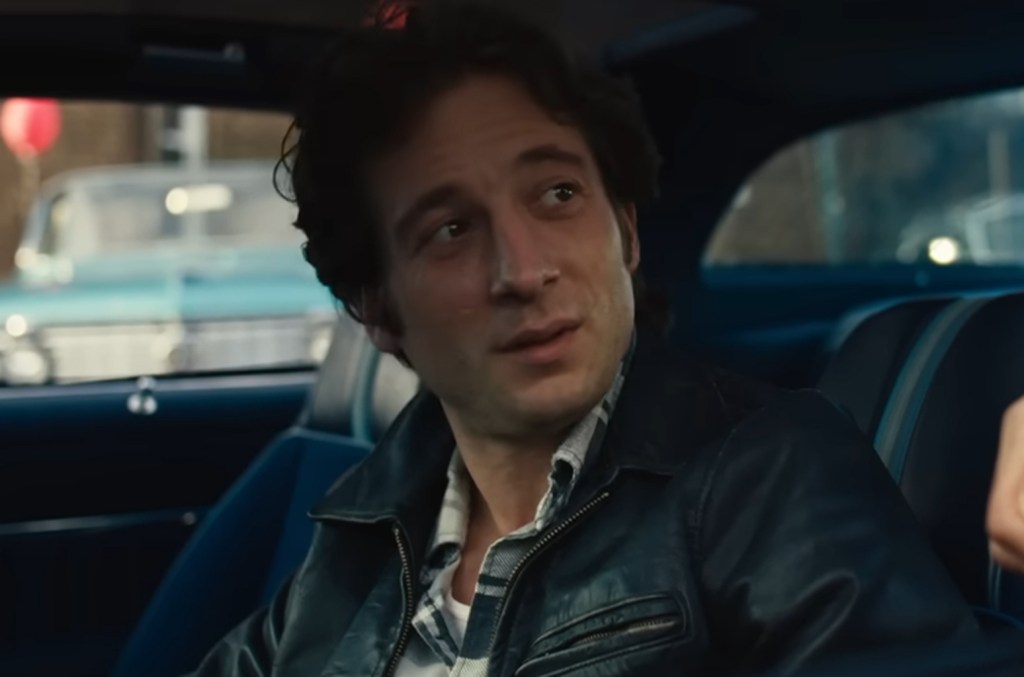
Fans will have to wait until Oct. 24 to see the eagerly anticipated Bruce Springsteen biopic Deliver Me From Nowhere. But they got a teaser on Wednesday morning (June 18) when the first trailer for the film starring The Bear‘s Jeremy Allen White as the Boss dropped, revealing the shape and mood of the film that will follow the Rock and Roll Hall of Famer’s introspective sessions for his stark, 1982 acoustic album Nebraska.
The two-and-a-half minute preview opens with White as Springsteen sitting in a Camaro on a car lot as he tells the salesman that he’s never owned a new vehicle before. “It’s awfully fitting for a handsome devil rock star,” the salesman says, tipping his hat that he knows exactly who his low-key, famous client is. “Well that makes one of us,” White replies.
Trending on Billboard
We next see Springsteen in his New Jersey bedroom with his guitar tech Mike Batlan (Paul Walter Hauser) as he works out the stripped-down sound of the Nebraska title track. “Don’t need to be perfect,” he tells Batlan, “I want it to feel like I’m in the room by myself.”
Director Scott Cooper’s movie also features Emmy and Golden Globe winner Jeremy Strong as Springsteen’s longtime manager and confidant Jon Landau, who is seen telling a record exec that his client’s deeply personal album is “not about the charts. This is about Bruce Springsteen and these are the songs that he wants to work on right now,” as White moans out the lyrics to the album’s haunting title song.
Over images of White looking at old pictures, Strong tells a story about the singer’s childhood bedroom, which had a hole in its floor. That hole becomes a metaphor for Springsteen’s complicated relationship with his withholding father (played by Adolescence‘s Stephen Graham). “Bruce is a repairman,” Strong says. “And what he’s doing with this album is he’s repairing that hole in his floor. He’s repairing that hole in himself… and once he’s done that, he’s going to repair the entire world.”
The two-and-a-half-minute trailer ends with triumphant footage of a sweat-drenched White howling “Born to Run” on stage with the E Street Band, the veins in his neck strained to the extreme as he pulls off one of the rocker’s signature stage hops. Springsteen spent time on the set of the film earlier this year and he professed to be very impressed with White’s work.
In a chat on SiriusXM’s E Street Radio in January, the 75-year-old rocker was asked if it felt weird to see White play him on screen. “A little bit at first, but you get over that pretty quick and Jeremy is such a terrific actor that you just fall right into it,” Springsteen said. “He’s got an interpretation of me that I think the fans will deeply recognize and he’s just done a great job, so I’ve had a lot of fun. I’ve had a lot of fun being on the set when I can get there.”
In high praise from the singer known for his signature raspy, emotive voice, Springsteen said White was nailing it. “He sings well,” he said. “He sings very well.” Springsteen gave his full blessing for the adaptation of Warren Zanes’ book of the same name and in an interview earlier this year White said he’d studied hours and hours of video and worked with a vocal coach to nail Bruce’s vocal tone and speaking cadence.
The film also features Odessa Young (A Million Little Pieces) as Springsteen’s girlfriend, Gaby Hoffman (Transparent) as his mom, Adele, Marc Maron (Sticks) as record producer Chuck Plotkin and David Krumholtz (Oppenheimer) as a Columbia Records executive.
Check out the Deliver Me From Nowhere trailer below.

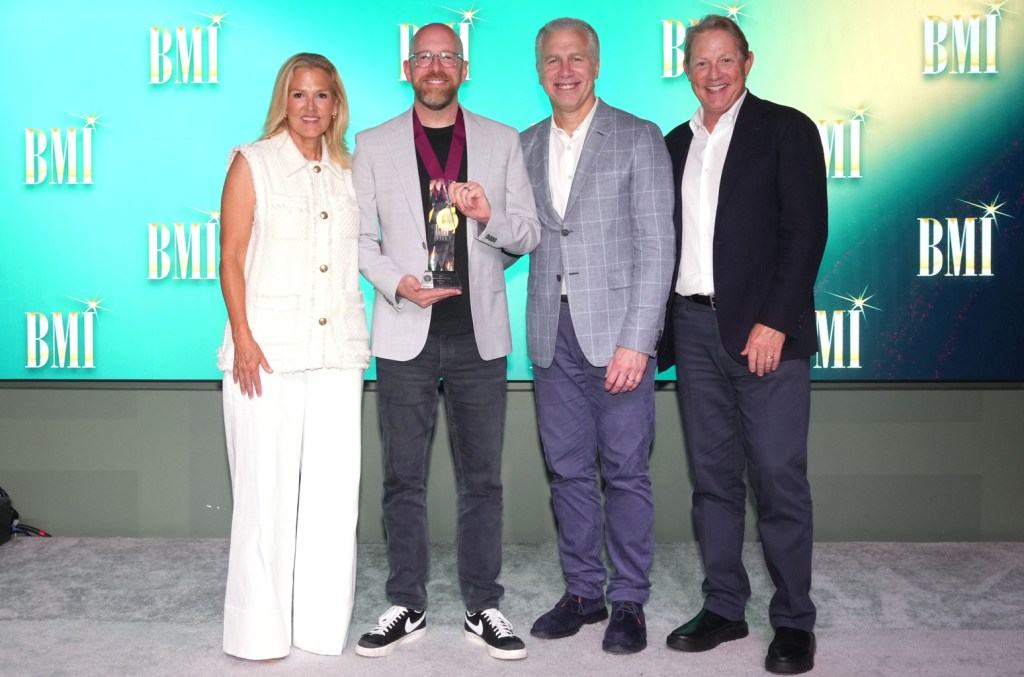
Jeff Pardo was named BMI Christian songwriter of the year for the second time in three years at the BMI Christian Awards, which were held at its Nashville office on Tuesday (June 17). The private event was hosted by Leslie Roberts, BMI’s avp, creative.
Pardo, 43, wrote or co-wrote five of BMI’s 25 most-performed Christian songs: “Don’t Stop Praying,” “Heaven Changes Everything,” “Praise the Lord” with Jake Henry and Micah Tyler, “Running Home” and “Strong” with Anne Wilson. Pardo received a Grammy nomination in 2013 for co-writing “My Jesus” with Wilson and won two GMA Dove Awards in 2022. He has successfully crossed genres as well, working with artists such as Lady A, Ben Rector and Tauren Wells.
BMI’s Christian song of the year went to “Praise,” written by Chris Brown, Cody Carnes, Stephen Furtick and Chandler Moore. The hit by Elevation Worship featuring Brandon Lake, Chris Brown & Chandler Moore spent 31 weeks at No. 1 on Billboard’s Hot Christian Songs chart and nine weeks at No. 1 on the Christian Airplay chart.
Trending on Billboard
Leading up to song of the year, BMI named the 25 most-performed Christian songs of the previous year. The roster included 18 first-time award winners.
Capitol CMG Publishing brought home publisher of the year for representing 17 of the 25 most-performed songs of the year including “Praise” as well as “Don’t Stop Praying,” “I Believe,” “Jesus Does” and “Take It All Back.”
In addition, Jackie Patillo, president of the Gospel Music Association and the GMA Foundation, was honored with the BMI Spotlight Award. As a surprise tribute, five-time GMA Dove Awards female vocalist of the year (and nine-time Grammy nominee) Natalie Grant, performed her first recording, “I Am Not Alone.” She was accompanied by Bernie Herms.
“This is more than just a business,” Patillo said in accepting the award. “We are all making a difference and impacting culture, and that’s what we get up for every day.” Previous recipients of the BMI Spotlight Award include Dottie Leonard Miller, Randy Edelman and Frank Gari.
Special moments at the event include Roberts calling BMI’s 2019 Compass Award winner Elwyn Raymer to the stage to start the celebration with a prayer; country songwriter Jordan Rowe giving the audience a preview of his unreleased song, “Way Back;” and first-time BMI award-winner Seph Schlueter sharing his hit “Counting My Blessings.”
For a complete list of winners, go here.
Gente de Zona became the first Cuban duo to sell out the coveted Kaseya Center in Miami earlier this month, where they performed for over 14,000 fans in celebration of its 25th anniversary. The duo’s prolific career includes their breakout hit “Bailando” with Enrique Iglesias and Descemer Bueno that spent 41 weeks at No. 1 on the Hot Latin Songs chart in 2014 and made history as the first Spanish-language video to achieve one billion views on YouTube.
Like Gente de Zona, helmed by Randy Malcom and Alexander Delgado, artists such as Osmaní García, Jacob Forever, and El Chacal formed part of the booming Cubatón movement in the 2010s, and propelled the genre (that blends Cuban rhythms with reggaetón) beyond the Caribbean island and onto its mainstream success. García teamed up with Pitbull, Sensato and Lil Jon in the 2015 hit “El Taxi,” Jacob’s “Hasta Que Se Seque El Malecón” peaked at No. 10 on Hot Latin Songs in 2016, and Chacal’s “Ay Mi Dios” in collaboration with Yandel and IAmChino reached No. 1 on the Latin Airplay chart that same year.
But in recent years — especially since 2018 when public WiFi hotspots were made more accessible on the island — a large wave of artists, mainly still living in Cuba, has brought to the forefront “reparto” music, a genre that was once considered “reggaetón of the poor,” but today represents the sound of modern-day Cuba, and is gaining massive popularity.
What is Reparto?
In honor of its 25-year trajectory, Gente de Zona also released its tenth studio album called Reparto, with the hopes of “showing the world the evolution of Cuban reggaetón that defines our culture, and shine a light on the artists who are leading the authentic reparto movement,” according to Malcom in a statement.
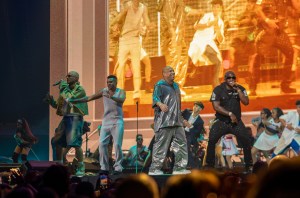
Dale Pututi, Gente de Zona, and L Kimii perform in Miami’s Kaseya Center on June 7, 2025.
Cumba Photographer
The name derives from the barrios or housing projects in Cuba, where aspiring artists would create their own homemade reggaetón and sing about street life powered by local slang. The genre’s first exponents trace back to the mid-2000s with artists such as the late Elvis Manuel (who tragically drowned in 2008 as he migrated to the U.S. by raft), Adonis MC, El Uniko, and most notably, Chocolate MC, who cleverly added the Cuban clave to his 2010 reggaetón song “Parapapampan,” resulting in what is known now as reparto.
“The genre is known for its fusion of Afro-American rhythms and rumba elements, and its main element is the Cuban clave,” producer NandoPro (real name: Fernando Lázaro Otero Van-Caneghem) tells Billboard. “It’s evolved and now features a blend of drums derived from reggaeton, hip hop, timba, and Cuban folk music in general. But, the biggest difference is the way the lyrics are narrated. El Reparto is characterized by more aggressive, harsher and explicit lyrics, without much filtering in the language.”
Today’s reparto artists, however, are changing the narrative.
They are singing about love (Wampi’s “Roma”); making positive affirmations (El Chulo’s “Tienes Que Nacer de Nuevo”); and even empowering women (Mawell’s “La Triple M”). Others are strategically turning popular songs, such as Alejandro Sanz’s “Corazón Partío” and Akon’s “I Wanna F*ck You,” into a reparto melody.
Meanwhile, the movement is highly consumed in Peru, Spain, Miami, and has already captured the attention of non-Cuban artists, such as Nacho, Lenny Tavárez, and Sergio George, who have all collaborated with a repartero.
“The Dominican Republic has its dembow, Puerto Rico has its reggaetón — today Colombia is taking over Afrobeat, and I think that’s going to happen with Cuba as well,” Venezuelan artist Nacho, who’s currently viral with his reparto tune “Nosotros” alongside Maffio and L Kimii, says to Billboard. “Reparto is a wealth of rhythms combined: there’s son, there’s salsa, there’s timba, there’s reggaetón. There’s a bit of everything, and I’ve been in love with that genre for a long time.”
Nando, who’s produced hits for Gente de Zona, El Taiger, J Balvin, and Farruko, among others, further explains: “After 2014, many Cubatón exponents emigrated to the United States in search of international success, and many even explored other genres in search of acceptance. This left a large void within urban music in Cuba and it was the young reparto artists that filled that space. This is the evolution of music from the Cuban barrios. We still have a long way to go, but the authentic message is getting through, and artists from other countries are discovering a refreshing style they can experiment with.”
Below, meet 31 reparto artists shaping Cuba’s new urban movement:
Adonis MC
It has been (another) good year so far for Bailey Zimmerman. The country artist reached No. 4 on the Billboard Hot 100 this spring with his feature on BigXthaPlug’s “All the Way” from the latter’s forthcoming country collaboration project. Then, Zimmerman followed that with “Backup Plan,” his inspirational new single featuring Luke Combs, which became his ninth career Hot 100 entry and has reached a No. 36 high in its six weeks on the chart.
Zimmerman and Combs debuted the stomping “Backup Plan” during Combs’ headlining set at Stagecoach in April — though the song’s roots were planted well prior to that performance. According to the track’s producer, Austin Shawn, it was initially created because people compiling the soundtrack to 2024 film Twisters asked Zimmerman to send along songs for consideration. “We sent that one, but ‘Hell or High Water’ landed better for the movie,” Shawn, 27, tells Billboard.
Trending on Billboard
“Backup Plan” is just the latest extension in the winning partnership between Zimmerman and Shawn, which started with the former’s first EP, Leave the Light On, and includes the hit songs “Rock and a Hard Place” and “Fall In Love.”
Below, Shawn talks about creating “Backup Plan,” his working relationship with Zimmerman and what listeners can expect on his second album.
What did you think the first time you heard “Backup Plan”?
We heard it around early 2023, and I immediately loved the song because it reminded me of “The Chain” by Fleetwood Mac. It had a bit of red dirt, a bit of country, a lot of the hookiness of modern country, which is exactly what me and Bailey tend to lean [to] when we make songs. The original demo was just an acoustic guitar and a vocal that Tucker Beathard [co-writer, along with Jimi Bell and Jon Sherwood] did.
Were you involved in the decision to add Luke Combs to the song?
It worked out really well because when Bailey did the vocals, we were thinking, “Who could feature?” When I finished the first rough mix on it, Bailey was like, “Should I text it to Luke?” Luke didn’t get back to him for a month — he was probably just living with it. And then he was like, “Song rips, I’m in,” out of nowhere. We had not gone to anyone else. It was either Luke or nothing.
Were you together in the studio for Combs adding his part?
Luke is, first of all, one of the best dudes in the world. I sent the session over to [his producer] Chip Matthews and then me and Bailey went over to Chip’s house and Luke cut the vocal. We spent about two hours talking and rambling on and laughing and telling jokes — and about 10 minutes doing the vocal. It was mostly just a big hangout session; barely any work was being done. Luke is so good, he can do three passes of the song, and it sounds like it’s a finished thing.
Thematically, it’s like Combs’ song “Doin’ This,” in that if being an artist is your path no matter what, you cannot have a backup plan. Is the end result similar to what the demo sounded like?
The original demo was just an acoustic guitar in a voice memo that Tucker Beathard did. Tucker is one of our good buddies, too, and we write a lot of songs with him, so he usually just plays his guitar and his vocal and sings it into his phone.
From the very beginning, the song felt like an overcoming adversity type of song, so we wanted it to be big. We wanted it to be like an anthem. We wanted it to be something that is charged up. We had to paint the picture from there and carry it into that big, beat-your-chest type of energetic song.
So that stomp feel wasn’t there, but you heard the possibility of that.
It was completely different. It was like someone sitting here in your living room just playing it for you or around the campfire. It was good, though, because the sentiment was there and it gave us all the runway to paint the picture the way we wanted to.
You’ve been collaborating with Zimmerman since the beginning. How has your working relationship evolved?
When you work on so much music together over the years, you learn how to communicate and decipher each other’s emotions, feelings, words — I know when Bailey loves a song, doesn’t love a song. He’ll know when I think a decision that he wants to make is good or when I don’t. That helps us get round the bend on songwriting, production, direction. We’re like brothers. He’s gone through a lot in his personal life; I’ve gone through a lot in my personal life. We’ve been there for each other outside music, too.
This is the second song we’ve heard from Zimmerman’s second album, Different Night, Same Rodeo, which is due out Aug. 8. Anything else you can tell us about the album?
Absolutely. A lot of the stuff is familiar, and then there’s a good batch of songs that go outside of the box where we’ve really pushed the boundaries. There’s a couple of awesome features on the record. There’s familiarity, there’s evolution and there’s a little bit of something for all demographics of music too, not just country.
A version of this story appears in the June 7, 2025, issue of Billboard.
The Golden Globes released the timeline, eligibility rules and award guidelines for the 83rd Annual Golden Globes. The show, to be hosted by Nikki Glaser for the second year in a row, is set to air live coast-to-coast on Sunday, Jan. 11, from 8 to 11 p.m. ET on CBS, and streaming on Paramount+ in the U.S. The show will emanate from its long-time home, the Beverly Hilton Hotel in Beverly Hills, Calif.
Eligibility rules include the newly added best podcast award outlining how the top 25 podcasts will qualify with a total of six final nominations for the category. Luminate will determine qualifying podcasts.
Trending on Billboard
Nominations for the Golden Globes will be announced on Monday, Dec. 8. The full awards timeline is outlined below, and complete rules and categories can be found on the Golden Globes’ website.
The Golden Globes, which likes to call itself “Hollywood’s Party of the Year,” is the world’s largest awards show to celebrate the best of both film and television. Dick Clark Productions will plan, host and produce the show.
Here’s the 83rd Annual Golden Globes timetable. All dates are 2025 unless otherwise noted.
Friday, Aug. 1: Submission website opens for 2026 Golden Globes motion picture and television entries.
Wednesday, Oct. 1: Submission website opens for 2026 Golden Globes podcast entries.
Friday, Oct. 31: Deadline for motion picture, television, and podcast submissions. Entries must be completed on the Golden Globes’ website.
Monday, Nov. 17: Deadline for television and podcast nomination ballots to be sent to all voters.
Sunday, Nov. 23: Final date for television and podcast press conferences; final date for television and podcast programs to be uploaded to the Golden Globes screening platform by 5 p.m. PT.
Monday, Nov. 24: Deadline for receipt of television and podcast nomination ballots by 5 p.m. PT.
Tuesday, Nov. 25: Deadline for Motion Picture and Cinematic and Box Office Achievement nomination ballots to be sent to all voters.
Wednesday, Dec. 3: Final date for Motion Picture and Box Office Achievement press conferences; final date for Motion Pictures and Cinematic and Box Office Achievement to be uploaded to the Golden Globes screening platform.
Thursday, Dec. 4: Deadline for the receipt of Motion Picture and Cinematic and Box Office Achievement nomination ballots by 5 p.m. PT.
Monday, Dec. 8: Announcement of nominations for the 83rd Annual Golden Globes at 5 a.m. PT.
Friday, Dec. 19: Final ballots sent to all voters.
Saturday, Jan. 3, 2026: Deadline for the receipt of final ballots by 5 p.m. PT.
Sunday, Jan. 11, 2026: Presentation of the 83rd Annual Golden Globes at 5 p.m. PT.
The Golden Globes are produced by Dick Clark Productions, which is owned by Penske Media Eldridge, a joint venture between Eldridge Industries and Billboard parent company Penske Media.
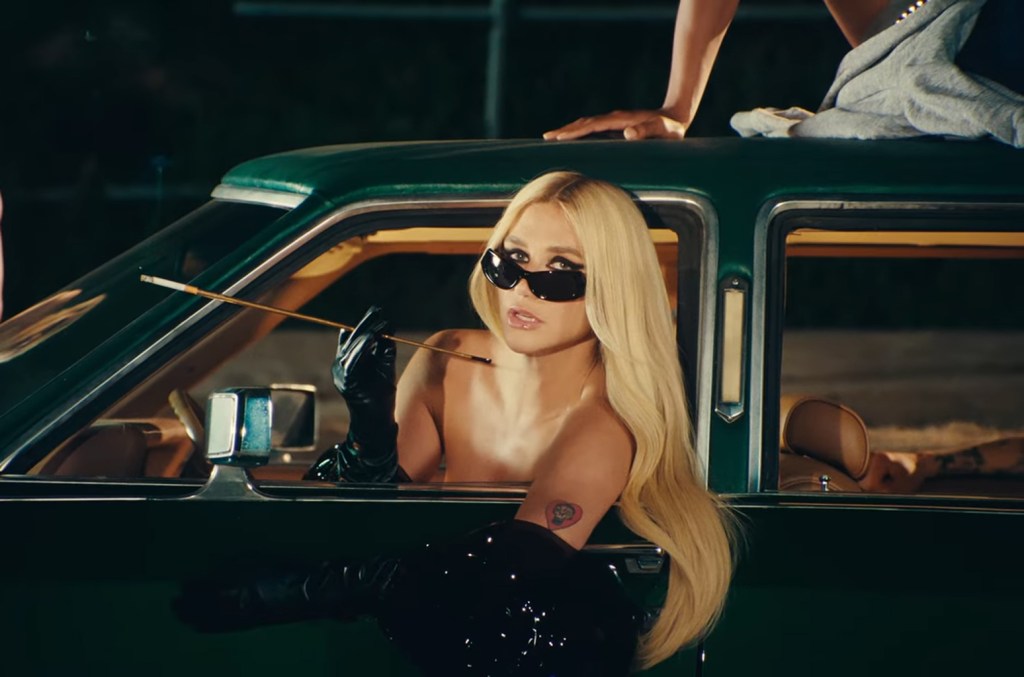
Kesha just can’t get enough in the video for her new single, “Boy Crazy.” In the self-directed visual posted Tuesday (June 17), the pop star is surrounded by a diverse cast of men wearing varying amounts of clothing as she sits down for a feast in a rodeo-themed restaurant, where things unravel into chaos as […]
Source: Mike Marsland/WireImage / Mike Marsland/WireImage
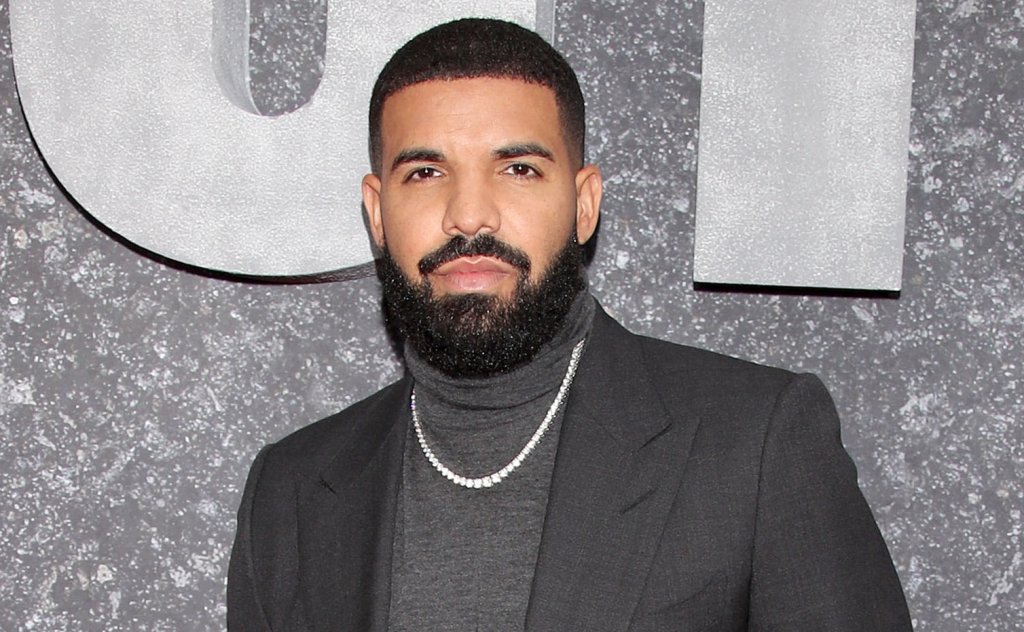
A new claim from Lil Wayne’s son is stirring up conversation around Drake’s catalog.
Novi Carter, the son of the rap legend, recently told YouTuber TrillMarty that his dad wrote “most” of Drake’s lyrics. “My dad wrote most of [Drake’s] sh*t, I mean, on God,” Novi said. “If it wasn’t for my pops, there wouldn’t be no Drake. I mean, there probably would be a Drake, but he wouldn’t be where he’s at, though.”
He followed that up by saying, “No disrespect to Drake, he hard,” giving credit to Drake while still backing up his statement. Novi didn’t offer details on which songs Wayne may have helped write, and as of now, neither Drake nor Lil Wayne has commented on the claim.
Even without specifics, the relationship between the two rappers is well known. Weezy was the one who brought the “6 God” into the game, signing him to Young Money in 2009 and helping launch his rise to stardom. From there, the pair delivered several big collaborations that helped define their careers.
One of their earliest major moments was “Forever,” where Drake shared a track with Wayne, Kanye West, and Eminem. It was a huge look for Drake, who was still proving himself at the time. Not long after, they linked up again on “Miss Me” from Drake’s debut album *Thank Me Later*, giving fans one of the first true glimpses of their creative connection.
In 2010, when Lil Wayne went to jail on a weapons charge, Drake stepped up and held the Young Money crew down. That time was a turning point, as Drake began to carve out his own lane and show he could carry the spotlight on his own.
After Wayne’s release, the chemistry between the two continued. Their 2011 track “She Will” showed a darker, more introspective side, with Drake’s smooth hook leading into one of Wayne’s more serious verses. Then in 2014, they linked up again on “Believe Me,” a fan favorite that built anticipation for Tha Carter V.
Whether Wayne actually wrote most of Drizzy’s lyrics or not, one thing is clear, their partnership helped shape a new era in Hip-Hop. Drake might have blown up regardless, but with Wayne backing him early on, his rise to superstardom came a lot quicker.
HipHopWired Featured Video
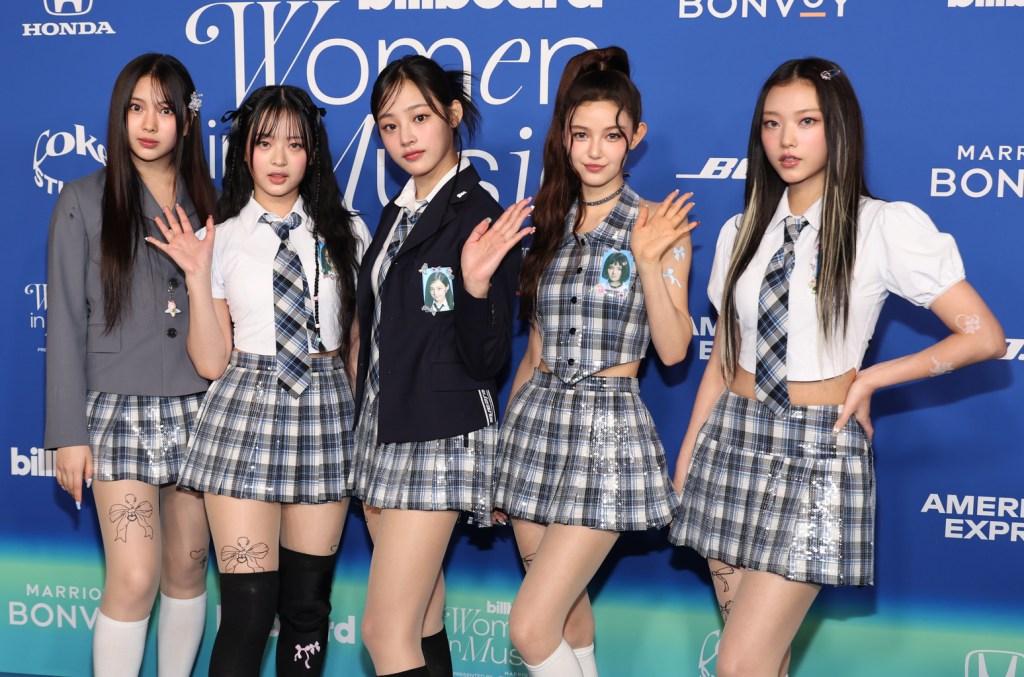
The Seoul High Court has sided with ADOR, the label behind K-pop powerhouse NewJeans, in an ongoing legal dispute that’s captivated fans and industry insiders alike.
On Tuesday (June 17), a panel of judges — Hwang Byung-ha, Jeong Jong-gwan, and Lee Kyun-yong — upheld a prior injunction barring the five-member group, currently promoting as NJZ, from pursuing independent activities outside of their exclusive contract with ADOR.
The court rejected the group’s appeal, stating there were no sufficient legal grounds to overturn the original decision, which was put in place to maintain the status quo of the contract.
Trending on Billboard
In their filing, the members of NewJeans argued that HYBE, the parent company of ADOR, had broken the trust central to their contract — pointing to HYBE’s internal audit and the controversial dismissal of former ADOR CEO Min Hee-Jin. They also cited a lack of support and neglect from the label as further grounds for appeal.
However, the court disagreed, finding no contractual clause that guaranteed Min’s position as CEO or producer. Judges emphasized that while the leadership dispute may have created tension, it did not invalidate the binding nature of the agreement.
The court further noted that HYBE had acted in good faith by establishing ADOR specifically for NewJeans and providing major support for the group’s debut and rise to stardom. Even after Min’s dismissal, HYBE reportedly offered to keep her involved in the group’s creative direction and later reinstated her as an internal director of ADOR.
In response to concerns about inactivity and career disruption, the judges concluded that any resulting harm stemmed from the members’ refusal to fulfill contractual obligations — not from actions by the company. They also emphasized that the contract had been individually negotiated and could not be considered an unfair, one-size-fits-all agreement under Korean law.
The ruling highlighted the potential financial damage to ADOR if the group were allowed to unilaterally terminate the agreement, a risk the artists had acknowledged at the outset. The seven-year term, the court noted, was clearly agreed upon by all parties.
With the decision, the court reaffirmed ADOR’s legal authority over NewJeans’ management and effectively shut down the group’s attempt to gain independent control of their activities marking a significant chapter in a legal battle that could reshape how artist-label contracts are viewed in the K-pop industry.
In the heart of the South, where culture, music, and history collide, the acronym “F.I.L.A.” has become a beloved mantra for many. Standing for “Forever I Love Atlanta,” F.I.L.A. is more than just a phrase—it’s a declaration of pride, loyalty, and love for the city of Atlanta.
Popularized in the early 2000s, the term gained widespread recognition through Atlanta’s vibrant hip-hop scene, with artists like Young Dro and others incorporating it into their lyrics. It quickly became a cultural emblem, representing the city’s unique blend of Southern charm, resilience, and creativity.
For locals, F.I.L.A. is a badge of honor, symbolizing their deep connection to Atlanta’s rich history, diverse communities, and iconic landmarks. From the bustling streets of downtown to the soulful beats of its music scene, the phrase captures the essence of what makes Atlanta special.
Whether it’s shouted at a Falcons game, worn proudly on a t-shirt, or hashtagged on social media, F.I.L.A. continues to unite Atlantans and fans of the city worldwide. It’s not just a slogan—it’s a way of life.
This year, #BirthdayBashATL is proud to present the Forever I Love Atlanta set, with performances by Young Dro, Yung LA, J Money, Trinidad James, and Rich Kidz…a nostalgic reminder of what makes the city so special. Check out some of our favorites in our playlist below!
When Atlantic Records’ Kevin Weaver was approached about the soundtrack to F1, he says the label didn’t face much competition. “The successes that we’ve had speak for themselves,” he notes, which include recent smash soundtracks to films including Barbie and Twisters. Both boasted chart-topping superstars and spawned multiple hits on the Billboard Hot 100 — and, in the case of Barbie: The Album, even landed three Grammys and an Academy Award. Which is partly why, Weaver adds, “We do get a lot of opportunities to see things early and first.”
Weaver, Atlantic’s president of the West Coast, was first approached about F1 last fall by David Taylor, head of music at Apple TV+ and Apple Original Films. He was then introduced to director Joseph Kosinski and producer Jerry Bruckheimer, who showed him several scenes from the Brad Pitt-starring Formula 1 racing drama and discussed opportunities for music. “At that point, it felt undeniable to me,” Weaver recalls. “We knocked the deal out in less than a week — that is unheard of.”
Trending on Billboard
Weaver oversaw and produced F1: The Album — which received a kickoff at the Miami Grand Prix in April and will arrive June 27 alongside the film — with Atlantic executive vp/co-head of pop/rock A&R Brandon Davis and senior vp of A&R and marketing Joseph Khoury. This will be Atlantic’s first soundtrack release since restructuring as Atlantic Music Group, with Weaver sharing his gratitude for the “trust and support” from the new leadership team, including CEO Elliot Grainge, GM Tony Talamo and COO Zach Friedman. “From the very start with our launch at the Miami Grand Prix through each weekly single release, we’re lucky to have a team that is so dialed in,” he says.
Still, Weaver believes securing the deal might have been the easiest part of a process that has yielded one of the more genre-diverse soundtracks in recent memory, with contributions from Ed Sheeran, Rosé, Chris Stapleton, Myke Towers, Tate McRae, Burna Boy and more. “We try to look into a crystal ball,” he says. “And so as much as we go with the staples like the Ed Sheerans, trying to forecast artists that are going to be having the biggest moments around when we’re releasing the project and when the film comes out is always of critical importance, too.”
Plus, as Weaver says, Formula 1 is a “very global” brand, with the average F1 fan having music taste that is equally wide-ranging. “I went to a bunch of races. I got to spend time with drivers and team principals and immerse myself into the sport. A big part of general strategy was, ‘What are we doing that has a global feel?’ A big part of it was, ‘What kind of music would you hear when you’re in the paddock at an F1 race?’ ”
Kevin Weaver (second from left) and Rosé.
Evan Hammerman
The A&R experience, as a result, was much different compared with last year’s soundtrack to Twisters, which primarily featured country stars — fitting for a film about chasing tornadoes in central Oklahoma. (Twisters: The Album debuted at No. 7 on the Billboard 200.)
Only one artist appears on both projects: Stapleton had an existing song in Twisters and contributed the original track “Bad as I Used To Be” to F1: The Album. “Part of what was exciting was [it would] put Chris on an album and a platform that played in a much broader way than the lane and genre of country music,” Weaver says. “Same thing when I went to Dom Dolla and Tiësto and Peggy Gou: These seminal dance artists saw an opportunity to sit on an album with other global superstars across a lot of different genres, and I think that was part of the coveted nature of why artists really wanted to be a part of this thing.”
For Sheeran in particular, his aptly titled track, “Drive,” came together quickly while he was in the studio with John Mayer and producer Blake Slatkin, saying that “the song fell out of us” after he had seen some of the film. (Dave Grohl is also on the track.) Sheeran recalls how Mayer “just whacked an octave pedal on and went wild” to come up with the song’s riff.
“Movies are my hobby and probably the only thing other than sport that I get, like, starstruck to be part of,” Sheeran adds. “Not just directors or actors or whatever, but being a part of the journey of a movie is so exciting for me.”
Of the album’s 17 tracks, seven singles are already out. McRae’s “Just Keep Watching” has become the first to enter the Hot 100, at No. 33. The song also scored her another No. 1 on the Hot Dance/Pop Songs chart.
“We set out to have multiple hits and to move culture. We always have our own odds of what we think are going to be the records, but then other records come out of nowhere,” Weaver says. “We always felt like the Tate song was going to be big. We always knew the Rosé song [“Messy”] was going to be special and really important. I feel really bullish about the Ed Sheeran song, the Burna Boy song [“Don’t Let Me Drown”], Tiësto and Sexyy Red [“OMG!”]. We have a lot of really strong records here. It boils down to which raise their hand.”
Until then, Weaver is already on to his next project — in fact, his next three are locked in. “I have one I can’t talk about specifically, but all I can say is we are doing the soundtrack for probably the most highly anticipated relevant global media [intellectual property] of our generation,” he teases. “And I think that is going to be a monster.”
This story appears in the June 21, 2025, issue of Billboard.
State Champ Radio