State Champ Radio

by DJ Frosty

Current track

Title

Artist

Current show

Lunch Time Rewind

12:00 pm 1:00 pm

Current show

Lunch Time Rewind

12:00 pm 1:00 pm


Author: djfrosty

Page: 171

MediaPunch / Diddy

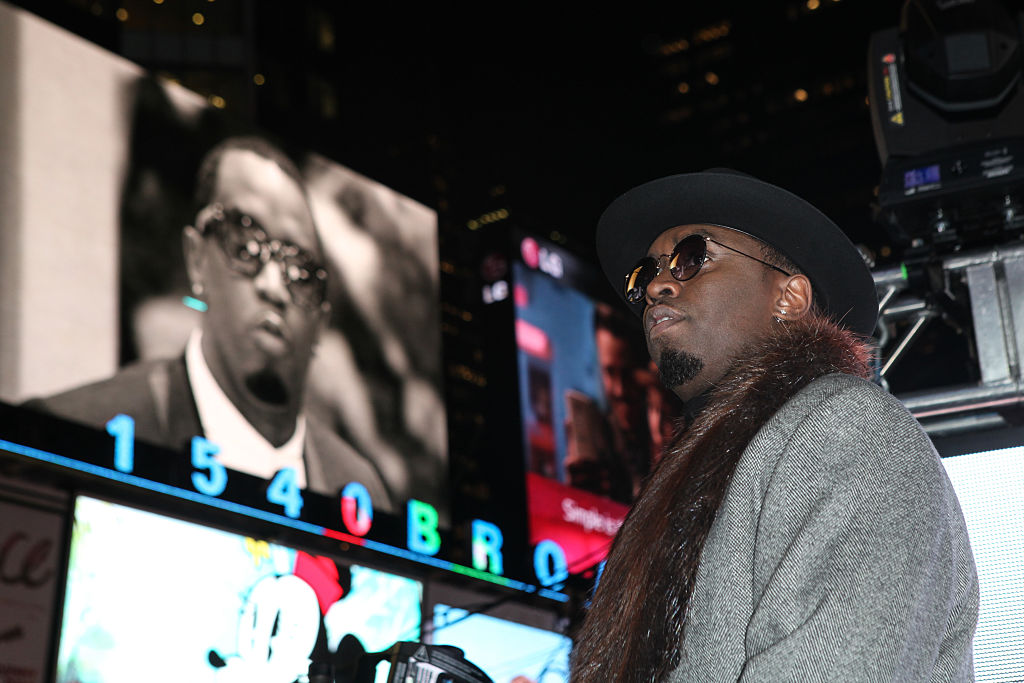
Sean “Diddy” Combs was transferred to federal prison in Fort Dix, New Jersey, on Thursday to begin his 50-month sentence, a Bureau of Prisons spokeswoman said.

The 55-year-old disgraced music mogul has spent his time at the Metropolitan Detention Center in Brooklyn, New York, before he was sentenced to 50 months (4 years) on two counts of interstate prostitution.

Combs was acquitted of the more serious charges of racketeering and sex trafficking and pleaded not guilty while maintaining his innocence.

Love Crime? Get more! Join the Hip-Hop Wired Newsletter

We care about your data. See our privacy policy.

According to NBC News, Combs’ new living arrangements for the next 4 years, Fort Dix prison, is a low-security prison for men that houses up to approximately 4,000 inmates.

Combs’ legal team asked U.S. District Court Judge Arun Subramanian at his sentencing to send him to Fort Dix for drug rehabilitation and an opportunity to be closer to his family.

The news website also reports that Combs’ legal team will seek an expedited appeals schedule while calling the prosecution’s use of the “Mann Act,” which forbids by law traveling across state lines to engage in prostitution, “unfair.”

Diddy is slated to be released on May 8, 2028, and could be let out of prison earlier for good behavior, or have his whole jail sentence commuted if Donald Trump issues him a pardon. Trump is reportedly not considering it at the moment.

Speaking with reporters from the Oval Office, Trump revealed that Diddy’s team did reach out to him in hopes of securing a pardon.

“A lot of people have asked me for pardons,” Trump said. “I call him Puff Daddy, [he] has asked me for a pardon.”

Well, we hope Diddy uses his time behind bars, however long that is, to reflect on life and come out of the experience a fully rehabilitated person.

Source: Joshua Applegate / Getty

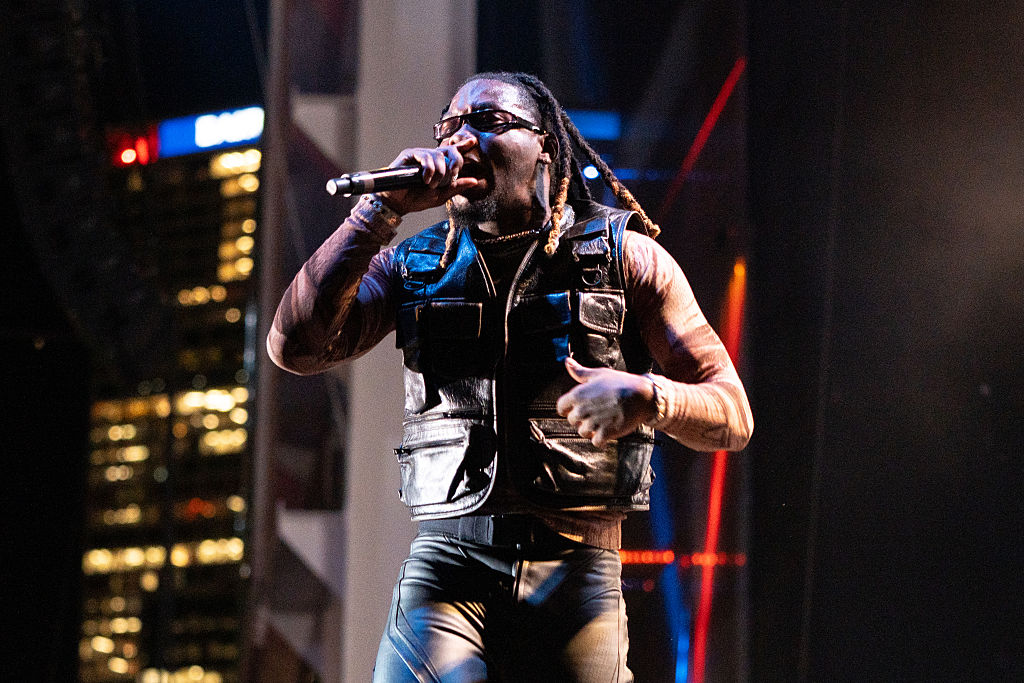
Offset has not taken his foot off the gas one bit.

The ATL rapper dropped a surprise album, “HAUNTED BY FAME,” on Halloween. Following the positive reviews of his collaborative record with JID on “Bodies”, this adds to a great year the former Migos artist is having. The project holds three features, one of which is from NBA YoungBoy, for whom Set has been on the MASA tour, opening up for him.

YB & Offset have collaborated in the past. With arguably YoungBoy’s best feature on the Migos record, “Need It”. The other feature was a shocker and the first time that NoCap and Offset have worked together. Strange combo, but it worked.

Leading up to this surprise release, Offset’s ex-wife Cardi B was in her bag, dropping her long-awaited sophomore album, “AM I THE DRAMA?” Which led to the Set It Off rapper to show her love and give her ex her well-deserved flowers, “For sure, the sh*t hard, she’s gonna do her big one. I just want all peace, we all gotta win, we got our kids to take care of.”

Fast forward to “HAUNTED BY FAME”, it seems as though he may have had a change of heart. Offset appears to have taken some shots at Bardi on his song, “NO SWEAT”, requesting his ex to get some help, “You a fool if you think that I’m hurt, you ain’t happy I know how it work. How you married and still giving birth? Get some help, b*tch, you goin’ berserk.”

The Bodak Yellow rapper has not responded (yet).

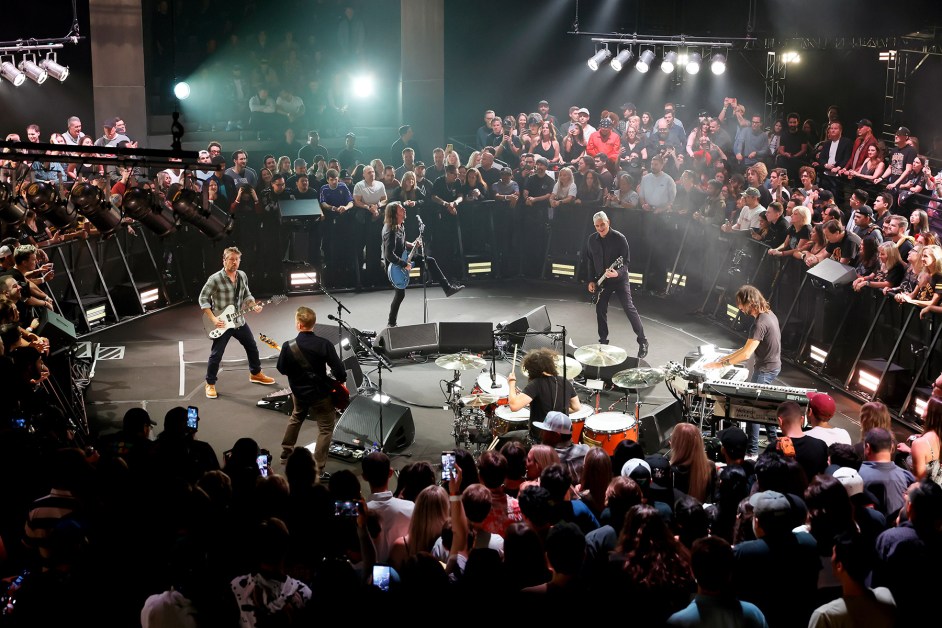
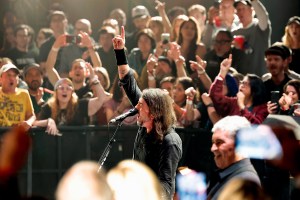
Billboard rounds up the highlights for one of the most uniquely presented gigs of the Foos’ decades-spanning career.

10/31/2025

Trending on Billboard Chris Jones is pledging allegiance to his teammate’s famous fiancée, and Taylor Swift is loving it. In a sweet moment from a recent press conference, the Kansas City Chiefs defensive tackle walked into the room with the pop star’s Billboard Hot 100-topping single “The Fate of Ophelia” blasting on his phone speaker. […]

Trending on Billboard

The staff at the Atlanta’s Masquerade can’t say for certain if the music venue is haunted, but there are stories – lots of stories.

The sprawling four-room venue first established itself in Atlanta in 1989 – two years after the first venue of its name was opened by the same owners in Tampa – and took over the former DuPre Excelsior Mill at 695 North Avenue that had come to life a century earlier. The mill produced a packing material to fill mattresses and other items (before foam eventually made it obsolete) and, like many 19th century factories, several workers were injured in the production process, and the belt of the mill took the life of at least one man.  

Related

While no one has managed to exchange names with those haunting the various Masquerade venues, no one claims to be specifically visited by mill workers. There’s a woman who was seen by several staff members hanging around the freight elevators at the 695 location. One of Masquerade’s owners Berta Ochs says he was supervising the construction before the venue first opened one night and a leftover coin operated basketball machine started up. He could see a man shooting hoops and after yelling at the figure to leave, Ochs said, suddenly he was gone.  

Employees have often felt like they were being watched when no one else was around and one employee who was working the venue’s haunted house Chamber of Horrors says she felt a tap on her shoulder, turned to find no one except a medical instrument from the prop table flung at her feet. There have even been online rumors that Masquerade has vampires. 

Greg Green, Elena de Soto, and Brian McNamara.

Josh Martin

“Not to dispel the rumors,” says Masquerade marketing manager Camilla Grayson, “But I think that was because there was a plaster vampire up in the rafters that was left over from an event.” 

“There’s also a popular roleplaying game called Vampire of the Masquerade that people go around doing live enactments of,” chimes in Masquerade GM and talent booker Greg Green. “That might have played into that whole vampire rumor too.” 

Masquerade has not helped itself in the matter with rooms that denote the afterlife. Since its first Atlanta location, it has featured multiple rooms named Heaven, Hell and Purgatory and referred to them as a trinity of nightclubs. The rooms were stacked with Heaven obviously at the top, Hell on the bottom floor and Purgatory somewhere in-between.  

“The upstairs Heaven room was known for the bounciness and sway of the floors,” recalls Green, who has been with the venue for nearly 35 years. “When people would get to jumping in unison and you were downstairs, you could see the ceiling looking like a trampoline. When you hear about people reminiscing, it is like, ‘We were jumping on the trampoline floor in Heaven and we just knew we were about to fall through, but never did.’” 

Related

The venue’s 695 North Avenue location was a behemoth on the streets of Atlanta’s Fourth Ward – with an entirely black stone exterior save for a purple cursive neon sign that read Masquerade. It was an intimidating figure brought to life by founders Ochs, Brian McNamara and Dean Riopelle that attracted all forms of rockers and punks in the early 1990s including Fugazi, The Ramones, Foo Fighters, Radiohead and, of course, grunge legends Nirvana who were paid $200 to play for a room of maybe 50 people, according to Green. 

Pay receipt for Nirvana’s 1990 performance at Masquerade.

Elena de Soto

With three rooms to fill, Masquerade was able to take a chance on many bands in their early years including Bjork, N.W.A and Coldplay. Green recalls a young Dave Matthews coming through at the start of his career with manager Coran Capshaw (a now-renowned artist manager who runs Red Light Management) selling the musician’s t-shirts out of his trunk.  

In 2016, Masquerade had to leave behind the 695 North Avenue location when ownership sold the building as gentrification (and undoubtedly the historic music venue) made the Fourth Ward a desirable neighborhood to build a mixed-use development. Ownership was looking for another space to house the multi-room venue, when the city of Atlanta stepped in.  

“The city wanted to keep us given the cultural institution that we were and [the city] had all these vacant spaces that they said, ‘Hey, is there any of this that you can use, even on a temporary basis,’” Green explains. The space is part of Underground Atlanta, a formerly neglected shopping and entertainment district that first opened in 1969, but the buildings date back to the mid-to-late 1800s when they served as the Georgia Railroad Depot and were a major hub early on for the city. “We didn’t really have a choice at the time. And wound up moving equipment, gear and all the stuff, building out on a small scale what it would take to operate temporarily and it just worked. That was nine years ago and we’ve stayed and we’ve expanded.” 

Related

The Masquerade at Underground Atlanta now features four rooms Heaven (1,450 capacity), Hell (625), Purgatory (300) and Altar (250) connected by a shared courtyard. A fifth venue is expected to open in 2026.  

Despite moving to a new location – surrounded by pedestrian-only spaces with shops and art galleries – Masquerade has not lost its spooky factor. Underground Atlanta’s custodial staff refuses to enter certain areas of the entertainment district at night and has heard people talking at night when no one was around. On one of the interior buildings there’s a plaque that says this wall was part of the first Civil War era hospital in Atlanta, “The dead and wounded were brought here,” explains Grayson.  

A back hallway that connects all the venues is littered with creepy dolls with burnt-out eyes brought in by operations manager Howie Stepp – though no one knows where he sources the dolls from. Online, fans say they’ve seen a headless confederate soldier that walks around at night, and the courtyard is along Kenny’s Alley, which is named after a man who died in a jousting accident at the Georgia State Fair in the 1800s. That same courtyard is where fans from every room gather between sets to smoke, order some food, grab drinks and interact with music lovers of all genres. 

New Found Glory play the Heaven room of Masquerade in 2022.

Elena de Soto

“The courtyard is the great equalizer,” Grayson says. “It’s awesome watching a K-pop fan interact with a ska fan because they’re both coming out of shows at the same time. It’s an awesome mix of people from all walks of life.” 

With the ten-year anniversary of the new location looming, Masquerade is reaching new milestones. By the end of 2025, Green says the venue and their company Masquerade Presents, that promotes larger concerts in the city, will have presented a record 800 shows. Despite steep competition from various local venues including the more than 70,000-capacity Mercedes-Benz Stadium, the Live Nation-owned Coca-Cola Roxy and Tabernacle, and the home of NBA’s Atlanta Hawks State Farm Arena, Masquerade has continued to thrive by taking a chance on up-and-coming artists and seeing that goodwill returned.  

“We really don’t look at the individual shows as a series of battles to be won or lost,” Green says. “We look at it as one long campaign. If we can come out just a little bit better off at the end of the year than we were at the beginning, then it’s a win.” 

Related

In recent years, they have hosted shows with Japanese Breakfast, Mitski and Doja Cat. Alex G played 10 years ago at the 250-capacity Purgatory, worked his way up from Hell to Heaven and, earlier this month, he returned to Atlanta to play the 22,000-cap Eastern with Masquerade Presents as a co-promoter. Arena act Travis Scott played the Heaven room earlier this year to celebrate the 10th anniversary of his debut Rodeo.  

“Part of our ability to maintain over all that time is an attitude of treating people just as well when they’re young and getting their start as we do when they’re superstars,” Green says. “Providing them with amenities they might not get at other small rooms like private green rooms and showers and laundry and all the things.” 

“We’re able to take that risk on [rising acts] a second time, because we really believe in the music that people are creating, and not just focused on the numbers and the data. We were actually there. We’re talking to our staff that we’re working it that said this was really cool,” Grayson adds. “We’re like, ‘They are worth having back because they absolutely kicked ass to 30 people.” 

Last Month’s Indie Venue Profile: Antone’s in Austin

The Billboard Hot 100 chart has long been seen as a measure of success for musicians across all genres, with placement on the list solidifying years of hard work. For the first time in 35 years, Hip-Hop, one of the most successful genres of modern times, has fallen out of the top 40 of the Billboard Hot 100 list, and it could signal a shift in consumer tastes.

Billboard reports that, surprisingly, not one Hip-Hop song occupies the top 40 slots of the Billboard Hot 100, with the highest ranking song being YoungBoy Never Broke Again’s “Shot Callin” at the No. 44 slot. Following are Cardi B’s “Safe” featuring Kehlani from Cardi’s latest album, Am I The Drama?, and BigXthaPlug’s “Hell at Night” featuring Ella Langley, sitting at No. 48 and 49 in that order.

The outlet adds that the last time this happened was on February 2, 1990, with Biz Markie’s classic “Just A Friend” at No. 41 on the charts, ahead of becoming a top 10 hit for the late rapper and DJ. The following week, the song leaped to the No. 29 slot.

More from Billboard explaining how this happened:

Recent rule changes to Billboard’s Hot 100 methodology did play a part in the streak coming to an end. For the chart dated Oct. 25, descending songs were deemed recurrent and removed from the chart if they had exceeded certain durations on the chart while also falling below certain updated chart thresholds — for instance, if they had fallen below No. 25 after spending over 26 weeks on the chart. That particular change resulted in the departure of “Luther,” which had fallen to No. 38 on the previous week’s Hot 100 in its 46th week on the listing.

The headline itself does sound alarming on the surface, but it seems that a technicality is the reason for this, not a dip in quality. As we try to highlight at Hip-Hop Wired via our CRT FRSH playlist, the music and culture are thriving well, and it should be expected that another artist or more will make their way to the top of the charts again. Given the chart dominance of acts like Drake, Kendrick Lamar, and the aforementioned BigXThaPlug, we should see Hip-Hop near or back at the top soon.

Photo: Billboard

Trending on Billboard

Offset unleashed his surprise Haunted by Fame project on Friday (Oct. 31), which appears to find him addressing Cardi B and Stefon Diggs’ relationship, along with his estranged wife’s pregnancy.

The not-so-subliminal shots at Cardi and the New England Patriots wide receiver come to close the first verse of the Coupe-produced “No Sweat.” Set essentially implies Cardi downgraded by trading Chicago Bulls star Michael Jordan for Dennis Rodman, who was more of a caffeinated role player.

“How the f—k you leave Jordan for Rodman/ You a fool if you think that I’m hurt/ You ain’t happy, I know how it work,” he raps.

He seemingly continues to blast Cardi for getting pregnant by the NFL player while their divorce still isn’t finalized. “How you married and still giving birth/ Get some help, b—h, you going berserk,” Set spews.

Billboard has reached out to reps for Cardi B and Offset.

Cardi B filed for divorce from Offset for a second time in July 2024. The Grammy-winning rapper and Migos member share three children. Cardi began dating the NFL star earlier this year, and went public with her relationship while sitting courtside at a Knicks game with Diggs in May.

“I fell in love. I got two rings [on] my finger. I lasted seven years,” she said of the relationship with Offset in September during an X Spaces. “Seven years that I didn’t have to last with somebody. I lasted seven years in a marriage. Stop saying, ‘Oh, but you’re still married.’ No, I’m legally separated.”

She also alleged at the time that it was her estranged husband’s demands holding up the divorce. “Y’all wanna know the tea?” Cardi said. “The only way I can get out of my marriage is if I pay for somebody else’s taxes — even though I pay for my own — and give them one of my properties.”

The Bronx native is expected to give birth to baby No. 4 in the coming months, and then she’ll be hitting the road for the Little Miss Drama Tour in February.

As for Offset, Haunted by Fame is his second album of 2025, after dropping Kiari in August. Releasing music on Halloween isn’t new for Set, who released Without Warning alongside Metro Boomin and 21 Savage in 2017.

Listen to Offset’s “No Sweat” below.

Trending on Billboard

Win Butler and Régine Chassagne of Arcade Fire have separated after 22 years of marriage, the band announced Thursday (Oct. 30).

In a statement posted to the Montreal rockers’ Instagram account, the longtime couple shared that “after a long and loving marriage, Win and Régine have decided to separate.”

“They continue to love, admire and support each other as they co-parent their son,” the message continued.

As for the group’s future, the bandmates wrote that their “bond as creative soulmates will endure, as will Arcade Fire.”

“The band send their love and look forward to seeing you all on tour soon,” the statement concluded.

The split comes after a long journey for Butler and Chassagne, who first met in 2001 at McGill University and formed Arcade Fire that same year. The pair tied the knot in 2003 and welcomed their son in 2013.

In 2022, Chassagne stood by her husband after he was accused of sexual misconduct by four people in a Pitchfork report. Butler confirmed at the time that he’d had extramarital relations with the people who came forward, but denied that any of them had been nonconsensual. He also apologized to “anyone who I have hurt with my behavior.”

“Win is my soulmate, my songwriting partner, my husband, the father of my beautiful boy,” Chassagne said in a statement at the time. “I know what is in his heart, and I know he has never, and would never, touch a woman without her consent, and I am certain he never did. He has lost his way and he has found his way back. I love him and love the life we have created together.”

Earlier this year, Arcade Fire dropped Pink Elephant, the band’s first album since the allegations came to light. In April, the group embarked on its Don’t Think About Pink Elephant Tour, which concluded the following month.

See Arcade Fire’s statement below.

Trending on Billboard

Olivia Dean’s sophomore album The Art of Loving, released in late September, is an intimate portrait of matters of the heart, and the highs and lows of romance in your 20s. Now the world loves her back and U.K. industry insiders are blown away as a fresh outpouring of affection gives her a rare shot of breaking America.

Related

Released via Capitol Records U.K. in partnership with Island Records U.S., The Art of Loving recently peaked at No. 6 on the Billboard 200, and currently remains in the top 10. And this week, its breakout hit “Man I Need” continues to rise on the Hot 100 and is up to No. 8 — Dean’s first-ever Hot 100 top 10 hit — while two other tracks, “So Easy (To Fall In Love)” and “Nice to Each Other,” appear at No. 44 and No. 88, respectively. 

Records have tumbled on the U.K’s Official Charts. On release week, The Art of Loving and “Man I Need” concurrently hit No. 1 on the Albums and Singles chart, with Dean becoming the first British female solo artist to achieve the feat since Adele in 2021. This week, Dean has broken a new U.K. chart record with four songs inside the top 10, the first time any female solo artist has achieved the feat and buoyed by her appearance on Sam Fender’s “Rein Me In.”

Dean is no overnight sensation. The BRIT School graduate first appeared as a backing singer with dance group Rudimental, and landed a record deal with AMF (a subsidiary of EMI) in 2019 for OK Love You Bye, her debut EP. Her debut album Messy (2023) scored a Mercury Prize nomination, and alongside an appearance on the BBC’s Sound Of poll the following year, she earned nominations in three categories at the BRIT Awards in 2024. 

Now that steady build has exploded into potential global stardom. Next spring, the 26-year-old will headline six nights at London’s 20,000-capacity O2 Arena as part of her sold-out U.K. and Ireland tour, but the campaign is smartly positioned to break across the pond, too. She’s currently the lead support for Sabrina Carpenter’s ongoing arena tour, including five nights at New York’s Madison Square Garden this week. A performance on Saturday Night Live is scheduled for Nov. 15.

Now, with the campaign going from strength to strength, Tom Paul, managing director of Capitol Records U.K., earns the title of Billboard’s Executive of the Week. Here he discusses the canny A&R decisions that supported Dean’s artistry, why she stands out in a world “increasingly shaped by AI” and keeping her well-fed with her favorite snack: chocolate raisins.

Related

This week, Olivia Dean’s “Man I Need” became her first top 10 hit on the Billboard Hot 100, soaring to No. 8 in its ninth week on the chart. What key decisio did you make to help make that happen?

Partnering with Island U.S. in 2023 was absolutely key — that team is world-class. They completely understand and support Olivia’s artistry, and we’ve been working in lockstep since the release of Messy. We built an ambitious plan for The Art of Loving rollout in late 2024 and really stuck to it. “Man I Need” was quickly chosen as the focus single by Olivia and the team — and when she started performing it across her U.S. headline shows before release, the response was undeniable. You could feel it connecting in the room. Her being back in market now, supporting Sabrina Carpenter, has only amplified that momentum — and honestly, given the commercial and radio plans Island have put in place, it feels like this track still has plenty more room to grow.

Olivia released four EPs and her debut album, 2023’s Messy, before breaking through with The Art of Loving. How have you worked to build her career steadily through the years?

From the start, we’ve always focused on Olivia as an artist with longevity. We’ve been consistent with music releases since 2019, including live albums from the Jazz Café and Hammersmith Apollo, standout sync moments with Bridget Jones and Heartstopper, her work with brands such as Burberry and Adidas, and extensive global touring.

She’s one of the hardest-working artists I’ve ever seen — she’s travelled the world several times over, supported brilliantly by Nickie Owen and the Universal Music U.K. International team. Olivia knows exactly who she is, and we’re all completely aligned on her ambitions. The key is making smart decisions every day and avoiding shortcuts. She’s in this for the long run, and everything we do is built around that.

What specific decisions did the A&R team and Olivia make during the process of writing and recording The Art of Loving?

Willem Ward’s decision to turn an east London house into a recording studio — complete with Olivia’s own piano — was a key part of the alchemy behind the album’s magic. Olivia lived in the space for three weeks, inviting both longterm collaborators and new writers to join her. Having that creative home base in London, in a space that felt completely her own, made a huge difference.

We kept the core team that’s been integral to her journey while bringing in new creative energy from producers like Zack Nahome. And through it all, we followed Olivia’s lead — she set the tone, the pace and the emotional compass for the record.

Over in the U.K., Olivia currently has three songs in the Top 10, plus a collaboration with Sam Fender. How much planning goes into making sure that each single has the push it deserves when they’re all big simultaneously?

The U.K. chart success is an astounding achievement and absolutely one to be celebrated, but we’ve always said it doesn’t matter which song brings you into Olivia’s world — and we’ve always looked at the bigger, global picture before local chart metrics. We’ve had “Reason to Stay” going viral in Southeast Asia while “It Isn’t Perfect” was peaking in the U.K., and “Dive” [from debut LP Messy] was charting in Australia. She’s a true artist in that respect — every one of her songs forms part of the Olivia Dean story. When “Man I Need” was released, we suddenly had 12 songs in the U.K. Spotify Top 200, spanning her entire catalogue from 2019’s OK Love You Bye right through to The Art of Loving.

While meticulous planning goes into every rollout, there’s no accounting for those unexpected moments. Constant communication with the team — and the willingness to pivot, or sometimes to simply let things grow organically — is crucial. Olivia is an incredibly intuitive artist; she just knows when a song needs attention. Her COLORS session shining a light on “A Couple Minutes” was a perfect example of that instinct at work.

Olivia first broke in the U.K. and is now seeing gains in the U.S. How did you work with your counterparts in the U.S. to set her up for success in the market?

It really comes down to forward planning, consistent communication and talking through every decision with a global perspective. We’re always looking at each move through that lens — understanding the importance of Olivia being in market, aligning on our ambitions, but also making sure we enjoy the process. At the end of the day, we’re a team that genuinely gets on, loves music, and loves working together.

Breaking British acts in the U.S. and globally has been something of a concern for the industry lately, but the trend appears to be bucking. Why do you think audiences have connected with Olivia?

Audiences are craving honesty and authenticity. In a world increasingly shaped by AI, Olivia’s music feels deeply human — soulful, witty and emotional. She represents a new generation of artists redefining British music through intimacy and integrity. Her live performances are truly exceptional; she connects in person the same way she does online. There’s an element of old-school glamor and timelessness in her presentation, but always with her own modern, individual twist. And, of course, the pure quality of her songwriting is second to none.

Related

How have you been able to leverage TikTok for The Art of Loving’s singles?

TikTok has been a huge part of Olivia’s discovery — not through trends or gimmicks, but through people being genuinely transfixed by the joy of her performances or using her lyrics to soundtrack their own lives. We’ve built every key promo moment around authenticity rather than virality.

The best part is that her biggest moments on the platform have always come from fans, not marketing — and that’s exactly how you know you’ve got a special artist. One of our current trending sounds is simply Olivia explaining the concept behind The Art of Loving — I’ve honestly never seen something like that before, and it’s a perfect example of how her storytelling drives discovery.

Between chatter for a Grammy nomination, an upcoming SNL performance and a massive tour in 2026, how do you position Capitol U.K. to support Olivia on this next phase of the campaign?

Although Olivia’s trajectory this year has been nothing short of explosive, it’s important that we keep the momentum going — there are still so many people yet to discover her and such a rich catalog for them to explore. We have ambitious longterm plans in place, but our job is to make sure Olivia can scale globally without losing the intimacy that defines her.

Keeping our small, focused team at Capitol U.K., led by Jo Charrington, allows us to make every decision intentionally and with care. And, of course, making sure Olivia has a steady supply of chocolate raisins — an absolute essential.

Trending on Billboard

In today’s music economy, where streaming royalties remain thin and ticket prices continue to escalate, one of the fastest-growing and most resilient sectors is merchandise — and few companies are as prominent in the space as Universal Music Group’s wholly owned Bravado, which oversees the world’s largest music merchandise operation.

Bravado aims to unite artists and fans through products that aspire to be more than souvenirs, and at the center of its machine is its president, Matt Young. A 25-year merchandising veteran who joined Bravado four years ago, Young has shepherded the company through an era of unprecedented demand and logistical complexity, helping Bravado grow into a revenue engine that UMG says now generates over $900 million in annual business. But those top-line numbers tell only part of the story.

“We’re building bridges,” Young says, “allowing fans to touch something physical that represents the emotional connection they have to the music.”

Matt Young will participate in a panel at Billboard‘s Live Music Summit, held Nov. 3 in Los Angeles. For tickets and more information, click here.

Related

Young’s path to Bravado traces the broader arc of the merch industry. He began at Roadrunner Records in the late 1990s, when the label had started to flirt with what would become known as “360 deals,” which bundled merchandising with recording and touring rights. From there, he spent time at an independent merch company before moving on to Warner Music and helping it build its merchandise division. “I’ve seen this industry from every angle: indie, major, startups,” he says.

By the time Young joined Bravado in 2021, the merch sector had begun to mature into a sophisticated global business with its own supply chains and sustainability strategies. In his role, he oversees customized blueprints for artists who range from global superstars like Billie Eilish and The Rolling Stones to emerging bands on the club circuit. About one-quarter of Bravado’s roster is non-UMG acts, and the company’s model spans from tour merch sold directly at concerts to retail partnerships with American outlets like Hot Topic and others in Europe and Asia.

“Tickets and T-shirts,” Young muses, are now twin pillars of the touring economy, with some artists selling hundreds of thousands of dollars’ worth of items in a single night. For certain acts, particularly those with deeply engaged fans, the merch table rivals the box office as a source of income. This shift has also forced the industry to rethink product design, moving away from one-size-fits-all T-shirts toward fashion-forward collections, sustainable fabrics, upcycled inventory, exclusive colored vinyl, collectible collaborations and even action figures.

Billie Eilish posing with her merchandise at the Billie Eilish x American Express Hit Me Hard and Soft Pop Up on May 8, 2025 in Berlin, Germany.

Marcus Lieder

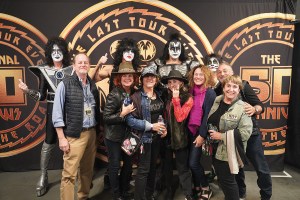
Meanwhile, the evolution of VIP experiences has further blurred the line between merch and fan engagement. Bravado’s premium programs for artist tours range from simple early-entry packages to elaborate meet-and-greet activations that command thousands of dollars. For bands like Pierce the Veil, VIP passes that grant barricade access and exclusive goodie bags have become essential fan experiences, while legacy acts like Def Leppard and KISS have offered photo ops and once-in-a-lifetime perks.

Yet challenges remain. The company must navigate tariffs and geopolitical disruptions to supply chains and shipping routes while managing its inventory and combating bootleggers — both the ones who have long hawked counterfeit shirts outside arenas and those in the Wild West of digital merch, where Instagram scammers selling fake band shirts is an ongoing issue. For Young, though, these obstacles underscore the stakes. In his view, merch is not only about revenue diversification but also about cementing culture through everyday objects that can transform passive listeners into active community members. Merch — and Bravado’s products — are both commerce and cultural currency. “This isn’t just what I listen to,” Young says. “It’s who I am.”

How big is Bravado’s business today?

Universal’s earnings reports show that merchandise generated north of $900 million last year. It’s a substantial piece of UMG’s overall revenue, and it means our side of the business gets attention at the highest levels.

You often describe merch as more than just souvenirs. What do you mean by that?

Music creates an emotion, and merch is the last tangible thing you can hold, wear or display that represents that feeling. A vinyl record — even for someone without a turntable — can be merch. A hoodie or a T-shirt is an identifier: It says, “This is who I am, this is the culture I belong to.” That’s more powerful than a simple transaction.

KISS posing with fans during a VIP experience on the band’s End of the Road Tour in 2023.

Keith Leroux

What does your job look like week to week?

It’s a mix. We run teams in cities across the globe — New York, L.A., London, Berlin, Tokyo, Sydney, Madrid, Nashville. So there’s operational management. But there’s also signing new artists, pitching them ideas, collaborating with labels and making sure our products fit each fan base. We also spend a lot of time on sustainability: upcycling leftover inventory, using recycled materials and building new processes to reduce waste.

How does upcycling work?

We partner with a company called Hallotex. They take old tour stock — unsold shirts, tote bags, whatever — break down the fibers and respin them into new cotton. That gets turned into new blank [shirts] for fresh merch. Or maybe it’s taking old tote bags and turning them into a blanket. It’s about turning excess into opportunity and cutting down on the warehouse full of leftovers that used to define this business.

How do the economics of merch work for artists?

There are three main buckets: tour sales, online stores and retail. On tour, there’s usually a truck following the band with inventory, and most of that money goes directly to the artist on a net-split basis. Online and retail work more like a royalty system since we handle production and logistics. Across the board, the splits are heavily in the artist’s favor — often 80% to 90% after costs. It’s often the No. 2 source of revenue [for artists] after ticket sales. It’s not unusual for a major tour to transact hundreds of thousands of dollars in merch in a single night.

What makes for a successful merch strategy?

Culture. If a band has a lifestyle built around them, merch thrives. Look at Billie Eilish, who insists on sustainability and explains it to fans every night. Or Olivia Rodrigo, who wore her own merch onstage. When the artist truly believes in it, sales follow. It becomes part of their identity and their fans’ identities.

What kinds of products are trending now beyond T-shirts and hoodies?

Exclusive vinyl colorways for tours, blankets for amphitheaters, memorabilia books like Olivia Rodrigo’s, collectible action figures like we did for Rihanna, Slipknot’s masks and jumpsuits. It’s all about matching the lifestyle of the artist with the passion of the fan.

Rihanna collectible action figure, “Rhenna”.

Courtesy of Bravado

How do global challenges — tariffs, Brexit, supply chain issues — affect you?

They definitely add complexity. Brexit alone changed how we move goods in and out of Europe. Tariffs can impact pricing and margins. But we have logistics teams built to handle that. We try to be nimble and find ways to keep delivering.

What about risk? Not every product is going to be successful. How do you deal with demand uncertainty?

The key is smart inventory control. We measure sales every night on tour and adjust orders quickly so we don’t get stuck with piles of leftovers. Years ago, I inherited a warehouse in Nashville that was literally two football fields wide full of unsold merch. That doesn’t happen anymore. We recycle, upcycle and design smarter so we’re not flooding the market. And when there is excess, we’ll sometimes move it online for fans who couldn’t get to the show.

How much do fashion trends dictate what you create?

A lot. Kids today don’t want the same cuts we sold 10 years ago. Right now, shorter, wider shirts are in. A few years ago, it was skinny fits and super-thin fabrics. Hip-hop audiences might prefer heavyweight blanks, while pop audiences want pajamas or skirts. It’s about curating for each fan base — answering their call rather than handing them a generic black T-shirt.

Machine Gun Kelly wearing a shirt from the collection he collaborated on with his hometown football team, the Cleveland Browns, at the start of the current football season.

Sam Cahill

Do you work outside music, with comedians or podcasters?

Yes. We do VIP and merch for Kevin Hart, and we also work with Shane Gillis, who’s one of the biggest comedians in the country right now. Comedy is different — comedians don’t pile into vans for long tours; they fly in for weekends. But they have catchphrases and bits that translate perfectly to merch. We also work with YouTubers and media personalities if it makes sense for our demographic.

Do macroeconomic shifts — inflation, politics, consumer confidence — ­affect your numbers?

On tour, not really. Since COVID, merch numbers have been the highest we’ve ever seen. People are celebrating being back in shows and merch is part of that. At retail, yes, you see slowdowns when inflation hits or tariffs drive up prices. But live is resilient. People are buying hoodies, vinyl and collectibles as part of the celebration of going to a concert.

Bootleggers have been around ­forever. Are they still a problem?

Always. If you’re buying from a guy in the parking lot, it’s not legit. And while the shirts might be cheap, they fall apart. But there’s also a fascinating subculture of vintage band tees. Original Nirvana or Nine Inch Nails shirts from the ’90s can sell for thousands of dollars today. That market is booming, and in some ways, it fuels demand for new designs, too.

Looking ahead, where’s the growth?

Digital. We’re learning as we go in video games and online platforms — it’s still the Wild West. There’s also a fight against online piracy, with fake ads on Instagram and Facebook. Beyond that, it’s about converting casual fans into superfans with unique, culturally relevant products. At the end of the day, it’s about making sure fans feel closer to their favorite artists.

This story appears in the Oct. 25, 2025, issue of Billboard.