Author: djfrosty
Page: 150
Trending on Billboard
SYDNEY, Australia — More than three-and-a-half years after the siren sounded, the Australian government is activating local content quotas for popular streaming video on-demand platforms operating on these shores.
Confirmed Tuesday, Nov. 4, the new obligation will require those services with over 1 million domestic subscribers to invest 10% of total program expenditure here, or 7.5% of their total Australian revenue, to supporting local storytelling.
Related
Netflix, Disney, Amazon and other SVOD services will be compelled to comply by the legislation, which will be introduced to Parliament this week, the ABC reports.
Those quotas must pass that bar set by the Australian Content and Children’s Television Standard (ACCTS), meeting or exceeding the same requirements currently applied to commercial and subscription television services.
“We have Australian content requirements on free-to-air television and pay television, but until now, there has been no guarantee that we could see our own stories on streaming services,” minister for the arts Tony Burke remarked.
“Since their introduction in Australia, streaming services have created some extraordinary shows. This obligation will ensure that those stories — our stories — continue to be made.”
APRA AMCOS celebrated the announcement as an “incredible first step for Australia.” Whether the next step is a long-mooted content quotas for streaming music platforms, time will tell.
The Australian-made regulation, says Dean Ormston, CEO of APRA AMCOS, is a critical mechanism “within a global content market where extraordinary local stories and local music can be drowned out by content from major overseas markets.”
Critically, he adds, “the obligation includes requirements to spend on post-production in Australia, opening the door for Australian screen composers and local music to play a central role in telling our stories. This represents a significant new opportunity for Australia’s music creators.”
The Albanese government’s announcement follows the presentation last week of APRA AMCOS’s 2025 Screen Music Awards, and delivers on Canberra’s commitment in its national cultural policy, the five-year action plan dubbed Revive.
With its presentation in January 2023, the federal government mapped out a timeline for legislation that would enforce local content quotas on streaming platforms. “For video streaming,” federal minister of the arts Tony Burke said at the time, “the timeline is locked in.”
The new rules should’ve been implemented in 2024 but were delayed over concerns on how they might create a stumbling block for Australia’s trade agreement with the United States.
The champagne corks aren’t exactly flying, but the Australian creative community has cause to celebrate. The government’s commitment to investing in Australian storytelling comes on the heels of last week’s decision that there would be no exception for big tech in Australia’s copyright regime to allow for text and data mining.
“This announcement marks a landmark day for the Australian screen industry,” enthuses Screen Producers Australia CEO Matthew Deaner. “For too long, our local production sector has operated in an uneven environment where global streaming services could reap the benefits of doing business in Australia without contributing fairly to the creation of Australian stories.”
The commitment is “the result of years of advocacy,” he continues. “It recognizes that Australian stories matter, and that they deserve to be seen and heard on every platform.”
Trending on Billboard
Robert Irwin, Alix Earle and Whitney Leavitt rocked, so too did Chicago, while one unfortunate couple rolled out of the competition as Dancing With The Stars celebrated Rock & Roll Hall of Fame Night.
Explore
See latest videos, charts and news
On Tuesday night (Oct. 4), all eyes were on Irwin, once again, as the Australian conversationist and his dancing pro partner Witney Carson hit the main floor.
Drenched in red light, Irwin, son of the late “Crocodile Hunter” Steve Irwin and younger brother of Bindi, who won the 21st season of DWTS, in 2015, transformed into a matador for a paso doble to The White Stripes’ “Icky Thump.”
The judges loved the routine, as Irwin and Carson were awarded 38 out of 40, matching their season-high from last week’s Halloween Night. Only the teams of Alix Earle and Val Chmerkovskiy, and Whitney Leavitt and Mark Ballas (both with 39/40), fared better.
No pairing has yet landed a perfect score in this 34th season of DWTS.
However, Danielle Fishel and Pasha Pashkov failed to hit the right note with their contemporary dance to “Dream On” by Aerosmith, which came in at the bottom of the pack with 34/40. The lowest score of the night means elimination, so the actress and her pro partner are out. Live votes are cast during the East Coast airing and ends shortly after the final performance is completed.
Also on Rock Hall night, the group dances returned with a bang as the cast was evenly split in two, and teamed up alongside one of the co-hosts, Julianne Hough and Alfonso Ribeiro.
The winner was Ribeiro’s “Team Chicago” performance, with Danielle (team captain) and Pasha; Whitney and Mark; Jordan and Ezra; and Dylan and Daniella, earning a perfect 40/40.
Chicago, which was inducted into the Rock Hall in the class of 2016, provided the score with a rendition of “25 or 6 to 4.”
Dancing with the Stars airs live Tuesdays on ABC and Disney+, and streams the next day on Hulu. The finale will be on Nov. 25.
Rock And Roll Hall of Fame Night Scores
Dylan Efron and Daniella Karagach: 36/40Alix Earle and Val Chmerkovskiy: 39/40Andy Richter and Emma Slater: 30/40Whitney Leavitt and Mark Ballas: 39/40Danielle Fishel and Pasha Pashkov: 34/40 (ELIMINATED)Elaine Hendrix and Alan Bersten: 37/40Jordan Chiles and Ezra Sosa: 38/40Robert Irwin and Witney Carson: 38/40
Trending on Billboard
A coalition of top independent labels has joined forces to launch Catalog, a curated music licensing marketplace designed to let artists sync their music and receive real-time compensation.
Beggars Group, Domino, Ninja Tune, Warp, Partisan Records and Erased Tapes are among the early supporters of the platform, which launches Wednesday (Nov. 5) via music supervision company Too Young Ltd.
Related
Created by Frederic Schindler, AIM’s music supervisor of the Year 2025, the platform will debut with more than 30,000 sync-ready tracks from over 1,800 artists, with the aim of serving as an antidote to the royalty-free stock music economy.
Catalog arrives with the intention of helping to put more money into artists’ pockets. Creatives are able to set sync offers via its Sync Smart Pricing technology, which analyzes data points on an artist and song history to generate market-rate fees. The process thus allows for approvals faster, bypassing the traditional exchange of documents and any subsequent red-lines by auto-generating a final license once the terms have been agreed upon between stakeholders.
While searching for music on Catalog, creatives can use advanced filters such as audio similarity, and audio-to-picture auditioning, as well as being guided by a human-led “editorial search” mode to find relevant tracks. Artists signed up to the platform include Kurt Vile, Yves Tumor, Ela Minus, Marie Davidson and Icelandic multi-instrumentalist Ólafur Arnalds.
By providing this technology, Catalog is seeking to reduce the number of sync exchanges with “ghost artist libraries” – stock music attributed to anonymous musicians, presumably in an effort to reduce sync payouts for advertisements, video content and so forth.
“Catalog is the result of a deep collaboration with the most forward-thinking rights holders in the industry,” Schindler explained to Billboard U.K. “This is what happens when artists, labels, publishers, managers, and supervisors come together to address a problem. We’re not ‘disrupting’ them; we’re building this new era together.”
Ahead of its launch, Catalog music director Thierry Planelle worked with Veronique Nichanian, creative director of Hermès, to replace a key track for the fashion house’s Men’s Ready to Wear 2026 runway prior to the show. The feat prompted an endorsement from Christof Ellinghaus, founder and CEO of revered indie City Slang.
“This placement very quickly demonstrated Catalog’s ease of process and powerful usability,” Ellinghaus said in a press release. “We are excited about the prospects ahead with this great new platform. And trust us, we usually hate platforms!”
Membership applications for Catalog are now open in the U.K., Europe, US, Canada and Mexico. Further access information can be found on its official website.
Trending on Billboard
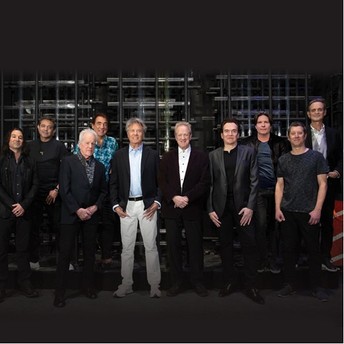
Robert Taylor, former lead guitarist and backing vocalist with ARIA Hall of Fame-inducted rock band Dragon, has died aged 74.
Taylor’s passing was confirmed in a social post by ex-drummer Kerry Jacobson.
“I’m writing to share the unexpected and devastating news of the passing of my mentor, my partner in crime for some of the best times, my musical comrade through the hardest of times and my dear friend of decades…the irreplacable (sic) Robert Taylor,” he writes.
“Many admired his songwriting and his musical talent and, after all these years people would still speak to me with great reverence of his talent and contribution to Australian music.
Explore
See latest videos, charts and news
“I admired his loyalty, I treasured his mateship, I valued his consistency and I absolutely loved it when often the phone would ring and he was up for a chat.”
Born in Waipukarau, New Zealand, Taylor had a hand in some of the most enduring Australasian songs of a generation.
Dragon was formed in Auckland, NZ, and relocated to Sydney, Australia in the mid-70s. Led by the band’s flamboyant and self-destructive frontman Marc Hunter, Dragon pumped out the hits, initially in the back-end of the 1970s with “Are You Old Enough?,” “April Sun In Cuba” and “Still In Love With You”.
The ‘80s wasn’t kind to many bands from the previous decade, but Dragon orchestrated an impressive comeback with the 1983 album Body and the Beat, which spawned the hits “Rain,” “Cry,” and “Magic.” The first of those, “Rain,” poured down for a Billboard Hot 100 appearance in 1984, peaking at No. 88.
Taylor was there as Dragon spread its wings for two distinct heydays, performing in the band from 1974–1979, and again from 1982–1985.
Dragon continued to breathe chart fire through the ‘80s with “Speak No Evil,” “Dreams of Ordinary Men,” “Young Years” and a cover of Kool & The Gang’s “Celebration.”
Dragon was inducted into the ARIA Hall of Fame in 2008, ten years after Hunter died with throat cancer, at the age of 44. Taylor joined his surviving Dragon bandmates for the special Hall of Fame presentation at Melbourne Town Hall.
Taylor “had a dry wit, was a keen observer and had a memory like a razor but mostly he was just one of the good ones,” writes Jacobson. “That’s what has stuck in my head today “he was one of the good ones” and I think that sums it up. I will miss him terribly. My love and condolences to Carol, Lesley and Alex.”
Today, Dragon continues to tour and record with a lineup featuring co-founder and bass player Todd Hunter — Marc’s brother — and Mark Williams on vocals.
Trending on Billboard
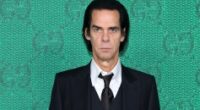
Nick Cave’s bad boy Bunny comes to life for a six-part streaming series, The Death of Bunny Munro, the first trailer for which has dropped online.
BAFTA and Emmy-nominated Matt Smith (Doctor Who, The Crown, House of the Dragon) takes the lead as Munro, a slippery door-to-door salesman on a road trip with his young son, played by Rafael Mathé in his television debut, following the death of his wife by suicide.
Explore
See latest videos, charts and news
In the new clip, Bunny takes Junior on the road for a eventful sales trek around Brighton and the surrounding coast, an area familiar to Cave, the Australian-born alternative rock legend who has called the English seaside home for some decades.
“My dad,” says Bunny Junior in the trailer, “he’s the best salesman in the world.” The youngster doesn’t know the half of it.
Cuts of Jarvis Cocker’s “Black Magic,” and Cave’s “Bright Horses” soundtrack the clip, which can be seen in full below.
Following Libby’s death, Munro, a sex addicted beauty product salesman and “self-professed lothario” finds himself “saddled with a young son and only a loose concept of parenting,” reads a plot synopsis from Sky.
“Together with nine-year-old Bunny Junior he embarks on an epic and increasingly out-of-control road trip across southern England as the two struggle to contain their grief in very different ways.”
First published in 2009, The Death of Bunny Munro is Cave’s second novel after And the Ass Saw the Angel from 1989.
The forthcoming series was written by BAFTA winner Pete Jackson (Somewhere Boy) and directed by BAFTA-nominated Isabella Eklöf (Industry, Holiday), with an original score by Cave and his longtime collaborator Warren Ellis. Cave also serves as executive producer for the show, produced by Clerkenwell Films in association with Sky Studios.
Cave is, of course, the celebrated frontman of The Bad Seeds, and several seminal outfits including The Boys Next Door, The Birthday Party, Grinderman and more.
In the United Kingdom., his adopted homeland, the band has landed seven top 10 albums, including Wild God, which opened and peaked at No. 5.
Wild God, released through Cave’s own label Bad Seed, via a new, exclusive worldwide licensing agreement with Play It Again Sam, an imprint of the independent [PIAS] label group, was nominated for a raft of awards, including two Grammy categories (best alternative music album and best alternative music performance), best alternative rock record at the Libera Awards and the 2024 Australian Music Prize.
Cave was inducted into the ARIA Hall of Fame in 2007, and has won eight ARIA Awards for his solo or group work.
The Death of Bunny Munro will air on Sky Atlantic and streaming services Now and Binge from Nov. 20.
Trending on Billboard
Live Nation reported an 11% increase in total revenue in the third quarter on Tuesday (Nov. 4), the result of continued fan demand for live music and a shift to stadiums from amphitheaters and arenas.
On a call with analysts and investors, CEO Michael Rapino and COO Joe Berchtold discussed the finer points of the results. Although it’s only November, all signs point to more growth in revenue, ticket sales, attendance and sponsorships in 2026. Fan demand isn’t falling back to earth any time soon, and Live Nation has made investments — renovations, new venues and acquisitions — to capture as much of that demand as possible.
Related
Here are some of the highlights from the earnings call and Tuesday’s earnings release.
Stadiums Dominated 2025 and Will Be Big Again in 2026
In the concert business, the venue matters. Live Nation’s owned and operated amphitheaters historically generate better margins than other venues, but in 2025, there have been more stadium shows. “A lot of artists decided not to play arenas and amphitheaters and go for stadiums,” said Rapino. In fact, in the third quarter, Live Nation had 250 fewer amphitheater shows and 120 more stadium shows, according to Berchtold. But because Live Nation operates some of those stadiums — such as Rogers Stadium in Toronto and Estadio GNP in Mexico City — those shows boosted the quarter’s per-fan profitability, Berchtold said.
With the FIFA World Cup taking place in the U.S., Canada and Mexico in the summer of 2026, there have been some concerns that soccer matches would limit stadiums’ availability and put a damper on North America tours. But those fears “haven’t seemed to come to life,” Rapino said, adding that stadiums should have “a very strong year [in 2026].”
Related
Fans Keep Spending
People may be suffering through nagging inflation and feeling economic jitters, but music fans are proving to be a resilient bunch, as per-fan spending at Live Nation’s owned and operated venues rose 8% through October. Part of the growth comes down to offering the right products. Non-alcoholic drink sales were up by 20%, and ready-to-drink options were up, too. The growth can also be attributed to renovations at amphitheaters that created VIP areas with premium food and beverage options.
Amidst the growing importance of VIP options to Live Nation’s business, the company said it’s not seeing any pullback from lower income brackets. “No, we have not seen any of that,” Rapino said when asked by Citi analyst Jason Bazinet if there was evidence of “bimodal” consumer behavior. Many shows for 2026 are already on sale, Rapino noted, and the company saw “no pull-back anywhere.”
More Gains into the Fourth Quarter and 2026
The fourth quarter and 2026 are expected to continue the trends seen in the first three quarters of 2025. Deferred revenue — money collected but not yet recognized as revenue for accounting purposes — is an important metric for assessing demand for upcoming events. Live Nation’s deferred revenue is up big from a year earlier: Event-related deferred revenue of $3.5 billion was up 37% from the prior-year period, and Ticketmaster’s deferred revenue of $231 million was up 30%. In addition, Live Nation says its large venue show pipeline for 2026 is up by double-digits, and ticket sales for concerts in 2026 have already reached 26 million. Sponsorship commitments for 2026 are up double-digits, too, according to the company.
Related
An International Tipping Point is Coming
Fans at international concerts are on track to surpass U.S. fans, the company revealed on Tuesday. In fact, international business is driving Live Nation’s growth. Whereas total fee-bearing gross transaction value (GTV) was up 7%, it rose 16% in international markets. And of the 26.5 million net new tickets from Ticketmaster enterprise clients, 70% came from outside the U.S. Additionally, more than half of the 5 million fans expected to attend concerts at Live Nation’s large (over 3,000 capacity) venues in 2026 will come from international markets.
Confidence in the Federal Antitrust Lawsuit
The U.S. Department of Justice’s lawsuit against Live Nation and Ticketmaster is set to go to trial on March 6. While the company’s latest quarterly SEC filing admits the case “could involve significant monetary costs or penalties,” its executives are publicly confident the lawsuit won’t lead to a nuclear option: namely, breaking up Live Nation and Ticketmaster. Berchtold pointed to the remedies decision in September in the Department of Justice’s case against Google, which aimed to restore competition in the internet search and search advertising markets. The court placed certain remedies on Google — a ban on exclusive distribution of Google Search and Chrome, for example — but didn’t break up the company. To Live Nation, the decision “very much validated our view that the claims in our case can’t lead to a breakup of Live Nation and Ticketmaster even if the DOJ prevails on one claim or another,” said Berchtold.
Trending on Billboard The sheer number of artist signings announced on a weekly basis makes it difficult to keep up, no matter how closely you pay attention to the industry news cycle. That’s why every other Tuesday, Billboard compiles the latest signings to labels, distributors, agencies, management companies and more, in an effort to provide […]
Trending on Billboard
Imagine the distance between Las Vegas and Chicago. Now imagine a line of 20 million stacked plastic cups and single-use serveware items extending along the 1,700-mile route.
According to reuse company r.World, that’s the actual cumulative number of plastic cups and single-use serveware items it and its partners have kept out of landfills since r.World launched in 2017.
Related
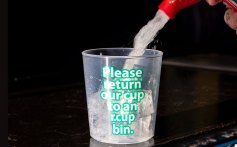
R.World provides reusable cups and serveware to venues and events, which are then returned by fans and sent out for cleaning at nearby r.World wash stations. R.World products are now in and at venues and events including Crypto.com Arena, Peacock Theater, Red Rocks Amphitheatre, Warped Tour and myriad Goldenvoice festivals. The company has also partnered with artists including Chappell Roan, Billie Eilish and Coldplay.
According to r.World, its work has thus far stopped more than 110 tons of plastic from being produced (netting out any plastic the company itself used), thereby eliminating 440 U.S. tons of CO2 emissions, saving 1,650,000 kWh of energy and conserving 5,000,000 gallons of water — amounts representing the creation and transport of these single-use items. Every cup or piece of serveware the company delivers that’s then returned is counted to ensure accurate environmental impact tracking and reporting.
“There is tremendous new growth in the world of reuse,” r.World founder Michael Martin tells Billboard. “When we launched the reuse movement back in 2017, no one was doing reuse. Now NFL, NBA, NHL, MLS, MLB and college stadiums are implementing reuse. As more and more venues realize the economic and environmental benefits of doing reuse, we are adding more clients every month.”
Martin says the company will be announcing a host of new partners in the coming weeks. Still, amid this growth, he says the biggest hurdle remains the fear of change and misinformation that exists in the marketplace, along with an “imagination gap” in terms of how reuse works. He notes that reuse can save venues money; that it’s a “vastly better” environmental solution than single-use aluminum cups, compostable cups, souvenir cups or plastic cups; that the reuse system is easy; and that guests and servers love it.
Related
“Reuse is common in most developed countries. The U.S. was behind,” Martin says. “As more and more U.S. venues are discovering the benefits of reuse, the demand is skyrocketing. The country’s leading venues are moving to reuse and away from single-use.”
Many scientists have noted that the world is currently in a “plastic crisis,” with these items contaminating natural spaces and waterways, harming wildlife and humans. Health Policy Watch reports that 98% of plastics are made from fossil fuels, with plastics “polluting human health through an array of pathways, including direct exposure to waste fills or chemical plants, environmental contamination, absorption through food packaging, microplastics, air and soil pollution, and burning of feedstock fossil fuels.”
R.World is one of several initiatives aimed at dramatically bringing down the use of single-use plastics in the music industry and beyond. In September, electronic producer Blond:ish announced Zero Plastic Club: NYC, a project that’s working to rid New York City dancefloors of single-use items like bottles, cups and wristbands.
“The movement toward reuse is a collective effort, built on partnerships and shared values, with contributions from venue managers, beverage companies, promoters, artists, and fans,” says Martin. “Every time a fan returns a reusable cup instead of throwing one away, they play a part in a larger transformation.”
Trending on Billboard Bizarrap announced his next “BZRP Music Sessions” is with Daddy Yankee. The surprising news was shared in a joint Instagram post between the Argentine hitmaker and reggaetón icon on Tuesday (Nov. 4), alongside a photo of the two artists posing in Biza’s popular studio. “BZRP Music Session #0/66,” reads the caption — […]
Trending on Billboard
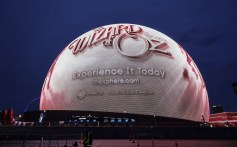
Sphere Entertainment Co. reported on Tuesday (Nov. 4) that the success of The Wizard of Oz and the Backstreet Boys residency at its state-of-the-art Las Vegas venue boosted revenue and operating income — though those gains couldn’t offset a nearly $130 million operating loss in the third quarter.
Sphere Entertainment generated revenue of $262.5 million, up 15% or $34.6 million, for the quarter ending Sept. 30, compared to the same period last year. Adjusted operating income, an indicator of how much of a company’s revenue will eventually become profit, rose to $36.4 million from negative $10.2 million a year ago. The company also reported an operating loss of $129.7 million, up $12.1 million from a year ago.
Related
Since opening in 2023, Sphere has become a destination for artist residencies, hosting acts including U2, Phish, the Eagles, electronic act Anyma and now the Backstreet Boys, who recently extended their Into the Millennium residency into February 2026. Upcoming acts include the DJ/producer Illenium, who’s slated for a residency in March and April, and No Doubt, which will play the venue beginning in May.
When Sphere isn’t occupied by a concert, the mega-venue also shows movies, including the U2 immersive concert film recording of its U2:UV Achtung Baby Live residency and The Wizard of Oz at Sphere. The company’s executive chairman and CEO, James Dolan, has said that recording, licensing and adapting these films costs significantly less than live performances and presents meaningful upside revenue.
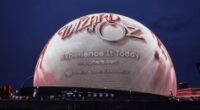
The Wizard of Oz at Sphere — an immersive adaptation of the classic 1939 movie — has sold more than 1 million tickets and generated more than $130 million in sales since its Aug. 28 premiere, the company reported late last month.
Related
In a statement, Dolan called The Wizard of Oz “the best example to-date of experiential storytelling in this new medium.”
He added that the film “has been met with strong consumer demand. Looking ahead, we believe our Company is well positioned for long-term growth as we continue to execute on our global vision for Sphere.”
Quarterly revenue generated by the company’s Sphere segment rose 37% overall to $174.1 million in revenue over the same period last year, boosted by $28.3 million more in revenue coming from the venue’s film screenings, collectively known as The Sphere Experience.
The Sphere Experience posted higher per-show revenue from its 220 showings (up from 207 last year) of three movies: Postcard from Earth, the immersive U2 concert film and The Wizard of Oz at Sphere. An additional 16 concert residency shows compared to the prior year quarter also helped boost event-related revenue by $15 million, though that was offset by “lower average per-concert revenue due to the mix of concerts” and the absence of big sporting and corporate events in the quarter. Sponsorship and advertising on the outside of Sphere, along with suite licensing fees, rose $2.7 million from a year ago.
Related
But more movies and shows mean more expenses, and those associated with The Sphere Experience rose by about $10 million. Meanwhile, event expenses primarily from residency shows rose by nearly $4 million, contributing to an overall 26% increase in the Sphere segment’s operating expenses, which totaled $78.7 million for the third quarter.
Overall, the Sphere segment posted an operating loss of $84.4 million — a $40.6 million improvement from last year — and adjusted operating income of $17.1 million.
Elsewhere, MSG Networks revenue fell 12% to $88.4 million on a more than 13% decline in subscribers and a $12.7 million decrease in distribution revenue.
State Champ Radio