Author: djfrosty
Page: 139
Trending on Billboard
Following Ozzy Osbourne’s July 22 death, the legendary rocker makes his presence known on the TouchTunes charts for the third quarter of 2025, paced by a No. 2 debut on the TouchTunes Artists Chart.
Explore
See latest videos, charts and news
The TouchTunes charts for the third quarter of the year track the most played songs and artists on TouchTunes jukeboxes from July 1 to Sept 30, with the Frontline ranking inclusive of music released in the last 18 months, followed by the Catalog tally for any music that was released more than 18 months ago. The TouchTunes Artists Chart tracks the same period, combining all of an artist’s plays across both rankings. TouchTunes has jukeboxes in over 60,000 locations worldwide. Its data is not factored into other Billboard charts.
Osbourne’s music had not been featured on TouchTunes’ charts since the songs-based rankings’ inception in the second quarter of 2024 or on the Artists survey since it began in the first quarter of 2025. But after his July death, he vaulted onto the Artists tally at No. 2, behind only Morgan Wallen, who has reigned for all three of the ranking’s iterations so far.
On the TouchTunes Catalog Chart, Osbourne appears three times, twice under his own name. “Mama, I’m Coming Home” leads the trio at No. 3, while “No More Tears” enters at No. 24. The former peaked at No. 28 on the Billboard Hot 100 in 1992, while the latter reached No. 71 the same year, both via the 1991 album No More Tears.
The third Osbourne-related song to chart, meanwhile, is Black Sabbath’s “War Pigs,” which enters at No. 21. The 1970 track stems from Osbourne’s time fronting the rock band and is featured on its sophomore release, Paranoid.
Both Osbourne and the original iteration of Black Sabbath performed at a star-studded final concert, Back to the Beginning, on July 5 in Birmingham, England.
Wallen’s reign on the Artists ranking, meanwhile, is assisted by music from his newest album, I’m the Problem, which was released in May, meaning the latest TouchTunes charts are the first full-quarter period the majority of the LP’s songs have been available. As such, one of the Frontline list’s big movers for the quarter is Wallen’s “What I Want,” featuring Tate McRae, which vaults 18 positions to No. 6 in its second quarter on the tally. Additionally, “I Got Better” and “20 Cigarettes” debut at Nos. 11 and 12, respectively.
In all, Wallen appears across the Frontline and Catalog charts 10 times this quarter — eight times on Frontline and twice on Catalog. That equals his count from the second quarter of 2025; “I Got Better” and “20 Cigarettes” replace “Lies Lies Lies” on Frontline, while “Last Night” departs from Catalog.
The Frontline and Catalog No. 1s are the same as they’ve been since their inception, as Shaboozey’s “A Bar Song (Tipsy)” reigns on the former while Chris Stapleton’s “Tennessee Whiskey” tops the latter. A change is coming soon, though, as “A Bar Song” is approaching its move to catalog status 18 months removed from its release.
Other Frontline movement includes debuts for songs from Alex Warren, Blake Shelton, Jessie Murph, Cardi B, Justin Bieber and Gavin Adcock. Murph in particular starts at No. 21 with “Touch Me Like a Gangster,” while her “Blue Strips” lifts 7-4 for a new peak.
Finally, the genre check-in: according to TouchTunes, the rock genre accounted for 39% of its plays across both Frontline- and Catalog-eligible titles, a 1% increase over quarter two and again the dominant genre on the platform. Country is second at 22%, though its dominance of Frontline-eligible songs remains, accounting for 41% of plays, followed by pop (19%), rap (14%) and rock (12%).
See all rankings below.
TouchTunes Frontline Chart
“A Bar Song (Tipsy),” Shaboozey (=)
“I’m the Problem,” Morgan Wallen (=)
“Pink Pony Club,” Chappell Roan (=)
“Blue Strips,” Jessie Murph (+3)
“I Never Lie,” Zach Top (-1)
“What I Want,” Morgan Wallen feat. Tate McRae (+18)
“I Had Some Help,” Post Malone feat. Morgan Wallen (-2)
“You Look Like You Love Me,” Ella Langley feat. Riley Green (-2)
“Just in Case,” Morgan Wallen (-1)
“All the Way,” BigXthaPlug feat. Bailey Zimmerman (+8)
“I Got Better,” Morgan Wallen (debut)
“20 Cigarettes,” Morgan Wallen (debut)
“Ordinary,” Alex Warren (debut)
“Not Like Us,” Kendrick Lamar (-5)
“Texas,” Blake Shelton (debut)
“Nokia,” Drake (-5)
“Messy,” Lola Young (-4)
“Love Somebody,” Morgan Wallen (-8)
“Luther,” Kendrick Lamar with SZA (-5)
“I’m a Little Crazy,” Morgan Wallen (-4)
“Touch Me Like a Gangster,” Jessie Murph (debut)
“Outside,” Cardi B (debut)
“Daisies,” Justin Bieber (debut)
“Last One To Know,” Gavin Adcock (debut)
“I Am Not Okay,” Jelly Roll (re-entry)
TouchTunes Catalog Chart
“Tennessee Whiskey,” Chris Stapleton (=)
“I Love This Bar,” Toby Keith (=)
“Mama, I’m Coming Home,” Ozzy Osbourne (debut)
“Lose Control,” Teddy Swims (-1)
“Friends in Low Places,” Garth Brooks (-1)
“Sweet Child o’ Mine,” Guns N’ Roses (+11)
“Simple Man,” Lynyrd Skynyrd (-1)
“Brown Eyed Girl,” Van Morrison (+7)
“Neon Moon,” Brooks & Dunn (-4)
“Whiskey Glasses,” Morgan Wallen (-2)
“I Think I’ll Just Stay Here and Drink,” Merle Haggard (-4)
“Drinkin’ Problem,” Midland (-3)
“Copperhead Road,” Steve Earle (-3)
“Family Tradition,” Hank Williams Jr. (-2)
“Fat Bottomed Girls,” Queen (-1)
“Rockstar,” Nickelback (-5)
“Thunderstruck,” AC/DC (+1)
“In the Air Tonight,” Phil Collins (+4)
“Cowgirls,” Morgan Wallen feat. ERNEST (=)
“Don’t Stop Believin’,” Journey (-7)
“War Pigs,” Black Sabbath (debut)
“Pour Some Sugar on Me,” Def Leppard (+2)
“Something in the Orange,” Zach Bryan (=)
“No More Tears,” Ozzy Osbourne (debut)
“Should’ve Been a Cowboy,” Toby Keith (debut)
TouchTunes Artists Chart
Morgan Wallen (=)
Ozzy Osbourne (debut)
Toby Keith (-1)
Chris Stapleton (-1)
Lynyrd Skynyrd (+1)
AC/DC (-2)
Zach Bryan (=)
Drake (=)
Shaboozey (-4)
George Strait (=)
Trending on Billboard
SZA is minding her own business. In a GQ cover story published Thursday (Nov. 6), the hitmaker spoke about how she’s chosen to stay out of two major feuds that have gone down recently in the music world — Drake versus Kendrick Lamar and Nicki Minaj versus, well, her.
Starting with the beef between two of her frequent collaborators, SZA — who recently co-headlined a stadium tour with Dot but has been friends with ex-boyfriend Drizzy for years — addressed why she chose not to take sides when one of rap’s biggest clashes on record unfolded last year. “It was something between two grown-a– men, so why would I insert myself between something between two grown-a– men, you know?” she told the publication.
“I feel like that’s how everybody felt — with the exception of people who didn’t feel that way,” SZA continued. “I didn’t really have any stake, per se. Obviously, I love Kendrick. I’m signed to [Top Dawg Entertainment]. That’s my family. Obviously, I’ve known Drake for so long and we have a beautiful rapport. And, obviously, it’s always unfortunate when the unfortunate occurs.”
Despite her diplomacy throughout the back-and-forth, fans couldn’t help but wonder last year how SZA felt about two of her longtime friends — both of whom have helped her score some of the biggest hits of her career with their collaborations — going toe to toe. Tension had been brewing for years, but the feud reached a fever pitch in the spring of 2024 when the two men started lobbing searing diss tracks at one another left and right, including Lamar’s Billboard Hot 100-topping “Not Like Us.”
But while she didn’t necessarily take sides on a personal level, SZA was certainly caught in the crossfire professionally. On the one hand, she served as the Compton rapper’s main guest artist in his 2025 Super Bowl Halftime Show — during which he openly taunted his foe while performing “Not Like Us” — but on the other, she also sang her Drake duet “Rich Baby Daddy” every night on the Grand National Tour, her joint trek with Lamar. (“Why wouldn’t I?” she told the publication of putting the track on the setlist. “I don’t know why I wouldn’t be celebrating some s–t that I ate up.”)
Protecting her peace proved more difficult, however, when the Queen of Rap began firing off increasingly mean-spirited posts about her on X this past summer. While in the midst of dissing both Roc Nation CEO Desiree Perez and Top Dawg president Terrence “Punch” Henderson — who used to be SZA’s manager — Minaj dragged SZA into the mix with repeated insults about her appearance.
After getting in a few shots of her own during the back-and-forth on X, SZA stepped away. Months later, she told GQ of Minaj, “I don’t know her.”
“We have no connection to each other,” she continued. “There’s no backstory. Like, there was no through-line narrative. It was just like, ‘Roc Nation’ … I don’t know where it came from. That’s not even my place to correct a narrative that I don’t got s–t to do with.”
“It was a little strange,” SZA added. “It was very like, ‘Why?’ But also, you know, ‘I guess.’ ”
See SZA on the cover of GQ below.
https://www.instagram.com/p/DQt0V1gkbyu
Trending on Billboard
Over the past few years, the revenue of the organizations that collect and distribute public performance and mechanical royalties have gone up – by a collective 7.2% in 2021, an eye-popping 28.9% in 2022 and then 7.6% in 2023. But the pandemic bust and subsequent recovery boom made it hard to see trends that would shape the future of this part of the business. With the Nov. 6 release of the organization’s Global Collections Report, though, a clearer picture of this part of the music publishing business is starting to emerge.
Revenue from music collections hit 12.59 billion euros ($13.62 billion), up 7.2% from 2023, a rate of growth not so different from the previous year, while revenue from digital sources rose 10.8% to 5.01 billion euros ($5.42 billion). This, too, seems to be falling into something of a pattern: Digital revenue jumped 35.1% in 2022, then 9.5% in 2023. Revenue from live and background music – played at concerts and in places like restaurants and bars – also seems to be settling into a groove. After falling more than 45% during the pandemic, it grew 68.5% in 2022, 21.8% in 2023, and 10.4% last year to 3.38 billion euros ($3.66 billion). Revenue from television and radio climbed 1.2% to 3.42 billion euros ($3.7 billion), after growing 11.8% in 2022 and falling 5.3% in 2023.
Related
Over the past decade, global music collections rose by more than two-thirds – and the mix of revenue has changed significantly. In 2024, revenue from digital sources made up 39.8% of collection organization revenue, while television and radio accounted for 27.1% and live and background music for 26.8%. Digital and live are expected to continue to grow, especially since live revenue in most cases is pegged to concert ticket prices.
Globally, the picture hasn’t changed as fast as some hoped. Western Europe still accounts for almost half the market (47.5%) and revenue there grew 6.6%. Including the U.S. and Canada, where revenue grew 10%, the West accounts for more than 75% of global collections. For years, publishing executives expected significant growth in African and Latin America, but so far it has not lived up to expectations – revenue from Africa grew 10% while that of Latin America rose 3.3%. The latter region’s growth was hurt by a currency decline in Argentina, while growth in Asia was hampered by a slight decline in Japan for the same reason. The standout region for growth was Eastern Europe, which CISAC counts as everything from the former Iron Curtain to Central Asia, where collections grew 17.9%.
These CISAC statistics capture a significant amount of the music publishing business – but not all of it. They include all of the revenue that goes through collecting societies that are CISAC members, most of which operate on a nonprofit or not-for-profit basis, plus private companies like BMI and SESAC. (These numbers do not include GMR, or Global Music Rights, and some other entities.) In most of the world, unlike the U.S., societies collect both public performance and mechanical rights revenue, and these numbers reflect that. CISAC does not currently account for money collected for mechanical rights by the MLC, although that may change next year. These numbers also exclude revenue collected for multi-territory online rights assigned by publishers to ICE and some other European entities. For all those omissions, however, the CISAC report is one of the better ways to get a sense of music publishing.
Related
CISAC is an organization that goes far beyond music – it includes 228 collective management organizations in 111 countries and territories – including those that collect money for the use of audiovisual works, visual art, literature and drama. Much of this non-music revenue comes from Europe, where countries have an array of collecting societies for different media. Music is the biggest source of revenue by far, however, accounting for about 90% of a 13.97-billion-euro ($15.11 billion) total, which was up 6.6% from 2023. Overall, digital revenue for all rights rose by 11.2%.
“This year’s results are testament to the adaptability and resilience of creators’ collective rights management in a rapidly changing environment,” CISAC director general Gadi Oron said in a statement distributed with the report. In the same document, CISAC president Björn Ulvaeus noted that “In 2024, authors’ societies delivered record royalties to creators worldwide. This achievement is a cause for celebration, reflecting the resilience of collective management and the value of creative works in a growing market.”
Oron and Ulvaeus also took the opportunity to issue warnings about the potential threat of generative artificial intelligence. Without proper regulation, AI “risks undermining the very foundation of creative value,” Oron writes in his foreword to the report. So far, he notes, the European Commission’s implementation of the AU AI Act has fallen short of the protections in it, which amounts to “a betrayal” that “underscores the urgency of ensuring that the rights of authors are upheld in practice, not just in principle.”
Related
In his own foreword, Ulvaeus takes a similar tone. A study commissioned by CISAC projected that as much as a quarter of creators’ royalties could be lost without AI regulation as the market for AI-generated content could reach 64 billion euros in three years. “This is value flowing away from the individuals who give culture its meaning,” Ulvaeus writes. “I have urged that creators must be at the decision table, not on the outside looking in.”
Trending on Billboard
The Ball brothers are teaming up again — this time off the court and outside the booth. Lonzo and LiAngelo Ball are returning to the podcast world with their new series, The Ball and the Family Podcast.
Explore
See latest videos, charts and news
“The chemistry hits different when it’s real family,” Lonzo tells Billboard. “We joke, argue, push each other, hype each other up — you’ll see that. People will also see how our relationship has evolved, from kids in the backyard to dealing with everything we’ve been through.”
Set to debut Nov. 11, The Ball and the Family Podcast will feature 40 episodes with guests from across the sports and entertainment world, including Michael Porter Jr., Larry Nance Jr., Myles Turner, Donovan Mitchell and Jake Paul. The premiere episode will feature ESPN’s Stephen A. Smith. The show will stream exclusively on the Betr app, a gaming and media platform cofounded by Joey Levy and Jake Paul.
“You can come on the show and really be yourself. No filters. Real conversations. It’s your voice, heard by the world,” LiAngelo tells Billboard, promising a space for authenticity.
Though both brothers juggle demanding schedules, they’ll host remotely: Lonzo — now with the Cleveland Cavaliers — will record from Cleveland and on the road, while LiAngelo will be based in Los Angeles. They will also share hosting duties alongside Darren “DMo” Moore and Anthony “Ant” Salazar.
Beyond their shared ties to basketball and music, the Ball brothers aim to explore deeper conversations and dream of hosting guests like Tom Brady, Kevin Hart, Zendaya, Barack Obama, and Leonardo DiCaprio.
“We want to go deeper than basketball and music,” Lonzo says. “Everyone always sees the highlights, but we want to take people behind the scenes — family dynamics, growth, what we’ve learned. Real life conversations, but still fun.”
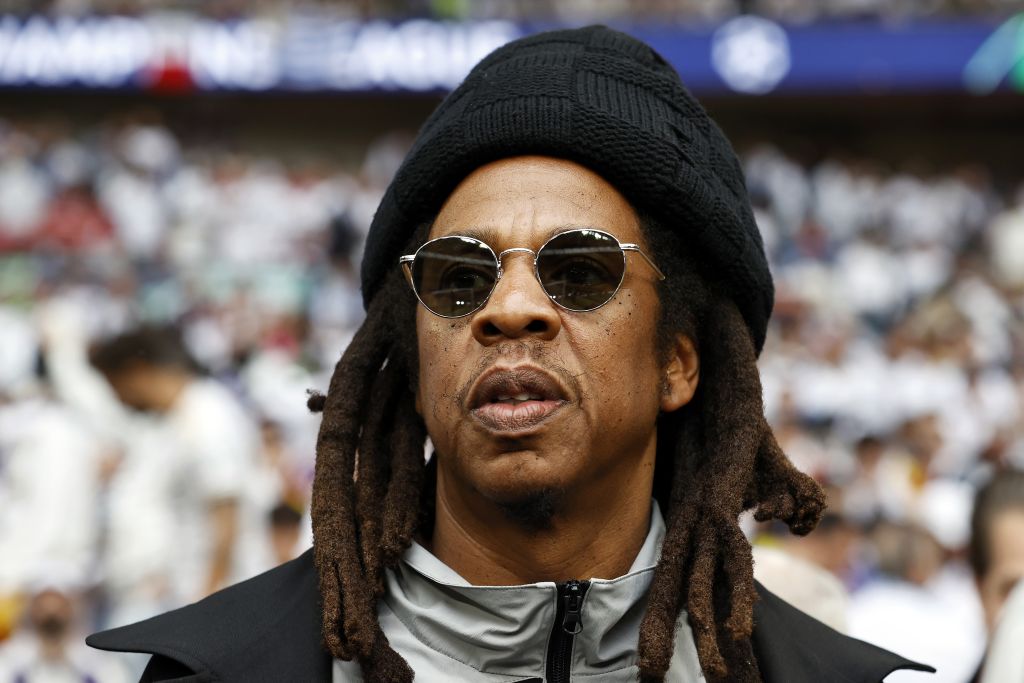
Rymir Satterthwaite began a quest over a decade ago, claiming that Jay-Z impregnated his mother in the late 1990s, leading to his birth. Jay-Z has fought the case at every turn, and now, a California judge has dismissed the paternity lawsuit from Rymir Satterthwaite.
In a report from Page Six, it was revealed that Rymir Satterthwaite, 30, will not have his paternity case go any further after a judge in California dismissed the matter with prejudice on Wednesday (November 4). From this point forward, Satterthwaite can no longer file a paternity suit against Shawn Carter, professionally known as Jay-Z.
The outlet adds that Wanda Satterthwaite, the mother of Rymir, filed a civil lawsuit against Carter that did not materialize into any legal ramifications before her passing. Ms. Satterthwaite died in 2016, but her son vowed to keep the pressure up.
Rymir Satterthwaite is also a rapper, according to past report,s but it isn’t known how far his music has traveled.
There have not been any statements made by Jay-Z’s legal team.
—
Photo: Getty
Trending on Billboard
AXS is ramping up its European ambitions with two senior executive hires designed to accelerate the ticketing company’s growth across the region. The company has appointed Peter Quinlan as managing director of Europe, and Hannah Rouch as vp of marketing in Europe — both newly created roles that will operate out of London and report to AXS’s international division.
Quinlan will oversee all European operations and lead the company’s regional strategy, reporting to Blaine Legere, president of AXS International. Rouch will report to Quinlan and spearhead marketing efforts across the continent, with a mandate to expand brand awareness and drive audience growth for the ticketing platform.
Related
“Europe remains a critical growth engine for AXS, and these appointments mark an important step forward in our continued evolution,” Legere said in a statement. “Peter’s global experience and operational acumen, combined with Hannah’s deep marketing expertise and track record of execution, will be instrumental as we continue to scale and deliver across the region.”
Quinlan joins AXS after 18 years at Live Nation Entertainment, where he held leadership roles across marketing, sponsorship, and ticketing. He most recently served in a global executive capacity at Ticketmaster, overseeing commercial partnerships, payments, fraud operations and other revenue initiatives. His new role puts him at the center of AXS’s European expansion strategy at a time when the company continues to compete with Live Nation’s Ticketmaster, CTS Eventim and other players across the territory.
“There’s tremendous opportunity for growth — especially in Europe, where promoters, venues and artists are looking for innovative, transparent partners with technology that can scale and deliver,” Quinlan said. “I’m excited to help lead that charge.”
Rouch joins AXS from Gumtree/eBay, where she led a brand repositioning for the marketplace and previously held marketing leadership roles at Motors.co.uk and Bauer Media. Her remit will include strengthening the AXS brand across all European markets and building a marketing infrastructure to support both promoter clients and consumer initiatives.
“I’m thrilled and energized to take on this role at a time of significant growth for AXS across Europe,” Rouch said. “Our focus will be on strengthening our brand and reach across Europe and building out marketing as a growth engine for the business – accelerating our ability to deliver for our clients and enhancing our efforts to ‘hold the hand of the fan’ from show discovery to live event.”
The hires come as AXS continues to grow its international footprint, with partnerships spanning festivals, arenas, sports franchises, and touring artists. The expansion also reflects the company’s broader strategy to scale its global technology platform and deepen its presence outside the U.S.
“These new appointments reflect AXS’s ongoing commitment to scale, unify, and empower our international teams,” Legere added. “With this expanded leadership structure, we’re better positioned than ever to deliver world-class support for our clients and partners.”
Trending on Billboard
5 Seconds of Summer pulls up to Barney’s Beanery in L.A. to talk about the group’s new album, Everyone’s a Star!, over drinks, food and a game of pool. The members share why they made a complete 180 with the new album, what their recording sessions looked like, how they’re tackling the stigma of being a boy band, their Billboard chart history, who they would include in a super boy band, their touring experiences and more!
5 Seconds of Summer: Like the apple baby. That’s going to be a tight squeeze.
Tetris Kelly: 5 Seconds of Summer, what!
5 Seconds of Summer: Tetris looks very confused. I like this. Sup, Billboard.
Ashton: Nice. Welcome to Barney’s Beanery.
Yo, fellas, this is sick.
Ashton: We’re here, man.
Yeah, come on in, guys, let’s get some food. I mean, not every day you get to kick it at Barney’s Beanery with 5SOS. Wait, do y’all hate when people do that? 5SOS? Do you care?
Michael: That’s what it’s meant to be.
I’m just saying.
Michael: 5 SOS is wrong.
Does anybody ever walk up to you and say, “Hey, 5 SOS.”
Calum: Instantly shunned.
They’re not allowed at the table.
Michael: They wouldn’t be invited to lunch at Barney’s Beanery.
Luke: No, 100%.
And like, what’s the story behind Barney’s Beanery? Like, you guys come here often? Like, why did we pick here to hang out today?
Ashton: Oh, because Outback Steakhouse said no. I thought you guys already knew that.
Luke: Which is some bulls–t, honestly because you know what? Outback Steakhouse started by a Floridian guy.
Calum: Yes, he’s not even Australian.
Luke: And we go, “Oh, we’re the biggest band from Australia.”
Ashton: And he has the hide to say, “No thanks.”
Luke: He says, “No.” You dropped- I don’t know which camera to go to. I’m gonna go to all of them. Applebees saying no? Fumbled the bag. Chili’s saying no like that’s fair, but Outback, like, come on. I thought, I thought we were cool.
Ashton: At the end of the day, we have to thank the Beanery. Thank you for having us. It’s our sweet sanctuary. You were our fourth choice.
Keep watching for more!
Trending on Billboard
Drake is appealing after a judge dismissed his defamation lawsuit against Universal Music Group (UMG) over Kendrick Lamar’s diss track “Not Like Us” — and some legal experts think it could be a closer case than one might expect.
Related
The appeal, filed last week, will seek to revive Drake’s case, which claimed that UMG defamed him by releasing lyrics that called him a “certified pedophile.” A judge tossed the case out last month, ruling that listeners would think Lamar was just lobbing hyperbolic opinions, not hard facts.
For many casual observers, the reaction to Drake’s decision to appeal was some version of the law of holes: If find yourself in one, stop digging. After taking a reputational hit from filing a lawsuit during a rap beef, and then quickly losing that case in court, why drag it out any further?
Because, some legal experts say, a court of appeal might be more open to siding with Drake than the court of public opinion. “I think there’s actually a good argument that ‘pedophile’ wasn’t meant metaphorically here,” says Benjamin C. Zipursky, a professor at Fordham Law School and an expert in defamation law.
Much of Judge Jeannette A. Vargas‘ ruling against Drake turned on context — that Kendrick’s lyrics came amid a “war of words” in which fans had seen repeated “inflammatory insults” from each side. In that setting, and within the art form of battle rap more generally, the judge said listeners would likely view the pedophile line as just one more “hyperbolic vituperation” rather than the kind of “sober facts” that could be proven true or false.
On appeal, Drake’s lawyers are likely to argue that Vargas got lost in that context-heavy approach and missed the actual reality of the case: That even if it came during a diss track, Kendrick accused Drake of a very specific type of wrongdoing. And some experts say that might gain traction at an appeals court.
“Is that a verifiable statement? Of course it is,” Zipursky says. “As opposed to calling somebody a ‘fascist’ or a ‘sh-thead’ or claiming they don’t love their family, the statement that ‘X is a pedophile’ falls more on the verifiable, falsifiable side. And that’s clearly what Drake’s lawyers are going to push.”
Zipursky stresses that Vargas had done an “artful” job crafting her ruling, taking into account layers of legal precedent and serious concerns about a chilling effect on free expression from letting a rich celebrity sue over art. But when dealing with the almost metaphysical complexity of speech law, he says an appeals court might still see things differently.
Related
“If I were Drake’s lawyers, I would absolutely try to pull apart some of these context issues,” Zipursky says. “I’d ask why it’s fine for rap musicians to tell lies about each other’s criminality when there’s nothing in New York law that says that.”
Another way for Drake’s lawyers to frame those issues could be to argue the case was simply tossed too soon. Judge Vargas dismissed the case on a so-called motion to dismiss — meaning at the earliest possible stage of a case. Under that rule, she said that even if Drake proved all his lawsuit’s defamation allegations were factually true, he still couldn’t win the case because the law itself was against him.
For Marina V. Bogorad, a veteran entertainment litigator at Munck Wilson Mandala LLP, that ruling smacks of blanket immunity for any statement made in the context of a diss track, even an accusation of heinous conduct that would obviously be defamatory if false.
“The statement on its face accuses Drake of a serious crime,” Bogorad says. “To find that you can lace rap songs with facially libelous statements with impunity as a matter of law is quite a holding.”
Of course, none of this means Drake’s appeal is a slam dunk. Other legal experts had predicted to Billboard that the case would be dismissed for exactly the reasons later cited by Judge Vargas. And scholars versed in hip hop also came out against the case, arguing that Drake’s effort to treat rap lyrics literally was both legally faulty and potentially dangerous.
Related
But reasonable legal minds can differ on something as complicated and nuanced as free speech and defamation — and Bogorad says the appeals courts might think Judge Vargas should have waited and allowed more discovery into the facts of the case, including into the falsity of the claim or how actual listeners understood Kendrick’s lyrics.
“Whether or not someone is a ‘certified pedophile’ is certainly a fact capable of being disproved,” Bogorad says. “It remains a question for the [appeals court] whether rappers have an instant immunity from these kinds of inquiries.”
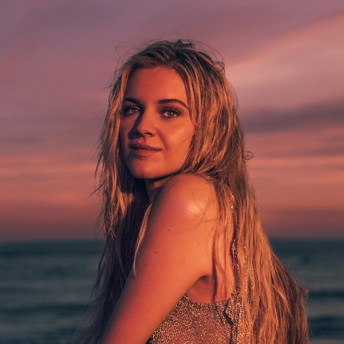
Trending on Billboard Kelsea Ballerini is set to release her latest project, the six-song EP Mount Pleasant, on Nov. 14. Ballerini will preview the set via the release of her new song, “I Sit In Parks,” on Friday (Nov. 7). In the process, the singer-songwriter is ushering in her new creative era. Explore See latest […]
Trending on Billboard
Over the last 12 years, Greg Harris has quietly, methodically steered the Rock & Roll Hall of Fame to massive financial growth despite a swamp of issues — from its lack of female inductees to Rolling Stone founder Jann S. Wenner’s abrupt 2020 departure as foundation chairman to Dolly Parton’s (temporary) refusal to accept her nomination. According to ProPublica, the Cleveland-based hall and museum’s revenue increased from $19.2 million in Harris’ first year as president and CEO in 2012 to $54.8 million in 2023, while its annual visitors recently hit 1.5 million. “We worked to grow the business so that we’d be more stable,” says Harris. “And we have an incredible group of donors.”
Talking to Billboard by phone from the museum’s I.M. Pei-designed pyramid — before he visited the construction site of its $135 million, 50,000-square-foot expansion — Harris previewed the 2025 Rock & Roll Hall of Fame ceremony to induct Outkast, Cyndi Lauper, Joe Cocker, The White Stripes and others. (The show, this Saturday Nov. 8, will be livestreamed on Disney+.) He also discussed the Hall of Fame’s six new board members, plus Chris Kelly, a partner at Cleveland law firm Jones Day, who became board chair in July. A former Philadelphia record-store owner, folklorist and top National Baseball Hall of Fame exec, Harris spoke of the common “emotional impact” of sports, music and folklore during the conversation, which you can read in full below.
Related
What accounts for the revenue growth since you’ve been president?
Harris: We’ve greatly increased our visitation in those years. We made the museum more experiential. Odds are, in the summer, there’s a live band onstage. You can play guitars and drums and things in new spaces that we’ve built and jam with other visitors. We’ve made a lot of investments in improving the visitor experience, and they’ve paid off.
What’s the greatest percentage of revenue? Is it the paid visitors, or something else?
Visitors, ticket sales and retail sales are incredibly important, and we have a lot of events and groups that do events. Our fundraising is what’s enabled us to do this massive expansion project.
It strikes me that the iconic names from the ’50s and ’60s have mostly been inducted, so the Hall of Fame has to update it with new generations. Is that difficult? Fun? Both?
It’s a healthy project to continue to look at different eras. And maybe going against your hypothesis is that Chubby Checker and Joe Cocker are going in, and you could extend that up to the ’70s and ’80s and ’90s with Warren Zevon.
Related
Do you get as many, “That’s not rock ‘n’ roll, that’s Dolly Parton, or [fill in the blank],” as much as you used to?
I believe that’s died down. This big tent of rock ‘n’ roll, that all these different genres and sounds and eras fit into it, has become much more widely accepted. It’s fun to tell these stories about how it all fits together rather than defend a decision here or there. It’s all rock ‘n’ roll. It all fits.
Everybody has a hot take on who should be in and who shouldn’t. What’s yours?
When I came over here, you would think about a certain artist, and most of them have gotten in. Back then, I thought Tom Waits should be in, of course — now he’s in. Stevie Ray [Vaughan] — now he’s in. Hall and Oates — now they’re in. That’s the debate we get to have all year long. At this moment, let’s celebrate this year’s inductees.
The new trustees have business backgrounds, not music backgrounds. Why is that the right criteria to lead the Hall of Fame?
What we look for is good trustees that will help advise us, help us think bigger and help us grow. Because the museum has such an economic impact in northeast Ohio, we do have quite a few of them from northeast Ohio, and they’re here to make sure this entity is terrific for this region while still being terrific for the world.
Related
Chris Kelly, the new board chair, was head of the Republican National Convention host committee in 2016. Did that come up in the process of choosing him for the Hall of Fame, since so many people involved in the organization are politically progressive?
The host committee is what every city has when they try to attract a political convention. That convention was in Cleveland in 2016, but the reason why cities want them is because they’re a massive economic boon to the local economy. It’s not a political statement. It’s about attracting these things, like attracting the Olympics to your town.
Early in your career, you went from founding the Philadelphia Record Exchange to studying folklore in Cooperstown, N.Y., which led you to the Baseball Hall of Fame, then here. What was that transition like?
When I discovered there were these people called folklorists who do oral history, they make documentary films, they produce records, I thought, “What a career, that’s me.” After the Record Exchange, I road-managed some bands. I went back to college and thought I’d go to law school and worked for a law firm, and it just wasn’t for me. That’s when I went heavy on the folklore and museum studies. The great thing is, it’s a history of everyday people, and in many ways that’s what rock ‘n’ roll is all about.
Anything I’ve missed?
One thing is to make sure fans tune in. Go online and watch the streams of the induction. Visit us in Cleveland. We’re open 363 days a year. We have an exhibit right now on Saturday Night Live, 50 years of music that contains every performance. You can watch all of them.
[Harris calls back 30 seconds after the interview.]
What I should’ve ended with was, I love all museums, but this is the greatest museum in the world, and the one place where every visitor has a memory tied to the songs. People come through, they hear a certain song or they remember something they heard in college, the greatest road trip of their life … all that is tied to the music we get to honor every single day at the museum.
State Champ Radio