
Author: djfrosty
Page: 1105
We’re breaking down some of the biggest things to expect at the 2025 Grammys. From the biggest nominations to some of the performers, we’re giving you a preview of music’s biggest night. Who do you think will take home a Grammy? Let us know in the comments! Tune in to Billboard’s Grammy Pre-Show on February […]
On Sunday (Jan. 26), news broke that Universal Music Group and Spotify had struck a direct deal affecting both the company’s recorded music and publishing royalty payments. The recorded music side of the deal marked an important step forward in UMG’s so-called “Streaming 2.0” plan, but the publishing side of it is even more noteworthy.
This agreement represented the first direct deal between a music publisher and Spotify since the passage of the Music Modernization Act in 2019, and it effectively overrides the government-regulated statutory rate for mechanical royalties in the U.S. with a private deal between the two companies. While the jointly issued press release about it was vague on details, sources close to the deal say it offers better pay to UMPG and its songwriters than before, and it signals that Spotify might be ready to bury the hatchet with U.S. publishers overall. But it’s not over yet.
Trending on Billboard
First, the context: In March 2024, Spotify added audiobooks to its platform and reclassified its premium, duo and family subscription tiers as “bundles” in the U.S., a classification streamers can use to pay discounted mechanical royalty rates for musical works. This means that Spotify started splitting the money it once only paid to U.S. music rights holders to pay for both music and books, leading to a sudden and dramatic drop in mechanical streaming royalties. (At the time, Billboard estimated a decrease of $150 million in U.S. mechanical royalties for songwriters and publishers over the first 12 months of the new classification, compared to what they would have made had the tiers never been reclassified.)
This led to a nearly year-long war between the publishers and Spotify, led vigorously by the National Music Publishers’ Association (NMPA), which launched a multi-pronged retaliation against Spotify. In the months that followed, the NMPA sent Spotify cease and desist notices for podcast and video content on its platform that were allegedly infringing on music IP; submitted a legislative proposal, asking for the overhaul of the statutory license; sent complaints to the FTC and nine state attorneys general; and more. The Mechanical Licensing Collective jumped in too, suing Spotify in May for allegedly “unlawfully” changing its subscriptions to bundles.
Then, in a surprisingly-timed announcement, the MLC’s lawsuit against Spotify was dismissed this morning (Jan. 29) with a federal judge saying that Spotify’s move to bundling was supported by “unambiguous” regulations. This timing was good for Spotify. Had the ruling come down before the direct deal with UMPG, the outcry from publishers about it would have been far worse (not to say there won’t still be some outcry). The judge is not giving the MLC a chance to refile the case, saying the law is clear and that amending the accusations would be futile, although the MLC can challenge the ruling at the federal appeals court.
But since this ruling came after the UMPG news became public, publishers now have hope for another way out of the Spotify bundle: direct deals. Although sources close to the situation say they are not aware of any other negotiations going on between Spotify and other publishers to date, the other major publishers now have precedence to argue for similar deals with Spotify. The bigger question is what happens to the small indie players. Will they be subjected to the original bundle rate while the majors get better terms? Does this further the monetary divide between indie and major publishers? UMG is the world’s largest music company and the world’s second largest publisher, after all. Not everyone has that kind of leverage.
The NMPA told Billboard at the time of the UMG-Spotify deal that it was not making any changes to the moves it had already set in motion against Spotify — and neither was the MLC. (Of course, this all came before the MLC’s lawsuit was dismissed.) The NMPA struck a somewhat hopeful tone in a statement about the UMG-Spotify deal, saying it was “good news for the entire industry” and that “a rising tide lifts all boats, and this signals that Spotify is coming back to the table.”
The question remains, however, why Spotify came back to the table with UMG for a new publishing deal in the first place. Spotify had found a way to pay less for songs. Why did Spotify make this concession?
There are a few possible answers to that. For starters, the NMPA had essentially promised that, until Spotify relented on bundling, it would make any future moves the streamer wanted to make difficult. The NMPA’s cease and desist letter cited a Wall Street Journal report that Spotify eventually wanted to offer a “remix” feature to speed up, mash up and otherwise edit sound recordings; the NMPA warned that if Spotify released “any such feature … without the proper licenses in place from our members” it “may constitute additional direct infringement.” Given the NMPA’s overall tone throughout this letter, it seems clear that this was a warning to Spotify that it needed publishers’ cooperation for remix features.
Spotify has also teased other features that would require the platform to get new, voluntary licensing approval from the publishers. In October, Spotify began hosting music videos in 97 countries — but, notably, not in the United States. In November, Spotify CEO Daniel Ek teased the idea of a higher cost ultra-premium tier, including more offerings for top fans such as high fidelity listening and, vaguely, “a bunch of other things.” A few weeks ago, Spotify partnered with The Weeknd to stream his Billions Club Live show exclusively on the platform. By developing a solution with UMPG, and maybe other publishers in the future, Spotify is signaling that it is ready to make nice so that it can push forward with its plans for new products.
It also must be noted that all of these publishing companies, as well as Spotify, are global.
While the bundling situation is specific to the United States, UMPG and other publishers are negotiating with Spotify for licensing deals in multiple markets worldwide where publishers have room to negotiate. With UMG’s direct deal, UMPG and Spotify can move forward with their plans to grow their income and presence in emerging markets — something both Spotify and UMG shareholders are keen on — without wasting time and resources threatening each other in every new licensing conversation.
It turns out that playing nice is helpful for both parties — and the market is rewarding that. Since the announcement of their new direct deal, the share price of both companies saw a positive bump. Even Warner Music Group saw upward movement, since some analysts believe the UMG deal opens the door for other major music companies to do the same.
Though it constitutes a step in the right direction, only time will tell how, and if, other direct deals between Spotify and publishers develop, and if this might grow the chasm between majors and indies.
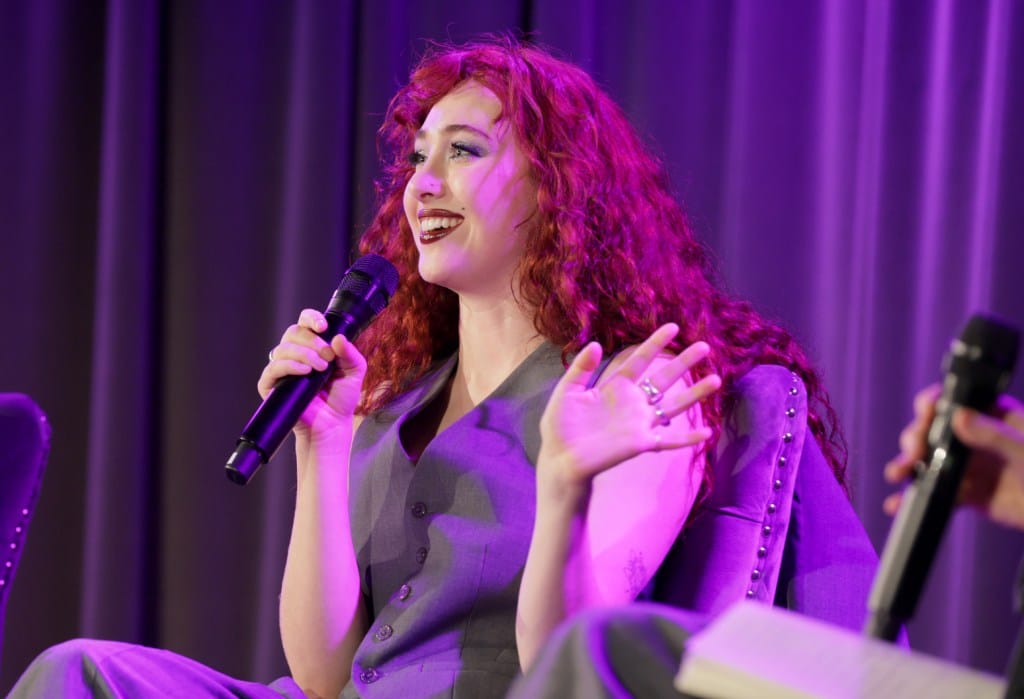
As fans and artists alike gear up for this Sunday’s Grammys, Chappell Roan is taking a beat to share some gratitude for her fans. In a post to her Instagram on Wednesday (Jan. 29), Roan shared a series of selfies while writing a lengthy note of appreciation to her fans. “Good morning booboos. It’s Grammy […]
AEG has unveiled the company’s plans for realigning its international business divisions, promoting Adam Wilkes to the newly created position of president/CEO of AEG Presents, Europe and Asia-Pacific and elevating Alex Hill to lead AEG’s global real estate and venue operations outside the U.S. in the new position of president/CEO of AEG International. In his new […]
When Dylan Schneider released his first full-length album Sept. 27, he titled it Puzzled, recognizing after at least five previous EPs that the pieces of his musical persona were fitting together better than ever before.
Explore
Explore
See latest videos, charts and news
“This whole process of creating the album was figuring out, you know, who I am now as an artist, what I want to say, where I want to go with my music,” he says. “And I think that this collection is the best representation and the best songwriting I’ve done.”
A new single from the project, “Better Than You Left Me,” behaves much like a sonic puzzle — it employs a hook with the kind of verbal twist that’s associated with country songwriting, and it opens with a jigsaw instrumental riff, a simple acoustic guitar arpeggio that interlocks with a three-note “drunk steel thing,” as producer Zach Abend characterizes it. That intro establishes a mildly mysterious tone for a piece about a familiar conundrum.
Trending on Billboard
“It’s a classic sentiment,” Schneider notes. “Someone’s moving on, they’re finally doing good, they’re happier, they found somebody new, and the second that word gets out about that, you know, the person that did them wrong wants to come back around and try to mess it up or sneak back in. I feel like that happens all the time.”
“Better Than You Left Me” arose Oct. 10, 2022, on the first day of a multi-day writing retreat at Nashville’s SMACK offices, where a handful of songwriters crafted material for Schneider. As Schneider drifted periodically between dueling writing rooms, Michael Tyler (“Somewhere on a Beach,” “Mind on You”) and unrelated Brett Tyler (“Cold Beer Calling My Name,” “Wild as Her”) settled into the office of Lalo Guzman (“Cowboy Songs”), and after a long period of catching up, one of the Tylers – which one remains an enigma – offered up the “Better Than You Left Me” word game. It finds the singer in conversation with an ex, affirming that he’s feeling better than when they broke up, but also noting that he’s become a better man since meeting the new girlfriend.
Schneider remembers Michael throwing out the title, though neither of the Tylers is certain who introduced it. Even if the title was Michael’s, Brett had a similar one in his notes, helping to crystallize the song’s direction.
“The idea that I had was sort of that ‘Leave the world better than you found it’ sort of thing,” Brett recalls. “It kind of stems from that quote, and I was thinking it’d be interesting if you were in a relationship and it was bad, [but] the next person is going to get me better than you left me.”
To get the music going, Guzman called up a program that allows a keyboard to approximate acoustic guitars. That might make traditionalists scoff, but it has a practical application in a group setting. “Instead of me being like, ‘Everyone be quiet, I’m gonna mic this up,’ it’s just an easier way to keep the vibe going in the room,” Guzman says.
And since the programmed version requires pressing keys instead of plucking strings, it also changes some of the creative possibilities. “When I’m playing the acoustic on a keyboard, I’m playing completely different methods,” Guzman says, “and I’m playing completely different inversions of chords that spark a completely different way of feeling and thinking.”
He used that set-up to create the acoustic guitar riff for the intro, and it shifted the group out of its chatty disposition and into more focused progress on the assignment. “After Lalo brought that track up,” Michael says, “it kind of jump-started the whole song.”
The arpeggiation inspired a fairly linear verse melody, and they explored the protagonist’s situation, introducing a breakup-induced period of bar-hopping, when he felt like an “empty glass.” After repeating the linear melody twice, they introduced a pre-chorus with an “I saw the light” positivity that created an anticipation for the chorus.
Even in that early stage, they knew that segment was strong enough they should repeat it again later. “If it’s good enough for the pre-chorus, then it should be good enough for the bridge,” Michael suggests.
That “pre” shifted straight into a hooky chorus that varies between elongated phrasing and lighter, bouncy passages that work in tandem even as they contrast. “I always like crafting melodies where you give something really staccato, almost, and right on the beat, and then throw in a curve ball that makes it pop out a little bit more,” Brett says. “It’s a push-and-pull thing.”
In the second verse, the ex reappears in what could be interpreted as a booty call, or – now that he’s found someone new – a play to take the guy back. Regardless of the motive, the singer pushes back, confirming in the process that he really is in a “Better” place. “You want to find somebody that not only will make you feel better, but will make you a better person, will make you work on yourself,” Schneider notes.
Michael sang lead on the demo, and Guzman finished the bulk of it during the session’s final moments, blanketing the faux arpeggiated-guitar intro with a simple, three-note atmospheric part. “That was something I created with a little pitch-bend on the keyboard,” he says. “I have a couple sounds that I do that with to create a vibe, that you really can’t do without doing it that way.”
When Schneider went to record Puzzled, he included “Better Than You Left Me” in a large batch of potential songs he presented to Abend, who was convinced that it should be part of the project. There was little pre-production conversation about “Better” – Schneider trusted Abend would know what to do with it. For his part, Abend thought he should stick close to Guzman’s roadmap.
“It had that trappy beat, and that sig lick was in there,” Abend says. “It was so like a Lalo kind of demo, kind of more on the urban side.” They recorded “Better” at Sound Stage on Nashville’s Music Row, mixing real musicians with some programmed pieces. The snare sound, for example, was the thin, ticky-ticky style originally popularized in hip-hop recordings, instead of Nir Z’s thicker snare pops. It was tucked in with Tim Galloway’s banjo, the two instruments combining to define the percussive support.
“A real snare would have gotten too busy,” Abend notes.
“There’s no gaps in the lyrics,” he added. “I wanted to put fills everywhere, but it would distract, I think.”
However, guitarist Justin Ostrander took a solo in the middle of the song, deftly rippling his way through a scene-changing side journey. Schneider recorded his final vocal at Sound Emporium, deviating in a few spots from Michael’s original phrasing to make the performance a little more personal. “He sounds really effortless,” Brett says, “and also really believable.”
Wheelhouse originally planned to release “Carhartt,” the opening track on Puzzled, as a single, but “Better” – even though it was the 14th cut on the project – generated nearly the same number of streams. The label took notice and switched its plan, issuing “Better Than You Left Me” to country radio via PlayMPE on Jan. 7, with Jan. 27 pinpointed as the official add date. It’s catchy; it’s also relaxed enough to assist Schneider’s promotion efforts.
“It’s not like a straining thing,” he says. “You can just be easy and run around stage, have fun, and focus a little more on your performance and getting the crowd excited. Which, I think that’s what this song does anyway.”
Madonna tested out some new material at the Comedy Cellar in New York City this week, surprising the crowd with a stand-up set while in attendance with friend Amy Schumer. One blurry photo from the evening shows the superstar standing up on the famed venue’s tiny stage while reading jokes from a notebook on a […]
Don’t ever play yourself, DJ Khaled stays winning. According to the RIAA, the We the Best mogul racked up another 17 new certifications on Wednesday (Jan. 29) to go along with his new diamond plaque for “I’m the One.” Outside of “I’m the One,” other standout certifications include Rihanna and Bryson Tiller’s “Wild Thoughts” at […]
Kenshi Yonezu blasts in at No. 1 on the Billboard Japan Hot 100 with his latest hit song “Plazma,” on the chart dated Jan. 29.
The track was written as the theme song for the latest installment of the Mobile Suit Gundam franchise called GQuuuuuuX -Beginning-, released in domestic theaters Jan. 17. After being released digitally on Jan. 20, the track racked up 9,235,562 streams to hit No. 3 for the metric, while coming in at No. 1 for downloads with 40,408 units and No. 4 for radio airplay. This is the eighth chart-topper — and 16th week at No. 1 — for the 33-year-old hitmaker, whose singles “Lemon,” “Flamingo,” “Spirits of the Sea,” “Uma to Shika,” “Pale Blue,” “M87,” and “KICK BACK” have previously hit No. 1.
Coming in a close second on the Japan Hot 100 is Mrs. GREEN APPLE’s “Darling.” The theme song for NHK’s television special featuring the group collaborating with teenagers called Mrs. GREEN APPLE 18 Matsuri hit No. 2 for streaming (12,054,584 streams) and downloads (19,835 units), ruled video views, and came in at No. 18 for radio.
Explore
See latest videos, charts and news
The three-man band’s former No. 1 track “Lilac” slips two notches to No. 3 this week. While toppling from the top spot on the Japan Hot 100, the song continues to dominate the streaming metric for the 22nd week. Mrs. GREEN APPLE’s “Soranji” is also charting in the top 10, climbing a rung to No. 7. With 6,431,698 weekly views, this track continues to hold in the top 10 for streams and is on the verge of reaching 500 million cumulative streams. Mrs. GREEN APPLE has 5 songs in the top 10 and 20 songs in the top 100 this week, with “Darling ~18 Matsuri Ver.~” bowing at No. 44.
Trending on Billboard
ONE OK ROCK’s “Puppets Can’t Control You” debuts at No. 10. The theme song for the TV drama Mikami Sensei ruled radio, while hitting No. 3 for downloads and No. 64 for streaming. Meanwhile, Chanmina’s songs continue to rise, with “Harenchi” climbing 51-47, “Never Grow Up” 79-75, “NG” debuting at No. 80, “^_^” at No. 92, and ‘B-kyu’ rising to No. 95.
The Billboard Japan Hot 100 combines physical and digital sales, audio streams, radio airplay, video views and karaoke data.
See the full Billboard Japan Hot 100 chart, tallying the week from Jan. 20 to 26, here. For more on Japanese music and charts, visit Billboard Japan’s English X account.
hololive VTuber and virtual idol Hoshimachi Suisei has announced her first new album in two years, SHINSEI MOKUROKU.
Ever since her debut, her slogan has been “A shooting star that appeared from diamonds in the rough,” and that slogan was embodied by her first album, a refreshing work with a true idol feel. She followed this up with a very different album that took her music to the next level, expressing the struggles and tumult she faced in her musical career. Now, she is releasing an ambitious third album with the theme of “revolution.” In an interview with Billboard JAPAN, Hoshimachi said, “Virtual artists have been seen as oddities. People don’t look at me as a person, but I sing my own songs and I dance my own dances. Gaining recognition for that is, to me, a revolution.”
Her appearance on a massive billboard in New York’s Times Square is a sign of the steady progress she is making in that revolution. The Spotify advertisement is unusual, as the company has done few collaborations with Japanese artists, and it is their first time collaborating with a Japanese indie artist. When Hoshimachi first heard about the project, she thought they were talking about an advertisement on Shibuya Scramble Square.
Explore
Explore
See latest videos, charts and news
Hoshimachi says she ultimately decided on the concept for the new album around the time she released the lead single “BIBBIDIBA” in March 2024. The theme of the song, written by Vocaloid producer Tsumiki, is a strong-willed woman—a Cinderella who isn’t content to sit back and wait for her prince to come but who goes out to seize her destiny herself. It became the first-ever VTuber song on the Billboard JAPAN charts to reach 100 million streaming plays. That same concept was also part of “AWAKE,” a Hoshimachi song written by the team of Giga and TeddyLoid, whose other credits include Ado’s “Odo.” “Modern women are drawn to and want to become strong women. I’m particularly fond of the lyrics ‘Clichéd storyteller, don’t pass the mic.’ I don’t like falling into clichés, either. I want to explore my own way of doing things. I’m singing about how people can’t leave the direction of their own lives to others who just live cookie-cutter lives.”
Trending on Billboard
The music on the album was written by a wide range of artists at the vanguard of J-pop and rock, such as Soichiro Yamauchi (Fujifabric), Enon Kawatani (indigo la End, Gesu no Kiwami Otome, etc.), Deu (PEOPLE 1), Natori, and Haruno. Hoshimachi discussed how she chose these artists. “A lot of the artists on my second album were creators active in the online scene. That’s because I’ve also always been heavily online, and those were the artists I was listening to. With this third album, I decided to take a step outside the bounds of the online scene.”
The music videos for the album’s songs are also unique. The videos for “BIBBIDIBA” and “AWAKE” combine anime and live action. Hoshimachi explains, “I really want to break into the real world. I thought about how I, as a virtual figure, could get closer to 3D people, so I went with this approach of fusing our worlds.” The entire video for “Venus Bug” is live action, a rarity for a VTuber.
“Kireigoto,” for which Hoshimachi wrote both the lyrics and music herself, is of particular note. This marks her first time writing her own lyrics and music. “I wanted to do that on my second album, but I ran out of time. Or, I guess I should say, I had a hard time getting myself going. When I was talking to someone on the staff, I mentioned that for sure I wanted to do it on my third album, and they started making concrete deadlines and plans, like ‘okay, have this done by that time’ or ‘let’s have these folks work on the music video.’ That’s when I knew I simply had to make the song, and I set my mind to it. I ended up going way over the deadline, though.”
The lyrics to “Kireigoto” include the line “I sing because I hate spewing platitudes.” It expresses a dilemma that Hoshimachi herself often confronts. “I’ve been online for a long, long time, and a lot of the people in the online communities I’m in live in big cities. That meant it was easy for them to meet up, but since I lived far from anywhere, I could never attend. Then, years later, after I finally made it to the city, I’d reach out to my friends from back then and they’d say ‘I can’t, I’m not young anymore, it’s just too tiring.’ These were people who were already adults back when I was a kid. It made me really sad to see that people changed like this as they got older.” Looking back on this experience, she spoke about how she always wanted to remain lively and young at heart, giving up as little as possible. “But I know that’s just painting a rosy picture. I hate platitudes, and I hate when I’m the one saying platitudes, so I just sing. That’s what the song is about.”
On February 1, she will put on a solo show at the Nippon Budokan. Back before she joined hololive, when she was on her own as an artist, she talked in her very first self-introduction video about her dream: playing at the Nippon Budokan. Reflecting frankly about her feelings at the time, she shared, “I was a little worried that if my dreams came true I’d lose my drive. I also worried that perhaps my listeners would be left with the feeling that they’d watched my story through to its very end and they’d drift away. But now, I’ve actually got my sights set on a lot of things after I play at the Budokan. I’m going to be really busy (laughs). My schedule is packed, so I don’t think there’s ever going to be an end. And I now trust my listeners to stick with me.”
The Nippon Budokan is known as one of Japan’s most prestigious concert venues, but the way Hoshimachi talks about it, it is just one point in her journey. She shared her vision for what lies beyond. “I’ve talked about this for a long time, but I want to create a world in which virtual beings are part of everyday life. I like science fiction set in the near future, like Coil – A Circle of Children. I hope we can see that kind of future in our own lives. That’s why I want to help bring in a new era.”
“There are a lot of people who speak negatively about virtual beings. Whenever I see that, I think ‘they’ve got low resolutions.’ People will say things like ‘all they do is push a button to dance or sing,’ and I just think ‘that’s not true.’ But if people are going to be that way, then, fine, I don’t care, I’ll just become even more active. I’ll force my presence down their throats, like ‘Here, eat up, this is the virtual world.’ If I do that, their resolution might just improve. That’s why I hope to create even more opportunities for people to be exposed to me.”
—This article by Takuto Ueda first appeared on Billboard Japan
HipHopWired Featured Video
Source: Getty / General
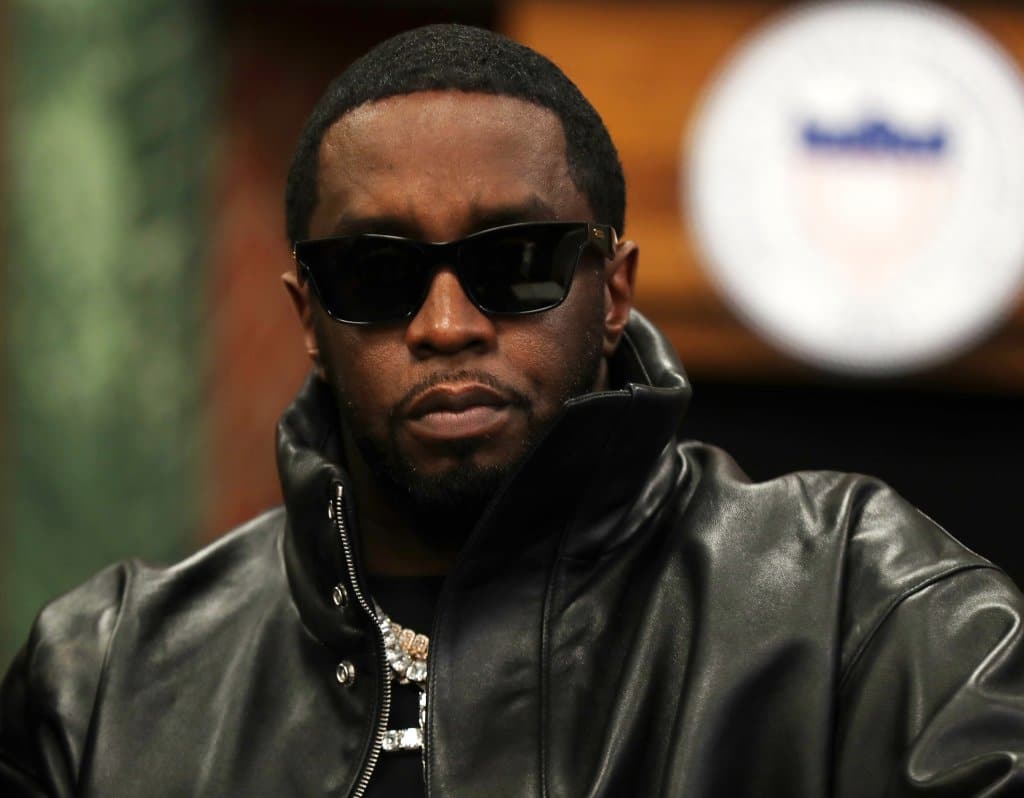
More evidence about Diddy’s wild ways are being uncovered. The disgraced mogul’s former assistant has shared voice notes of the Bad Boy Records founder requesting drugs, allegedly.
As spotted on Newsweek, the newest episode of The Fall of Diddy has been released and it further examines his infamous “freak off” parties. In the fifth installment his former employee Phillip Pines speaks publicly for the first time ever and details his role in how he would help coordinate the raunchy meet-ups. During the segment he made sure to clarify all the misconceptions behind these invite only events.
“I think there’s a difference in the disparity between what people think they were, meaning that there were hundreds of people engaging in these activities. That wasn’t my experience” he explained. Pines went went on to detail his role saying it was his job to stock the “Wild King Nights,” which only included “a very intimate group of people.” Some of the requested items included lighting, booze, marijuana, ketamine, molly and mushrooms.
“Those requests started to become more frequent. It started to occur on a daily basis” he added. Pines also was tasked to ensure these rooms were cleaned up afterwards and even erasing video footage of the sex acts from Diddy’s devices. The former personal assistant also played voice notes from the rapper requesting “Cialis,” “20 Xanax,” a Plan B pill,” “10 Adderall” and “mushroom capsules.”
The Fall of Diddy is available on Investigation Discovery and can be streamed on platforms such as DirectTV, Hulu + Live TV, Philo and Sling.
State Champ Radio