State Champ Radio

by DJ Frosty

Current track

Title

Artist

Current show

State Champ Radio Mix

12:00 am 12:00 pm

Current show

State Champ Radio Mix

12:00 am 12:00 pm


Author: djfrosty

Page: 1073

Miley Cyrus won her third career Grammy at the awards ceremony on Sunday night (Feb. 2), and the superstar took to Instagram to celebrate. “Last night at the @recordingacademy,” she wrote alongside a series of photos wearing custom black Alaïa dresses. “Having your name called is an honor that deserves to be celebrated. Just remember […]

Pepsi Super Bowl BoilThe tailgate-style event will feature two of the city’s favorite seafood boil restaurants battling for the title of Pepsi Super Bowl Boil Champion. Super Bowl LVI Champion Andrew Whitworth will be judging the final dish.Woldenberg Riverfront Park – 1 Canal St, New Orleans, La.12 – 2 p.m.

Pepsi NOLA Eats Fest featuring DRIPS by PepsiThe event will feature 20 dishes from 10 local restaurants, plus exclusive crafted beverages from DRIPS by Pepsi with NOLA-inspired recipes. Action Bronson and Larry Morrow are set to appear at the event, while Mannie Fresh and local jazz and brass legends will perform. Woldenberg Riverfront Park – 1 Canal St, New Orleans, La.12 – 5 p.m.

Celebrity SuperSlamThe family-friendly event will feature a charity basketball game, in which Team Mike McKenzie will face off against Team Landon Collins to generate support for underserved youth in New Orleans. Buy tickets here.XULA Convocation Center – 7900 Stroelitz Street, New Orleans, La.6 p.m.

The One Party by Uber Performance by Travis Scott, with special guests to be announced. The event is free for those with Uber One memberships, which you can sign up for here.724 Richard Street, New Orleans, La.7 p.m.

Bud Light Backyard with Post Malone Super Bowl ConcertFans over 21 years of age can enter to win tickets here.The Fillmore – 6 Canal St, New Orleans, La.8 p.m.

Shaq’s Fun HouseThe annual part-festival, part-carnival, part-circus event will feature performances by Shaquille O’Neal (a.k.a. DJ Diesel), Ludacris, John Summit and more. All-inclusive open bar tickets, VIP tickets and WYNN Nightlife Hosted VIP tables are now available here.Mardi Gras World – 1380 Port of New Orleans Pl, New Orleans, La.9 p.m.

UnKommon Events Pre-Game Party The celebration will feature performances by Diplo and DJ UnKommon. A portion of proceeds from the event will be donated to the American Red Cross to support those affected by the Los Angeles-area wildfires as well as the Southeast Louisiana Red Cross, who works to support the greater New Orleans area. Tickets available here.Generations Hall – 310 Andrew Higgins Blvd, New Orleans, La. 9 p.m.

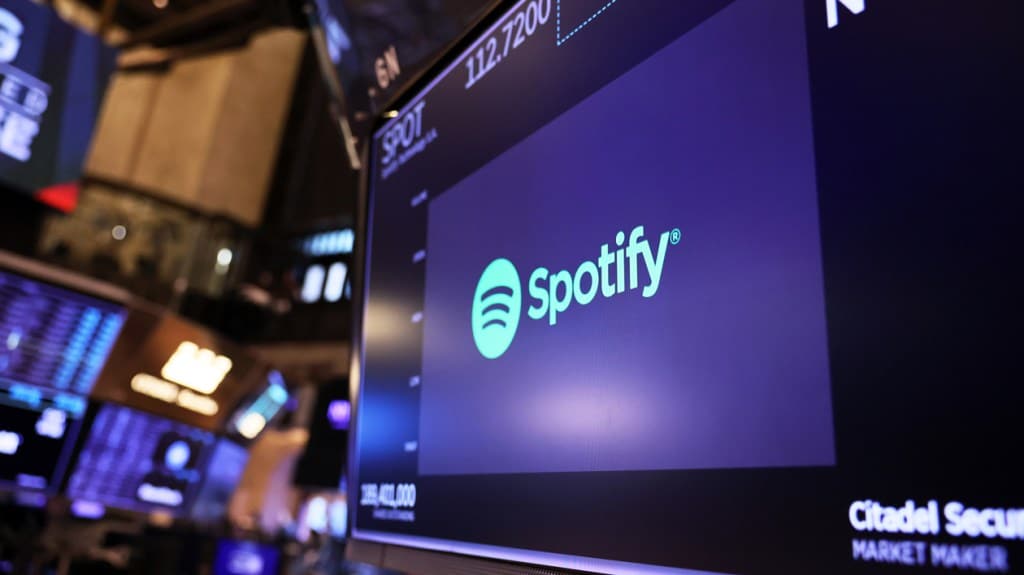
Spotify’s share price continues to soar in 2025 following a massive gain in 2024, making the music streaming company’s $109.3 billion market capitalization worth about the same as every standalone, publicly traded music company from which it licenses music combined — with nearly enough left over to include concert promoter Live Nation.
Based on closing prices Monday (Feb. 3), Universal Music Group has a market cap — the value of outstanding shares — of $51.1 billion, amounting to less than half of Spotify’s. The other standalone, publicly traded “multi-sector” music companies covering record labels and music publishers total another $27.8 billion: Warner Music Group ($16.6 billion), HYBE ($6.5 billion), JYP Entertainment ($1.8 billion), Believe ($1.5 billion), SM Entertainment ($1.3 billion), YG Entertainment ($646 million), Reservoir Media ($522 million) and Avex ($421 million). That brings the multi-sector aggregate market cap to $80.4 billion. If you add Live Nation’s $33.6 billion market cap to the multi-sector group, the combined market cap exceeds Spotify by just $4.7 billion.

Additionally, if you add the market cap of Sony Music – which is part of the Sony Corp. conglomerate and doesn’t trade as a standalone company – to UMG and WMG’s, the three major music groups’ aggregate market cap isn’t much more than Spotify’s. Importantly, if Sony Music was independent of Sony Corp, its value would be comparable to that of UMG. In the past four quarters, the two companies have had almost equal revenues on a dollar basis — $11.6 billion for UMG to $11.59 billion for Sony Music. Assuming the companies have similar margins and growth prospects, Sony Music’s market cap could — but would not necessarily — equal UMG’s $51.1 billion. Add WMG, and the three majors have a combined market cap of $118.8 billion — just $9.5 billion more than Spotify’s market cap at the end of trading on Monday.

Trending on Billboard

This imbalance between Spotify and music companies’ values hasn’t always existed. A move into podcasting and a pandemic-led growth spurt pushed Spotify’s stock above $380 in February 2021. The frothy times didn’t last long, however. Investors who were previously attracted to streaming companies’ high growth rates eventually demanded more financial discipline. When Spotify shares fell to an all-time low of $69.29 on Nov. 4, 2022, its roughly $13.3 billion market cap was less than a third of UMG’s $40.9 billion. But layoffs and price increases turbocharged Spotify’s financial statements and sent its share price into a new stratosphere. In 2023, the company laid off roughly a quarter of its full-time staff and implemented the first of two price increases. In 2024, Spotify’s share price rose 138.1%. Last month, it jumped another 22.6%.

Today, Spotify’s market value puts it in a rarefied air amongst entertainment companies. Netflix — which has 302 million subscribers globally to Spotify’s 252 million, and much higher prices — currently has a market cap of $418.8 billion. Walt Disney, which spans streaming, cable TV networks and theme parks, is worth $206.1 billion. Sony Corp, a huge company that includes games, movies, TV and hardware, has a market cap of $133.7 billion. Telecommunications giant Comcast, owner of NBCUniversal and cable company Xfinity, is worth $126.7 billion. Spotify is worth more than Warner Bros. Discovery ($24.9 billion), sports gambling company DraftKings ($20.2 billion) and video game companies Nintendo ($87.6 billion), Roblox ($46.4 billion) and Electronic Arts ($32.2 billion).

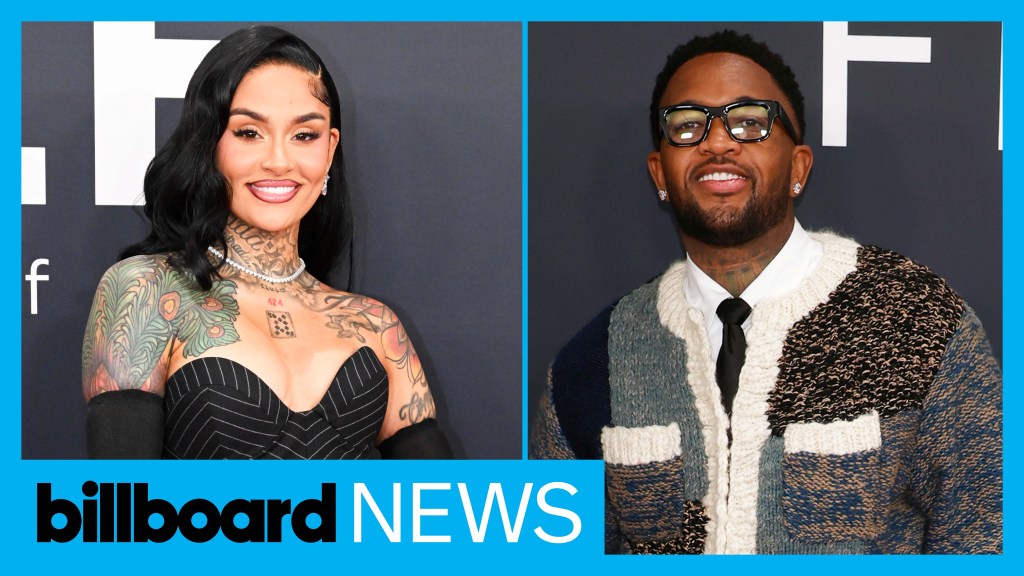
On the Grammys 2025 red carpet, Mustard, Kehlani, Zedd and more predict who will win the  Super Bowl LIX this upcoming Sunday, Feb. 9. 

Who do you think will win? Let us know in the comments!

Tetris Kelly:

Eagles or Chiefs? 

Mustard:

I’m gonna go Chiefs. Man, I’m gonna go Chiefs. I’m a 49ers fan, but I like Cheifs for this game. 

Rich the Kid:

Eagles. 

Tetris Kelly:

Okay, just making sure,

Zedd:

Okay, I was rooting for somebody who’s no longer in, so I don’t know. Okay, part of me does not want the same team to win this many times in a row, but the other team knocked out the team I was rooting for it. As you can tell, I’m not naming anyone, right? 

Tetris Kelly:

He’s being very specific. 

Rania Aniftos: 

We could deduce.

Zedd:

But I’m rooting for a really good game. 

Rania Aniftos:

Period. 

Tetris Kelly:

Safe answer, are you a politician Zedd? You got any skin in the game, you know, Chiefs? Eagles? 

Durand Bernarr:

So I just started going… No, I’ll go to football games like in person, but like, you know that’s where the energy is. 

Rania Aniftos

Yeah, I agree. 

Durand Bernarr:

You gotta let me know who’s, you know, team I’m rooting for, so I can coordinate with my outfit. 

Rania Aniftos:

I agree, I’m the same! 

Omarion:

I’m looking forward to Kendrick Lamar’s performance.

Dan Nigro:

You can’t ask me that. You look in the crowd, I might be at the game. 

Kehlani:

Oh, football.

Tetris Kelly:

That’s how I feel, too, don’t worry about it. 

Kehlani:

I’m like, touchdown go! I’m so sorry. Um Kendrick! 

Tetris Kelly: 

Okay, there we go.

HipHopWired Featured Video

Source: John Nacion / Getty
Last week The Weeknd finally released his highly-anticipated sixth studio album, Hurry Up Tomorrow and while has fans have been indulging in what the Canadian crooner’s cooked up, he’s now dropped a new visual for one of his fan favorite cuts.

For his latest visuals to “Open Hearts,” The Weeknd finds himself being rushed to a hospital in an ambulance through a desert while he belts out his melodic vocals on a stretcher seemingly dying as he does so. He must’ve thought this would be his swan song or something. We ain’t mad at him.

On the Hip-Hop side, Uncle Murda and Tony Yayo seem to be enjoying themselves overseas and in their clip for “Live From Romania,” the Brooklyn to Queens duo floss all kinds of ice while eating at fancy restaurants and performing at sold out arenas out in Europe. More proof that Brooklyn be in the house everywhere in the world.
Check out the rest of today’s drops and some joints you might’ve missed over the weekend including work from Larry June, 2 Chainz and The Alchemist, Pretty Pitcher, and more.
THE WEEKND – “OPEN HEARTS”

UNCLE MURDA & TONY YAYO – “LIVE FROM ROMANIA”

LARRY JUNE, 2 CHAINZ & THE ALCHEMIST – “I BEEN”

PRETTY PITCHER – “ARROGANT”

MASIO GUNZ – “PERSCRIPTION THERAPY”

VISIONPLUGGED – “M&M”

BILLY BANKROLL – “REDHOT BURRITO REHEATED”

D. WEATHERS & ENGLISH MCFLY – “BACK & FORTH”

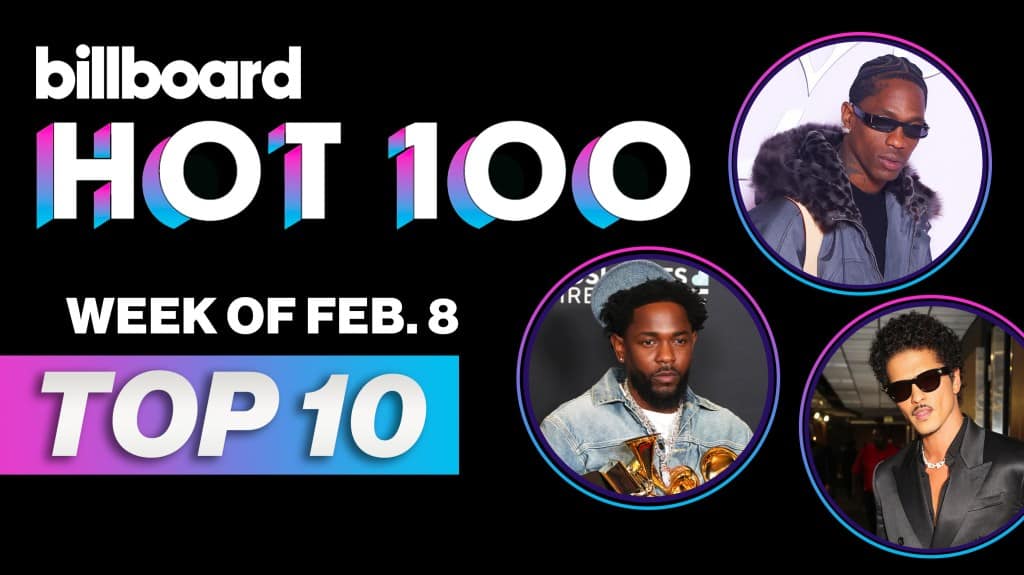
Will Lady Gaga & Bruno Mars “Die With A Smile” still take No. 1 this week? Tetris Kelly:  There’s a brand new No. 1 on the charts. This is the Billboard Hot 100 Top 10 for the week dated February 8. Still at 10, Morgan Wallen, and down to nine is Gracie Abrams. “DtMF” slides […]

Solange appreciated Alicia Keys for mentioning her in her speech while Keys accepted the Dr. Dre Global Impact Award at the 2025 Grammys Sunday evening (Feb. 2). “I just want to give big love to my brother Dr. Dre who created a sound that began a movement, and your sound told me that if you’re […]

Universal Music Group (UMG) chairman/CEO Lucian Grainge released his annual New Year’s memo to staff on Monday (Feb. 3), about a month later than usual owing to the wildfires that broke out in Los Angeles in early January.
In the 3,113-word letter, Grainge retreaded much of the same ground covered in his 2023 and 2024 New Year’s addresses and his presentation at the company’s Capital Markets Day in September, including mentions of “Streaming 2.0,” “responsible AI,” “artist-centric” approaches, “super fans” and more.

Grainge began the letter by noting UMG’s accomplishments over the last year, including breaking new artists like Sabrina Carpenter and Chappell Roan, working with Taylor Swift — the most streamed artist globally on Spotify, Amazon and Deezer — and Apple Music’s Artist of the Year Billie Eilish, adding that “achievements like these don’t just happen.”

Trending on Billboard

“Those achievements were greatly assisted by our continuing self-reinvention, reshaping our organizational structure,” wrote Grainge, referring to the widespread restructuring of UMG’s recorded music division in 2024 that led to layoffs. “Within months we were operating with greater agility and efficiency. We then saw something exceptional take place.”

As the largest music company in the world enters 2025, Grainge reminded his staff that UMG is still a “relative minnow” compared to the trillion-dollar tech companies it calls its partners. Still, he noted that UMG was successful in ushering in its “artist-centric strategy,” a term he introduced two years ago to describe UMG’s efforts to better monetize music and to limit gaming of the systems.

“Not only do we want to ensure that artists are protected and rewarded, but we’re also going after bad actors who are actively engaged in nefarious behavior such as large-scale copyright infringement,” he wrote. In the last year, UMG forged new deals with TikTok, Spotify and Amazon to aid in those efforts. Also in 2024, UMG sued AI companies Suno and Udio and music distributor Believe to prevent what Grainge called “large-scale copyright infringement.”

Grainge then detailed his plans to influence and set the ground rules for “Streaming 2.0” — or “the next era of streaming” — with UMG’s partners. He pointed back to new agreements with Amazon and Spotify as major wins, adding, “We expect that similar agreements with other major platforms will be coming in the months ahead.”

He also discussed the company’s goal of finding ways to “accelerat[e] our direct to consumer and superfan strategy,” building on past moves like its strategic partnership and investment in NTWRK and Complex. “This year will see us expanding our product offerings to fans, as we continue to redefine the ‘merch’ category and create superfan collectibles and experiences,” Grainge wrote.

He also noted the company’s focus to “aggressively grow our presence in high potential markets,” whether that’s through A&R, artist and label service agreements or mergers and acquisitions. In the last year, UMG has managed to work towards this goal by announcing that Virgin had entered an agreement to acquire Downtown Music Holdings, purchasing the remaining share of [PIAS] and partnering with Mavin Global in Nigeria.

“The reason so many independent music entrepreneurs actively seek to partner with UMG when they have more alternatives than ever before is that we provide what they’re seeking… After all, we’re not a financial institution that views music as an ‘asset,’” he wrote. “And we’re not an aggregator that views music as ‘content.’ We are a music company built by visionary music entrepreneurs. For us, music is a vital — perhaps the vital — art form.”

Grainge ended on a high note, writing, “Let me leave you with this: Some will try to disrupt our business or criticize us. That we know. It comes with being in the most competitive market that music and music-based entertainment has ever seen, and it comes with being the industry’s leader and primary driving force. But our vision and our ability to consistently execute gives us the momentum to continue to succeed and grow.”

Read Grainge’s full New Year’s note to staff below.

Dear Colleagues:

When I wrote my first letter about the L.A. fires, I said that my annual New Year’s note would have to come later than usual.  And so here it is…

Last night’s Grammy awards served as a perfect metaphor for our company’s performance in 2024—breaking new artists and taking our superstars to new heights.  In fact, last night, UMG artists and songwriters brought home more Grammys than ever before in our history.  You can read more about that here.

Thanks to your day-in, day-out dedication and hard work, we accomplished so much together in 2024 and are positioning ourselves for another great year of success.  I’ll sum up some of UMG’s stunning achievements last year and give you a glimpse of what we plan for this year.  Our company’s fundamental building block is artist developmentand in 2024, investment in new talent continued to produce spectacular results around the world.  Consider the following facts: that UMG broke the two biggest artists in the world last year in Sabrina Carpenter and Chappell Roan; Taylor Swift was the most streamed globally on Spotify, Amazon and Deezer; and Apple Music named Billie Eilish its Artist of the Year.  And that a UMG recording artist who is also signed to UMPG as a songwriter had the No. 1 song globally on the year-end lists for both Apple Music (Kendrick Lamar) and Spotify (Sabrina Carpenter).  Or that UMG had four of the Top 5 artists globally on Spotify with Taylor Swift (No. 1), The Weeknd, Drake and Billie Eilish; eight of the Top 10 albums (Taylor Swift’s The Tortured Poets Department at No. 1); five of the Top 10 songs (Sabrina Carpenter’s “Espresso” at No. 1), and six of the 10 Most Viral songs (Lady Gaga and Bruno Mars’ “Die With A Smile” at No. 1). Or consider that in the U.S., UMG had all Top 3 label groups according to Billboard (Republic, Interscope and Universal Music Enterprises) not to mention four of the Top 5 artists and eight of the Top 10 albums, including all of the Top 5 – Taylor Swift (No. 1 and No. 2), Morgan Wallen, Noah Kahan and Drake. And on YouTube, six of the Top 10 songs (Kendrick Lamar at No. 1) and two spots on the Trending Topics Top 10 across all content categories in 2024 (Kendrick Lamar and Sabrina Carpenter). You can read more of our remarkable achievements around the world at the end of this note, but as you can already see, in 2024, our momentum only grew.  Also, these were achievements not only by a few superstars, but also by dozens of artists from around the world—both developing and established—performing in multiple genres, styles and languages.  Achievements like these don’t just happen. They are the culmination of maintaining a clear vision of who we are, what we do and where we’re going, then executing on that vision, maintaining momentum and, of course, at the heart of it all, having some absolutely incredible music to work with.  And last year those achievements were greatly assisted by our continuing self-reinvention, reshaping our organizational structure, re-building our teams and refining our strategy.  A vision which boldly and, when necessary, quickly adapts to an ever-changing world.  For example, in early 2024 we executed on our vision to realign our U.S. label structure, and within months we were operating with greater agility and efficiency.  We then saw something exceptional take place: UMG had its best U.S. performance in six years, according to Luminate.  I’m confident that our realignment will yield still further momentum around the world and that the achievements of our artists and songwriters—as well as UMG’s success—will reach new heights.In 2024, we continued to lead the media industry in our embrace and advancement of “Responsible AI.”  Three recent examples of that initiative include our agreements with SoundLabs, ProRata and KLAY—companies that are taking unique approaches to the rapidly evolving AI space through new technologies that provide accurate attribution and tools to empower and compensate artists.Our leadership also includes our commitment to the enactment of Responsible AI public policies, fighting back against so-called text and data mining copyright exceptions and other misguided and ill-intentioned proposals that would enable what I will euphemistically call the unauthorized exploitation of creators’ work.  Instead, we will work towards legislative “guardrails” to ensure the healthy evolution and growth of AI that mutually serves creators, consumers and responsibly innovative technology players.In my note last year, I said that 2024 would see us once again attracting the brightest entrepreneurs, expanding our existing relationships with other such talents and investing more resources into providing a full suite of artist services businesses to independent labels around the world.  And we did exactly that.  We acquired the remaining share of [PIAS] two years after taking an initial stake in the company and brought its highly respected co-founder Kenny Gates into our family.  And we grew our geographic footprint.  One example: our partnering with and investing in Mavin Global, whose founders Don Jazzy and Tega Oghenejobo continue to lead that company as well as, going forward, all of UMG’s business in Nigeria.Just last month, Virgin announced it entered into an agreement to acquire Downtown Music Holdings, which includes FUGA, Downtown Artist & Label Services, Curve Royalties, CD Baby, Downtown Music Publishing and Songtrust.The reason so many independent music entrepreneurs actively seek to partner with UMG when they have more alternatives than ever before is that we provide what they’re seeking: the most innovate creatives and finest resources that will advance the careers of their artists and achieve their financial goals within a culture that respects artists and their music.  After all, we’re not a financial institution that views music as an “asset.”  And we’re not an aggregator that views music as “content.”  We are a music company built by visionary music entrepreneurs.  For us, music is a vital—perhaps the vital—art form.  Artists and the music they create are our lifeblood.  We’re proud both to invest in businesses that can and do support today’s leading music entrepreneurs and to advocate for the policies and practices that are designed to protect and grow the entire music ecosystem.And finally, one of 2024’s announcements of which I am proudest is the formation of our Global Impact Team, whose mission is to enact positive change in our industry and in the communities in which we serve.  This cross-functional group of executives brings a deep understanding of our global organization and will develop and execute strategies to tackle a variety of critical issues, including: equality; mental health and wellness; food insecurity and the unhoused; the environment; and education.  By dovetailing seamlessly with our goals and those of our artists, we can promote and even catalyze beneficial and authentic changes where they are needed.  Recently, in the wake of the terrible Los Angeles wildfires, the Impact Team mobilized, offering support to those affected, activating a multi-pronged relief effort to help both our own employees and the broader L.A. communities.Before I get to what lies ahead for 2025, let me first provide you with some context as to the enviable position UMG holds.UMG is a global creative enterprise at the center of an ecosystem of hundreds of digital partners.  And while we’ve consistently been the music industry’s leader since the advent of the streaming era—an era whose dawn we were instrumental in ushering in—the leadership posture among our DSP partners has undergone some significant changes.  For example, one of our fastest-growing subscription partners, YouTube, is also one of the most recently launched.  We expect more inevitable jockeying for the leadership position among standalone platforms as well as among the music services that are divisions of trillion-dollar valuation tech companies.But, even though we are a relative minnow in comparison to a trillion-dollar tech company, the music of our incredible artists and songwriters enables us to exercise outsized influence on the global stage and serve as a critical catalyst in fostering a truly competitive commercial marketplace for music.  We will keep using our position to promote a healthy and sustainable music ecosystem that benefits all artists at all stages of their careers.Now to 2025 … starting with our artist-centric strategy:When we introduced that strategy two years ago, we immediately went to work with our partners to make it a reality.  In a matter of months, we reached agreements in principle on a number of issues: increasing the monetization of artists’ music; limiting the gaming of the system by protecting against fraud and content saturation; and focusing on the value of authentic artist-fan relationships, inspiring the development of more engaging consumer experiences, including specially designed new products and premium tiers for superfans.  Platforms as diverse as Deezer, Spotify, TikTok, Meta and most recently Amazon, have adopted artist-centric principles in a wide variety of ways—principles that benefit the entire music industry from DIY to independent to major label artists and songwriters.Our work in driving these artist-centric principles will continue in 2025.  Not only do we want to ensure that artists are protected and rewarded, but we’re also going after bad actors who are actively engaged in nefarious behavior such as large-scale copyright infringement.  To that end, we’re setting forth the best practices that every responsible platform, distributor and aggregator should adopt: content filtering; checks for infringement across streaming and social platforms; penalty systems for repeat infringers; chain-of-custody certification and name-and-likeness verification.  If every platform, distributor and aggregator were to adopt these measures and commit to continue to employ the latest technology to thwart bad actors, we would create an environment in which artists will reach more fans, have more economic and creative opportunities, and dramatically diminish the sea of noise and irrelevant content that threatens to drown out artists’ voices.In September, during our Capital Markets Day presentation, I described what would constitute the next era of streaming—Streaming 2.0.  Built on a foundation of artist-centric principles, Streaming 2.0 will represent a new age of innovation, consumer segmentation, geographic expansion, greater consumer value and ARPU growth.I’m pleased to report that the Streaming 2.0 era has arrived.  We recently announced a new agreement with Amazon that includes many of these elements, and just last week, we announced a multi-year agreement with Spotify.  We expect that similar agreements with other major platforms will be coming in the months ahead. In 2025, we’ll also be reaching out in new ways to engage fans.  In addition to listening to their favorite artists’ music, fans want to build deeperconnectionsto artists they love.  Last year, in accelerating our direct-to-consumer and superfan strategy, we formed a strategic partnership and became an investor in NTWRK and Complex to build a premium live-video shopping platform for superfan culture.  This year will see us expanding our product offerings to fans, as we continue to redefine the “merch” category and create superfan collectibles and experiences.  Some of this will be done through our current partners and some through our own D2C channels, which we will continue scaling to meet the massive appetite of fans. After years of working to aggressively build a healthy commercial environment for artists and music—one in which we have reached approximately 670 million subscribers—we will be laser-focused in 2025 on continuing to expand the ecosystem and improve its monetization.  As we did in 2024, this year we will continue to aggressively grow our presence in high potential markets through organic A&R, artist and label services agreements, and M&A.The work that lies ahead of us will bring challenges, no doubt about that.  But we will meet those challenges with pride and a sense of privilege, because no other form of creative expression is more fundamental to human existence than music.  By that, of course, I mean real music created by human artists.  So let me leave you with this:Some will try to disrupt our business or criticize us.  That we know.  It comes with being in the most competitive market that music and music-based entertainment has ever seen, and it comes with being the industry’s leader and primary driving force.  But our vision and our ability to consistently execute gives us the momentum to continue to succeed and grow.  Our global worldview and the internal competition fueled by our entrepreneurial spirit breeds innovation.  Our passion for finding new and better ways to bring music to the world will keep us ahead of competitors and new entrants alike.  We’ll continue to do what we do because what we do and how we do it is impossible to replicate.  Our culture and our people—you—are our superpower.I can’t wait to see and hear what this year brings, and I am thrilled to be on this journey with you.Let’s go!Lucian

Central Cee finds himself in the middle of some controversy. It’s really nothing serious, unless you’re a New Yorker. The British rapper recently claimed that he’s influenced streetwear here in the States, specifically having a hand in the popularity of the Nike Tech Fleece sweatsuit. In a clip posted on X by user @web_culture, Cench […]

Billboard Japan’s Women in Music initiative launched in 2022 to celebrate artists, producers and executives who have made significant contributions to music and inspired other women through their work, in the same spirit as Billboard’s annual Women in Music celebration that has continued since 2007. This interview series featuring female players in the Japanese entertainment industry is one of the highlights of Japan’s WIM project.

Explore

Explore

See latest videos, charts and news

See latest videos, charts and news

The eight members of CUTIE STREET sat down with writer Rio Hirai for the latest installment of the series. The J-pop girl group’s debut single, “Kawaii dake ja dame desu ka?” (which roughly means, “isn’t it enough to just be cute?”) took off on social media and hit No. 1 on Billboard Japan’s Heatseekers Songs chart, then went on to peak at No. 2 on the Japan Hot 100. The members — Risa Furusawa, Aika Sano, Kana Itakura, Ayano Masuda, Emiru Kawamoto, Miyu Umeda, Nagisa Manabe, Haruka Sakuraba — come from different backgrounds, including not only those who aspired to be idol performers from the beginning, but also those who started off being an influencer, actor, dancer, and student. The women shared their thoughts on the message of their debut single and what it means to be an idol.

You all come from different backgrounds. Why did you decide to become an idol performer, and what does being in this line of work mean to each of you?

Trending on Billboard

Risa Furusawa: I’ve wanted to be an idol performer since I was eight years old. I loved AKB48 and would dance along watching TV and buy their CDs to show my support. My mother knew this and encouraged me to go in for auditions, but even though I took part in many, I couldn’t get a chance at becoming an idol for quite some time. I worked as a model and influencer before making my debut as a member of CUTIE STREET, so it feels like my wish has come true and the second chapter of my life has begun. Being an idol is something I’ve always wanted that I’ve now miraculously achieved.

Kana Itakura: I’ve been taking dancing lessons since I was little and think that’s where it all began. Dancing led to doing modeling gigs and I used to upload videos on YouTube. Before becoming involved in CUTIE STREET, there was a period when I was a bit worried about what I should do in life, but was given a chance to take part in the audition just as I was thinking about what I could do with the dance experience I’d gained up to that point. I have friends who work as idol performers, but being one had never crossed my mind until then. So being a member of CUTIE STREET is a challenge for me.

I always aspired to “be cool” (before joining the group) and “cute” (kawaii) was something I looked at from the outside to find comfort. After becoming someone who expresses “cuteness,” I realized that there were many elements packed into that one word. Everyone is cute, but they all have different colors. Right now, I’m trying to find what my cute is.

Emiru Kawamoto: I began longing to become an idol who sings and dances on stage after seeing the anime Pretty Rhythm when I was little. AKB48 was also popular at the time and idol groups were all the rage in Japan. My dream has always been to be an idol performer, and I’ve lived my life determined to not give up on that. In reality, stanning your favorite someone or something isn’t essential for life, unlike things related to food, clothing and shelter, but it’s something that colors your world. It was for me, so I do what I do hoping that I can add color to someone’s life too.

Miyu Umeda: I was already an idol performer before joining CUTIE STREET. I got involved in this line of work after being offered the position and became more passionate about it as I kept at it. It was really fun. But that group disbanded before I could do work that satisfied me. I couldn’t give up on my dream of being an idol, so I took part in the CUTIE STREET auditions. After actually trying it, I thought, “This might be my true calling!” I think being an idol is meaningful if someone sees what you do and becomes motivated, like, “I’ll hang in there tomorrow too.”

Nagisa Manabe: I’ve always liked singing and dancing, but never really took the plunge. But the COVID pandemic made me take a fresh look at my life and I decided to try doing things I really want to do. That’s when I encountered CUTIE STREET. I’ve always been the curious kind and the things I wanted to do have changed a lot over the years. Now that I’ve started my idol career, it feels like it’s something that allows me to express the things I want to express and also the core of who I am. I’m totally hooked on it. Being an idol performer is the first thing that’s made me feel strongly, “I really I want to do this!”

Aika Sano: I used to perform in plays and musicals. I discovered the joy of singing and dancing there, and thought, “I want to do more of this,” so I took part in the CUTIE STREET auditions. Now that I’ve actually started working as an idol, I sometimes think, “I didn’t really understand idols before.” I’ve discovered how fun it is and now want to work even harder at it. As an idol, you have a closer relationship with your fans, and you might hurt them with your actions but you can also make them happy. Being able to directly feel that you’re being a support for someone or that you make them happy is encouraging.

Ayano Masuda: I also belonged to the same idol group Miyu used to be in. I met many fans during my time in that group and when we disbanded, they told me things like, “I was happy (to support you)” and “Let’s hang tough together from now on, too.” Because of those fans, I wanted to do better at my performances and work harder on social media posts so that more people got to know us, and I changed a lot. Being an idol performer is really fantastic and my life became a lot more fun.

Haruka Sakuraba: I think being an idol requires strength, both mental and physical. Being drawn to the strength of other idols has personally saved me in the past. Idols have the power to help people, to be a source of inspiration for someone, to give someone the energy to live, so I want to be an idol like that.

What’s the message being conveyed by your song, “Kawaii dake ja dame desu ka?” (“isn’t it enough to just be cute?”)

Kawamoto: The phrase “Isn’t it enough to just be cute?” might sound a bit pushy and harsh, like, “It’s good enough to just be cute, isn’t it?” In fact, we’ve received comments saying, “Of course just being cute isn’t enough” and “That’s not acceptable in society.” But I think that what “isn’t cute” for one person may be cute for someone else, and that the lyrics convey the message, “Let’s accept and love all the things about ourselves that aren’t cute.” There are lots of positive phrases in the lyrics, like, “I can be really cute if I go all out” and “play up your strengths” and “compared to my big dreams, these mistakes are small.”

How did you feel when the group received this song?

Kawamoto: Our concept is “KAWAII MAKER,” a group that has come together to create “kawaii” and share it with the world. This song conveys the message that there are many different kinds of “kawaii,” so I thought it was perfect as our debut single.

Being a woman is one of the central themes of this interview. How does being a woman affect your life?

Itakura: I preferred cool things over cute things since I was little. That’s probably why I don’t like being told what to do because I’m a woman… I don’t think that just because you’re a woman you have to be cute, and that just because you’re a man you have to be cool. I think people who pursue what they like regardless of gender are wonderful, and I’ve come this far thinking it’s fine to do what you want to do and be who you want to be.

How have you resisted conforming to values that tell you what to do because you’re a woman or a man?

Itakura: I think I’m the type who doesn’t get swept away easily and have stuck to my own beliefs. When I used to upload videos to YouTube, there were more male YouTubers than female, but I thought that women can do it, too. Even now, I belong to a female idol group, but I want to make an effort to compete equally with other groups, regardless of gender.

Sano: I’ve always wanted to be born a woman again in my next life because I enjoy the variety in makeup and fashion, but nowadays it’s normal for men to get their nails done and gender differences are becoming more irrelevant in that sense. 

When considering your future career, is there anything you’d like to see happen to make it easier for women to thrive in your line of work?

Masuda: If being a woman is affecting how I work now, I think it’s probably my physical strength. Men tend to be bigger than women and I admire the power and impact of their performances. Even off the stage I sometimes have to ask male crew members to carry heavy loads, but I want to be able to carry them myself. Maybe I should start doing some strength training. [Laughs] Improving our strength is one of the issues we’re facing as a group, actually.

So not only will CUTIE STREET “just be cute,” but you’ll also be stronger from now on as well! Are there any women who give you courage and empower you?

Manabe: There’s a calligrapher, Shoko Kanazawa, who I recently learned about in class at school. She has Down’s syndrome, but became completely independent at 30 years old and has a career as a professional calligrapher. I think she’s someone who also personifies the advancement of working women in society. After learning about her, whenever I feel that I can only do something up to a certain point, I now think maybe it’s not my own abilities that are holding me back, but that my own preconceptions are making me feel that way. Although it’s not as prevalent as before, the idea that “a woman can only do so much” still exists, so I hope I can change that through my own actions and words.

—This interview by Rio Hirai (SOW SWEET PUBLISHING) first appeared on Billboard Japan