djfrosty

Taylor Swift Personally Tips Individual Workers at a Grammys Afterparty in Newly Surfaced Clip

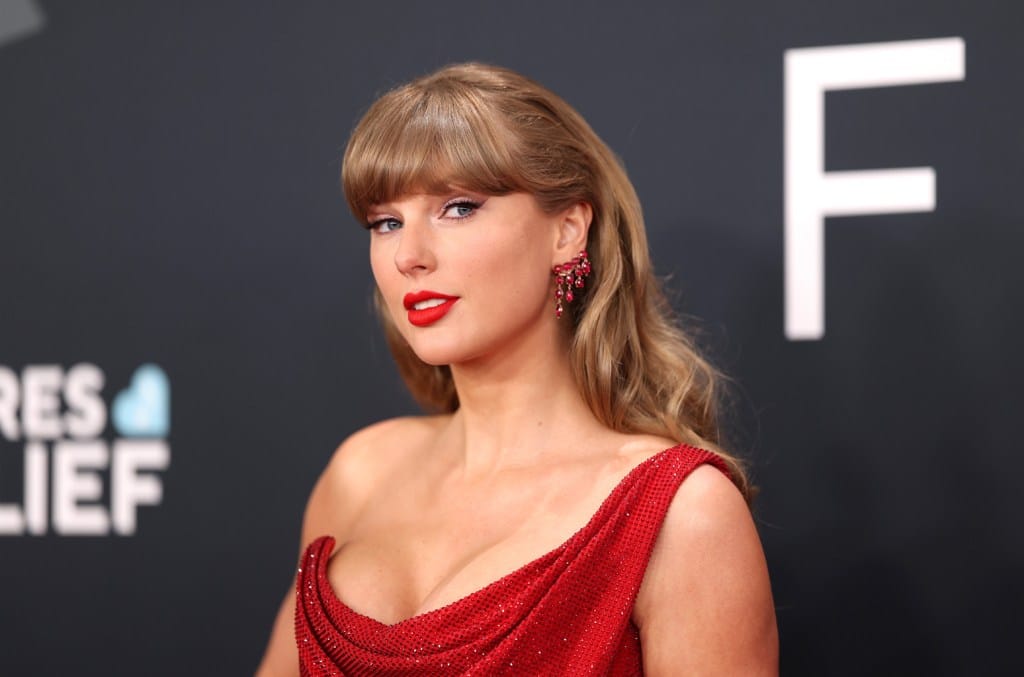
Taylor Swift made sure to show her appreciation to employees at a party after the 2025 Grammys.

In a newly surfaced clip from the night of the Feb. 2 awards, the pop star — dressed in a sparkly silver party dress and combat boots — heads toward the exit of a building with her group. When she realizes that she’s passed a group of four people working the event, she doubles back to personally hand each of them some cash. 

“We appreciate you so much,” the “Fortnight” singer tells them earnestly. “Thank you.” 

The video started making rounds online more than a week after Swift attended the Grammys, where she was nominated for six awards. Though she didn’t end up taking home any new golden gramophones, the musician did appear to have an excellent time dancing during performances from Billie Eilish, Charli XCX and more, hanging out with Alicia Keys’ son Genesis and snagging Janelle Monáe’s jacket during the Quincy Jones tribute. 

Trending on Billboard

After the ceremony, Swift headed to the post-show gathering with Sabrina Carpenter, Jack Antonoff, Margaret Qualley and more friends, as captured in film photos posted by the “Espresso” singer. 

The footage of the “Karma” artist thanking the party’s employees is just another example of her showing her gratitude to service workers. In December 2023, a viral photo captured Swift appearing to slide cash tips through a door at Gillette Stadium after a Kansas City Chiefs away game. A couple months before that, she made headlines for reportedly gifting all of her Eras Tour truck drivers $100,000 bonuses, totaling an estimated $5 million. 

Cynthia Erivo to Receive GLAAD Media Award for Promoting LGBTQ+ Visibility

After defying gravity in 2024’s Wicked, Cynthia Erivo has raked in plenty of nominations during the 2025 awards season. Now, she’s add at least one trophy to her collection.

On Wednesday (Feb. 12), LGBTQ+ advocacy group GLAAD announced that Erivo would be the recipient of its annual Stephen F. Kolzak prize at the 2025 GLAAD Media Awards. Presented each year to a queer celebrity who “made a significant difference in raising visibility and promoting acceptance of LGBTQ people and issues” the year prior, the award will be presented to Erivo at the organization’s Los Angeles ceremony on March 27.

Erivo, who is nominated for best actress in a leading role at the upcoming Academy Awards for her portrayal of Elphaba, came out publicly as queer in a 2022 interview with British Vogue, explaining that she wanted to help any other up-and-coming actors weighing whether or not to come out. “Some young Black queer actress somewhere will know coming in that she’s not alone,” she said at the time. “I could feel myself actively hiding that part of myself and it didn’t feel good. That takes a lot of energy to uphold and there is zero return.”

Trending on Billboard

In a statement shared with the news, GLAAD president and CEO Sarah Kate Ellis applauded Erivo’s work in pushing forward narratives around intersectionality in the entertainment industry. “Her legacy is defined not by her numerous accolades and honors but by how with each new platform and milestone, she continues to show up for Black, queer and other marginalized peoples amid her well-deserved success,” she wrote. “As she continues to shatter glass ceilings, I am certain her commitment to showing up as the intersectional and authentic person she is will never falter, and it is a privilege to present her with the Stephen F. Kolzak Award at this year’s GLAAD Media Awards.”

Erivo won’t be the only musician receiving a GLAAD award in 2025 — fellow LGBTQ+ artists including Billie Eilish, Doechii, Elton John, Adam Lambert and Omar Apollo were announced as nominees in the show’s music categories in January.

2025 Billboard Women in Music to Honor JENNIE, Erykah Badu, aespa, GloRilla, Gracie Abrams, Tyla & More

Women dominated this year in music, and Billboard is ready to celebrate today’s groundbreaking artists at its annual Women in Music event.

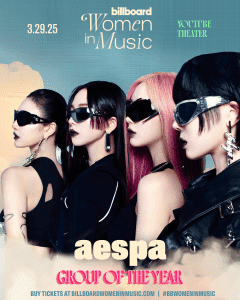
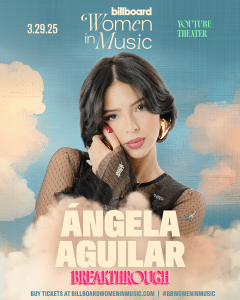
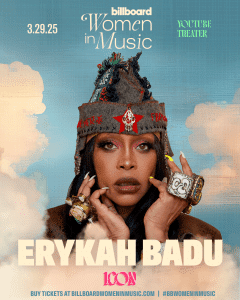
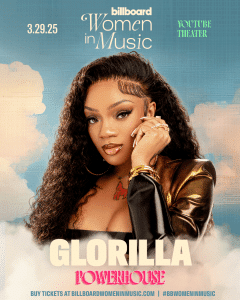
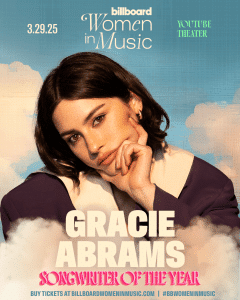
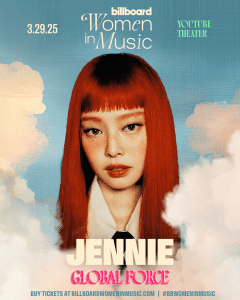
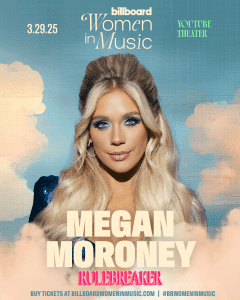
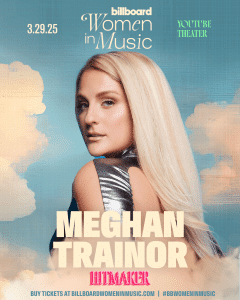
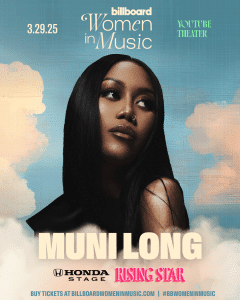
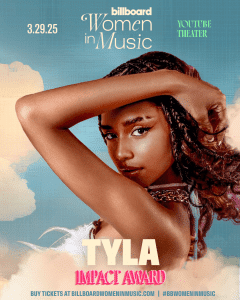
This year’s honorees include a diverse group of artists, ranging from rising stars to seminal veterans, from pop and country, to R&B, Latin and beyond. The 2025 event will honor aespa, Ángela Aguilar, Erykah Badu, GloRilla, Gracie Abrams, JENNIE, Megan Moroney, Meghan Trainor, Muni Long and Tyla.

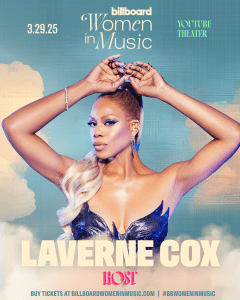
Laverne Cox will host the 2025 Billboard Women in Music event, which will take place Saturday, March 29, at YouTube Theater at Hollywood Park in Inglewood, California.

Presenters, performers and the coveted 2025 Billboard Woman of the Year will be announced in the coming weeks.

“The 2025 Billboard Women in Music celebrates the incredible women who continue to drive innovation, inspire change, and reshape the future of music,” Dana Droppo, Billboard‘s Chief Brand Officer, said in a statement.

Billboard‘s Editor-in-Chief, Hannah Karp, added, “From rising stars to legendary icons, this year’s honorees are redefining what it means to be a trailblazer in the industry. We’re honored to highlight their outstanding achievements and contributions through unforgettable performances, powerful tributes, and an evening that will truly shine a spotlight on their impact. It’s a privilege to continue Billboard’s tradition of recognizing the women who are pushing the boundaries of music and culture, and we can’t wait to share this incredible night with our global audience.”

Sponsors for the 2025 Billboard Women in Music event include official whisky Partner Crown Royal, HarbourView Equity Partners, Bose and Honda Stage, the presenter of the Rising Star Award.

A limited quantity of early access tickets will be available for purchase on Wednesday (Feb. 12) starting at 1 p.m. ET/10 a.m. PT with code WIM25. Public on-sale then begins Thursday (Feb. 13) at 1 p.m. ET/10 a.m. PT via Ticketmaster here. Prices begin at $89.

See below for the full list of 2025 Billboard Women in Music honorees so far.

Why Reggaetón Stars Are Investing In Puerto Rican Pro Basketball

Growing up in the projects of Río Piedras in San Juan, Ozuna had hoop dreams, playing on neighborhood courts until he finally accepted he would never be tall enough to go pro. His younger brother José Ginés, on the other hand, grew right past him and was eventually drafted in 2020 to play in the territory’s premier basketball division: the BSN, or Baloncesto Superior Nacional.

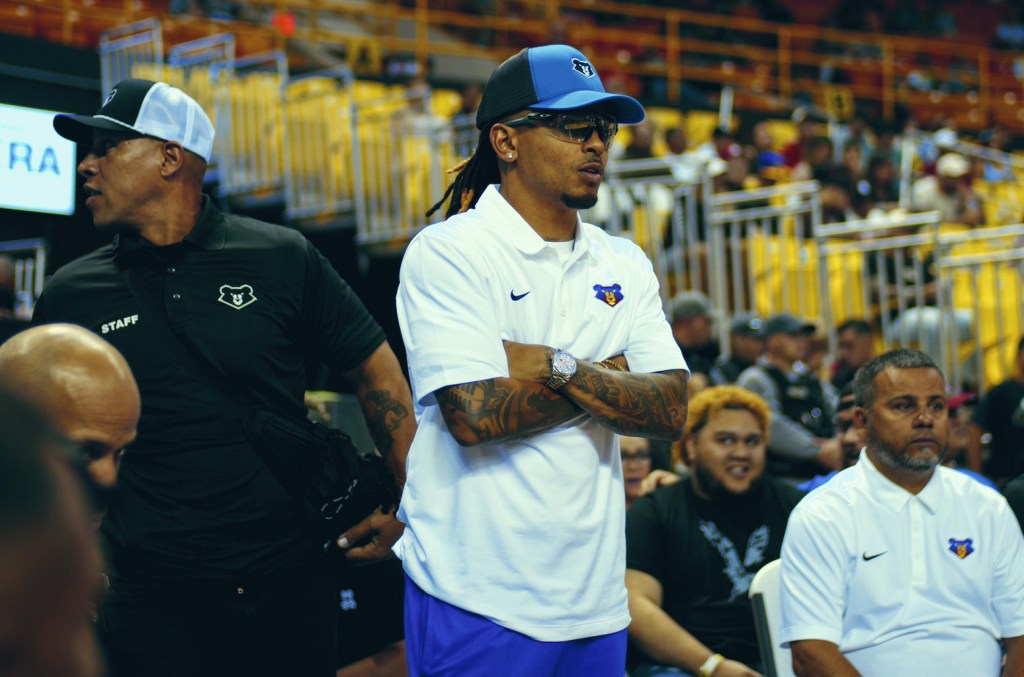
By then, Ozuna had left the projects far behind and become one of the world’s top reggaetón stars. And in 2022, he became the sole owner of BSN’s Los Brujos de Guayama, an underfunded team located far from San Juan. Ozuna moved it to the bigger city of Manatí and renamed it Osos de Manatí (the Manatí Bears, in a nod to his fondness for the animal). Within a year, it rose from last in the league to second place in the 2024 BSN championship.

“Those players needed a push from someone who was listening to them so they’d know there are bigger opportunities,” says Ozuna, who also hired his brother away from a previous team to play for Los Osos. “And I’m teaching them how to set goals and grow, and yes, maybe one day get to the NBA.”

Trending on Billboard

Ozuna is one of three huge reggaetón artists who in the past few years have acquired ownership in local BSN teams in Puerto Rico. In 2021, Bad Bunny joined manager Noah Assad and Rimas executive Jonathan Miranda in acquiring Los Cangrejeros de Santurce, and the same year, Anuel and his then-manager, Frabian Eli, purchased Los Capitanes de Arecibo. Though Anuel and Eli have since split up and ceded their team ownership, the three artists’ combined star power has reinvigorated a languishing Puerto Rican basketball scene.

While Ozuna put Los Osos on the map, Assad, Miranda and Bad Bunny literally revived Los Cangrejeros, who had been on hiatus since 2016. “We were approached by J.J. Barea, who said he wanted to play his last seasons in front of his home fans in Puerto Rico,” Assad explains. Owning the team, he says, is another way for him, Miranda and Bad Bunny to bring people together. “Puerto Rico is all about family. Just having the team has a positive impact.”

Ozuna has now also bought a minor league team, and he has a development team where kids train from 6 years old until the juniors level. “It’s like a basketball farm,” he says. “We have about 160 kids playing on 10 teams. We pay their transport, their snacks. The vision is for them to realize they have to work in steps to make it big. There’s a lot of talent here, but it wasn’t on display until we came along.”

Other artists outside Puerto Rico are apparently following his example. In January, Colombian rapper Ryan Castro announced he was acquiring a significant stake in Paisas Basketball Club, a professional team in his hometown of Medellín. “It’s another facet for us as entrepreneurs — supporting sports — because the kids in the barrios have the same dreams as us, the artists,” Castro tells Billboard. The same month, Colombian reggaetón star Blessd acquired a stake in Vendsyssel FF, a European second division soccer team.

Castro says his impetus for investing in a team came from his own love of the sport, much like Ozuna, who admits he didn’t have the tools to make it big himself. “Now I can do it for someone else. But it’s not about making money. It’s about love for basketball.”

This story appears in the Feb. 8, 2025, issue of Billboard.

Meet The College Marching Bands Who Play Hits By Chappell Roan, Tyler, the Creator, and More

By the time Temple University director of athletic bands Dr. Matt Brunner finally listened to Chappell Roan’s music, many of the young adults in his life — students, band alums, even his son’s girlfriend — had already implored him to check her out.

When he did play the singer’s debut album, The Rise and Fall of a Midwest Princess, he quickly realized why they’d been so adamant. “I started listening and I was like, ‘Oh, my God. This is awesome. I absolutely have to do this,’ ” he recalls excitedly months later. “Everything about it just worked.”

By that, Brunner means Roan’s glitzy dance-pop tracks seemed tailor-made for a marching band — full of the catchiness and energy the format demands, plus the kind of melodies that begged to be amplified by high brass and drum line-ready percussion. Still struck by how fast the arrangement came to him, Brunner orchestrated a 10-minute halftime medley of the pop star’s music that his marchers eagerly learned in just three rehearsals ahead of the Owls’ September football game against Utah State at Philadelphia’s Lincoln Financial Field.

Trending on Billboard

Their work paid off before they even stepped onto the field. “Some people said, ‘I’m coming to the football game just to see the show,’ ” Brunner says with a laugh, recalling how the student section later came to life doing Roan’s viral “Hot To Go!” choreography along with the band. With that energy behind it, Temple bested Utah State, 45-29.

Feature, Marching Bands, Temple University Owls, Chappell Roan

Temple University Diamond Marching Band performs at the Temple Owls game against Utah State on Sept. 21, 2024 in Philadelphia, PA.

Ricky Swalm

That kind of stadium-rocking enthusiasm is exactly what motivates collegiate band directors all over the country — whether at major state schools like Temple; smaller, private institutions; or historically Black colleges and universities — to adapt current chart-toppers for halftime shows, stand tunes (keeping the bleachers hyped during timeouts and between plays) and pep rallies every year. Having evolved far beyond their 19th-century military band origins, marching ensembles are now key fixtures in the spectacle of college game days, tasked with engaging fans and generating the kind of hype that will inspire the team, reflect well on the school and, ultimately, manifest in more ticket sales. One of the best ways to serve that mission, the directors of seven different ensembles tell Billboard at the end of their 2024-25 football season, is to incorporate fresh pop music into their repertoires — a goal that’s easier said than done.

For starters, not all pop songs are created equal in the world of marching bands. Directors have numerous considerations to make when vetting potential selections, from crowd appeal — which many of them measure by surveying students, patrolling the Billboard Hot 100 and tracking Spotify streams as early as spring to determine what will be trendy in the fall — to whether they can secure the necessary licensing, budgeting anywhere from a few thousand dollars to five-digit sums for rights-buying each year.

They also must weigh if a hit has enough longevity to justify the time spent getting permissions and then arranging and teaching it to 300-plus marchers. Notre Dame director of bands Dr. Ken Dye still ruefully remembers a “Macarena” draft his ensemble never got to play before the dance craze fell out of favor in the ’90s. He also notes with a laugh that he tries to steer clear of tracks with inappropriate lyrics, to avoid repeating the time he received a stern email “from the boss” over a performance of Daft Punk’s “Get Lucky.” Turning 180 this year, The Fighting Irish’s college marching band is the oldest in the United States and also represents a Catholic university. (So far, nothing has hit Dye’s inbox over the “motherf–ker” bomb in Sabrina Carpenter’s “Please Please Please,” which he paired with Post Malone and Morgan Wallen’s “I Had Some Help” for a 2024 halftime.)

But checking those boxes isn’t enough if a song doesn’t first have the musical foundation of a good marching band tune. University of Southern California (USC) band director Dr. Jacob Vogel says that compelling, stackable melodies; harmonies; basslines; and background elements are crucial ingredients, emphasizing how important variation is for filling stadiums with sound. “I refer to it as the enveloping nature of music,” he explains. “Why do people turn music on so loud in their car? So they feel like they’re inside of it. When I put our arrangements together, I want to make sure the band also has that enveloping nature.”

Fortunately, pop’s current crop of upbeat, melodically driven hits led by the likes of Roan and Carpenter offers those elements in abundance. But Vogel remembers two eras that definitely did not: the Adele-style power ballads of the mid-2010s, which were simply too slow for marching, and the EDM crossover phase before that, which was laden with dubstep dance breaks that band instruments couldn’t replicate.

Hip-hop, band directors say, has always been case by case. Horns can’t mimic the spoken quality of rap, but they can do a track justice if it has a prominent instrumental — like Kendrick Lamar’s “Not Like Us,” which Southern University’s Human Jukebox covered this season. “ ‘They not like us, they not like us’; we wouldn’t be able to musically execute that,” director Dr. Kedric Taylor explains. “But we are able to musically execute ‘bum bum ba bum,’ ” he continues, singing the chromatic four-note string theme that anchors Lamar’s hit and got new heft courtesy of Southern’s screaming horn line.

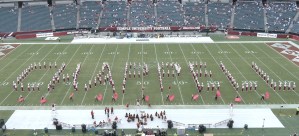
Once songs are selected and parts assigned, directors and their staff can design field routines — an art form that, at times, is as straightforward as mining a song’s lyrics for ideas. Vogel’s students at USC formed a deck of cards while playing Beyoncé’s “Texas Hold ’Em” at halftime, while Brunner, fully aware of a particular lyric’s cheeky double meaning, had his Temple marchers take the shape of a rabbit during Roan’s “Red Wine Supernova” after spelling out her first name. “I can play dumb,” he says with a laugh. “I figured that the people that knew about it would love it and the people that didn’t would be like, ‘Oh, that’s cute.’ ”

Feature, Marching Bands, Temple University Owls, Chappell Roan

Temple University Diamond Marching Band performs at the Temple Owls game against Utah State on Sept. 21, 2024 in Philadelphia, PA.

Ricky Swalm

Other parts of the field plan are far less intuitive. Directors must always think mechanically about the relationship between drill and music to ensure that their bands’ sound isn’t compromised by the spacing, timing or direction of any on-field configurations. The list of errors to avoid is endless, as University of Michigan assistant director of bands Dr. Richard Frey illustrates: “Where you place the tubas relative to the melody ends up being critical. If the drums are on the 10-yard line, we’re in big trouble. If you’re backward marching at 172 bpm, the sound’s not going to be great.”

But that painstaking attention to detail pays off on game day, when the marchers finally get to show off their hard work and see how it fires up fans in real time. Their pop arrangements are usually mixed in with classic hits and school songs, but Auburn University director Dr. Corey Spurlin — recalling how the student section sang and danced to Carpenter’s “Espresso” throughout the 2024 season — can attest that the more recent tracks are particularly useful for engaging the crowd. And as long as collegiate marching bands can do that, he says, the ensembles, and not recorded music, will remain “the soundtrack of college football.”

“When people come to the stadium, you want that experience to be worth the investment,” Spurlin says. “Bands are the key cog in being the sight — and sound especially — of college football and making people feel like they’re part of the pageantry. The percussion, the brass, the woodwinds — that’s what we associate with the sport. You can’t get that in your living room.”

Incorporating popular music also helps bands promote themselves and their schools far beyond campus. Many of the directors interviewed here scored viral moments for their shows this year, and one group, Jackson State University’s Sonic Boom of the South, even caught the attention of an artist it covered: Tyler, The Creator, who retweeted a video of the band’s speaker-busting rendition of “Sticky” in November and wrote, “THIS IS WHY I ARRANGED IT THAT WAY … MY HEART IS FILLED.”

“That’s what arranging is all about,” director Dr. Roderick Little says proudly of the rapper’s reaction. “Music is such an important vehicle because it can be interpreted by different musicians a thousand different ways.

“I’m just happy that our program was the one to bring his vision to life,” he adds. “I hope that it brings about new opportunities for marching bands so we can continue to create this art form and ultimately provide opportunities for our students — because we have a lot to offer.”

This story appears in the Feb. 8, 2025, issue of Billboard.

Paul McCartney Brings ‘Now and Then’ to America, Speaks on Ukrainian Freedom at Surprise NYC Show

In an increasingly expensive touring market, $50 has come to seem like a reasonable amount to pay for a night of live music. And when that ticket gets you into a 575-capacity venue in New York City to see Sir Paul McCartney? Well, it just might be the deal of a lifetime.

Explore

Explore

See latest videos, charts and news

See latest videos, charts and news

Midday Tuesday (Feb. 11), it was revealed that the Beatle would perform a last-minute underplay at Manhattan’s peerless Bowery Ballroom that very evening – with tickets only available at the box office. Even with the in-person purchase requirement and a one-ticket-per-person limit, the show sold out in approximately 30 minutes.

Certainly more accustomed to playing to tens of thousands in stadiums than several hundred people in a dark Manhattan club, McCartney has been at this long enough (The Beatles first played America 61 years ago) that it’s hard to imagine any crowd fazing him. At this point, the same goes for his core backing band (Wix Wickens, keyboards/musical director; Abe Laboriel Jr., drums; Rusty Anderson, guitar; Brian Ray, guitar and bass), who have been providing unflappable support since the early ‘00s. Additionally, the Hot City Horns (who first joined McCartney during his Grand Central Station pop-up in 2018) rotated in and out to provide punchy backing on “Jet,” “Got to Get You Into My Life,” “Lady Madonna” and other classics. McCartney warned the audience that his band hadn’t had much time to rehearse, but you wouldn’t have known – only during a quickie jam session on Jimi Hendrix’s “Purple Haze” did the show sound anything short of meticulously timed, but there’s nothing wrong with flirting with a bit of chaos during that song anyway.

Trending on Billboard

Seeing Paul McCartney live remains a bit of a religious experience – tears were shed during “Let It Be,” couples were swaying during “Let Me Roll It” and inter-generational families were singing along during ripping opener “A Hard Day’s Night.” If you’ve been to a McCartney show before, you’re familiar with some of the stories he tells before each song, which he cheekily acknowledged during his mid-song banter: “Have you heard this story? Well, I’m gonna tell it anyway.”

A few of those anecdotes have a sense of newfound relevance. Prior to performing “Mrs. Vanderbilt” (which isn’t always in his setlists), McCartney talked about singing the Wings tune in Independence Square in Kyiv, Ukraine, back in 2008. With a note of sadness, McCartney recalled the concert had a sense of uplifting freedom. “Let’s hope we get back to that,” he said, tipping to Russia’s ongoing war of aggression in the Ukraine.

Prior to his Civil Rights-inspired ode “Blackbird,” McCartney talked about how the Beatles encountered legal segregation in the American south during their first tour of America. “We thought it was just stupid,” he said plainly before sharing the story of how the Beatles forced a Jacksonville, Flor., venue to integrate for their show. It’s a story that he’s told before, but at this moment in American history, we could use a reminder that it makes a difference when artists stand up to governments and courts that stoke racial divisions.

Speaking of the Beatles, McCartney gave “Now and Then” – the Grammy-winning final Fab Four song which came out in 2023 – its American debut Tuesday night, paying tribute to John Lennon after wrapping up the ballad on an upright piano. For a song that started as a Lennon demo in 1977, it’s fitting its first U.S. performance should take place in his beloved adopted home base of New York City.

Macca is in NYC to help Saturday Night Live (a slightly younger pop culture mainstay) celebrate 50 years on Sunday (Feb. 16). Whether his Bowery Ballroom show was a warm-up for a potential SNL performance or simply a chance for him to rock out at a venue where he can enforce a no-phones policy (all cells were bagged at the door) remains to be seen, but on Tuesday evening, it was certainly the best 50-buck investment anyone could make in Manhattan.

2025 Love Rocks NYC Benefit to Feature Cher, Beck, Alicia Keys, Kate Hudson, Trey Anastasio & Others

The 2025 Love Rocks NYC benefit concert will feature sets from Alicia Keys, Beck, Cher, Kate Hudson, Mavis Staples, Michael McDonald, Peter Frampton, Phish’s Trey Anastasio and many more. The ninth annual benefit for God’s Love We Deliver — an organization that cooks and delivers medically tailored meals for people too sick to shop or cook for themselves — will take place at New York’s Beacon Theatre on March 6.

Explore

See latest videos, charts and news

See latest videos, charts and news

The show, executive produced by fashion designer John Varvatos, along with New York real estate broker Douglas Elliman and concert producers Greg Williamson and Nicole Rechter, will also include performances from Christone “Kingfish” Ingram, the Eurythmics’ Dave Stewart featuring Vanessa Amorosi, the Black Pumas’ Eric Burton, Grace Bowers, Jesse Malin, Struts singer Luke Spiller, The War and Treaty and more acts to be announced.

It will also have appearances by comedians Alex Edelman, Amy Schumer, Susie Essman and Tracy Morgan.

Trending on Billboard

God’s Love We Deliver was founded in 1985 as a response to the AIDS pandemic and now serves people living with more than 200 different diagnoses. The organization has served more than 40 million meals to date, with this year marking the group’s 40th anniversary.

“As we prepare for the 9th Annual LOVE ROCKS NYC concert, we’re reminded of the power of music and community to create change,” said God’s Love We Deliver CEO Terrence Meck in a statement. “This year is especially meaningful as God’s Love We Deliver celebrates having delivered more than 40 million meals since our founding in 1985. We are so proud of our work nourishing our neighbors affected by severe and chronic illness, and we are grateful to Love Rocks NYC for the visibility and funds it raises for God’s Love We Deliver.”

Since the annual show launched in 2017, it has raised $50 million and helped fund more than five million meals. This year’s show will support God’s Love as well as their Food Is Medicine Coalition peer organization Project Angel Food in Los Angeles as part of a response to January’s devastating wildfires.

Past performers at God’s Love shows have included: Keith Richards & The X-Pensive Winos, Jon Bon Jovi, Dave Matthews, Robert Plant, Norah Jones, The Black Crowes, Dave Grohl, Ziggy Marley, Cyndi Lauper, Hozier, St. Vincent, Marcus King, Nathaniel Rateliff and many more.  

Pre-sale tickets for this year’s show will go on sale on Thursday (Feb. 13) at 10 a.m. ET, with a public onsale going live on Friday (Feb. 14) at 10 a.m. ET here and here.

Ryan Hurd Signs With The Core Entertainment For Management

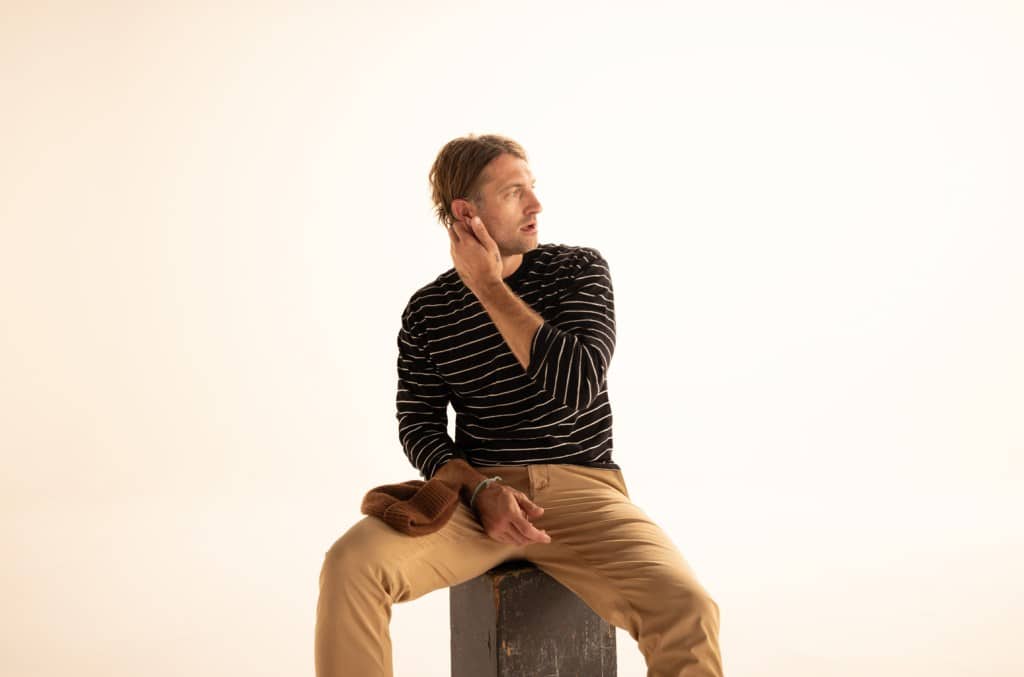
Singer-songwriter Ryan Hurd has signed with The Core Entertainment for management. The singer-songwriter will be managed by The Core Entertainment co-founders/CEOs Chief Zaruk and Simon Tikhman, as well as Brittani Johnson.

The new management deal comes as Hurd gears up to release his sophomore album, the dozen-song Midwest Rock & Roll, on March 21 via Big Machine Records. The album features his new single, “Die For It,” which Hurd wrote with Mark Holman and Randy Montana. The project will also include previously-released songs “Go To Bed Sober” (featuring Sasha Alex Sloan) and “This Party Sucks.”

During his career, Hurd has enjoyed Billboard Country Airplay-charting songs including “To a T” and “Every Other Memory,’ as well as the Maren Morris collaboration “Chasing After You,” which reached No. 23 on the Billboard Hot 100 and No. 2 on the Country Airplay chart in 2021. The 2022 ASCAP country award winner has also co-written hits for other artists, including Diplo’s “Heartless,” Luke Bryan’s “Waves,” Lady A’s “What If I Never Get Over You” and Jordan Davis’s “What My World Spins Around.” Hurd has also earned two Grammy nominations, including best country song (for his writing work on Morris’s “Circles Around This Town”) and best country duo/group performance (for “Chasing After You”).

Trending on Billboard

Hurd told Billboard in a statement, “I am really excited about this new chapter of making music with everyone at The Core. I feel like this is a special team and I can sense how deeply they care about this album and the music I want to create in the future.”

“Ryan’s ability to seamlessly blend country storytelling with rock influences makes him a unique and powerful voice in today’s music landscape,” said Zaruk and Tikhman. “His knack for crafting compelling music that resonates across genres is something we’re incredibly excited to support as he enters this next era.”

Founded in 2019, The Core Entertainment focuses on talent development, management and record label services. The company’s roster also includes Nate Smith (“World on Fire,” “Whiskey on You”), Bailey Zimmerman (“Rock and A Hard Place,” “Where It Ends”), and Josh Ross (“Ain’t Doin’ Jack”). In 2023, the firm launched a producer management division.

Backstreet Boys Announce Summer 2025 Sphere Residency: ‘Into the Millennium’

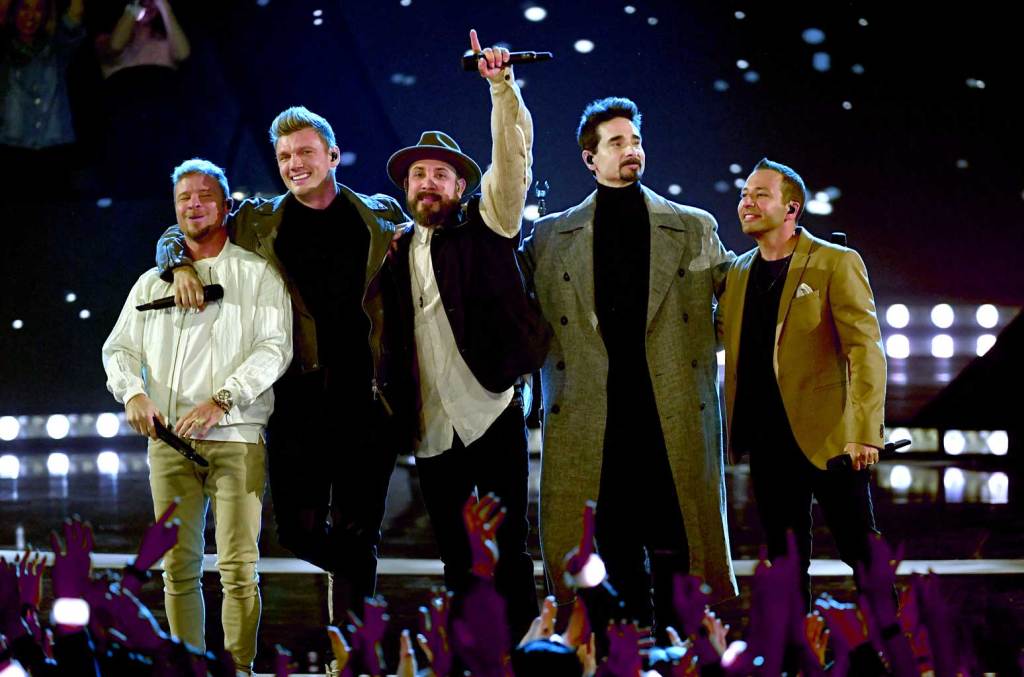
The Backstreet Boys will be the first pop group to take the stage at Las Vegas’ Sphere. The man band announced the dates for their summer 2025 “Into the Millennium” residency at the futuristic venue, which will find them performing nine shows in July.

“Fans can expect an unforgettable experience as the Backstreet Boys bring their legendary Millennium album to life, alongside a selection of their greatest hits,” read a statement announcing the run of shows, which will find the group performing such hits as “I Want It That Way” and “Larger Than Life” in the venue that has wowed attendees with its immersive sound and wrap-around, high-tech visuals.

The group — Nick Carter, Brian Littrell, AJ McLean, Kevin Richardson and Howie Dorough — will perform at the Sphere on July 11, 12, 13, 18, 19, 20, 25, 26 and 27. Fans can sign up for an artist presale now (through Feb. 17 at 10 p.m. PT) here for the first six dates. The Backstreet Boys Fan Club presale will kick off on Feb. 18 at 9 a.m. PT, with the artist presale launching on Feb. 19 at 9 a.m. PT. Additional presales will run throughout next week ahead of the general onsale that begins on Feb. 21 at 9 a.m. PT here.

Trending on Billboard

Tickets for the final three announced shows are available now via an artist presale through Feb. 17 at 10 p.m. PT here. The Fan Club presale for those shows will begin on Feb. 18 at 11 a.m. PT, with an artist presale beginning Feb. 19 at 11 a.m. PT, followed by additional presales throughout the week until the general onsale begins on Feb. 21 at 11 a.m. PT here.

“We’re heading ‘Into The Millennium’ once again! ?? Relive your Backstreet Boys Y2K memories, but this time… LARGER THAN LIFE at @SphereVegas starting this July!,” the band said in an Instagram announcement that included images of the quintet projected on the outside of the venue.

U2 helped launch the venue in Sept. 2023 with their U2: UV Achtung Baby Live at Sphere residency, which had them stay put through March of 2024, making way for a four-show run by Phish and a 30-show stint by Dead & Company. The Eagles will play 32 shows in a run that kicked off in Sept. 2024 and is currently slated to run through an April 12 gig. EDM artist Anyma’s 12-show run kicked off on Dec. 27 and is slated to wrap on March 2, with Dead & Co. slipping back in for 18 more shows from March-May of this year, after which Kenny Chesney will touch down for 15 shows in May and June.

Check out the Sphere announcement below.

2024 Rock & Roll Hall of Fame Nominees: Induction Odds From Least to Most Likely

Here’s how we handicap this year’s class of Rock & Roll Hall of Fame nominees and their respective chances of induction.

As the pool of artists eligible for the Rock and Roll Hall of Fame continues to get more and more diffuse in its nominations — in terms of sound, geography and chronology — the inductees get harder and harder to predict.

That’s particularly true this year, as the list of nominated artists includes eight first-timers — one of whom had their biggest hits in this century, one of whom hasn’t had a hit in over 60 years, one of whom has never had a major crossover hit in America, and one of whom has never had a major hit, period. Some of this year’s nominees are as down-the-center rock as you could imagine, some of them are only rock by association or rock in attitude, and at least one only really ever rocked in their downtime.

Further confusing things is the return of multiple nominees who seemed sure (or close-to-sure) things in previous classes — but were denied at least once. Should their current candidacy be judged on their resumés, or their histories of being dubbed close-but-not-quite by previous Rock Hall voting blocs? Are their chances of induction better or worse than artists who have been eligible for the Hall for decades, but who are only now being deemed worthy of such consideration?

Below, Billboard does its best to parse the many questions surrounding all 14 artists recognized as part of this year’s Rock and Roll Hall of Fame nominations class — ranking them in order of our projected odds for them to be inducted, from least to most likely.