State Champ Radio

by DJ Frosty

Current track

Title

Artist

Current show

State Champ Radio Mix

1:00 pm 7:00 pm

Current show

State Champ Radio Mix

1:00 pm 7:00 pm


Author: djfrosty

Page: 101

Trending on Billboard

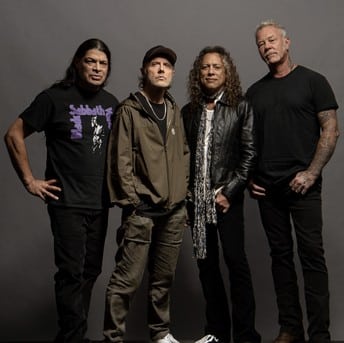
There were flames, fireworks, and an unexpected blast of “Smoko,” as Metallica’s M72 tour stopped by Brisbane’s Suncorp Stadium on Wednesday night, Nov. 12.

Explore

See latest videos, charts and news

The Rock Hall-inducted metal giants have been extra sweet to audiences on this trek, their first down under since 2013, by playing a homegrown classic on each tour date.

For their tour opener Nov. 1 at Perth’s Optus Stadium, the Bay Area legends carved out a rendition of John Butler’s “Zebra,” which the Western Australian native responded to with his own cover of Metallica’s “Enter Sandman.”

Then, at Adelaide Oval on Nov. 5, the rockers covered INXS’ Billboard Hot 100 leader “Need You Tonight,” and segued into the Angels’ classic from 1976, “Am I Ever Gonna See Your Face Again,” led by bass player Robert Trujillo at the mic. For their Melbourne show, at Marvel Stadium, Metallica covered “Prisoner of Society” the alternative rock trio the Living End.

The rumor mill was grinding away ahead of Metallica’s lone show in the Sunshine State. Would they cover a Powderfinger song, or the Go-Betweens? Perhaps the Saints? Or maybe a leftfield choice by performing the Bee Gees, the Veronicas or even Keith Urban.

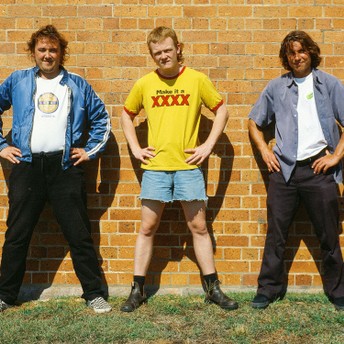
As it turned out, Metallica hit the right note with a cover of the Chats’ “Smoko,” originally released on the Sunshine Coast punk rock act’s 2017 EP, Get This in Ya!!. Trujillo once again took vocal duties, accompanied by lead guitarist Kirk Hammett. “We like to celebrate music from your hood,” Trujillo remarked.

A “smoko” is, for those uninitiated, an Australian expression for a break from work, or more specifically, a pause to smoke.

Eamon Sandwith and Co. were thrilled with the nod. “Stoked to make it to the ‘doodle’ section of the set, thanks Metallica,” reads a social post from the ARIA Award-winning band.

Metallica opened the show with a mainscreen montage of the fan photos, set to “It’s a Long Way to the Top (If You Wanna Rock ’n’ Roll)” by AC/DC, whose own tour of Australia kicked off at the same time, 1,000 miles south of Brisbane, at the Melbourne Cricket Ground. AC/DC will visit Brisbane’s Suncorp Stadium, twice, in December.

“Thank you, we missed you a lot,” frontman James Hetfield told the audience, gathered on an unusually cool November night. “We’re very grateful to be here. This is love.”

Hetfield also insisted that he had “the best job in the world,” which he well could, before Metallica launched into “Sad But True,” an anvil of a song.

Metallica may have mellowed through the years, but they’re still hard as hammers, which they proved with a set that flew high and never came down. The encore, of “Master Of Puppets,” “One,” and “Enter Sandman” could’ve woken the dead. Maybe the fourpiece was tipped off that the venue was once Paddington Cemetery, a burial ground. 

Late in the set, Hetfield welcomed the capacity house as members of the “Metallica family,” some as veterans, others newcomers. “That’s why we’re here. To forget all the bull**** in life.” As good parents, Hetfield, Hammett, Trujillo and drummer Lars Ulrich stayed on stage well after the last chord rung out, to share gifts of drumsticks, guitar picks and take turns in thanking the fans.

Produced by Live Nation Australia, the tour continues at Sydney’s Accor Stadium (Nov. 15) and wraps up Nov. 19 at Auckland’s Eden Park. Evanescence and Suicidal Tendencies are the support on this leg of the M72 World Tour.

Trending on Billboard

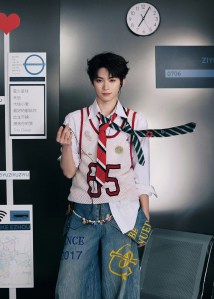
With the single “Quagmire,” Mandarin singer Zi Yu claimed the top spot in the Vol.01 September Selection of “Star Power Monthly Selection” (held by Billboard China, Tencent Music’s QQ Music and JOOX platforms).

From constant experimentation to commanding the stage, from wearing the “newcomer” label to earning “champion” recognition, Zi Yu has achieved a striking breakthrough with “Quagmire,” emerging as one of the most promising new voices in Chinese music.

The sound of “Quagmire” now lingers as the defining memory of this past September. We look forward to seeing the boy who once rose from the mud continue to dig, through his music, toward a vaster world.

Below, Li Shi Jue, the songwriter of “Quagmire,” speaks with Billboard China to decode the creative force behind the very first “Star Power Monthly Selection” champion song.

Zi Yu

Billboard China

The song Quagmire has resonated widely with listeners. Were you surprised? What do you think made it so moving?

Li Shi Jue: I was a bit surprised, yet not entirely, because our team actually wrote this song a few years ago. Its theme and melodic line have a retro, catchy quality, the kind that naturally evokes emotional resonance. Songs from that same creative period included Dislocated Space-Time, which later became a big hit. I think what really touches people is the combination of a simple, memorable melody and straightforward, relatable lyrics, brought to life by Zi Yu’s heartfelt performance. The overall listening experience just flows smoothly. When we wrote it, we only wanted to capture honestly the feeling of being stuck in a certain emotion or situation. We never imagined it would be embraced by so many people. Looking back now, perhaps what moved listeners was its authenticity — that tangled obsession of “wanting to break free yet sinking deeper,” a struggle everyone encounters at some point in life. The song doesn’t preach any grand truths; it simply passes on the feeling of “breathing inside the Quagmire,” and somehow, someone out there heard their own echo in it.

When writing “Quagmire,” what core emotion or idea did you most want to express? Where did the original inspiration come from?

What I wanted most to convey was a state of emotion—it could be my own feelings, or projections of many different kinds of emotions. It’s about recalling past experiences, being overwhelmed by sadness, crying awake in the middle of the night, falling asleep only to wake up crying again. That cycle of repeating pain mirrors the song’s looping melody. The inspiration naturally came from life: once you’ve lived through something like that, you can’t help but write it down. I believe everyone has their own “Quagmire moment”—a low point in life. It’s not about the inspiration of “getting out of the Quagmire,” but about the courage to “stand firm within it”. The earliest ideas came in fragments: seeing friends torment themselves over a goal that fell through; watching someone repeatedly edit and delete late-night social media moments out of confusion; or even my own frustration when I get stuck—when the harder I try to write, the less I can. These scattered moments came together like scenes of many people circling in their own “Quagmires,” and suddenly I wanted to write a song to tell listeners: It’s okay to be stuck. You don’t have to force yourself to climb out right away. Take a look at the soil beneath your feet—maybe something can grow from it.

When creating music, what do you value most? Does “Quagmire” reflect this philosophy?

When I write songs, I care most about the completeness and directness of the story, and about how catchy the melody is. I used to pursue more avant-garde arrangements or melodies to create relatively niche works, but as I’ve grown older, I’ve realized that what sounds truly good is often simple. “Quagmire” embodies exactly that belief. What I value most is accuracy—not technical precision, but emotional accuracy, staying true to the feeling. For example, the line “tears reach my lips, a little salty” wasn’t written just to rhyme; it’s meant to capture that physical detail of “trying to hold back your tears halfway through crying”. That kind of specific pain carries more weight than simply shouting “I’m so sad”. Quagmire achieves that—it doesn’t rely on ornate language. It sings of tangible emotions: “the darkness when you turn away,” and “the sweetness in dreams and the tears upon waking”. It’s like laying bare the creases of your heart for others to see, without hiding, without pretense.

What special charm do you think Zi Yu’s performance brings to this song?

Zi Yu truly infused this song with a special kind of magic. He’s a young, energetic singer of the new generation, while I wrote the song with a deliberately retro sensibility in mind. That collision between the “new” and the “old” gave “Quagmire” a fresh soul. There’s a kind of restrained resilience in Zi Yu’s voice that fits the song’s temperament perfectly. He doesn’t use explosive power to express the pain of being trapped in the Quagmire; instead, he shapes the details with soft, airy tones. In the line “repeating the sorrow again and again,” you can catch a faint, almost imperceptible tremor. That choice to hold back instead of crying out actually makes the struggle within the “Quagmire” feel more real. It’s like how, in real life, people in distress don’t always scream; more often, they wrestle silently with themselves. And Zi Yu managed to sing out the weight of that silence.

For listeners who found resonance in “Quagmire” and those who might be going through their own “Quagmire moment,” what would you most like to say to them?

If you happen to be living through your own “Quagmire” right now, tell yourself: let the storm rage on. Only time can heal, and there’s no other cure. If you’ve parted ways with someone, don’t disturb their life again. This experience might one day become one of the most beautiful memories on your journey. And when you emerge from the storm, safe and whole, you’ll no longer be the same person you once were. Stay strong!

At the same time, I want everyone to know: you’re not the only one sinking. Every life has stretches of road where people just can’t seem to move forward. Don’t rush to deny yourself, wondering “why haven’t I climbed out yet,” and don’t envy others who seem to have it easier. First, acknowledge “I’m here, right now,” and then take a look beneath your feet—those things that hurt you or twist and hold you down may quietly be helping you put down roots. And perhaps one day, when courage returns, you’ll be ready to step out of the mire—slowly, but surely.

In your songwriting process, are there any particular habits or principles you always stick to, and how do you deal with doubts or criticism?

In my songwriting process, I don’t worry about whether the lyrics or the melody come first. Sometimes I start with the words, sometimes with the tune, but most of the time they emerge together. What I care most about is the first feeling. When a melody suddenly comes to mind, I usually decide on it right away, because the more you revise, the further you drift from your original intention. That’s why I tend to write songs quickly.

With “Quagmire,” for example, the image of the Quagmire came first, and from there the melody and lyrics gradually grew. For me, letting emotions flow naturally is far more important than following a rigid process.

In fact, every song carries its own unique expression and emotion—each differs in theme, harmony design, and arrangement style. There are plenty of works out there that sound similar in mood or atmosphere, but art ultimately comes from life—and respecting originality matters most.

Zi Yu

Billboard China

Trending on Billboard

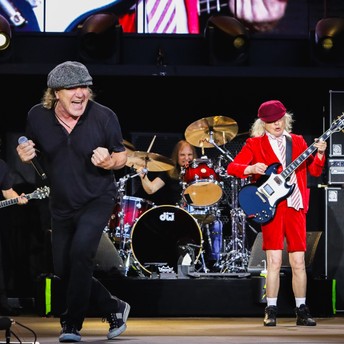
AC/DC came to rock the Melbourne Cricket Ground on Wednesday night, Nov. 12 and the city felt it.

The opening date of AC/DC’s Power Up tour of Australia made waves that were detected by earthquake monitoring equipment, and could be felt, and heard, deep into this former Olympic City.

According to Adam Pascale, chief scientist at the Seismology Research Centre, the concert registered in the 2-5 hertz range at their office in Richmond, some 2 miles from the concert at the towering MCG.

Explore

See latest videos, charts and news

That’s enough force for people to feel the ground move.

“The sound waves that people were experiencing nearby and feeling something through their bodies, that’s the equivalent to what our seismographs feel,” Pascale told the Australian Broadcasting Corporation. A resident some 6 miles away told the ABC they could hear the concert.

“We’re picking up the ground motion, we’re not picking up the sound from the air,” Pascale added.

“So, you’ve got speakers on the ground pumping out vibrations and that gets transmitted through the ground, but also the crowd jumping up and down is feeding energy into the ground.”

Although AC/DC came to rock, the largest signals received by the Seismology Research Centre were generated by Taylor Swift’s record-busting three-night stand at the MCG in 2024, Pascale remarked.

Stadium rock can move us, literally. Oasis’s now-completed tour of Live ’25 tour of Australia (via Live Nation) generated a “clear uptick in seismic signal” when fans “started pounding the ground” at Marvel Stadium during a show earlier in the month, the center confirmed earlier.

AC/DC doesn’t do things by halves. These latest round of shows require 300 tons of steel to build the production, with 28 tons of PA and speakers pumping out the sound. A crew of 155 are working each show, which consumes 500kw of power every night.

With Angus Young on lead guitar, vocalist Brian Johnson, rhythm guitarist Stevie Young, drummer Matt Laug and bass player Chris Chaney, the Rock Hall-inducted legends ripped out the classics at the MCG, including “Back In Black,” “Thunderstruck,” “Hells Bells,” “Riff Raff” and much more.

AC/DC last toured Australia and New Zealand in 2015, the domestic leg of their Rock or Bust world tour. On that visit, Young and Co. shifted more than 520,000 tickets across 11 coast-to-coast dates, including shows in Auckland and Wellington.

Next up, the second of two shows this Sunday (Nov. 16) at the MCG, followed by dates in Sydney, Adelaide, Perth and Brisbane.

TEG Van Egmond, a division of TEG, is producing AC/DC’s nine-date national tour, with special guests Amyl & The Sniffers.

AC/DC 2025 “Power Up” Australia Tour Dates:

Nov. 12 — Melbourne Cricket Ground (completed)

Nov. 16 — Melbourne Cricket Ground

Nov. 21 — Accor Stadium, Sydney

Nov. 25 — Accor Stadium, Sydney

Nov. 30 – Adelaide bp Adelaide Grand Final

Dec. 4 — Optus Stadium, Perth

Dec. 8 — Optus Stadium, Perth

Dec. 14 – Suncorp Stadium, Brisbane

Dec. 18 – Suncorp Stadium, Brisbane

Trending on Billboard

Christopher Cross’ “Sailing” isn’t coming in to dock anytime soon.

The American singer, songwriter and guitar talent released his “yacht rock” masterpiece back in 1979, a classic that sailed all the way to No. 1 on the Billboard Hot 100.

“Sailing” was one of four top 20 hits that appeared on Cross’ self-titled album, which, in 1981 would make history at the Grammy Awards, by sweeping five categories, including the Big Four — album, record and song of the year. Yes, it was unexpected. A shock, even. The only other artists to scoop the Big Four was Billie Eilish, doing so four decades later, in 2020.

Explore

See latest videos, charts and news

If “Sailing” was a guilty pleasure in the 1990s, today it’s simply a pleasure. The softly-spoken artist stopped by Jimmy Kimmel Live earlier this week to take us all “Sailing,” the video of which can be seen below.

Cross, a formidable guitarist who was blessed with the voice of an angel, appears to have made a full recovery from his grueling health battle five years ago, during which he contracted Guillaine-Barre Syndrome (GBS) after having COVID-19.

At one stage, he was paralyzed from the waist down. “It really was touch and go, and tough,” he CBS Sunday Morning at the time.

Cross’s late-night spot came ahead of the release this Friday, Nov. 14 of All Right: The Worldwide Singles 1980–1988, the first career-spanning collection of his biggest hits, including “Arthur’s Theme (Best That You Can Do),” from the film Arthur, which also led the Billboard Hot 100 and won an Academy Award for best original song. The set is released through Omnivore Recordings, the label that issued an “expanded edition” of Christopher Cross in June 2025.

Now aged 74, Cross will play many of those hits when he embarks on a South American tour this December, including shows with fellow ‘80s heavyweights Toto. Live shows across the U.K. and Europe follow from May 2026.

Trending on Billboard

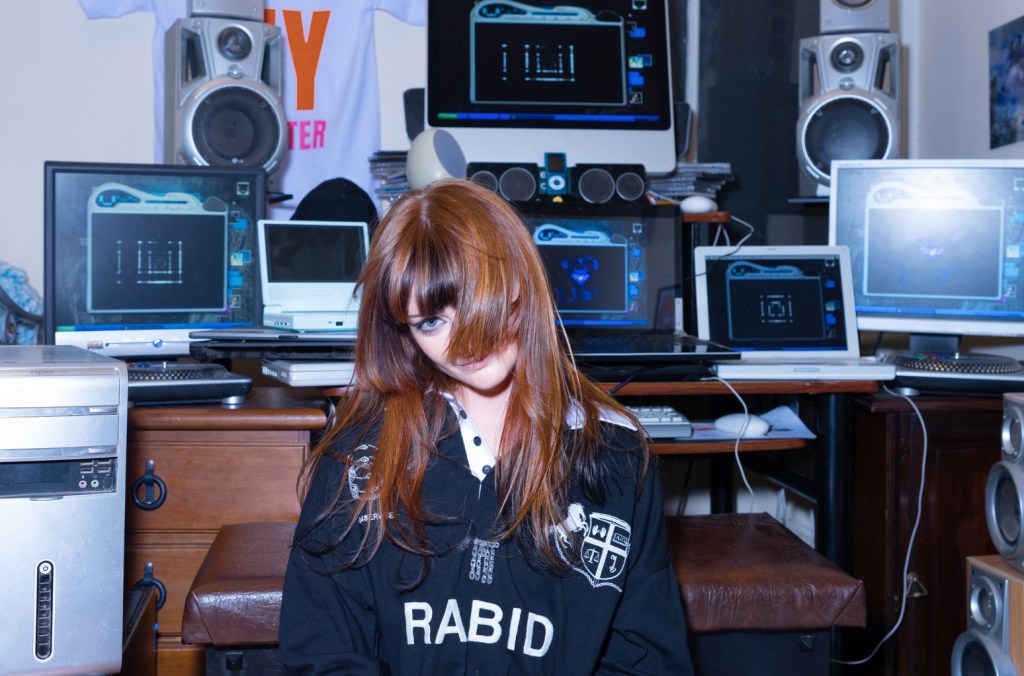
Ninajirachi’s hot streak shows no signs of cooling off.

The DJ, songwriter and electronic music artist adds to her collection the triple j album of the year and Australian music video of the year, two of five awards handed out Wednesday, Nov. 12 by the state-funded youth network.

The 26-year-old musician nabbed the top award, album of the year, for her debut full-length effort I Love My Computer (via NLV Records), which beat out a ten-strong shortlist of LPs by the likes of Tame Impala, Mallrat, Spacey Jane, OneFour and others.

Explore

See latest videos, charts and news

Ninajirachi also collected the top music video honor, for “F*** My Computer,” directed by Ball Bass John.

It’s all happening for Ninajirachi, known to her friends and family as Nina Wilson. Just last week, she collected the coveted Australian Music Prize (AMP), and its A$50,000 ($32,800) winner’s check, for her studio collection. And there’s a strong chance to add more when the 2025 ARIA Awards roll on next Wednesday, Nov. 19, where she’s competing for a leading eight pointy trophies.

After wrapping up her Australian tour in the early stages of 2026, the rising star will embark on her biggest north American jaunt yet, including a first-ever slot at Coachella.

“I really just had a good time making an album. I hope I can keep making albums that feels as good as this one did,” she told the Australian Broadcasting Corporation following her AMP win. “I’ve been making music for a long time and I could have never predicted what this year would look like. So it’s hard to say (what the future holds). I just hope it keeps feeling as fun as it has been recently.”

Now in its 21st year, the J Awards celebrate the cream of Australia’s crop of recorded musicians, live performers, emerging talent and more, and coincide with triple j’s Ausmusic Month. This year, 26 local artists were nominated for the J Awards.

Other winners announced by the ABC, parent of triple j, included Folk Bitch Trio (Unearthed artist of the year), Grammy and Brit Award-nominated punk rock act Amyl and The Sniffers (Double J Australian artist of the year) and SPEED (Australian live act of the year).

See the full list of 2025 J Awards nominees and winners below.

triple j Album of the Year

• Ninajirachi – I Love My Computer (WINNER)

• Baker Boy – DJANDJAY

• Folk Bitch Trio – Now Would Be A Good Time

• grentperez – Backflips in a Restaurant

• Mallrat – Light hit my face like a straight right

• ONEFOUR – Look At Me Now

• Spacey Jane – If That Makes Sense

• Tame Impala – Deadbeat

• The Rions – Everything Every Single Day

• Thornhill – BODIES

Unearthed Artist of the Year

• Folk Bitch Trio (WINNER)

• Don West

• Darcie Haven

• Sam Alfred

• PLAYLUNCH

Double J Australian Artist of the Year

• Amyl and The Sniffers (WINNER)

• Emily Wurramara

• Gordi

• Meg Washington

• Paul Kelly

rage and triple j Australian Music Video of the Year

• Ninajirachi – “F*** My Computer” (dir. Ball Bass John) (WINNER)

• Drifting Clouds – “Bawuypawuy” (dir. Matt Sav)

• Ecca Vandal – “CRUISING TO SELF SOOTHE” (dirs. Ecca Vandal and Richie Buxton)

• PLAYLUNCH – “Keith” (dir. Riley Nimbs)

• RONA. – “Show Me” (dir. Tyson Perkins)

Australian Live Act of the Year

• SPEED (WINNER)

• Amyl and The Sniffers

• Ball Park Music

• Miss Kaninna

• xmunashe

Trending on Billboard

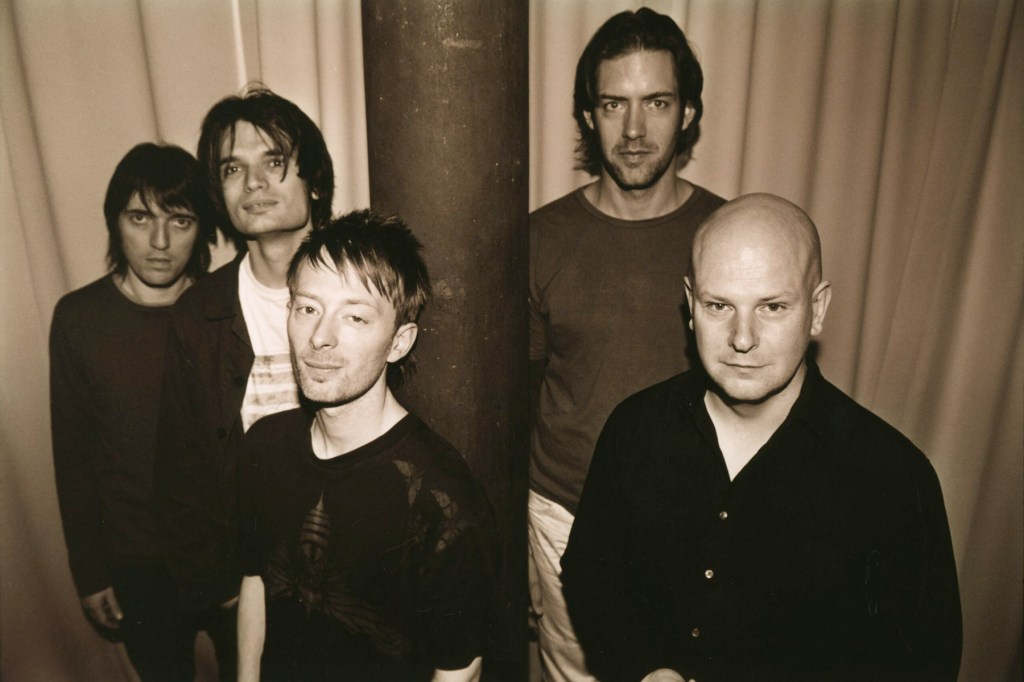
Radiohead’s second live album, Hail to the Thief: Live Recordings 2003-2009, makes a top 10 debut across four Billboard album charts (dated Nov. 15), including a No. 8 bow on Top Album Sales, marking the band’s ninth top 10. The set also enters the top 10 on Indie Store Album Sales (No. 4), Vinyl Albums (No. 5) and Top Current Album Sales (No. 8).

On the overall Billboard 200 chart, the set squeaks in at No. 200, landing the group its 17th chart entry. The set also bows at No. 30 on Independent Albums and at No. 48 on Top Rock & Alternative Albums.

In the tracking week ending Nov. 6 in the United States, the album earned a little over 8,000 equivalent album units, of which essentially all were in traditional album sales (purchases of digital and physical copies of the album).

Billboard’s Top Album Sales chart ranks the top-selling albums of the week based only on traditional album sales. The chart’s history dates back to May 25, 1991, the first week Billboard began tabulating charts with electronically monitored piece count information from SoundScan, now Luminate. Pure album sales were the sole measurement utilized by the Billboard 200 albums chart through the list dated Dec. 6, 2014, after which that chart switched to a methodology that blends album sales with track equivalent album (TEA) units and streaming equivalent album (SEA) units.

Radiohead’s new live album is one of six debuts or re-entries among the top 10 on the latest Top Album Sales chart, where Florence + the Machine’s Everybody Scream debuts atop the list. Tyler, The Creator’s chart-topping CHROMAKOPIA reenters at No. 2 after its one-year anniversary reissue on CD, vinyl and in two deluxe boxed sets (each containing branded merch and a copy of the CD). Grateful Dead’s latest archival live set Dave’s Picks, Vol. 56: Rainbow Theatre, London, England, 3/20/81 & 3/21/81 enters at No. 3, while Taylor Swift’s former No. 1 The Life of a Showgirl slips 3-4. The KPop Demon Hunters soundtrack rises a spot to No. 5, while Hamilton: 10 Shots (Highlights From the Original Broadway Cast Recording) bows at No. 6. Stray Kids’ chart-topping KARMA climbs 9-7, Bob Dylan’s from-the-vaults compilation Through the Open Window: The Bootleg Series, Vol. 18, 1956-1963 debuts at No. 9 and Vince Guaraldi Trio’s A Charlie Brown Christmas soundtrack returns to the top 10, rising 14-10.

Trending on Billboard Spotify is rolling out music videos to its users in the U.S. and Canada, the company confirmed with Billboard. The feature was previously beta-tested in nearly 100 overseas markets last year. A Spotify representative says music videos will be integrated into the service in the coming weeks for U.S. and Canadian customers, […]

Trending on Billboard

French streaming service Deezer reported on Wednesday (Nov. 12) that roughly 50,000 songs delivered to the platform daily are now fully AI-generated, in what amounts to the company’s fourth report on the surge of AI-generated content on its service this year.

Along with that statistic, Deezer also released the findings of a new survey about AI’s use in the music industry, including the stat that 97% of people can’t tell the difference between human-made and fully AI-generated musical works.

Related

According to Deezer’s proprietary AI detection tool — which only searches for fully AI-generated songs from select popular models, including Suno and Udio — the number of fully AI-generated songs delivered daily has been rapidly increasing throughout 2025. In January, it reported that the figure was 10,000 songs a day; in April, it noted the figure was 20,000 songs daily; and in September, it reported the number had risen to 30,000 songs daily.

In an interview with Billboard about the company’s AI research in May, Aurelien Herault, Deezer’s chief innovation officer, and Manuel Moussallam, its director of research, said that part of the reason why they were finding a growing number of fully-AI generated songs was simply that their “data got better” — as well as the fact that the overall volume of fully AI-generated songs had increased as more users adopted AI tools like Suno and Udio.

Beyond flagging AI use, Deezer has taken a proactive approach to regulating this content on its platform. To create transparency, Deezer adds a tag to any fully AI-generated work it detects on the platform, while removing it from algorithmic and editorial recommendations and playlists.

To continue its research into the emerging technology and its impact on the music business, Deezer also produced a new survey on the perceptions and attitudes around AI music. The study was executed by Ipsos with a total of 9,000 participants across eight countries — the United States, Canada, Brazil, the United Kingdom, France, the Netherlands, Germany and Japan. Below, you can check out the study’s top findings.

General perceptions about AI:

98% have at least heard of AI

72% used AI at least a few times

55% of the respondents place curiosity as one of their first overall sentiments towards AI

19% place trust among their first feelings towards this new tool

Music discovery creation with AI:

46% think that AI can help them discover more music they like

51% think that AI will play a significant part in music creation in the next 10 years

51% think that AI will lead to the creation of more low-quality, generic-sounding music on streaming platforms

64% believe that AI could lead to a loss of creativity in music production

Recognition and consumption of AI-generated music:

97% couldn’t tell the difference between fully AI-generated music and human-made music in a blind test with two AI songs and one real song

52% felt uncomfortable with not being able to tell the difference between AI and human-made music

66% of music streaming users say they would listen to 100% AI-generated music at least once, out of curiosity

45% of music streaming users would like to filter out 100% AI-generated music from their music streaming platform

40% of music streaming users say that they would skip without listening to 100% AI-music if they came across it

Transparency:

80% agree that 100% AI-generated music should be clearly labeled to listeners

73% of music streaming users would like to know if a music streaming service is recommending 100% AI-generated music

52% of respondents feel that 100% AI-generated songs should not be included in charts alongside human-made songs on the main charts

Only 11% believe that 100% AI-generated music should be treated equally on charts

58% of music streaming users believe that their music streaming platform never recommended 100% AI-generated music to them, while 25% are uncertain

Trending on Billboard

A new lawsuit claims Drake’s ”What Did I Miss?” music video ripped off the work of an Italian photographer — and, in a strange twist, that the rapper was intentionally trying to connect his feud with Kendrick Lamar to a controversial Balenciaga campaign.

The copyright infringement complaint, filed against Drake (Aubrey Graham) on Wednesday (Nov. 12) in federal court, alleges a key sequence in the “What Did I Miss?” video lifts from a photograph in Gabriele Galimberti’s 2020 book The Ameriguns. Both Galimberti’s photo and the scene in question show men standing outside houses, surrounded by firearms laid out in parallel around swimming pools.

Related

Galimberti is a photographer with National Geographic, though he is perhaps best known for shooting a notorious 2022 Balenciaga campaign that portrayed children with sexually explicit objects. The campaign drew a huge backlash, with consumers accusing the fashion house and Galimberti of glorifying pedophilia.

Wednesday’s lawsuit draws a direct line between the Balenciaga controversy and “What Did I Miss?,” in which Drake addressed the aftermath of his rap battle with Lamar. That feud ended with Lamar calling Drake a “certified pedophile” on the chart-topping diss track “Not Like Us,” leading Drake to sue Universal Music Group (UMG) for defamation.

“Plaintiff was ultimately publicly vindicated in a defamation lawsuit abroad related to the false accusations arising from the Balenciaga advertisement,” writes Galimberti’s attorney. “Given Kendrick Lamar’s lyrics…calling defendant Graham a pedophile and defendant Graham’s now dismissed defamation lawsuit, on information and belief, defendant Graham sought to imply that he, like plaintiff, would be publicly exonerated.”

Related

Drake’s defamation lawsuit was dismissed last month, with a federal judge ruling that lyrics in rap battles are hyperbole and not meant to imply facts. Drake is now appealing to revive the case against UMG, which owns both Lamar’s label Interscope Records and his label, Republic Records.

Republic and UMG are both defendants in Galimberti’s lawsuit as well, along with Drake and his company OVO Sounds. Galimberti is seeking financial damages for what he describes as “both an egregious violation of federal law and an affront to plaintiff, his livelihood, his legacy and to photographers everywhere.”

“Plaintiff is a serious professional, addressing serious themes,” reads the complaint. “His work hangs in galleries, museums, graces serious print literature, and his career depends upon the respect and admiration of dealers, collectors and critics of contemporary and documentary art. By the forced and unauthorized association of his work with the infringing video, the integrity of his work and his reputation as a photographer has been damaged.”

Reps for Drake and UMG did not immediately return requests for comment on the lawsuit.

“What Did I Miss?” debuted at No. 2 on the Billboard Hot 100 in July, and hit No. 1 on both Hot R&B/Hip-Hop Songs and Rhythmic Airplay, extending multiple Billboard chart records for the rapper.

Over the past few years, Busta Rhymes has experienced a resurgence of sorts as the man released some pretty impressive albums and found himself being featured on other artists’ records like it was the late 90s all over again, and now the man is lending his talents to an up-and-coming Latina artist that will no doubt be making much noise going forward.

Linking up with Minelli for the black-and-white visuals to “Azucar,” Bussa Buss and Minelli kick it on a private estate where they use the fancy backdrop to conduct a photoshoot while they display their musical talents and show they can pull off quite a few poses in luxurious leather attire.

Back in the South, Lil Flip is still balling something serious (pause?) and for his clip to “Slingshot,” the rap veteran pulls out some supped up slingshot automobiles to roll around town before pulling over and throwing a block party of sorts where he gets turnt up with his peoples.

Check out the rest of today’s drops, including work from Do Or Die, YFN Lucci, and more.

MINELLI & BUSTA RHYMES – “AZUCAR”

LIL’ FLIP – “SLINGSHOT”

TIANA MAJOR9 FT. YEBBA – “ALWAYS”

DO OR DIE – “FANTASY”

YFN LUCCI – “GHOST.”

A-F-R-O & STU BANGAS FT. WORDSMITH – “MASTERMIND”

BISHOP NEHRU – “KEEP IT A BEAN”

SPICE 1 FT. RICO 2 SMOOVE – “GOONIN”

Photo: Getty